Satellite Broadband Market: “Winners-takes-some”, Losers Lose Big
The satellite broadband market, with its high fixed costs and low marginal costs, has many characteristics of a natural monopoly on the…
Satellite Broadband Market: “Winners-takes-some”, Losers Lose Big
The satellite broadband market, with its high fixed costs and low marginal costs, has many characteristics of a natural monopoly on the supply side and it resembles industries that tend toward a winner-takes-all (WTA) structure. Still, several factors suggest that a duopoly with the features of a “winner-takes-some” (WTS) scenario, is more likely.
Starlink offers internet speeds that rival or exceed traditional fixed broadband in many regions, especially in underserved rural areas. Its LEO satellites allow for lower latency and faster download speeds compared to traditional Geostationary Earth Orbit (GEO) satellite services, making it a strong alternative to fiber or cable in remote areas.
Starlink’s dominance in the satellite broadband market stems from its ability to spread high fixed costs across a large and growing customer base. With approximately 70% market share, Starlink benefits from low marginal costs, similar to Microsoft’s dominance in operating systems, where the cost of adding new users is negligible. This cost advantage, combined with economies of scale, allows Starlink to offer lower prices, making it difficult for smaller competitors, facing higher distribution costs, to compete in a market already saturated by Starlink’s presence.
Additionally, Starlink’s strong brand and product differentiation reinforces customer loyalty. Its extensive customer base creates positive network externalities, enabling Starlink to offer unique services that are hard to replicate. With its first-mover advantage in securing regulatory approvals globally, Starlink holds a significant edge that competitors find challenging to overcome, positioning it as the dominant operator in a potential “winner takes all” scenario.
However, the following factors need to be considered:
Diminishing Returns to Scale, Rapidly Consolidating Market Although Starlink benefits from powerful economies of scale with its vast constellation of over 5,000 satellites already deployed, the sheer scale of maintaining and continuously launching new satellites (with a target of 12,000+ satellites) introduces operational complexities. While SpaceX reduces launch costs via reusable Falcon 9 rockets, ongoing operational expenses (satellite replacements, ground stations, user terminals) could see diminishing returns, especially when Kuiper and other competitors scale up.
- Starlink’s total expected capital investment: $20–30 billion.
- Kuiper’s investment: $10 billion, with over 3,200 satellites planned by 2025.
As Kuiper scales its constellation and launches commercial services by 2025, its integration into Amazon’s larger ecosystem, especially AWS, will further fragment the market, preventing any single player from dominating the market completely, but also creating strong pressure towards consolidation and forcing many players out of the market. Consolidation will continue, exacerbated by the 6% annual decline of the GEO video revenues, prompting LEO-GEO integration. The merger of Eutelsat and OneWeb, valued at approximately $1.5 billion, combined Eutelsat’s fleet of geostationary satellites with OneWeb’s low Earth orbit (LEO) satellite constellation. SES and Intelsat are creating the largest geostationary (GEO) satellite operator, bringing together in a $3.1 billion deal, fleets and assets. The acquisition of Inmarsat by Viasat can also be interpreted in the same light.
Product Differentiation and Market Segmentation Both Starlink and Kuiper are vying for large market shares, but their target demographics and product offerings create segmentation.
- Starlink focuses on a broad consumer market (B2C), but also including niche sectors like yachts, small boats, and rural households. Their focus on consumer equipment priced competitively strengthens brand loyalty in these areas.
- Kuiper, on the other hand, is likely to target enterprise clients by bundling its satellite service with AWS cloud services, a significant advantage for enterprises needing end-to-end connectivity solutions (logistics companies, rural ISPs, etc.).
By offering differentiated services, Starlink and Kuiper can both capture substantial but non-overlapping market segments, akin to the Coke vs. Pepsi competition where each firm leads in distinct niches and Pepsi built its competitive position by integrating other products to the core beverage business.
Network Effects with Fragmented Preferences Network effects, typically a force behind WTA dynamics, are less dominant in this case because of fragmented preferences. Customers with distinct requirements — such as those prioritizing rural coverage, maritime connectivity, or cloud integration — will find Kuiper appealing. The global satellite capacity surge (from 2.3 Tbit/s in 2019 to 279 Tbit/s projected for Starlink and Kuiper combined) underscores the growth potential, but also highlights supply imbalances in high-demand areas, leaving some room for smaller players and regional solutions.
- Starlink offers 102 Tbit/s, with Kuiper expected to add 117 Tbit/s. Yet, these figures still fall short of fully covering global high-demand areas like the Caribbean and USA, leaving some space for surviving competitors.
Regulatory Constraints and Competition Policy Regulatory policies will play a crucial role in preventing market monopoly, encouraging a WTS equilibrium. Many countries will favor local satellite options or enforce regulations limiting global players’ market dominance like Starlink.
- Operators with extensive ground infrastructure may find favor with governments due to its commitment to localized services, compliance with domestic data storage laws, and ground-based infrastructure.
- Regulators will need to play balance between telcos and satellite operators. Satellite communications have a huge potential to extend access to broadband to rural areas. This is impacting the very logic of building a terrestrial telecom network in rural areas, impacting the business model of towercos and MNOs in emerging markets with large, dispersed population. Despite initiatives such as AST SpaceMobile, with its BlueWalker satellites, seeking to work with telcos to enable direct-to-device (D2D) mobile communication, the potential for cannibalization is high. Rural infrastructure deployment is already capital-intensive with a slower return on investment (ROI), hence telcos might find less incentive to build new terrestrial networks if they can leverage satellite services to fill coverage gaps. Towercos will be under pressure. Regulatory responses will vary, creating space for some level of fragmentation, partially mitigating the clear advantage that Starlink has achieved in this area.
Geographic Niches Other satellite operators like OneWeb, Viasat, and Telesat may continue to capture niche segments by focusing on specific geographic areas (e.g., high-latitude regions for OneWeb) or offering specialized services such as low-latency backhaul for mobile networks or maritime and aviation sectors.
Figure: Starlink Availability Map, October 2024
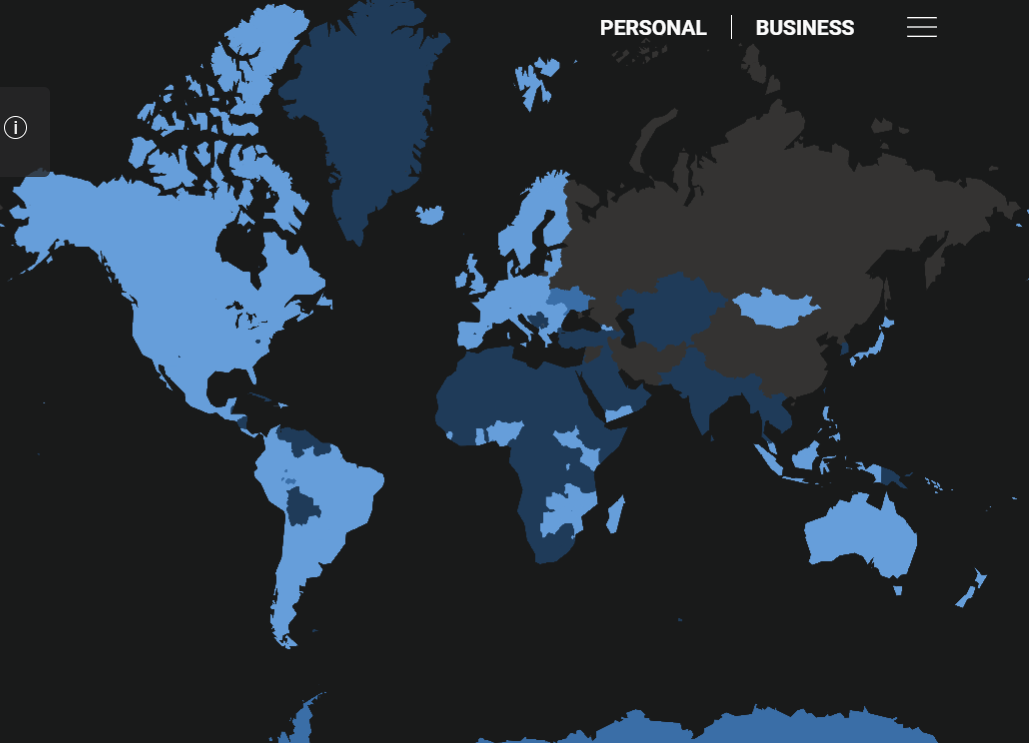
Source: OpenStreet Map; Starlink
Envelopment Strategy In an envelopment strategy, a company integrates and expands its services into adjacent markets to eventually dominate or significantly impact those markets. Kuiper’s integration into AWS cloud services creates an envelopment strategy that enhances its ability to appeal to enterprise clients and related markets. Similar to how Google Translate supports Google’s search dominance without monopolizing the translation market, Kuiper can bundle satellite broadband with AWS’s expansive cloud platform, creating a “winner-takes-some” dynamic where it coexists with Starlink but has an advantage in enterprise solutions. Moreover, Direct-to-Device (D2D) satellite services could facilitate an envelopment strategy by major satellite operators like Kuiper (Amazon) and Starlink (SpaceX).
Supporting Data and Figures
- Starlink’s Capital Costs: Starlink has spent approximately $10 billion so far, with future projections up to $30 billion as it scales globally to meet high-capacity demands.
- Kuiper’s Deployment: Amazon is investing $10 billion in Kuiper, aiming to launch 3,200 satellites by 2025. The company is currently testing satellites and aims to offer beta services in 2024, ahead of a full commercial rollout.
- Global Satellite Capacity: The global satellite capacity provided by Starlink and Kuiper will exceed 279 Tbit/s when both systems are fully operational, but congestion in high-demand regions like the USA will exist, limiting their ability to capture 100% of the market.
- Competitor Investments: Other players like OneWeb have also made significant investments, with $5–6 billion in capital costs, targeting specialized B2B and government markets, particularly in underserved regions.
Conclusion
Given these dynamics — diminishing returns to scale, market segmentation, fragmented preferences, persistent regulatory volatility, and differentiated product offerings — the satellite broadband market will likely evolve into a winner-takes-some scenario. Starlink and Kuiper will dominate much of the market, but there may be residual room for other competitors to carve out some market shares, particularly in niche segments. Losers will lose big. Further consolidation and market exit will continue the satellite segment, coupled with pressure on the business model of towercos and MNOs in large countries with dispersed populations.
Planet Envelopment, WTS, LLB: The Dawn of an Impefect Duopoly

메타데이터
- post_id
- 40da205e5402
- slug
- satellite-broadband-market-winners-takes-some-losers-lose-big-40da205e5402
- url
- https://medium.com/@carlo.rossotto/satellite-broadband-market-winners-takes-some-losers-lose-big-40da205e5402
- canonical_url
- https://medium.com/@carlo.rossotto/satellite-broadband-market-winners-takes-some-losers-lose-big-40da205e5402
- author_url
- https://medium.com/@carlo.rossotto
- status
- ok
- fetched_at
- 2026-06-09 15:37:30