The Light of a Distant Star
Memories of Kolyma Hard Labor: Translation of Feb 18, 1989 article in the Malyn, Ukraine Newspaper: October Flag — by L. Ivanchuk
The Light of a Distant Star
Memories of Kolyma Hard Labor: Translation of Feb 18, 1989 article in the Malyn, Ukraine Newspaper: October Flag — by L. Ivanchuk

The Investigator
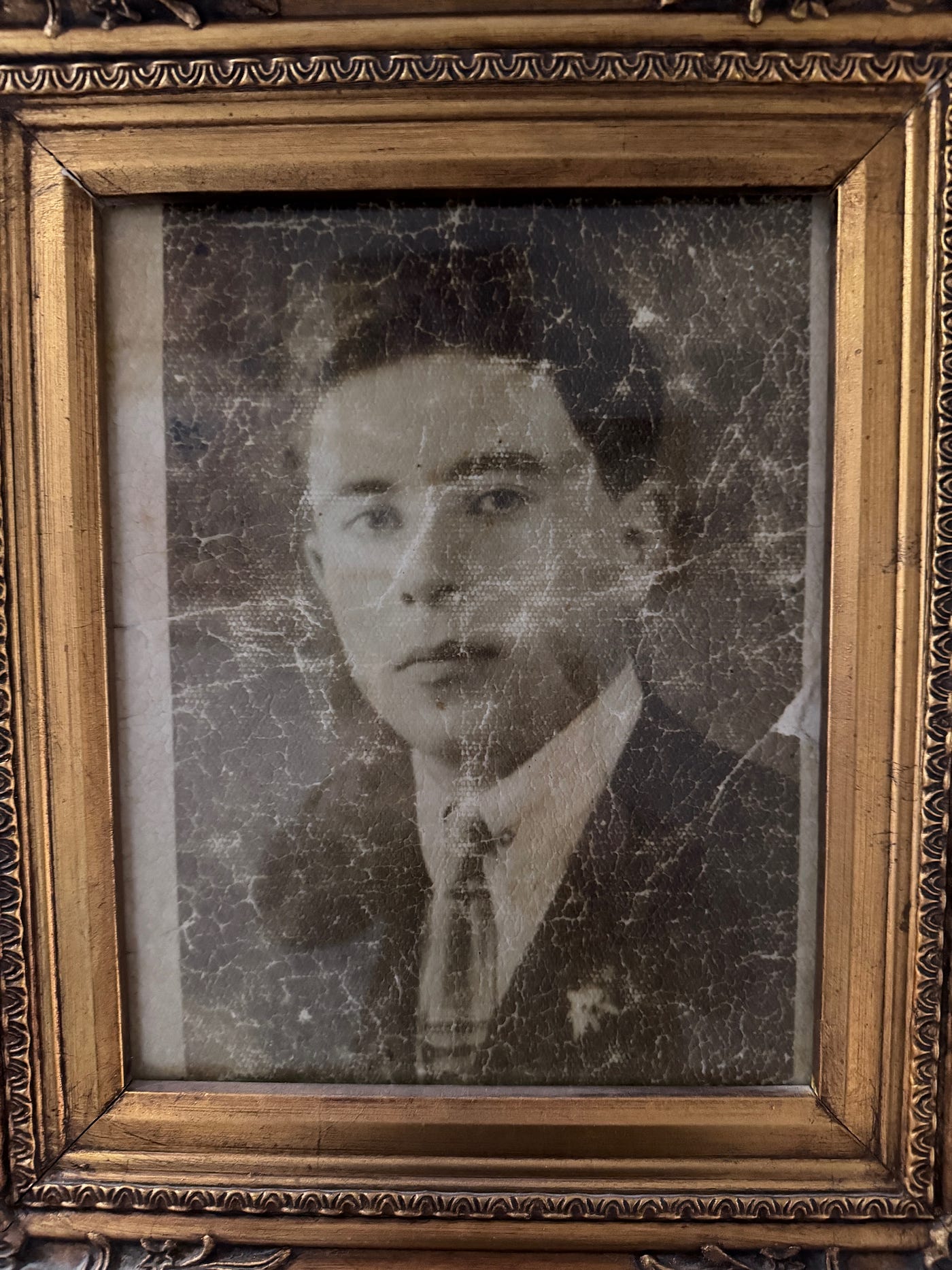
It seemed he had forgotten about him. He was writing something intently, rereading, smoking cigarette after cigarette without taking his eyes off the papers. But whenever Ilya Abramovich tried to relax, the investigator would cast a heavy glance his way. And he would straighten up as best he could, though it felt like he was standing on a hearth and hell itself was creeping up on him. Everything was swimming before his eyes; the investigator seemed to drift away, then appear right next to him again. How long would this go on? Thoughts rustled in his head like dry leaves. Maybe now I’ll fall and never get up again. Let them kill me. At least then these tortures would end.
At first, like his cellmates, he thought the arrest was just a misunderstanding, that it would be cleared up in a week, two at most. They’d figure out he had nothing to do with it, apologize, and he’d return home.
But months passed, and hope melted away like March snow. Ilya Abramovich, with horror, came to realize: no one was planning to release him, though nearly half a year had gone by — and there was no end in sight. No, he had to think about something else, or he’d go mad. How were his wife and son? Were they still waiting, or had they lost hope? Who could have thought that his speech at the union meeting would cost him so dearly?
The Meeting
At the time, he worked at a print shop. The work wasn’t well-paid, and the family was barely making ends meet. And then they started raising quotas again, slashing rates. He couldn’t take it anymore — he asked to speak at the meeting.
“We already earn so little compared to others,” he said. “I think it’s too early to raise quotas again. We just won’t be able to meet them, no matter how hard we try.” He saw how approvingly the other printers reacted to his words and hoped for support. But later, he cursed himself: why didn’t I just keep quiet? Everyone whispered about this privately — but yes, whispered, in corners. And he forgot what year it was — 1937 — when even a careless word could cost you your life.
Soon after, they brought up his speech again. At the factory-wide meeting, they were denouncing the “Trotskyists” Zinoviev and Kamenev.
The director stood and said: “Among us, comrades, are also unstable elements. Some want to disrupt the Stakhanovite movement and serve the bourgeoisie. Here’s one — printer Massover — who complains the quotas are too high. Let him look elsewhere for work. We refuse to work beside him.”
The Arrest
Three months passed. Ilya Abramovich knocked on every factory door in the city (Kiev). Everyone looked at him like he was diseased. Everywhere the same reply:“We don’t need any workers.”
At night, he listened to the rumble of cars in terror. Every knock, even at a neighbor’s door, felt like it was meant for him. He couldn’t take it anymore. He went to the police himself: “If I’m an enemy of the people — arrest me. But understand, I have nothing left. My family is starving.”
They listened and gave him a certificate stating he had left work by choice. Eventually, he got a job as a warehouse packer. Three months later, they came for him.
The Interrogation
They raided his home at night. Books by Bukharin were enough to accuse him of Trotskyism and terrorism. He was beaten daily, kept from sleeping, interrogated nonstop.
Confess, they said. Confess to what? “We have information that your factory director is an enemy of the people. You’re connected to him. Admit it.”
“I know him as an honest communist,” Ilya replied. The next day, they brought him face-to-face with a witness — reading a statement Ilya never gave. He shouted: “I didn’t say that! You added it later! This is blackmail! This is slander!” “You fabricate like fascists!” he screamed, bloodied teeth flying. “The truth will come out. You won’t be able to keep this up.”
Torture and Survival
They didn’t need truth — they needed signatures. Fifteen days he was kept on the “conveyor”: No sleep, no rest, new interrogators every few hours. They demanded confessions, names of “accomplices.” He wasn’t even allowed to stand by himself. When they moved him against the wall, his fellow prisoners paced back and forth in front of the peephole to let him rest — “rocking the pendulum.” Even here, people remained human.
No word came from home. Not a whisper of his wife or child. Then one day he heard a child’s laughter. It was distant but carefree. He rushed to the window, desperate. A soldier appeared behind him. “Miss your child?” the investigator asked. Then showed a photo from his notebook. “You want to see your son again? Just sign what I’ve written. Tomorrow, you’ll see your family.” He signed.
The Sentence
He waited for a trial that never came. One day, they entered his cell and said: “The NKVD special commission has sentenced you to eight years.” No hearing. No appeal. Just eight years in the cold unknown.
Kolyma
The train journey lasted two months. In the boxcars — filth, disease, death. At rest stops, they tossed out frozen corpses. No one mourned. Everyone feared — “Tomorrow, it could be me.”
At the transit camp in Vladivostok, guards shot anyone approaching the fence. Another life lost. Hope… gone.
Every day Ilya asked himself: “What is happening? Why are Lenin’s own communists in these camps too?” One man said: “We’re in Stalin’s way. He’ll clear the road. But you — you’re young. You’ll live to see the truth reach the people. Even if it’s distant, like starlight.” He remembered those words on the road to Kolyma, in frozen barracks, through nine endless years.
Gold and Graves
They mined gold with picks in the permafrost. Collapsed from exhaustion. Hauled frozen bodies by wheelbarrow. Behind them marched the burial crew.
Later, Ilya was transferred. Others envied him — “no quotas, regular rations.” But there, he saw the dead stacked like firewood. Frozen. Naked. Their bodies clattered like glass dolls. He almost ended up in a mass grave himself. Only a lucky moment — a cigarette butt and an approaching truck — saved him.
Return
A soldier nearly stabbed him, accusing him of trying to escape. Only a miraculous arrival of comrades saved his life. Ilya returned home, maimed.
No one waited for him. His sons had died in the war. His wife had remarried. He settled in Malyn. Married again. Worked at a furniture factory.
There, in 1962, the news came: Rehabilitation. “No crime committed.” The years in the camps were added to his pension. The distant star — truth — had finally reached him.
Legacy
It would be easy to lose faith. But Ilya remained a good man. “I’m a non-party communist,” he said. “I believe in rebuilding. I visit my old factory. Talk with colleagues. Argue when they lose faith. We’ve endured so much. We’ll go on. We’ll find the strength.” His silver hair glowed like a halo. He had suffered — truly — and had returned from hell.
“How good that people now speak of those years,” he said. “They want to commemorate the victims. But I don’t see it in the papers. Not in Izvestia, not in Trud.”
He yawned, eyes heavy. “Still, when they build the first memorial, my wife will help me up — and I’ll go.” “We can’t raise the thousands of my comrades from Kolyma’s frozen earth. We won’t get them back.
So why am I telling this? Because I want it to never happen again. So that people won’t allow it.”
— L. Ivanchuk
메타데이터
- post_id
- 40f4ed71dca5
- slug
- the-light-of-a-distant-star-40f4ed71dca5
- url
- https://medium.com/biography-of-ilya-abramovich-massover/the-light-of-a-distant-star-40f4ed71dca5
- canonical_url
- https://medium.com/biography-of-ilya-abramovich-massover/the-light-of-a-distant-star-40f4ed71dca5
- author_url
- https://medium.com/@marina-guvenc
- status
- ok
- fetched_at
- 2026-07-20 08:23:55