Happy Home African restaurant brings Port Harcourt to Seoul’s Itaewon
Tucked away in a quiet Itaewon alley, far from the busy main street, is a hidden gem that feels like home for Seoul’s African community…
Happy Home African restaurant brings Port Harcourt to Seoul’s Itaewon
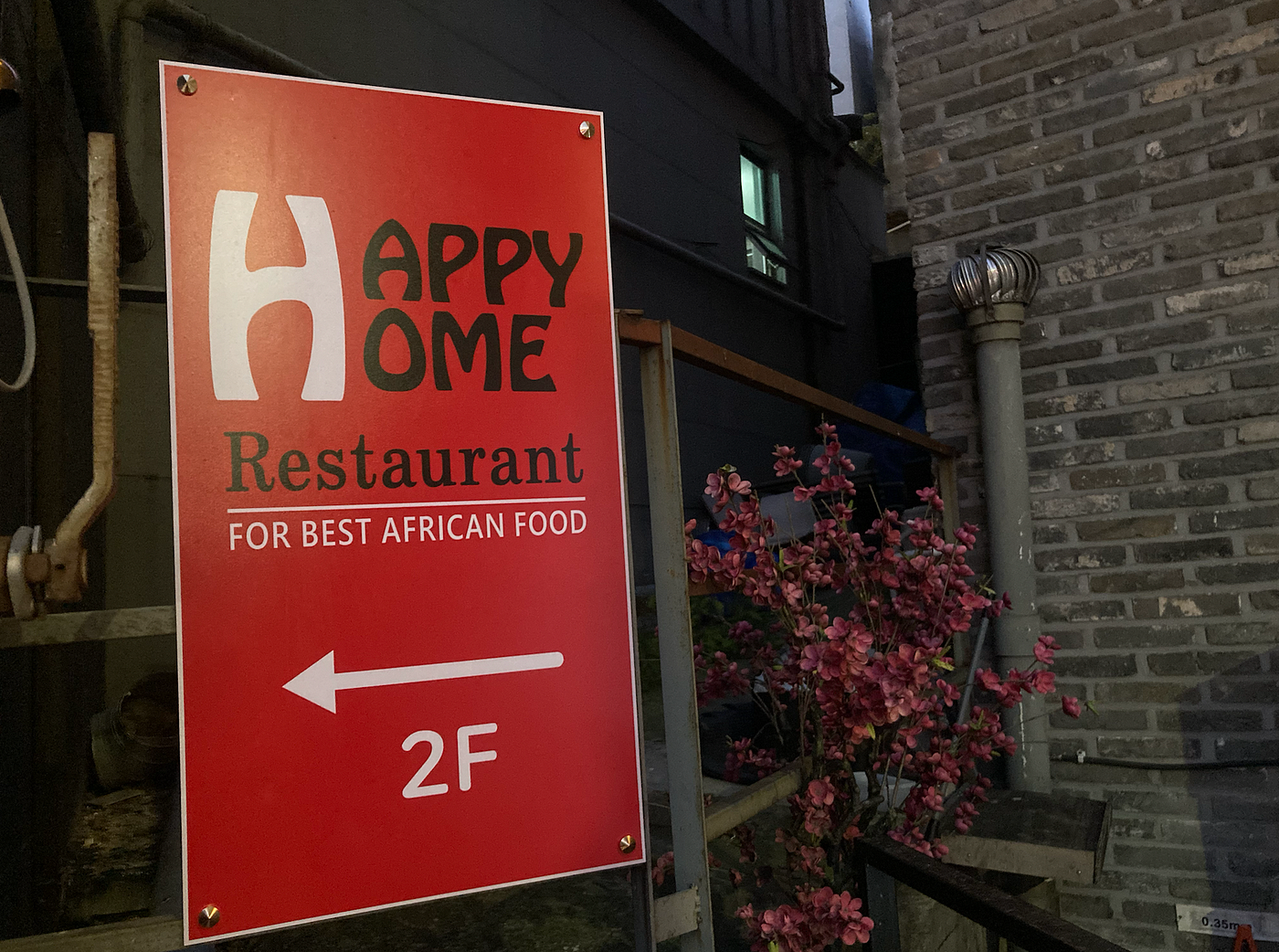
Happy Home African Resturant in Seoul, Itaewon district. Photo by Stephanie Scott
Tucked away in a quiet Itaewon alley, far from the busy main street, is a hidden gem that feels like home for Seoul’s African community. Happy Home Nigerian Restaurant isn’t a place you stumble upon. You go because someone told you about it. Maybe a friend sent you a message, or you saw a post in a Facebook expat group saying, “This is the real thing.”
When you open the door, the aroma welcomes you. It’s gentle, not overpowering.
If you know Nigerian or West African food, you recognise that smell. Palm oil warming in a pot, spices coming to life, ground melon seed, and stock simmering slowly. After three months in Seoul, that familiar scent made me stop. For a second, I wasn’t in Itaewon — I felt like I was back in my mum’s kitchen.
The owner greets you as soon as you arrive, and the place feels warm and cozy, with highlife music playing softly. He’s from Port Harcourt, and you can hear his pride when he talks about the food. He told me he opened Happy Home 14 years ago to share the flavours of Nigeria in Seoul, serving dishes that stay true to his roots. “I just wanted people to feel at home,” he said.

Happy Home Restaurant owner, Nigerian immigrant Ozo Emeka Martins. Photo by Stephanie Scott.
Itaewon is famous for its international food scene, so it’s no surprise the owner chose this neighbourhood.
As a British Nigerian, I didn’t know how much I missed this food until that moment. Korean food is great, but comfort means different things to different people. For me, sometimes comfort is jellof rice. Other times, it’s okra soup.
There’s a dedicated hand-washing station tucked neatly near the back. In Nigerian culture, eating with your hands is part of the experience.

A hand-washing station to wash hands before and after eating. Photo by Stephanie Scott
I ordered egusi soup, okra soup, fufu, and a side of fried plantain.
The food looked well presented on the plate, no messy splashes.
I started with the okra soup.

Happy Home Resturant’s okra soup: a blend of okra, tender beef, stockfish, and palm oil, simmered with traditional spices. Photo by Stephanie Scott.
It was glossy and had just the right texture — not too thick or too thin. The freshness was obvious from the first bite. The okra wasn’t overcooked, and the vegetables tasted crisp. The seasoning was spot on and clearly Nigerian.
This dish proves the chef knows what he’s doing.
Next, I tried the egusi soup.


A bowl of Happy Home’s egusi soup: rich melon seed stew simmered with greens, tender meat, and local spices, best enjoyed with pounded yam or fufu. Photo by Stephanie Scott.
Egusi soup isn’t easy to get right. Anyone who grew up with Nigerian food knows this. Too much spice can take over, but if it’s too bland, it loses its character.
That wasn’t the case here.
The spice was just right. The ground melon seeds tasted rich and nutty, tying the dish together. It tasted slow-cooked and made with care.
The fried plantain on the side completed the meal. It was perfectly golden, crisp on the outside, and soft and sweet in the middle. Eating it took me back to childhood afternoons, hearing oil sizzle while my mother chatted on the phone and flipped plantains.

But what stood out most to me was the room itself.
At one table, Nigerians and other Africans ate quietly, nodding in approval. At another, a mix of foreigners enjoyed their food. Nearby, a table of Koreans laughed and tried soup with handfuls of fufu.

Koreans, and expats share a meal at Happy Home resturant in Itaewon, Seoul. Photo by Stephanie Scott.
Seeing Korean diners enjoy Nigerian food in a genuine way made me feel quietly proud. This restaurant really brings people together.
So if you’re wandering through Itaewon’s narrow alleys and smell fried suya, follow it. You’ll probably find yourself at Happy Home.
메타데이터
- post_id
- 40faec48fd10
- slug
- happy-home-nigerian-restaurant-brings-port-harcourt-to-seouls-itaewon-40faec48fd10
- url
- https://medium.com/@stephaniescott93/happy-home-nigerian-restaurant-brings-port-harcourt-to-seouls-itaewon-40faec48fd10
- canonical_url
- https://medium.com/@stephaniescott93/happy-home-nigerian-restaurant-brings-port-harcourt-to-seouls-itaewon-40faec48fd10
- author_url
- https://medium.com/@stephaniescott93
- status
- ok
- fetched_at
- 2026-08-04 04:09:53