The Quiet Manipulation: 7 Devastating Signs You’re Playing a Covert Narcissist’s Mind Game
It’s Not Love — It’s a Psychological Battlefield. Here’s How to Know for Sure.
The Quiet Manipulation: 7 Devastating Signs You’re Playing a Covert Narcissist’s Mind Game
It’s Not Love — It’s a Psychological Battlefield. Here’s How to Know for Sure.

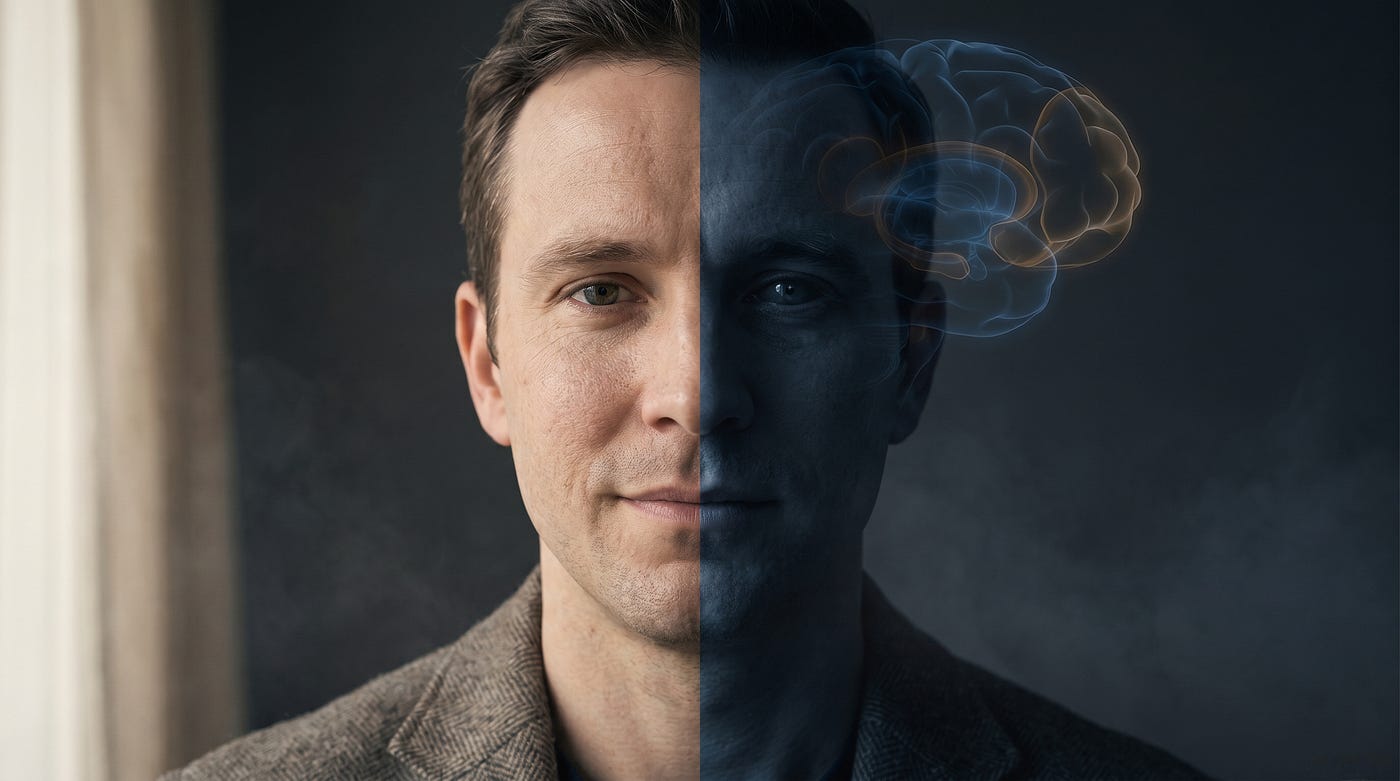
Image is generated via Chat Gpt 2.0 Model.
You don’t see the cyclone coming in a covert narcissist relationship. There’s no shouting, no slammed doors, no obvious cruelty you can point to with certainty. Instead, there’s a slow, suffocating unraveling — one that leaves you questioning your own sanity, your worth, and every memory you’ve ever made with the person who claims to love you.
Overt narcissism announces itself loudly. The bragging. The need for constant admiration. The dramatic tantrums. It’s exhausting, but at least it’s visible. Covert narcissism is the quiet stalker in the room — the abuse that happens with a whisper, not a shout. Hidden behind feigned vulnerability, pseudo-empathy, and a meticulously crafted persona of the “understanding partner,” the covert narcissist wields manipulation like a surgeon, cutting so delicately you don’t even notice the wounds until you’re bleeding out.
This type of narcissism is one of the most damaging forms of emotional abuse, precisely because the abuse is so hidden and insidious. These individuals are self-centered and manipulative, yet maintain a generally charming demeanor that conceals their faults. They are highly attuned to your reactions and adept at using psychological mind games to their advantage. Unlike the classic, grandiose narcissist who craves a spotlight, the covert narcissist manipulates you into performing for an audience of one — them.
If you’ve ever been in a relationship where you constantly feel confused, drained, and like you’re walking on eggshells — yet can’t quite articulate why — you may already be deep inside the covert narcissist’s “Let’s Pretend” game.
Let’s pull back the curtain on the seven quiet relationship games these master manipulators play.
The Invisible Architecture of Covert Abuse
Before we dive into the seven signs, we need to understand the operating system. Covert narcissists don’t operate randomly. Their tactics follow a highly calculated, predictable cycle: Idealization (love-bombing), Devaluation, Discard, and Hoovering. This isn’t chaos — it’s a deliberate emotional trap.
Idealization is the honeymoon phase. They shower you with attention, affection, and validation. They mirror your deepest desires, making you feel finally, beautifully seen. You believe you’ve found your soulmate.
Then comes Devaluation. Slowly, subtly, the criticism creeps in. Affection withdraws. Mind games begin. They begin planting the seeds of doubt — about you, about your perceptions, about your worth. The person who once adored you now makes you feel like you can never do anything right.
Finally, Discard — often abrupt, happening when you’re most vulnerable, most invested, most confused. And just when you think it’s over, there’s Hoovering: the return, wrapped in apologies and false promises, designed to suck you back in for another cycle.
What makes covert narcissists particularly dangerous is their shape-shifting ability. They adapt. They carefully monitor your reactions, and just as you begin to regain your sense of self or prepare to leave, they transform into whatever form is necessary to pull you back in — saying the perfect words, making the right gestures, creating false hope precisely when you need it most.
This cycle is the invisible architecture of the quiet battlefield. Now, let’s examine the specific weapons they use.
Sign #1: The Martyr’s Performance — “My Life is So Much Harder Than Yours”
The covert narcissist has perfected the role of the perpetual victim. They don’t boast about their achievements like a grandiose narcissist. Instead, they weaponize their suffering. They play the martyr.
In any conversation about your struggles, they will seamlessly pivot to their own. You share a difficult day at work? Suddenly they recount a far more exhausting, far more tragic, far more heroic ordeal. They don’t demand your sympathy — they extract it, positioning themselves as the silent sufferer who just soldiered through while everyone else crumbles.
But here’s the critical distinction: their victimhood is selective and strategic. They are not actually powerless. They use the “poor me” persona as a mechanism for control. Every slight, every inconvenience, every perceived injustice is cataloged and used to justify their behavior, to guilt you into compliance, or to deflect responsibility entirely.
Research has identified playing the victim as one of the most common manipulative games in covert narcissism. They often portray themselves as victims while isolating and breaking down the real victim — which is you — all while keeping their abusive tactics hidden behind charm and feigned helplessness.
This game serves a dual purpose. First, it ensures their ego remains intact — their suffering makes them special, unique, and beyond reproach. Second, it positions you as the perpetual caretaker, someone whose role is to manage their fragile emotional state rather than attend to your own needs. Over time, you’ll find yourself suppressing your own pain to avoid triggering their inevitable one-upmanship of misery.
Sign #2: The Gaslighting Maze — “That Never Happened. You’re Imagining Things.”
If there’s a signature weapon in the covert narcissist’s arsenal, it’s gaslighting. And with covert narcissists, gaslighting isn’t just a tactic — it’s an art form.
Unlike overt narcissists who might boldly deny reality, covert narcissists gaslight with a veneer of concern. You confront them about a hurtful comment they made. They tilt their head, furrow their brow with apparent confusion, and say, “I’m worried about you. You’re so sensitive lately. Are you okay? I never said that.”
Your memory wavers. You start to doubt yourself. They capitalize on this confusion, using your own self-doubt as a lifeline to maintain control.
Gaslighting is among the most devastating forms of covert manipulation, often called “the silent killer” of relationships. It dismantles your trust in your own perceptions, your memory, your judgment. Victims of covert narcissistic abuse often suffer in silence, internalizing the blame and questioning their very worth.
The covert narcissist never says directly that something is wrong with you — they imply it. They don’t make accusations — they suggest. This ambiguity is their genius and your torture. By never stating anything outright, they maintain plausible deniability while slowly eroding your sanity.
You’ll find yourself saving screenshots. Replaying conversations in your head. Asking trusted friends, “Did I imagine that?” You’re not crazy. You’re not over-sensitive. You’re in the gaslighting maze — a meticulously designed psychological trap meant to make you second-guess every single thought in your head.
Sign #3: The Silent Treatment Weapon — Punishment Through Absence
Nothing feels more devastating than the silence. You’ve done something — something you might not even understand — and suddenly, the warm, engaged partner who showered you with affection just hours ago has vanished, replaced by a cold, stonewalling stranger.
The silent treatment from a covert narcissist is not a request for space. It is not healthy communication. It is punishment. It is a calculated withdrawal of love and attention designed to induce anxiety, confusion, and desperate pleas for reconnection.
This tactic is often described as a cruel emotional roller coaster — you get everything from narcissistic rage to narcissistic collapse, all mixed with gaslighting and extended periods of disconnection. It can begin over something as trivial as asking them to take out the trash. You didn’t make a request — you committed an offense, and now you must pay.
The silent treatment works because it targets the deepest human need: connection. Your nervous system registers the withdrawal as danger, flooding you with cortisol and a desperate urge to fix it, to apologize, to do anything to bring back the loving partner you once knew. The covert narcissist sits in their silence, watching you unravel, feeding on the power your distress provides them.
This is emotional starvation dressed up as boundary-setting. And it’s devastating.
Sign #4: The Empathy Mirage — Feeling Your Pain Just Enough to Exploit It
Here’s where covert narcissists are most dangerous. They seem empathetic. They can mirror your feelings, finish your sentences, validate your struggles — just enough to convince you they understand you on a soul-deep level.
But it’s a mirage. Closer examination reveals their empathy is selective, strategic, and ultimately self-serving. It is displayed when it serves them, and withdrawn when they have no further use for it. The covert narcissist’s apparent understanding of your emotional state is not genuine compassion — it’s reconnaissance. They study your vulnerabilities, your wounds, your deepest fears, not to love you, but to build a precise map of how to manipulate you.
Behind the scenes, narcissists routinely hold others in disdain even as they simultaneously seek their favor. They can appear interested and engaged, but when real effort or authentic connection is required, they vanish.
You might find yourself in a dynamic where they seem deeply in tune with you when you’re serving their needs, but completely oblivious when you need support. They remember every detail of the fight you had six months ago but “forget” your birthday. They can cry at a movie with you but remain unmoved when you share your deepest pain.
This selective empathy is perhaps the most confusing sign of all because it feels so real in the moments it appears. But the truth is devastating: their empathy is simply the bait on the hook.
Sign #5: The Smear Campaign — The Quiet Assassination of Your Character
You don’t even know it’s happening. While you’re at home, wondering what you did wrong, apologizing for things you didn’t do, your covert narcissist partner is quietly poisoning the well.
The covert narcissist’s smear campaign is not the overt, public meltdown of the grandiose narcissist. It’s a whisper campaign. A “concerned” comment to a mutual friend: “I’m just so worried about her. She’s been so unstable lately. I’m trying to help, but she pushes me away.” A sigh at a family dinner: “I don’t know what to do anymore. Nothing I do is ever enough for him.”
They cultivate a public image of the long-suffering partner, the patient caretaker, the one who tries so hard with their difficult partner. And you, exhausted from the emotional warfare at home, too drained to defend yourself, become the villain in a story you didn’t even know was being written.
This isolation serves a strategic purpose. It ensures that when you finally try to speak your truth, when you finally try to leave, no one believes you. Your friends have heard their “concerned” version. Your family thinks you’re the problem. Your credibility has been assassinated before you ever got the chance to testify.
This is how victims of covert narcissistic abuse end up suffering in complete silence, often pushed to the brink while the narcissist plays the role of the caring partner.
Sign #6: The Love Bomb — The Drug You’re Desperate to Feel Again
The love bomb is the hook. And once you’ve experienced it, you’ll spend the rest of the relationship trying desperately to get back there.
In the idealization phase, the covert narcissist deploys what feels like the most perfect love you’ve ever known. Grand gestures. Constant attention. Deep, soul-baring conversations. They mirror your desires, your values, your dreams. They make you feel like the most important person in the world. They create a sense of emotional intimacy so profound you feel completely seen — perhaps for the first time in your life.
But experts note something crucial about love bombing: it’s not entirely conscious deception. The narcissist is often acting out of their own desperate need to feel good, important, unique — often at the expense of other people’s thoughts and feelings. The love bombing feels real to them in the moment because they need it to be real. They need you to validate them, to mirror back their worth, to complete their fragile ego.
That’s what makes it so devastating when it stops. And it always stops. The love is withdrawn, replaced with criticism, indifference, and distance. You’re left addicted to the memory of that perfect love, chasing the dragon, trying to figure out what you did wrong to make them change.
You’ve done nothing wrong. The love was never about you. It was a tool to secure your devotion. And now, you’re trapped in a trauma bond — a powerful, biological attachment created by the unpredictable cycle of reward and punishment. You stay, not because the relationship is good, but because the rare moments of “good” feel like survival.
Sign #7: The Reverse Discard — Making You Believe It Was Your Idea to Leave
You’ve finally had enough. You’re tired, broken, questioning everything. You gather your courage and say the words: “I think we should break up.”
But instead of the dramatic fight you expected, the covert narcissist looks at you with sad, understanding eyes. “You’re right,” they say softly. “I’ve been holding you back. I’m not good enough for you. You deserve better.”
You’re confused. This isn’t what you expected. Maybe you’ve misjudged them. Maybe you’re the problem. Maybe… wait. You start to backpedal.
This is the reverse discard. The covert narcissist hasn’t let you leave — they’ve manipulated you into thinking you chose to leave, then manipulated you into staying by appearing self-sacrificing. Or, if they want the relationship to end, they’ve engineered the breakup so they can exit as the victim, not the villain.
The reverse discard is a masterpiece of manipulation. It allows the narcissist to:
- Avoid being the “bad guy” in the breakup
- Preserve their self-image as the caring, wounded party
- Position you as the abandoning, ungrateful partner
- Retain the option to hoover you back later
Even in the moment of separation, you’re not free. You’re still playing their game by their rules.
The Trauma Bond: Why You Stay (And Why Leaving Is So Hard)
You’ve read the seven signs. Maybe you recognized every single one. And now you’re asking yourself the question every victim of covert narcissistic abuse asks: Why didn’t I leave sooner? Why can’t I leave now?
The answer lies in the trauma bond.
Your abuser didn’t just hurt you — they loved you, intermittently, unpredictably, just enough to keep you addicted. Your brain has been rewired. The cycles of idealization and devaluation create a form of intermittent reinforcement that is chemically identical to substance addiction. You become dependent on them for validation, for worth, for a sense of emotional stability.
Breaking a trauma bond requires more than willpower. It requires a profound reclamation of your sense of self — the self they systematically dismantled. It requires learning to trust your perceptions again, to honor your anger, to sit with the grief of a love that was never real.
Healing is possible. But it begins with recognition. You’re not crazy. You’re not overreacting. You’re not the problem. You’ve been playing a game you didn’t even know you were in.
Reclaiming Your Reality: The Path Forward
So what now? Awareness is the first step, but it’s not the last. Here’s how you begin to extricate yourself from the quiet battlefield.
Document everything. Write down conversations immediately. Keep a private journal of events, including dates and details. Covert narcissists thrive on ambiguity — documentation is your anchor back to reality when they try to gaslight you.
Stop justifying. You don’t need to explain your feelings, your boundaries, or your decisions. Every justification you offer is ammunition they will use to undermine you.
Build external support. Reach out to trusted friends, family, or a therapist — ideally one familiar with narcissistic abuse. The isolation is intentional. You need witnesses to your reality.
Go no-contact if possible. Covert narcissists are masters of hoovering — sucking you back in with apologies, promises, and idealization. Complete separation is the only way to truly break the cycle.
Rebuild your self-trust. Start small. Make minor decisions without seeking input. Honor your instincts. Your inner voice has been silenced — it’s time to let it speak again.
Get professional support. Books like Whole Again and resources from support communities like PsychopathFree.com offer structured guidance for the complex healing process. You don’t have to do this alone.
A Final Truth
Here’s what the covert narcissist never wants you to know: the love you felt in those early days? The soulmate connection, the perfect understanding, the feeling of being finally and completely seen? That was your capacity for love reflected back at you. They mirrored you. The magic was never them — it was you, filtered through their temporary performance.
You have always been whole. You have always been lovable. Their quiet games, their manipulation, their slow destruction of your sense of self — none of it was about you. It was about their emptiness, their desperate need for control, their incapacity for genuine intimacy.
You are not destroyed. You are waking up. And waking up is the beginning of everything.
If you recognized yourself — or your relationship — in these signs, you’re not alone. Thousands of survivors have walked this path before you, and thousands more will walk it after. Share this article. Start the conversation. Break the silence. And take the first step back to yourself.
메타데이터
- post_id
- 4111fd20988e
- slug
- the-quiet-manipulation-7-devastating-signs-youre-playing-a-covert-narcissist-s-mind-game-4111fd20988e
- url
- https://medium.com/psyche-pedia/the-quiet-manipulation-7-devastating-signs-youre-playing-a-covert-narcissist-s-mind-game-4111fd20988e
- canonical_url
- https://medium.com/psyche-pedia/the-quiet-manipulation-7-devastating-signs-youre-playing-a-covert-narcissist-s-mind-game-4111fd20988e
- author_url
- https://medium.com/@waheedahmedofficial
- status
- ok
- fetched_at
- 2026-06-18 00:10:23