AI + Blockchain: The Future of Secure, Transparent Health Records
The healthcare industry is at a pivotal moment, grappling with challenges like data security breaches, interoperability issues, and the…
AI + Blockchain: The Future of Secure, Transparent Health Records
The healthcare industry is at a pivotal moment, grappling with challenges like data security breaches, interoperability issues, and the sheer volume of patient information. Fortunately, two transformative technologies, Artificial Intelligence (AI) and Blockchain, are emerging as powerful allies in addressing these complex problems, promising a future of more secure, transparent, and efficient health records.
The Current Landscape: A Fragmented System
Today’s health record systems are often a patchwork of disparate technologies, leading to data silos, redundancy, and a lack of seamless information exchange between providers. This fragmentation not only hinders efficient patient care but also makes health data vulnerable to cyberattacks. The sensitive nature of medical information demands the highest levels of security and privacy, a demand that current systems often struggle to meet.
The Power of Blockchain: Immutable and Decentralized
Blockchain, the technology underpinning cryptocurrencies like Bitcoin, offers a revolutionary approach to data management. At its core, blockchain is a distributed, immutable ledger that records transactions in a secure and transparent manner. Each “block” of information is cryptographically linked to the previous one, creating a chain that is virtually impossible to alter without detection.
Imagine a patient’s medical history recorded on a blockchain. Each visit, diagnosis, prescription, and test result would be a new block in their personalized health record chain. This offers several key advantages:
- Enhanced Security: The decentralized nature of blockchain means there’s no single point of failure that hackers can target. Data is distributed across a network of computers, making it incredibly resilient to attacks.
- Data Integrity: Once recorded, information on a blockchain cannot be changed or deleted. This immutability ensures the accuracy and reliability of health records, crucial for medical decisions.
- Transparency and Auditability: All authorized participants on the network can view transactions, creating a transparent and auditable trail of access and modifications to patient data.
- Patient Empowerment: Patients could have greater control over who accesses their medical data, granting and revoking permissions as needed, without relying on a central authority.
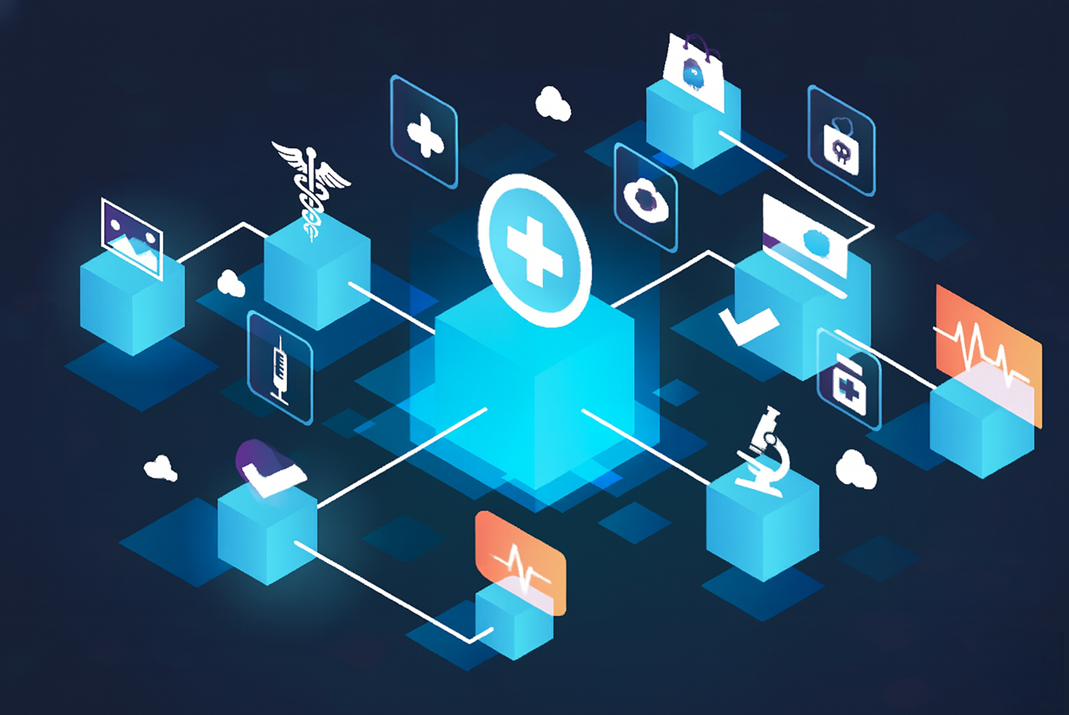
Secure Digital Chain
The Intelligence of AI: Unlocking Insights
While blockchain provides the secure infrastructure, Artificial Intelligence brings the analytical power. AI algorithms can process vast amounts of data stored on the blockchain, identifying patterns, predicting outcomes, and offering personalized insights that would be impossible for humans to discern.
Here’s how AI can revolutionize health records when combined with blockchain:
- Predictive Analytics: AI can analyze a patient’s historical data, genetic information, and even real-world environmental factors to predict the likelihood of developing certain diseases, enabling proactive interventions.
- Personalized Treatment Plans: By understanding individual patient responses to various treatments, AI can help doctors tailor medication, therapies, and lifestyle recommendations for optimal outcomes.
- Fraud Detection: AI algorithms can monitor blockchain transactions for suspicious activities, identifying potential fraud or unauthorized access to sensitive medical data in real-time.
- Drug Discovery and Development: Researchers can leverage AI to analyze anonymized patient data from the blockchain to accelerate drug discovery, identify new therapeutic targets, and conduct more efficient clinical trials.
- Operational Efficiency: AI can automate administrative tasks, streamline billing processes, and optimize resource allocation within healthcare facilities, freeing up human staff to focus on patient care.
Synergistic Power: AI + Blockchain in Action
The true potential lies in the seamless integration of AI and blockchain. Blockchain provides the secure, immutable, and transparent foundation for health data, while AI transforms that data into actionable insights.
Imagine a scenario where a patient’s smart wearable device continuously monitors their vital signs. This data, securely recorded on a blockchain, could be analyzed by an AI system. If the AI detects a significant anomaly, it could immediately alert both the patient and their physician, potentially preventing a medical emergency. The physician could then access the patient’s full, verified medical history on the blockchain, quickly formulating an informed treatment plan.
Furthermore, AI can facilitate interoperability between different blockchain networks, allowing for the secure and authorized exchange of health information across various healthcare organizations and even international borders. This paves the way for truly global and interconnected healthcare.

Interconnected Healthcare Ecosystem
Challenges and the Road Ahead
While the promise is immense, the widespread adoption of AI and blockchain in healthcare faces challenges. These include regulatory hurdles, the need for standardized protocols, the significant investment required for implementation, and the ethical considerations surrounding data privacy and algorithmic bias.
However, the potential benefits — increased security, enhanced transparency, improved patient outcomes, and greater operational efficiency — far outweigh these obstacles. As pilot programs and successful implementations emerge, the healthcare industry is gradually recognizing the transformative power of this technological convergence.
Conclusion
The fusion of AI and Blockchain offers a compelling vision for the future of health records: a system that is not only secure and transparent but also intelligent and deeply personalized. By empowering patients, improving data integrity, and unlocking unprecedented insights, these technologies are poised to revolutionize how we manage health information, ultimately leading to a healthier and more connected world.
References:
- Accenture: “Blockchain in Healthcare” — A comprehensive overview of blockchain’s potential in healthcare. (Search “Accenture Blockchain in Healthcare” for their latest reports)
- IBM: “AI in Healthcare” — IBM’s insights into how AI is transforming various aspects of the healthcare industry. (Search “IBM AI in Healthcare” for their latest articles)
- Deloitte: “Health Care and Life Sciences Predictions” — Deloitte often publishes predictions that touch upon emerging technologies like AI and blockchain in healthcare. (Search “Deloitte Healthcare Predictions AI Blockchain”)
- Medical Xpress / Nature / The Lancet Digital Health: Reputable scientific publications frequently feature research and articles on the application of AI and blockchain in medicine. (Conduct a search on their respective websites for relevant studies)
More Resources
Visit health.ai for more on AI in healthcare. Read more insights from the founder on Michael Greenhalgh’s blog
메타데이터
- post_id
- 415bfc7b48c9
- slug
- ai-blockchain-the-future-of-secure-transparent-health-records-415bfc7b48c9
- url
- https://medium.com/@healthai_official/ai-blockchain-the-future-of-secure-transparent-health-records-415bfc7b48c9
- canonical_url
- https://medium.com/@healthai_official/ai-blockchain-the-future-of-secure-transparent-health-records-415bfc7b48c9
- author_url
- https://medium.com/@healthai_official
- status
- ok
- fetched_at
- 2026-07-21 22:45:11