Cicero: The Father of The Just War Theory, Goal of Peace With Justice
“No war is just, unless it is entered upon after an official demand for satisfaction has been submitted or warning has been given and a…
Cicero: The Father of The Just War Theory, Goal of Peace With Justice
“No war is just, unless it is entered upon after an official demand for satisfaction has been submitted or warning has been given and a formal declaration made.” — Cicero
“To be ignorant of what occurred before you were born is to remain always a child.” — Cicero
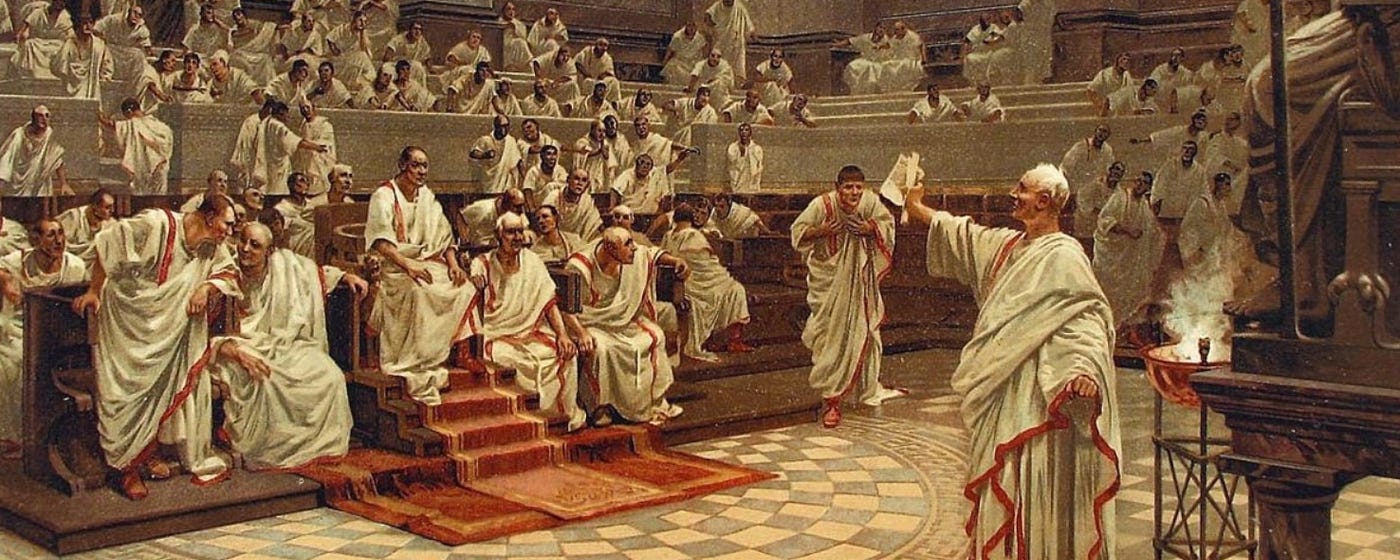
Cicero (Marcus Tullius Cicero, 106–43 BCE) is widely regarded as a foundational figure, often called the “father” or a primary originator, of just war theory in the Western philosophical, religious, and legal tradition.
His writings provided the first systematic, coherent account of when armed conflict is morally permissible, blending Stoic ethics, Roman legal/religious customs (especially the ius fetiale, or fetial law governing formal declarations of war), and practical responses to Roman imperialism and civil strife (notably Julius Caesar’s wars).
Later philosophers, especially St. Augustine (who directly quoted and adapted Cicero’s ideas in City of God), built upon his framework, transmitting it into Christian Just War doctrine and influencing figures like Aquinas, Grotius, and modern theorists.
Cicero’s key discussions appear in De Officiis (On Duties, Book 1.34–40, written 44 BCE) and fragments from De Re Publica (On the Republic, Book 3, via Laelius’ speech defending justice in war). Scholars note parallels to Michael Walzer’s modern just war philosophy, including critiques of “realism” (the view that morality has no place in international affairs) and the use of legalistic criteria.
While Cicero drew organizational structure from the Stoic Panaetius’ (lost) On Duties, his treatment is not merely derivative: it innovates by critiquing contemporary Roman practices, revising fetial procedures for practicality, and applying philosophy to imperial contexts.
Cicero’s Philosophical Thinking on War
Cicero’s views are rooted in natural law, Stoic cosmopolitanism, and the virtue of iustitia (justice). He sees humans as rational beings whose natural state favors peace and discourse; war is an unnatural rupture that must serve justice and the common good, never mere self-interest or glory alone.
Key principles (distinguishing ius ad bellum, justice of going to war, and ius in bello, justice in conducting war):
- War as last resort (preference for reason over force): Disputes should be settled by discussion (disceptatio), the proper human way; force (vis) is for beasts and only used when negotiation fails. “There are two ways of settling a dispute: first, by discussion; second, by physical force; and since the former is characteristic of man, the latter of the brute, we must resort to force only in case we may not avail ourselves of discussion.” (De Officiis 1.34).
- Just cause and right intention (iusta causa and recta intentio): The only justification for war is “that we may live in peace unharmed” (ut in pace sine iniuria vivatur). Wars are permissible for self-defense/safety (salus), defense of faith/honor (fides, including protecting allies or redressing wrongs), or justified vengeance/punishment of prior aggression. Unprovoked wars for expansion, personal glory, or domination are unjust. “No war is undertaken by a good state except on behalf of good faith or for safety.” (From De Re Publica, quoted by Augustine). Victory must aim at a secure, guile-free peace; wars for supremacy should be less bitter than those redressing wrongs.
- Legitimate authority and formal procedures (public declaration): War must be declared by the state (not private individuals) and follow the sacred fetial law: a formal demand for reparation/satisfaction (rerum repetitio), warning (denuntiatio), and public declaration (indictio). “No war is just, unless it is entered upon after an official demand for satisfaction has been submitted or warning has been given and a formal declaration made.” (De Officiis 1.36). Cicero revises strict fetial rituals somewhat for practicality while upholding their spirit of non-aggression.
- Just conduct in war (ius in bello) and post-war mercy: Even in a just war, observe humanity: spare those who surrender or lay down arms (even after a siege begins), show clemency to non-barbarous enemies, avoid treachery, and treat the defeated fairly. “When the victory is won, we should spare those who have not been blood-thirsty and barbarous in their warfare… Not only must we show consideration for those whom we have conquered… but we must also ensure protection to those who lay down their arms…” (De Officiis 1.35). Conquered peoples may even be granted citizenship if it serves justice and lasting peace (as Rome sometimes did). Empire itself can be just if it benefits the subjects (benevolent rule over those unfit for independence).
Cicero’s framework emphasizes proportionality, good faith (fides) even toward enemies, and the ultimate goal of peace with justice. It critiques both unchecked Roman expansionism and “realist” amoralism, insisting morality applies universally in public affairs.
Though some modern commentators note tensions (e.g., his allowance for wars of glory/honor alongside fetial restraint, or the competitive Roman honor code), Cicero himself saw coherence in a system where justice, honor, and the common good align under natural law.
In sum, Cicero did not invent the idea of “just war” ex nihilo (earlier Greeks like Plato and Aristotle touched on related themes), but he was the first to articulate a detailed, philosophically grounded theory with clear criteria that shaped the entire subsequent tradition.
American Essay. Published April 14, 2026. ©All Rights Reserved
메타데이터
- post_id
- 415edbfd455f
- slug
- cicero-the-father-of-the-just-war-theory-goal-of-peace-with-justice-415edbfd455f
- url
- https://medium.com/@American.Essays/cicero-the-father-of-the-just-war-theory-goal-of-peace-with-justice-415edbfd455f
- canonical_url
- https://medium.com/@American.Essays/cicero-the-father-of-the-just-war-theory-goal-of-peace-with-justice-415edbfd455f
- author_url
- https://medium.com/@American.Essays
- status
- ok
- fetched_at
- 2026-07-23 23:41:22