What Is Copart? Inside the World’s Largest Salvage Car Auction Platform
For millions of people around the world, buying a car still starts the same way: browsing dealership websites, checking classified…
What Is Copart? Inside the World’s Largest Salvage Car Auction Platform
For millions of people around the world, buying a car still starts the same way: browsing dealership websites, checking classified listings, comparing prices and hoping to find a good deal before someone else does.
But behind the traditional used car market exists another world entirely — one most everyday buyers never see.
A world of insurance write-offs, flood-damaged vehicles, repossessions, crashed luxury cars, stolen SUVs, burned EVs and repairable salvage vehicles worth billions of dollars every year.
At the center of that ecosystem is Copart — one of the largest online vehicle auction platforms in the world.
For some buyers, Copart is an opportunity to purchase vehicles below market value. For exporters, it’s a global inventory source. For rebuilders, it’s a business model. And for inexperienced buyers, it can quickly become an expensive lesson.
So what exactly is Copart, how does it work, and why do so many vehicles end up there in the first place?
The Hidden Side of the Automotive Market
Most people assume used cars come from:
- dealerships,
- trade-ins,
- lease returns,
- or private owners.
But a massive percentage of vehicles actually pass through insurance auctions before reappearing on the market.
Many eventually return to public roads with:
- rebuilt titles,
- repaired bodywork,
- replaced airbags,
- hidden structural damage,
- or histories most buyers never fully investigate.
This is where platforms like Copart play a major role.
What Is Copart?
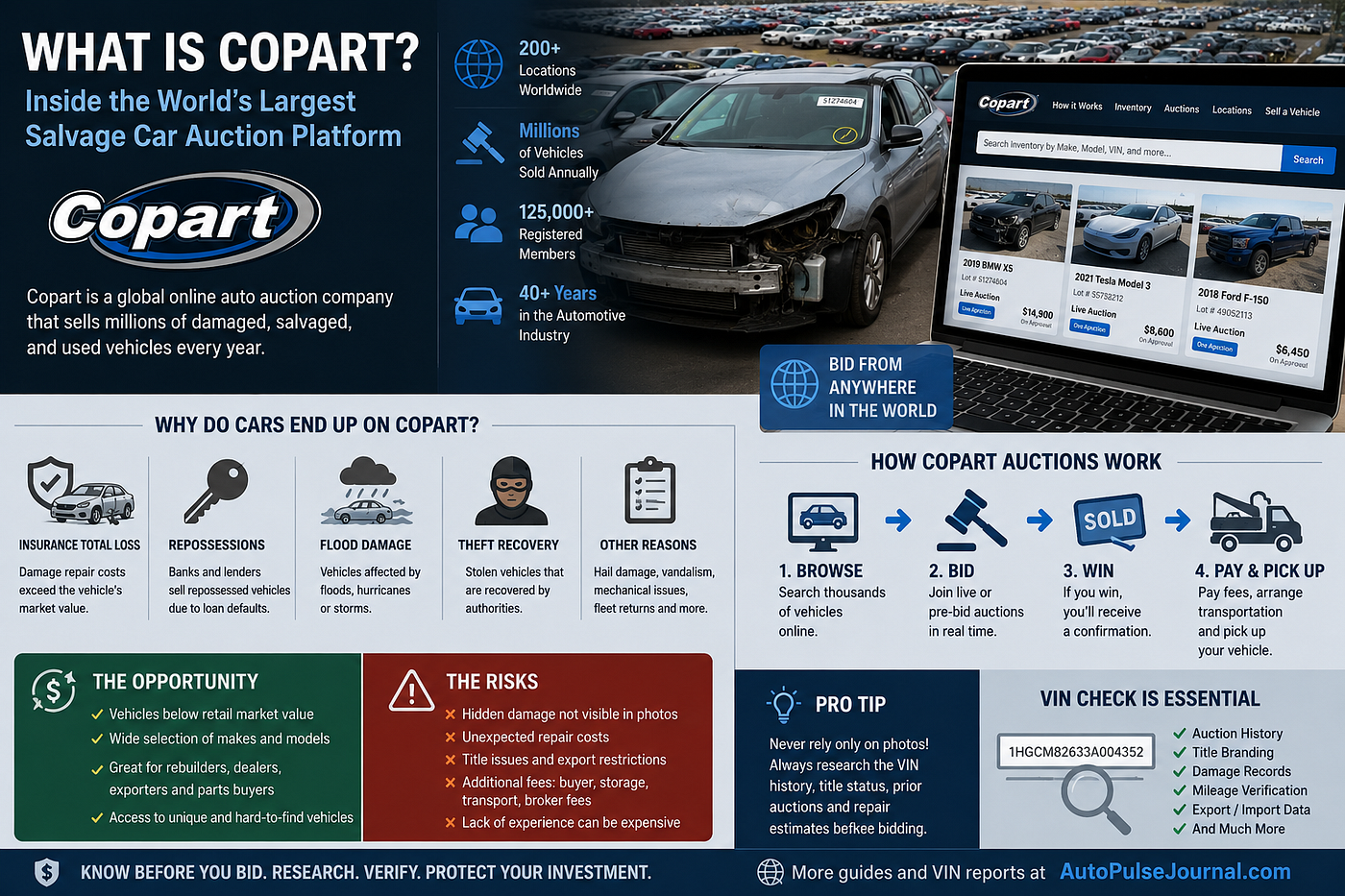
Copart is a global online auto auction company specializing primarily in salvage and insurance vehicles.
Founded in 1982, the company has grown into one of the largest vehicle remarketing platforms in the automotive industry.
Today Copart operates:
- hundreds of auction yards,
- massive storage facilities,
- and online bidding systems across multiple countries.
Its customers include:
- insurance companies,
- banks,
- dealerships,
- rental fleets,
- government agencies,
- corporations,
- dismantlers,
- exporters,
- and private buyers.
Every year, millions of vehicles are listed on the platform.
Some are lightly damaged. Others are completely destroyed.
And occasionally, buyers find vehicles with surprisingly minor issues sold at huge discounts compared to retail prices.
Why Insurance Companies Use Copart
Insurance companies don’t want to repair every damaged car.
At a certain point, repairs become economically impractical.
Modern vehicles are expensive to fix because they contain:
- sensors,
- cameras,
- radar systems,
- expensive LED lighting,
- airbags,
- advanced electronics,
- and increasingly complex structural components.
A relatively small front-end collision can now generate repair estimates exceeding $15,000–$20,000.
Sometimes the labor cost alone makes repairs unprofitable.
When repair costs exceed a certain percentage of a vehicle’s value, insurers often declare it a total loss.
Instead of repairing the vehicle, they:
- pay the owner,
- take ownership of the damaged car,
- and send it to auction through companies like Copart.
Not Every Copart Vehicle Is “Destroyed”
One of the biggest misconceptions about Copart is that every vehicle there is beyond repair.
That’s far from reality.
Some vehicles have:
- cosmetic damage,
- theft recovery history,
- hail damage,
- vandalism,
- repossession status,
- or mechanical issues only.
Others may have been declared total losses simply because repair costs exceeded insurance thresholds.
In some cases:
- airbags never deployed,
- the engine still runs,
- and the vehicle drives normally.
This is why experienced buyers constantly monitor auction inventory looking for undervalued opportunities.
The Rise of Flood-Damaged Vehicles
Flood cars have become one of the biggest concerns in salvage auctions.
After major hurricanes and storms in the United States, thousands of vehicles suddenly enter the market.
At first glance, some flood vehicles look completely normal.
The paint shines. The interior appears clean. The engine starts.
But water damage is often unpredictable.
Months later owners may experience:
- electrical failures,
- sensor malfunctions,
- corrosion,
- mold,
- transmission issues,
- or complete ECU failures.
Because modern vehicles rely heavily on electronics, even shallow water exposure can create long-term problems.
Many experienced rebuilders refuse to buy flood cars entirely.
The Global Export Business Behind Copart
Copart is not just an American platform anymore.
Vehicles purchased at U.S. salvage auctions are exported worldwide every day.
Large numbers of cars are shipped to:
- Eastern Europe,
- the Middle East,
- Africa,
- Central Asia,
- Latin America,
- and the Caucasus region.
In many countries, rebuilding salvage vehicles has become an entire industry.
Some buyers specifically search for:
- lightly damaged SUVs,
- repairable luxury vehicles,
- hybrid cars,
- EVs,
- or pickup trucks.
After repairs, these vehicles may re-enter local markets at prices far above their auction purchase cost.
This international demand is one reason salvage auctions have become increasingly competitive.
How the Auction Process Actually Works
Copart auctions are fully online.
Buyers:
- browse inventory,
- review photos,
- analyze damage,
- inspect VIN history,
- and place bids remotely.
The process appears simple:
- register,
- place bids,
- win the car,
- arrange transportation.
But reality is more complicated.
Many first-time buyers underestimate:
- auction fees,
- storage costs,
- transportation expenses,
- broker commissions,
- export paperwork,
- repair costs,
- and title complications.
A vehicle that “sold for $3,500” may actually cost thousands more before repairs even begin.
Why VIN Checks Matter More Than Ever
The salvage market today is far more data-driven than it was a decade ago.
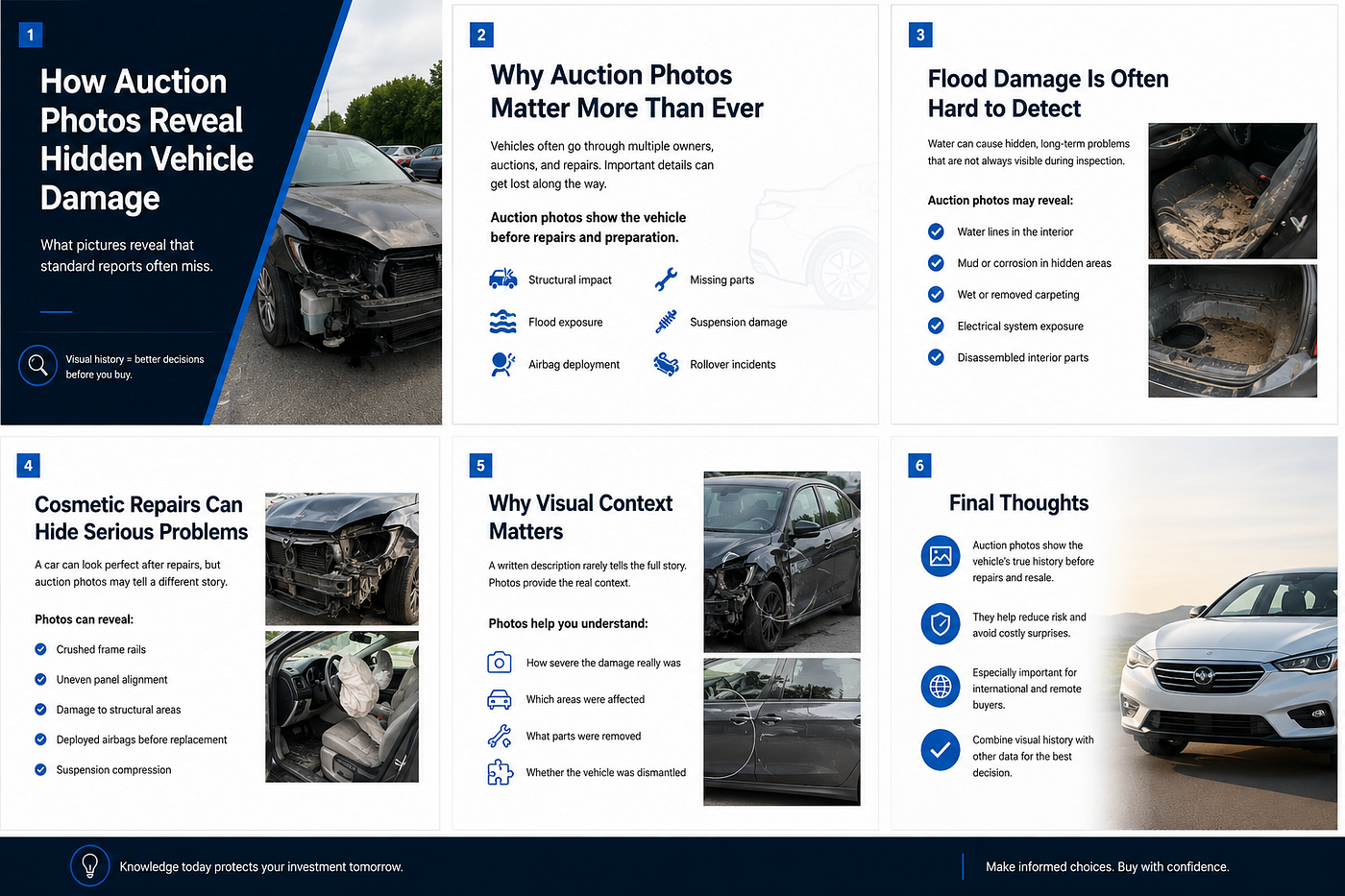
Experienced buyers rarely rely only on auction photos.
Instead, they analyze:
- VIN reports,
- previous auction history,
- historical listings,
- title branding,
- ownership records,
- mileage inconsistencies,
- export/import activity,
- and archived damage photos.
A car listed as “minor dent/scratches” may previously have appeared at another auction with severe collision damage.
Some vehicles circulate through multiple auctions before finally being repaired and resold.
This is one reason basic VIN checks are no longer enough for serious buyers.
Common Risks Buyers Still Ignore
Even experienced auction buyers sometimes overlook critical problems.
Some of the biggest risks include:
Hidden Structural Damage
Poor repairs can compromise safety even if the exterior looks acceptable.
Airbag Fraud
In some rebuilt vehicles, airbags are missing or replaced improperly.
Odometer Rollback
Mileage discrepancies still appear regularly in secondary markets.
Title Washing
Some vehicles move between states to reduce the visibility of salvage history.
Fake Dealer Listings
Auction vehicles are often resold online with minimal disclosure about prior damage.
Why Copart Continues to Grow
Despite the risks, Copart’s popularity continues increasing worldwide.
Why?
Because the economics make sense for many buyers.
Dealerships, rebuilders and exporters can still profit from:
- repairable inventory,
- wholesale pricing,
- parts harvesting,
- and global resale demand.
At the same time, rising used car prices have pushed more buyers toward salvage auctions searching for affordable alternatives.
Final Thoughts
Copart has fundamentally changed the global used car market.
What once happened mostly between insurance companies and local salvage yards now operates through a massive digital marketplace accessible from almost anywhere in the world.
For knowledgeable buyers, the platform creates real opportunities.
For inexperienced buyers, it can expose them to hidden damage, unexpected costs and expensive mistakes.
The most important lesson is simple:
Auction photos never tell the full story.
Before purchasing any salvage or auction vehicle, buyers should research:
- VIN history,
- title branding,
- prior auctions,
- repair estimates,
- and ownership records as carefully as possible.
Because in today’s automotive market, information matters just as much as the vehicle itself.
메타데이터
- post_id
- 41634bb08da4
- slug
- what-is-copart-inside-the-worlds-largest-salvage-car-auction-platform-41634bb08da4
- url
- https://medium.com/@vindatainsights/what-is-copart-inside-the-worlds-largest-salvage-car-auction-platform-41634bb08da4
- canonical_url
- https://medium.com/@vindatainsights/what-is-copart-inside-the-worlds-largest-salvage-car-auction-platform-41634bb08da4
- author_url
- https://medium.com/@vindatainsights
- status
- ok
- fetched_at
- 2026-07-10 15:36:45