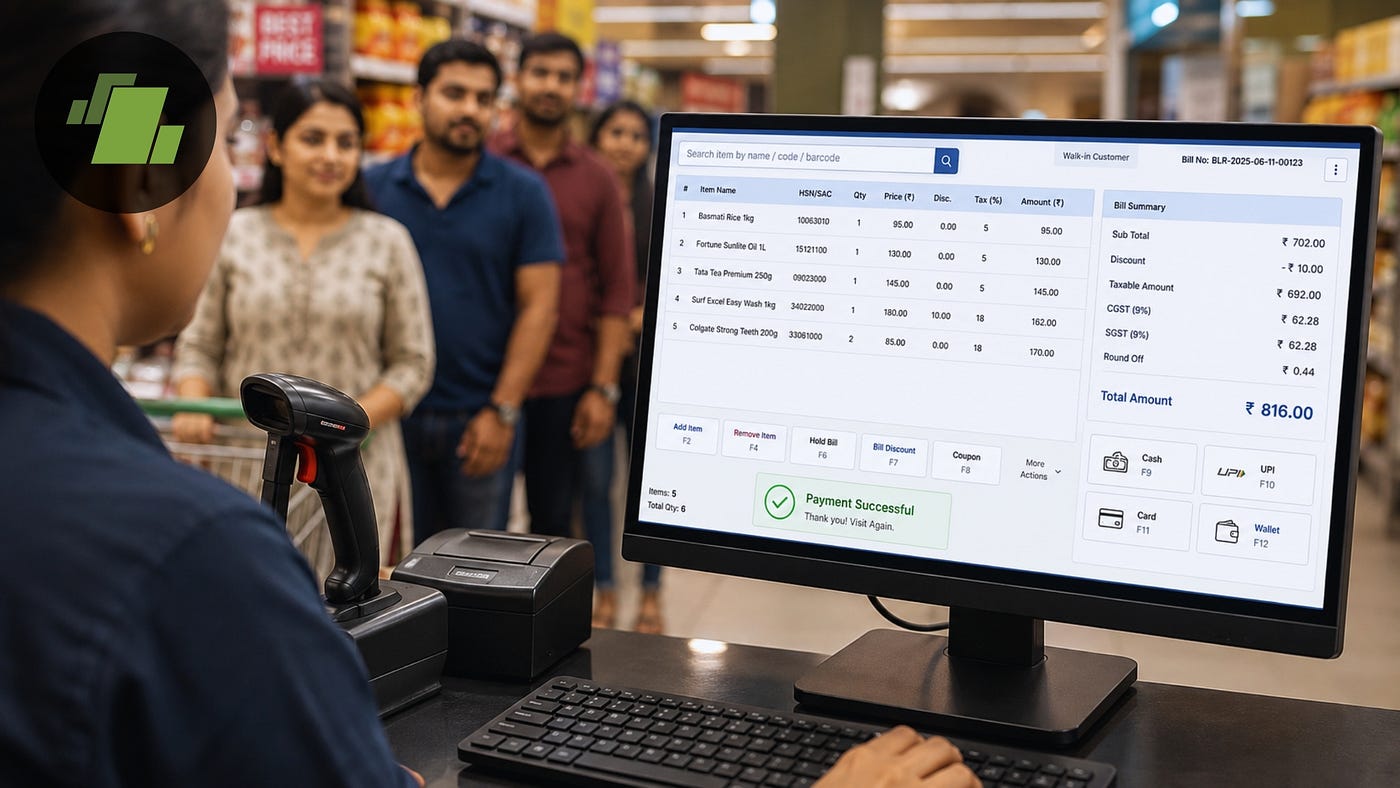
How LOGIC ERP Billing Software Helps Manage Inventory Along with Sales?
LOGIC ERP Billing Software connects sales and inventory in real time, helping businesses track stock, reduce errors, prevent stockouts, and…
How LOGIC ERP Billing Software Helps Manage Inventory Along with Sales?
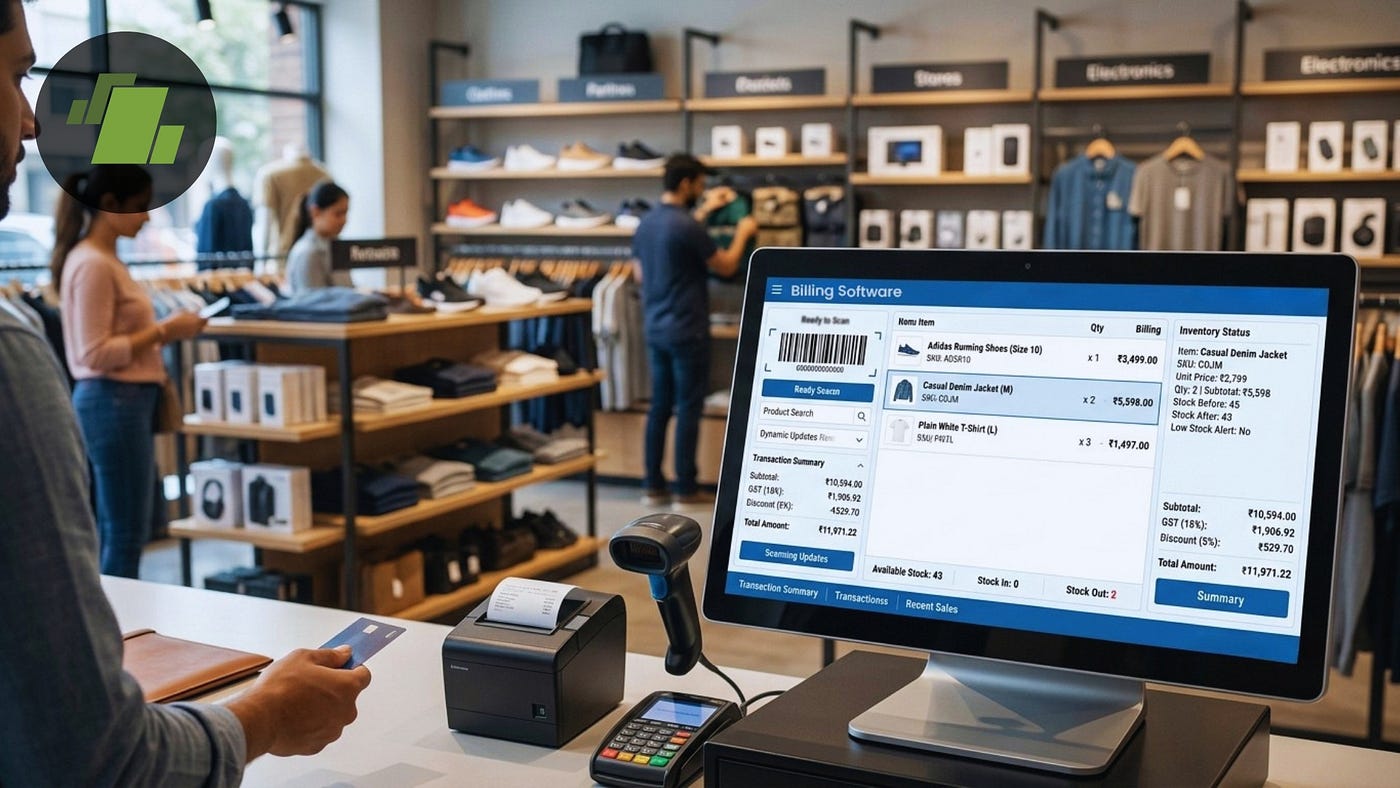
Every Sale Updates Your Stock — That’s the LOGIC ERP Advantage!
LOGIC ERP Billing Software connects sales and inventory in real time, helping businesses track stock, reduce errors, prevent stockouts, and make smarter purchasing decisions through integrated billing and inventory management.
Key Takeaways
- Connect sales and stock seamlessly with LOGIC ERP Billing Software for better inventory visibility and control.
- Track product movement and stock levels efficiently using Inventory Management Software for smarter replenishment.
- Reduce billing and stock discrepancies with Inventory Billing Software through integrated transaction updates.
- Streamline retail operations with Retail Management Software by connecting sales, inventory, purchasing, and reporting.
- Improve business efficiency with ERP Billing Software through centralized data, automation, and real-time insights.
Introduction
For modern businesses, billing and inventory are closely connected. Every sale affects stock levels, product availability, purchasing requirements, revenue, and business reporting. When sales and inventory are managed through separate systems, businesses may face stock discrepancies, delayed updates, duplicate data entry, overstocking, stockouts, and difficulty understanding actual product performance.
LOGIC ERP Billing Software brings billing, sales, inventory, purchasing, accounting, reporting, and other business operations together on one connected platform. With capabilities associated with Inventory Management Software, Inventory Billing Software, Retail Billing Software, and ERP Billing Software, businesses can update stock as transactions take place and maintain better visibility into inventory.
This connected approach allows businesses to understand not only what they are selling but also how each sale affects available stock. From small retailers to multi-location businesses, integrated billing and inventory management can improve operational efficiency, reduce errors, support better purchasing decisions, and provide a clearer picture of business performance.
[embed]
Watch this video to know more about LOGIC ERP Retail Billing Software for Retail Stores!
What Is LOGIC ERP Billing Software?
LOGIC ERP Billing Software is an integrated business management solution that connects billing and sales activities with inventory and other business functions.
Unlike a basic billing application that primarily generates invoices, an ERP-based billing system can connect each transaction with stock, purchasing, accounting, customer information, and reporting.
When a product is sold, the transaction can automatically contribute to inventory records. This means businesses can view sales activity and stock movement within the same system.
Depending on the Configuration and Modules Used, LOGIC ERP Billing Software can Support:
- Sales billing
- Inventory management
- Product management
- Barcode billing
- Purchase management
- Supplier management
- Customer management
- Pricing and discounts
- GST billing
- Accounting
- Sales reporting
- Stock reporting
- Multi-store management
- Business analytics
- User permissions
- Cloud-based operations
This integration helps businesses move from isolated billing and stock records toward a connected business-management environment.
Why Billing and Inventory Management Need to Work Together?
A sale is not just a financial transaction. It also changes the quantity of products available in the business.
- For example, if a store has 100 units of a product and sells 10 units, the available stock should reflect 90 units after the transaction.
- If sales and inventory are maintained separately, employees may have to update stock records independently. This can create delays and inconsistencies.
An Integrated Inventory Management Software System can Connect the Two Activities:
- Sale → Billing → Inventory Update → Sales Record → Reporting
This connection provides businesses with a more consistent view of their operations.
Key Benefits Include:
- Faster stock updates
- Better inventory visibility
- Reduced duplicate data entry
- Improved sales tracking
- Better purchasing decisions
- More accurate stock reports
- Reduced inventory discrepancies
- Improved customer service
When inventory information is connected with sales, businesses can make decisions using current transaction data rather than relying solely on older records.
How LOGIC ERP Billing Software Updates Inventory With Every Sale?
One of the major benefits of integrated billing is the connection between sales transactions and inventory.
A Typical Transaction can Work as Follows:
Step 1: Product Selection
The salesperson selects a product through product search, SKU selection, or barcode scanning.
Step 2: Product Information Appears
The system can display relevant information such as:
- Product name
- SKU
- Selling price
- Available quantity
- Applicable tax
- Discount
- Product category
Step 3: Sale Is Processed
The product is added to the customer’s bill and the transaction is completed.
Step 4: Stock Quantity Is Updated
The quantity sold is deducted from the available inventory according to the system’s configured workflow.
Step 5: Sales Information Is Recorded
The transaction becomes part of the sales history.
Step 6: Reports Are Updated
Sales and inventory reports can reflect the transaction, helping management monitor product performance.
This connected process reduces the gap between what has been sold and what the system shows as available stock.
Role of LOGIC ERP Inventory Management Software in Sales Operations
Inventory Management Software helps businesses monitor products from purchase through sale.
Inventory Information can Include:
- Opening stock
- Purchased quantity
- Sold quantity
- Returned quantity
- Available quantity
- Damaged quantity
- Transferred quantity
- Stock adjustments
- Closing stock
When billing is connected with inventory, each sale can contribute to the movement history of the relevant product.
- For example, a retailer may have 500 units of a particular product. After selling 75 units, the system can reflect the reduction in stock according to the transaction.
- This provides greater visibility into how products are moving and can help businesses determine when replenishment may be required.
How LOGIC ERP Inventory Billing Software Connects Sales and Stock?
Inventory Billing Software combines billing functions with stock-management capabilities. Instead of treating billing and inventory as two separate activities, the system connects them.
This can Help Businesses Monitor:
- What products were sold
- How many units were sold
- When products were sold
- Which store made the sale
- Current stock levels
- Product movement
- Sales value
- Purchase requirements
For example, if a retailer notices that a particular product is selling significantly faster than usual, management can review the current inventory level and determine whether another purchase order should be placed.
This connection can be especially valuable for businesses with large product ranges.
How LOGIC ERP Retail Billing Software Helps Manage Inventory?
Retail Billing Software has evolved beyond simple invoice generation. Modern retail systems can connect billing with product information, stock, purchasing, customers, and reporting.
When a retail transaction is processed, the software can update sales information and inventory according to the configured workflow.
This Allows Retailers to Monitor:
- Product-wise sales
- Category-wise sales
- Current stock
- Low-stock products
- Fast-moving products
- Slow-moving products
- Purchase requirements
- Sales trends
For retailers selling hundreds or thousands of products, this information can make day-to-day inventory management more organized.
Barcode Billing and Inventory Accuracy by LOGIC ERP Billing Software
Barcode scanning can simplify product identification during billing. Instead of entering product information repeatedly, staff can scan a product barcode and retrieve its corresponding record.
A Barcode-Enabled Billing Process can Help Reduce:
- Product selection errors
- Typing effort
- Billing time
- Duplicate product entries
- Incorrect product identification
Once the transaction is completed, the related stock information can be updated according to the system’s configuration.
For businesses with high transaction volumes, barcode billing can make checkout faster while also supporting more accurate inventory records.
Real-Time Inventory Visibility by LOGIC ERP Inventory Management Software
One of the major advantages of connected billing and inventory systems is improved visibility into current stock. When sales transactions are reflected in inventory records, management can get a clearer picture of product availability.
This can Help Answer Questions Such as:
- How much stock is available?
- Which products are selling quickly?
- Which products are reaching low-stock levels?
- Which products have excess inventory?
- Which products need replenishment?
- Which locations have available stock?
Real-time or near-real-time information depends on the system configuration and operational setup, but connected workflows can significantly reduce the delay between a sale and its reflection in inventory records.
Preventing Stockouts Through Integrated LOGIC ERP Stock Management Software
A stockout occurs when a customer wants a product that is unavailable. Frequent stockouts can affect sales and customer satisfaction. When billing and inventory are connected, businesses can monitor sales velocity and available quantities more effectively.
For example, suppose a store sells 50 units of a product every week. If the current stock falls significantly below the usual requirement, the purchasing team can review the situation and plan replenishment.
Businesses can Also Monitor:
- Minimum stock levels
- Reorder levels
- Sales trends
- Supplier lead times
- Purchase quantities
- Seasonal demand
This can help businesses maintain better product availability.
Reducing Overstock With Better Sales Visibility by LOGIC ERP Stock Management Software
Inventory problems do not only occur when stock is too low. Excess inventory can also create financial and operational challenges.
Products that remain unsold for long periods can occupy storage and shelf space while tying up business funds. By connecting sales with inventory, businesses can identify products that are moving slowly.
Management can Review:
- Sales frequency
- Current stock
- Stock age
- Purchase quantity
- Product margins
- Historical sales
- Promotional activity
This information can support decisions around purchasing quantities, promotions, product assortment, and stock allocation.
How LOGIC ERP Inventory Software Helps Track Fast-Moving Products?
Fast-moving products are items that generate frequent sales and require regular replenishment.
Examples May Include:
- Grocery staples
- Popular beverages
- Frequently purchased personal-care items
- Fast-selling fashion products
- Common electronic accessories
- High-demand household products
LOGIC ERP Billing Software can connect sales activity with inventory information so businesses can review which products are generating higher sales volumes.
This can Help Retailers:
- Monitor high-demand products
- Review current stock
- Plan replenishment
- Evaluate supplier requirements
- Reduce stockout risk
- Maintain product availability
The definition of a fast-moving product can vary by industry, location, season, and business size, so businesses should evaluate products according to their own sales patterns.
How LOGIC ERP Inventory Software Helps Identify Slow-Moving Products?
Slow-moving products may remain in inventory for longer periods because sales occur less frequently. A connected ERP system can help businesses compare sales activity with available inventory.
For example, a retailer may discover that a product has been stocked for several months but has generated only limited sales.
Management can then Review Possible Reasons, Including:
- Low customer demand
- High selling price
- Poor product visibility
- Strong competition
- Availability of substitutes
- Seasonal demand
- Incorrect purchase quantity
- Limited promotional activity
The business can then consider appropriate action rather than continuing to purchase the same quantity without reviewing its sales performance.
Inventory Control Through Sales Returns with LOGIC ERP Inventory Control Software
Sales returns also affect inventory. When a customer returns an eligible product, the business may need to adjust sales records and stock quantities according to the condition and return policy.
An Integrated System can Help Record:
- Original invoice
- Returned product
- Return quantity
- Return reason
- Refund or adjustment
- Inventory impact
This creates a clearer connection between sales and inventory.
For products that can be returned to sellable stock, the quantity can be handled through the configured return workflow. Products that are damaged or unsuitable for resale can be accounted for separately.
Purchase Planning Based on Sales Data with LOGIC ERP Purchase Order Software
Sales information provides valuable insight into purchasing requirements. A retailer can review historical sales to determine how frequently products are being sold and compare this information with current stock.
For example:
- Average sales → Current inventory → Supplier lead time → Purchase requirement
This approach can help purchasing teams avoid simply ordering the same quantity every time.
Instead, they can consider actual demand and stock conditions.
Purchase Planning can Also Consider:
- Seasonal demand
- Promotions
- Supplier delivery time
- Minimum order quantities
- Product shelf life
- Sales trends
- Store-wise demand
How LOGIC ERP Billing Software Supports Purchasing?
ERP Billing Software can connect sales and inventory information with purchase processes.
When management identifies products that require replenishment, the purchasing team can use sales and stock reports to support ordering decisions.
The Broader ERP Environment can Connect:
- Sales → Inventory → Purchase Planning → Supplier → Stock Receipt
- When purchased goods are received, inventory quantities can be updated according to the configured receiving process.
This creates a continuous flow of information from procurement to sales.
Multi-Store Inventory Management with LOGIC ERP Billing Software
Businesses with multiple stores face additional inventory challenges.
Each Location May Have Different:
- Sales volumes
- Customer preferences
- Product demand
- Stock levels
- Replenishment requirements
- Product assortment
LOGIC ERP Billing Software can support multi-store operations through centralized information and location-wise reporting, depending on the modules and configuration used.
- Management can review store-wise sales and inventory to understand where products are moving faster or slower.
- For example, if one branch has excess stock while another branch has stronger demand, management can review stock-transfer or purchasing options according to business policies.
This can improve the distribution of inventory across locations.
LOGIC ERP Retail Management Software for Connected Business Operations
Retail Management Software can bring together several activities that influence inventory.
These may Include:
- Sales
- Billing
- Inventory
- Purchasing
- Customers
- Suppliers
- Pricing
- Promotions
- Accounting
- Reporting
When these functions are connected, information generated by one department can support another.
For example:
- Sales information can support inventory planning.
- Inventory information can support purchasing.
- Purchase information can support supplier management.
- Product performance can support promotional decisions.
This connected approach can improve visibility throughout the business.
How LOGIC ERP Billing Software Supports Growing Businesses?
Business Billing Software can help organizations manage increasing sales transactions while connecting billing information with wider business activities.
As a Company Grows, it may have:
- More products
- More customers
- More invoices
- More employees
- More suppliers
- More stores
- More transactions
A basic billing application may become difficult to manage as operational requirements increase.
An ERP-based system can provide a broader environment in which billing and inventory are connected with other business processes. This can help businesses maintain consistent records while expanding operations.
Pricing and Discount Management with LOGIC ERP Billing Software with CRM
Pricing and discounts can directly affect both sales and inventory. For example, a promotional discount may increase sales volume for a product. This can affect inventory levels and purchasing requirements.
A connected ERP system can help businesses manage pricing information and track the resulting sales activity.
Businesses can Review:
- Product prices
- Customer-specific pricing
- Discounts
- Promotional offers
- Sales quantities
- Sales values
- Margin information
This helps management understand whether a promotion is improving product movement and whether inventory levels need adjustment.
GST Billing and Inventory Management with LOGIC ERP Billing Software
For businesses operating in India, GST-related billing and reporting form an important part of commercial operations.
- An integrated billing and inventory system can connect product information, sales transactions, applicable tax details, and accounting records.
- This can reduce repeated entry of transaction information across separate systems.
- Businesses should configure tax settings according to their applicable GST requirements and maintain accurate product and transaction records.
The combination of billing, inventory, and accounting can provide a more organized approach to financial and stock management.
Accounting Integration With Sales and Inventory
Sales transactions affect more than stock. They also contribute to financial records.
When Billing is Connected with Accounting, Businesses can Gain Greater Visibility into:
- Sales revenue
- Taxes
- Discounts
- Receivables
- Payment records
- Returns
- Purchase expenses
- Profitability information
Inventory also has a financial value. Therefore, connecting stock information with sales and accounting can help management understand both the physical and financial aspects of inventory.
This is one reason ERP systems can provide broader value than standalone billing applications.
Reports by LOGIC ERP MIS Software that Help Manage Sales and Inventory
Reporting is a major component of an ERP-based billing environment. Businesses can use different reports to understand operational performance.
- Sales Reports: These can show sales by product, category, customer, employee, store, or period.
- Stock Reports: These provide information about available inventory and stock movement.
- Product-Wise Sales Reports: These help identify products generating higher or lower sales.
- Purchase Reports: These provide visibility into procurement activity.
- Low-Stock Reports: These can help identify products approaching configured stock thresholds.
- Stock Valuation Reports: These provide information about the financial value of inventory.
- Profitability Reports: These can help businesses compare sales with costs and margins.
- Store-Wise Reports: These help multi-location businesses compare performance between branches.
The exact reports available depend on the system configuration and modules used.
How Sales Analytics by LOGIC ERP BI Software Improve Inventory Decisions?
Sales analytics can help businesses understand demand patterns rather than simply looking at total revenue.
Management can Compare:
- Daily sales
- Weekly sales
- Monthly sales
- Seasonal sales
- Product-wise sales
- Category-wise sales
- Store-wise sales
For example, a product may have strong monthly sales but experience significant fluctuations throughout the month.
Understanding such patterns can help businesses plan stock more effectively.
Sales analytics can also reveal products with declining demand, emerging high-demand items, and categories that require greater attention.
AI-Powered Features in LOGIC ERP Billing Software
Modern ERP platforms are increasingly incorporating AI and advanced analytics into business processes. Depending on the capabilities available in a LOGIC ERP system.
AI-Powered Features Support:
- Demand forecasting
- Sales trend analysis
- Product recommendations
- Stock-level analysis
- Replenishment planning
- Anomaly detection
- Business insights
- Automated reporting
For businesses handling large numbers of transactions, advanced analytics can help management identify patterns that may be difficult to notice through individual transactions.
AI-generated insights should be considered alongside business knowledge, current market conditions, supplier information, and management judgment.
LOGIC ERP Cloud-Based Billing and Inventory Management
Cloud-based business software can provide greater flexibility in accessing information across locations, subject to the system’s architecture, permissions, connectivity, and security arrangements.
For Businesses Operating Multiple Branches, Centralized Cloud-Based Access can Help Management Review:
- Sales
- Inventory
- Purchases
- Store performance
- Reports
- Product movement
Cloud-based systems can also support businesses with distributed teams and expanding operations.
The exact availability of cloud capabilities depends on the product edition and implementation.
Benefits of Connecting Billing With Inventory
Connecting billing with inventory creates a seamless flow of sales and stock information, helping businesses improve accuracy, visibility, efficiency, and overall inventory control.
Connecting Sales and Inventory Provides Several Operational Advantages Like:
1. Faster Stock Updates: Sales transactions can update inventory through an integrated workflow.
2. Better Inventory Visibility: Businesses can get a clearer view of available stock.
3. Reduced Duplicate Entry: Information does not need to be repeatedly entered into disconnected systems.
4. Better Sales Tracking: Management can review product and category performance more easily.
5. Improved Purchasing: Sales trends can support replenishment planning.
6. Fewer Stock Discrepancies: Connected processes can reduce differences between sales records and inventory records.
7. Better Customer Service: Employees can access product and stock information more efficiently.
8. Improved Reporting: Sales and inventory information can be analyzed together.
9. Better Multi-Store Visibility: Businesses can compare sales and stock across locations.
10. Greater Operational Efficiency: Connected workflows reduce unnecessary steps and provide a more organized approach to business management.
LOGIC ERP Billing Software vs Standalone Billing Software

The right choice depends on the size, industry, transaction volume, and operational requirements of the business.
LOGIC ERP Billing Software for Different Business Types
Integrated billing and inventory management can benefit several types of businesses.
- Retail Stores: Retailers can connect billing, stock, purchasing, and customer transactions.
- Grocery Stores: Grocery businesses can monitor product movement, stock levels, and replenishment.
- Pharmacies: Pharmacies can manage product sales alongside batch, expiry, and stock information through appropriate pharma modules.
- Garment Stores: Apparel businesses can manage product variants, sizes, colors, sales, and stock.
- Electronics Retailers: Electronics stores can monitor products, sales, inventory, and purchasing.
- FMCG Businesses: FMCG retailers and distributors can use sales and inventory information to monitor high-volume product movement.
The exact features available depend on the industry-specific ERP modules implemented.
How LOGIC ERP Billing Software Helps Reduce Inventory Errors?
Inventory errors can occur due to incorrect product entries, missed transactions, duplicate records, returns, stock adjustments, or discrepancies between physical and system quantities.
Connecting billing with inventory can reduce some of these issues by allowing transactions to flow through an integrated process.
Businesses can Further Improve Accuracy Through:
- Barcode scanning
- User permissions
- Stock audits
- Return management
- Purchase verification
- Stock adjustments
- Product master controls
- Regular inventory reconciliation
Technology can improve record consistency, but physical stock verification and appropriate business controls remain important.
Role of User Permissions in Billing and Inventory
Different employees may have different responsibilities.
For Example:
- Cashiers may process sales.
- Store managers may review inventory.
- Purchase staff may create purchase orders.
- Account teams may handle financial records.
- Senior management may access business reports.
User permissions can help businesses control access to specific functions.
This can improve accountability and reduce unauthorized changes to pricing, inventory, transactions, or business records.
How Billing Data Supports Demand Forecasting?
Historical sales information can provide a foundation for estimating future demand. For example, a retailer can review sales patterns from previous months and compare them with current sales.
Demand Analysis can Consider:
- Historical sales
- Seasonal patterns
- Promotional periods
- Price changes
- Product launches
- Store-wise performance
- Customer behavior
Forecasting is not always exact because demand can change due to external factors. However, using available sales information can provide a stronger basis for purchasing decisions than relying only on assumptions.
Inventory Turnover and Sales Performance with LOGIC ERP Software
Inventory turnover indicates how frequently inventory is converted into sales over a period. A higher turnover rate can indicate that products are moving quickly, while a lower rate may point to slower sales or excess inventory.
Businesses can Compare Inventory Turnover Across:
- Products
- Categories
- Stores
- Brands
- Time periods
This can help management identify products that require closer review.
A connected billing and inventory system can provide much of the transaction information needed for such analysis.
Managing Slow-Moving and Non-Moving Stock with LOGIC ERP Software
Slow-moving and non-moving products should not automatically be treated the same way.
A Slow-Moving Product May Still Have:
- Good margins
- Loyal customers
- Seasonal demand
- Strategic importance
A non-moving product may require more immediate review.
Businesses can Examine:
- Stock age
- Sales history
- Margin
- Purchase price
- Current stock
- Customer demand
- Promotional options
Possible actions may include reducing future purchases, changing shelf placement, offering promotions, bundling products, or discontinuing items where appropriate.
How Integrated Billing by LOGIC ERP Billing Software Helps Improve Customer Experience?
Customers expect fast checkout and accurate product information.
An Integrated Billing and Inventory System can Help Employees:
- Find products faster
- Scan barcodes
- Apply configured prices
- Calculate applicable taxes
- Process discounts
- Check stock availability
- Generate invoices
- Process returns according to business rules
When popular products remain available and checkout is efficient, businesses can provide a smoother customer experience.
How to Choose the Best Billing Software With Inventory Management?
When evaluating the Best Billing Software, businesses should look beyond invoice generation.
Important Areas to Evaluate Include:
- Billing Features: Check whether the system supports invoices, returns, discounts, taxes, and payment records.
- Inventory Features: Evaluate stock tracking, product movement, stock adjustments, and inventory reporting.
- Integration: Check whether sales, inventory, purchasing, and accounting work together.
- Scalability: Consider whether the system can support future increases in products, transactions, users, and locations.
- Reporting: Review the availability of sales, inventory, purchase, profitability, and store-wise reports.
- Ease of Use: Employees should be able to understand workflows and complete routine activities efficiently.
- Multi-Store Support: Businesses with multiple locations should evaluate centralized and store-wise management capabilities.
- Technology: Consider cloud capabilities, automation, AI-powered features, data security, and integration options.
- Industry Fit: The software should match the requirements of the business rather than simply offering a generic billing function.
Best Practices for Managing Sales and Inventory Together
Following best practices for managing sales and inventory together helps businesses maintain accurate stock levels, improve sales efficiency, reduce discrepancies, and make smarter purchasing decisions.
Businesses can Improve Results by Following a Structured Process:
- Keep Product Records Updated: Maintain accurate product names, SKUs, prices, tax information, categories, and stock details.
- Use Barcode Scanning Where Suitable: Barcode scanning can improve product identification and reduce typing.
- Review Sales Reports Regularly: Monitor product and category performance.
- Track Stock Levels: Set suitable stock thresholds according to demand and supplier conditions.
- Review Slow-Moving Products: Identify products that remain in stock for extended periods.
- Monitor Fast-Moving Products: Ensure high-demand products receive timely replenishment.
- Reconcile Physical and System Stock: Regular stock checks can help identify discrepancies.
- Review Purchasing Against Sales: Compare purchase quantities with actual product movement.
- Monitor Returns: Review returned products and their impact on inventory.
- Train Employees: Employees should understand the correct process for billing, returns, stock adjustments, and other transactions.
Read Case Study

LOGIC ERP x PUNJAB STORES: Case Study!
Established in 1961, Punjab Stores is a well-known multi-category supermarket retail business in Chandigarh & Punjab, offering a diverse range of FMCG and supermarket products. With strong industry roots & a growing customer base, the store experienced increasing operational complexity across billing, inventory, accounting, and customer engagement as the business expanded.
The lack of a centralized system, billing automation, inventory tracking, GST handling, & customer management created challenges in operational efficiency, compliance, stock accuracy, and overall customer experience. Managing diverse product categories with different tax structures, handling perishable inventory, & maintaining accurate financial records highlighted the need for a scalable FMCG supermarket retail software solution.
Read **LOGIC ERP x Punjab Stores | [FMCG Supermarket Retail Software](https://www.logicerp.com/Industries/Retail/Supermarket-Retail-Software) Implementation Case Study to discover how a unified ERP platform streamlined multi-tax [billing](https://www.logicerp.com/solutions/billing-software), [inventory management](https://www.logicerp.com/modules/inventory-management-software), [accounting](https://www.logicerp.com/modules/accounts-finance-management-software), and [customer engagement](https://www.logicerp.com/modules/crm-loyalty-management-software)**, empowering the business with real-time visibility, improved compliance, faster billing, reduced wastage, and data-driven decision-making for scalable growth.
Conclusion
Billing and inventory are two sides of the same business transaction. Every product sold changes stock, affects sales performance, contributes to revenue, and can influence future purchasing requirements. Managing these activities separately can create information gaps and make it harder for businesses to understand their actual inventory position.
LOGIC ERP Billing Software connects billing with inventory, purchasing, sales, accounting, reporting, and other business functions to provide a more unified operating environment. Through Inventory Management Software, Inventory Billing Software, Retail Billing Software, and ERP Billing Software capabilities, businesses can track product movement, improve stock visibility, support replenishment, reduce excess inventory, and make better decisions.
For businesses looking beyond basic invoice generation, an integrated billing and inventory system can provide a stronger foundation for efficient operations and long-term growth. The result is a connected approach where every sale contributes to a clearer understanding of inventory, business performance, and future requirements.
Call at +91–73411–41176/75 or send us an email at sales@logicerp.com to **book a free demo** today!
Frequently Asked Questions
1. What is LOGIC ERP Billing Software?
LOGIC ERP Billing Software is an integrated billing and business-management solution that can connect sales transactions with inventory, purchasing, accounting, reporting, and other operational functions.
2. How does LOGIC ERP Inventory Software Manage Inventory Along with Sales?
When a sale is processed, the transaction can be connected with inventory records so that sold quantities are reflected in stock information according to the configured workflow.
3. Can LOGIC ERP Stock Management Software Help Businesses Monitor Stock Levels?
Yes. Inventory features can provide information about available stock, product movement, purchases, sales, and other inventory activities.
4. Does LOGIC ERP Billing Software Support Barcode Billing?
Barcode billing by LOGIC ERP Billing Software capabilities can help employees identify products quickly and process transactions more efficiently, depending on the implementation.
5. Can LOGIC ERP Inventory Software Identify Fast-Moving Products?
Sales and inventory reports can help businesses identify products generating higher sales volumes or frequencies during selected periods.
6. Can LOGIC ERP Inventory Software Identify Slow-Moving Products?
Yes. Product-wise sales and inventory reports can help businesses identify products with lower movement.
7. Does LOGIC ERP Retail Billing Software Support Multi-Store Businesses?
LOGIC ERP Billing Software supports centralized and store-wise management for businesses operating multiple locations.
8. Can LOGIC ERP Billing Software Connect Purchasing with Inventory?
Yes. Purchase and inventory processes can be connected so that businesses can monitor procurement activity and resulting stock levels.
9. Does LOGIC ERP Billing Software with MIS Provide Business Reports?
Reporting capabilities can provide information about sales, inventory, purchases, products, stores, customers, and other business activities, depending on the modules enabled.
10. Why use LOGIC ERP Billing Software Instead of Standalone Billing Software?
LOGIC ERP Billing Software can provide a wider operational view by connecting billing with inventory, purchasing, accounting, reporting, and other business processes instead of focusing only on invoice generation.
메타데이터
- post_id
- 419ffdd34f31
- slug
- how-logic-erp-billing-software-helps-manage-inventory-along-with-sales-419ffdd34f31
- url
- https://medium.com/@logicerp/how-logic-erp-billing-software-helps-manage-inventory-along-with-sales-419ffdd34f31
- canonical_url
- https://medium.com/@logicerp/how-logic-erp-billing-software-helps-manage-inventory-along-with-sales-419ffdd34f31
- author_url
- https://medium.com/@logicerp
- status
- ok
- fetched_at
- 2026-08-21 21:57:51