Objects of Legacy: What the Wealthy Preserve for Eternity—and Why
Where inheritance becomes memory.
Objects of Legacy: What the Wealthy Preserve for Eternity—and Why
Where inheritance becomes memory.
The architecture of memory in a disposable world
The curtains are drawn. Not decoratively, but deliberately, the way a person closes a door when they need the world to recede. The city outside continues without acknowledgment. In here, the only light comes from a library lamp, its green shade casting a warm, focused pool across the surface of an old writing slope. Rosewood, brass-cornered, the metal tarnished to the color of old honey. A small key turns in the lock. The lid lifts.
What rises first is the smell. Old paper and dried ink carry a scent that has no modern equivalent, faintly sweet, faintly mineral, the way certain rooms in old houses hold onto the atmosphere of everyone who ever sat in them. Inside, wrapped in silk that has softened past the point of sheen, lie letters. Not a single letter, but many, bundled loosely, their edges gone fragile with age. The handwriting is looping and deliberate, the script of someone who understood that a letter, once sent, was permanent.
These were exchanged between a great-grandmother and a great-grandfather across years that included a war. They are not historically significant. No archive issue has requested them. No institution would catalog them. But the family that holds them knows something that cannot be explained to anyone outside the room: that these pages are the actual foundation of who they are. Not the assets. Not the properties. Not the accounts. These letters.
This is where any serious conversation about legacy and preservation has to begin. Not with what families accumulate, but with what they refuse to let disappear.
The Architecture of Memory
The wealthiest families in the world share a characteristic that has little to do with investment strategy or estate planning. They understand, often instinctively and sometimes over the course of several generations, that identity is fragile. That the forces eroding it are not sudden but gradual, the slow replacement of particular memory with general history, of personal narrative with collective noise. The objects they preserve are not trophies. They are defenses against that erosion.
There is a distinction worth making clearly, because it is the one that separates legacy preservation from wealth preservation. Financial structures protect capital. What serious families also build, sometimes consciously and sometimes through accumulated instinct, are structures that protect identity. The archive of a family is not its portfolio. It is the record of what it believed, how it lived, what it loved, and what it refused to abandon even when abandonment would have been easier.
These two archives are not opposites. But they are not the same thing, and confusing them is a particular modern error.
The Ancestral Portrait
High in the stairwell, or in the corner of a room that nobody uses for anything practical, a portrait hangs. Oil on canvas or a photograph mounted behind glass, formal or informal, the subject composed or caught mid-thought. What matters is not the medium or the quality of the rendering. What matters is the daily presence of a face.
Families who live with ancestral portraits rarely discuss them. They don’t need to. A child grows up knowing that face, that posture, that particular set of the jaw that reappears in their own mirror thirty years later. The portrait is not decorating the wall. It is holding a place in the living memory of the house, keeping a specific person present rather than allowing them to flatten into a name on a document.
The matriarch who navigated the family through ruin. The grandfather whose stubbornness, depending on the year, was either the family’s salvation or its greatest source of tension. These were not icons. They were people. When a portrait is sold to settle a debt or dispersed in an estate division, what leaves is not a painting. It is a specific kind of daily remembering that nothing else can restore.
The Founder’s Library
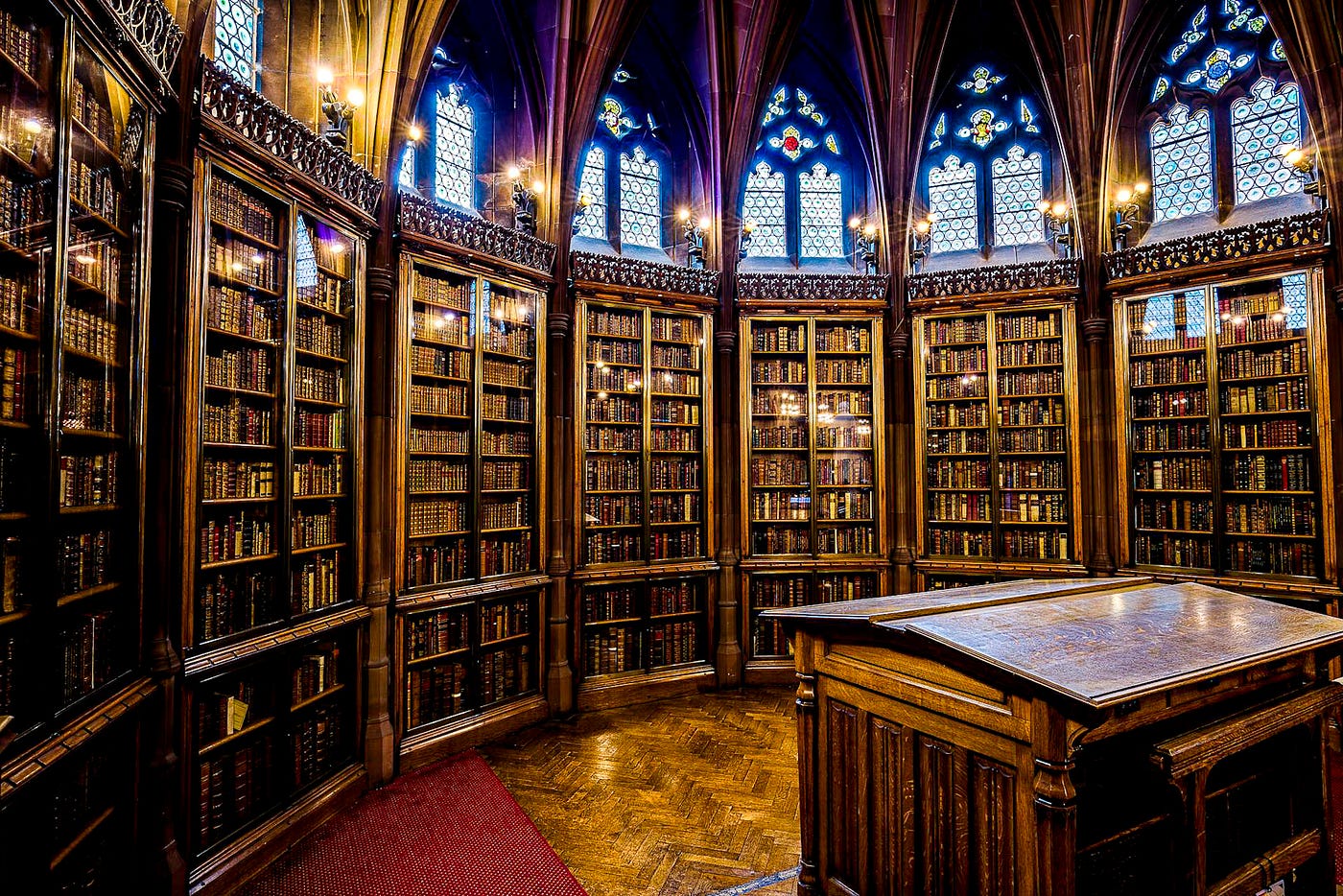
The books a person annotates are among the most intimate objects they leave behind. Not the ones purchased for appearance, but the ones they actually sat with, pen in hand, arguing with the author or agreeing so strongly they had to write it down.
A founder’s library, preserved intact rather than dispersed, is an extraordinary thing. It is not a collection of books. It is a preserved mind. The marginalia alone tells you more about how a person actually thought than any biography written by someone who never met them. A disagreement scrawled in the margin of an economics text. A question mark beside a philosophical claim. A single word underlined so hard the paper nearly tore. These are not annotations. They are a voice.
Families who keep these libraries intact, who resist the impulse to modernize or curate or sell what no longer seems relevant, are maintaining something that money cannot replicate. The knowledge of what someone cared enough to argue with, what they read in the months before they died, what they returned to across an entire life, is the closest thing to conversation that survives death.
The Ceremonial Object
There is a tablecloth in certain families that does not live with the rest of the linen. It comes out for perhaps three or four occasions a year, unfolded with a particular care that the children register before they are old enough to understand it.
They learn nothing from being told. They learn from watching.
The silver goblets that appear only for wedding toasts. The decanter reserved for births. These objects accumulate meaning through repetition until the repetition itself becomes the meaning, until the occasion is made legible by the appearance of the thing kept for serious occasions. When the object passes to the next generation, it carries that entire weight with it. The person who receives it already knows, without instruction, what it is for.
The Inherited Instrument
A piano that has stood in the same room for four generations is not the same object it was when it arrived. It carries the accumulated practice of everyone who sat down at it seriously, the years of scales and mistakes and occasional mastery written into the room itself.
A violin passed from a musician parent to a musician child is one of the more complicated forms of inheritance that exists. The child receives not just an object of great craft but a direct standard of comparison. Every time they play, they are playing the same instrument on which someone they loved produced sound. This can be pressure or conversation, depending on the child, depending on the relationship.
What neither of them would trade is the connection. The physical continuity of the same wood under different hands across different decades is a form of intimacy across time that no recording quite captures. The instrument was present for what came before. It continues to be present now.
The Recipe Book
In a kitchen drawer, or on a shelf where it cannot be confused with anything disposable, sits a book that should have been replaced years ago. The spine holds together by habit. Pages are stained in ways that are not damage but record, evidence of specific meals made in specific years.
The recipes are not exceptional in any culinary sense. They are exceptional because they belong to a particular person’s hand, and that hand belongs to someone no longer present. A typed version of the same recipe produces different food. Not because the ingredients differ but because the approximations, the handful rather than the measured quantity, the resting time the recipe doesn’t specify but which was always given, those live only in the margins and the memory of people who watched closely enough to learn them.
To cook from this book is to maintain a form of knowledge disappearing everywhere outside families disciplined enough to hold onto it. The specific way food was made in a specific household across several generations is cultural information of a kind no institution preserves. It is also something closer to presence than most objects can manage.
The Custodian’s Compact
To receive an object of genuine family legacy is to accept a responsibility that was never explicitly negotiated. Nobody signs anything. The compact is understood, which is part of what makes it binding in the way that matters.
There is a practical dimension: knowing how the object ages, what conditions damage it, what correct care looks like across decades. The custodian who takes this seriously becomes, over time, a particular kind of scholar, one whose expertise is specific to what they hold.
But the more consequential responsibility is narrative. The object without its story is an antique. With its story intact, it functions in the present tense, carrying live meaning rather than inert history. The moment of passing an object on is the moment the story is most at risk.
A brooch fastened for the first time to a daughter’s dress. A watch wound by new hands for the first time. The conversation that accompanies these moments is carrying something across time that cannot travel any other way. If it is not spoken here, it is gone.
What Is Actually Being Preserved
The financial structures that protect generational wealth are sophisticated, carefully maintained, and regularly reviewed. They are designed to survive market conditions, political shifts, and the unpredictability of human behavior across decades.
The structures that protect identity are less formal and, in a certain light, more demanding. They require ongoing intention rather than periodic review. The erosion of memory is gradual and gives no warning. By the time the loss is visible, recovery is rarely possible.
Wealth without memory becomes administration. The management of assets with no animating story, no particular reason beyond accumulation, no record of what the people who built it actually believed or endured or loved. It is entirely possible to be very wealthy and completely unmoored, to have resources that arrived from somewhere no one can quite describe, held by people who cannot say what they are for beyond their own continuation.
What serious families are preserving, behind the objects themselves, is a particular answer to the question of who we are. Not abstractly, but specifically: what we believed, how we endured, what we made, what we refused to give up even when it would have been easier. The objects hold that answer in material form. They keep it present. They make it touchable.
The alternative is not poverty. It is weightlessness.
The lamp is still on. The letters are back in their silk, the lid closed, the small key resting beside the lock. On the mantelpiece, a photograph stands next to a child’s ceramic bowl, uneven and earnest, fired in a school kiln and kept without anyone ever fully explaining why. Outside, the city has grown louder as the afternoon moved toward evening. The curtains hold it off. The room is empty now, and still.
Gallery Luxury World Magazine examines luxury as culture, memory, and structure—beyond trends, visibility, spectacle, and time.
메타데이터
- post_id
- 41a013e293c6
- slug
- objects-of-legacy-what-the-wealthy-preserve-for-eternity-and-why-41a013e293c6
- url
- https://medium.com/@galleryluxuryworld/objects-of-legacy-what-the-wealthy-preserve-for-eternity-and-why-41a013e293c6
- canonical_url
- https://medium.com/@galleryluxuryworld/objects-of-legacy-what-the-wealthy-preserve-for-eternity-and-why-41a013e293c6
- author_url
- https://medium.com/@galleryluxuryworld
- status
- ok
- fetched_at
- 2026-06-09 15:37:30