Resonate: Sharing My Story as a Living Donor
Spring 2025
Resonate: Sharing My Story as a Living Donor
Spring 2025
Project Overview
Inspired by TedX talks and leaning into the lessons learned from Resonate by Nancy Duarte, I produced a 4-minute presentation that shares my story as a living donor.
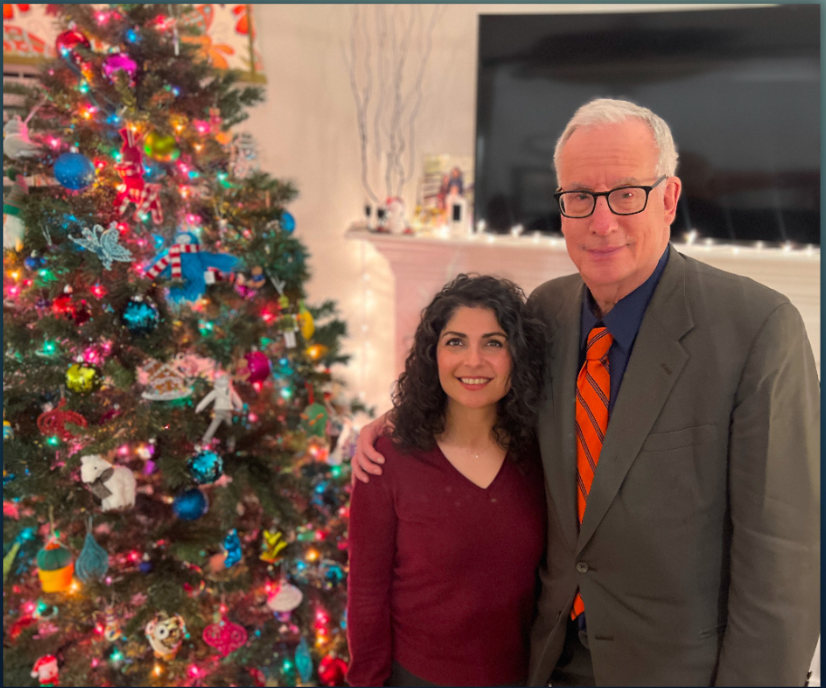
My and my recipient, former CNN colleague Richard Roth.
The Problem
More than 90,000 people in the United States are in need of a kidney transplant, and 13 people die each day waiting for one. Living donors can significantly improve the quality of life and life expectancy of those in need, but finding volunteers willing to donate one of their kidneys is a challenge — often because they don’t think it’s safe.
The Solution
Share more living donor stories, including mine. While that won’t solve for every aspect of the nation’s transplant shortage problem, storytelling is a powerful tool that can inspire and influence. In fact, it was the story of my colleague that sparked my urge to donate. This presentation is a part of my ongoing effort to share our story in hopes of planting that same spark in others.
First Steps
While I was confident in my story, it takes substantial planning to make sure any talk grabs the attention of the audience — and keeps it. My first step here was organizing my thoughts, statistics and narrative through a “Resonate Planning Document.” I focused on a single idea statement: More people should donate kidneys. And I asked myself what excited me about this idea and what I saw as the biggest challenges with this talk.
While I was pumped about sharing my personal story (I like to tell folks it’s “the hardest easy thing I’ve done”), I knew that the audience couldn’t rely on one person’s experience. They needed facts, statistics, reassurance. On the other hand, throw too many numbers out and it’s easy to feel lost or even bored. Balance was key.
Defining the Big Idea
I needed to connect the idea statement back to the audience, to take it out of the distant hypothetical and anchor it as a doable reality. This would serve as the Big Idea moving forward: One kidney can save a life, and you have the power to be that lifesaver.
The thing about Big Ideas is that they can be overwhelming. How could I serve up this one as a manageable concept?
I broke it down into three key ideas, and collected analytical, emotional and visual content (essentially Aristotle’s triangle of logic, credibility and emotion) for each:
- There’s an urgent need for kidney donation.
- Living donation is doable.
- You can be the hero.

Building out the Resonate planning document.
We Need to Talk
This project was styled after TedTalks — idea-driven talks that share knowledge, innovation, and personal stories in short, powerful presentations. It seemed like the perfect format for this story.
There was one more element that I needed to nail my Big Idea: the “star moment.” This is a key part of a presentation that’s often a repeatable soundbite, an evocative visual or a shocking stat.
To me, it was recalling the moment that I received a nearly missed email from a distant colleague — a note sent to all of CNN’s 4,000 employees — that made the emotional plea for a kidney. Sent on September 8, 2021, at 8:46 a.m. — before many of us have even had that crucial second cup of coffee.
“I need your help. Urgently. To save my life. Please help me.”
At 9:18, I responded that I would be willing to help. While I didn’t know it then, in hindsight I realize that is the moment that I went from ordinary to extraordinary.
That was my Star Moment.
[embed]
I made sure to balance the emotional component of the story with credible, sourced facts and statistics that were presented through compelling and well-paced visuals.
Crafting a strong, memorable call to action is also key for driving home a persuasive narrative. In this context, not everyone has to donate a kidney — I just wanted them to be open to it and ask themselves some key questions.

Results
The presentation sparked way more emotion and reflection than I ever expected. Some told me they felt truly moved. Some even felt inspired to take action themselves. It reinforced what I hoped deep down: that storytelling can plant real seeds of change. By combining personal storytelling with clear, reassuring facts, I was able to both inform and inspire — a balance I had carefully planned for. One key lesson learned was the importance of weaving emotional moments with practical information to create a lasting impact. Moving forward, I’d like to continue working on this presentation as a potential TEDxUGA talk.
메타데이터
- post_id
- 41cc9f0d2aa9
- slug
- resonate-sharing-my-story-as-a-living-donor-41cc9f0d2aa9
- url
- https://medium.com/@sj70769/resonate-sharing-my-story-as-a-living-donor-41cc9f0d2aa9
- canonical_url
- https://medium.com/@sj70769/resonate-sharing-my-story-as-a-living-donor-41cc9f0d2aa9
- author_url
- https://medium.com/@sj70769
- status
- ok
- fetched_at
- 2026-06-26 03:39:16