The Evolution & History of Danone Logo
The Journey of Danone’s Iconic Logo
The Evolution & History of Danone Logo

The Journey of Danone’s Iconic Logo
Dedicated to promoting health through food to as many people as possible, Danone is a leading global food and beverage company with four main businesses: Essential Dairy and Plant-Based Products, Waters, Early Life Nutrition, and Advanced Medical Nutrition. Much like the recognizable **Amazon logo**, Danone’s branding emphasizes its extensive reach and commitment to quality.
Danone, a renowned French food producer and distributor, was established in 1919 by Isaac Caruso. Today, it stands as one of the world’s largest corporations, with its products sold in over 130 countries. The Danone logo is akin to **superhero logos** in its symbolism of quality, trustworthiness, and reliability. As one of the world’s largest dairy product manufacturers, Danone has earned an impeccable reputation for providing the best possible foods to its consumers.
In 2019, Danone celebrated its 100th anniversary. The company was originally created by Isaac Caruso, a pharmacist from Barcelona, to help children suffering from dysbacteriosis, a common condition at the time. Inspired by the Russian scientist Ilya Mechnikov’s research on the health benefits of yogurt, Carasso sourced yogurt cultures from the Pasteur Institute and began producing yogurt in his home laboratory. His innovative approach to health can be compared to the **Tesla logo design**, representing cutting-edge solutions and progress.
The company was acquired by the French in 1973 and has since become a globally recognized brand. In the early 1990s, BSN Gervais Danone rebranded the French company as Danone, updating its logo to reflect its global expansion ambitions. This transformation mirrors the strategic creativity seen in **NYC logo design**, which often aims to reflect a brand’s heritage and future aspirations.
Danone’s journey began in 1919 in Barcelona, where Isaac Carasso, observing widespread intestinal infections among children, introduced yogurt — a product known for its health benefits in the Balkans. Named after his son Daniel, affectionately nicknamed “Danon,” Danone has been committed to healthy eating from the very start. The company’s continuous innovation and dedication can be seen as the work of leading **logo design services**, ensuring the brand remains relevant and impactful over the years.

The Danone logo, vibrant and insightful, has embodied the French company’s ethos since its inception. Reflecting its vision and values, the logo is a testament to **professional logo design services**. This ambitious design symbolizes Danone’s recognition of the connection between planetary health and societal well-being and its commitment to friendliness and care.
Danone’s logo evolution, from its humble beginnings to a globally recognized symbol, showcases the expertise of a top-notch **logo design company**. The rebranding efforts in the 1990s, which included a logo change, were akin to the services provided by a professional logo design service, ensuring that the brand’s identity remained strong and relevant through the decades.
The success of Danone’s branding strategy can be attributed to their collaboration with skilled **logo design agencies, who understand the importance of maintaining brand integrity while evolving with market trends. These agencies, much like the [best logo designers near me](https://www.logomagicians.com/)**, provide personalized and impactful logo designs that resonate with consumers.
Danone’s logo, featuring a young boy looking up at a star, not only tells the story of its origins but also embodies the best practices of logo design. This thoughtful and meaningful design, reminiscent of the **best logo design companies in Arizona**, captures the essence of Danone’s mission and vision.
The creation and evolution of Danone’s logo demonstrate the importance of partnering with talented logo creators. Just as a **custom logo design company** would ensure that the logo reflects the brand’s identity and goals, Danone’s logo has effectively conveyed its commitment to health and well-being for over a century.
Danone’s branding, much like a **custom logo design agency’s work, has been pivotal in establishing its global presence. By continuously evolving and adapting its logo design, Danone has remained a symbol of quality and trustworthiness, much like the logos created by the best [professional logo design services](https://www.logomagicians.com/)**. This strategic approach ensures that Danone remains a household name worldwide, synonymous with health and nutrition.
The Danone Growth Overview
Dedicated to bringing health through food to as many people as possible, Danone is a leading global food & beverage company built on four businesses: Essential Dairy and Plant-Based Products, Waters, Early Life Nutrition and Advanced Medical Nutrition.


The Brand overview

Danone, a French company founded in 1919, is a global leader in the dairy and wellness industry. The company’s logo, vibrant and insightful, represents its vision of planetary health and societal well-being. Danone offers healthy foods made from natural ingredients in 140 countries, including dairy products, mineral water, juices, whole grain snacks, infant nutrition, and dietary foods.
The company has expanded into fruit and baby food, bottled water, beer, LU biscuits, Royal Numico, and medical nutrition. Recently, Danone has focused on health and sustainability, leading the way with probiotic yogurt Activia and plant-based drinks from Alpro. In 2017, Danone bought White ave Foods for $12.5 billion, cementing its position as a leader in healthy and sustainable food.
A walk through Danone’s History
1919: Birth of Danone in Barcelona, Spain
Isaac Carasso lives in Barcelona in the 1910s. He observes that many Spanish children suffer from intestinal infection. Aware of research into lactic ferments by Nobel laureate and Pasteur Institute director Ilya Mechnikov, Isaac decides to introduce a product known in the Balkans for its health benefits: yogurt. He launches the Danone brand in 1919 named after his son Daniel, whose nickname was “Danon”. Danone is committed to healthy eating from the very start!
1929: Danone arrives in France

Daniel Carasso founds the Société Parisienne du Yoghourt Danone and opens the first retail outlet on rue André Messager in Paris. He also creates the brand’s first advertising slogan: “Delicious and healthy, Danone yogurt is the right dessert for happy, healthy digestion.” Danone pioneers its message of bringing together enjoyment and health. The French flock to try Danone’s small ceramic jars of yogurt, which are first sold in pharmacies before becoming available for purchase at cheese stalls.
1941: The start of the American dream

In 1941, Daniel Carasso and his wife leave France for NYC. Shortly after arriving, Daniel Carasso sees a classified ad: Yoghurt business for sale. He decides to investigate. “It was a shop in the Bronx run by an old Greek couple, who made between 100 and 200 pots o f yogurt a day for the cafeterias in the area.” By purchasing this goodwill, he founds Dannon Milk Products Inc. in 1942.
1966: Stronger together

In 1966, Antoine Riboud forms the French company BSN by merging Verreries Souchon-Neuvesel, France’s top producer of bottles and jars, with Boussois, France’s second-largest producer of flat glass. With 8,815 employees, BSN becomes a glassmaker capable of competing on a European scale.
1970: Investing in the food industry

BSN becomes France’s largest producer of beverages and baby food by acquiring Evian, Kronenbourg, Société Européenne de Brasseries and Blédina (originally Evian Solide).
1972: Groundbreaking speech in Marseille

In a speech to 2,000 executives at the Assises du Patronat, held in Marseille, Antoine Riboud redefines the traditional role of the business leader. Motivated by the ideals of May 1968, he calls for a different approach to management and outlines a new vision of corporate social responsibility. This is the birth of Danone’s dual commitment to business success and social progress. His speech marks the first time an employer in France stresses the need to consider the human side of business.
1972: A meeting of minds
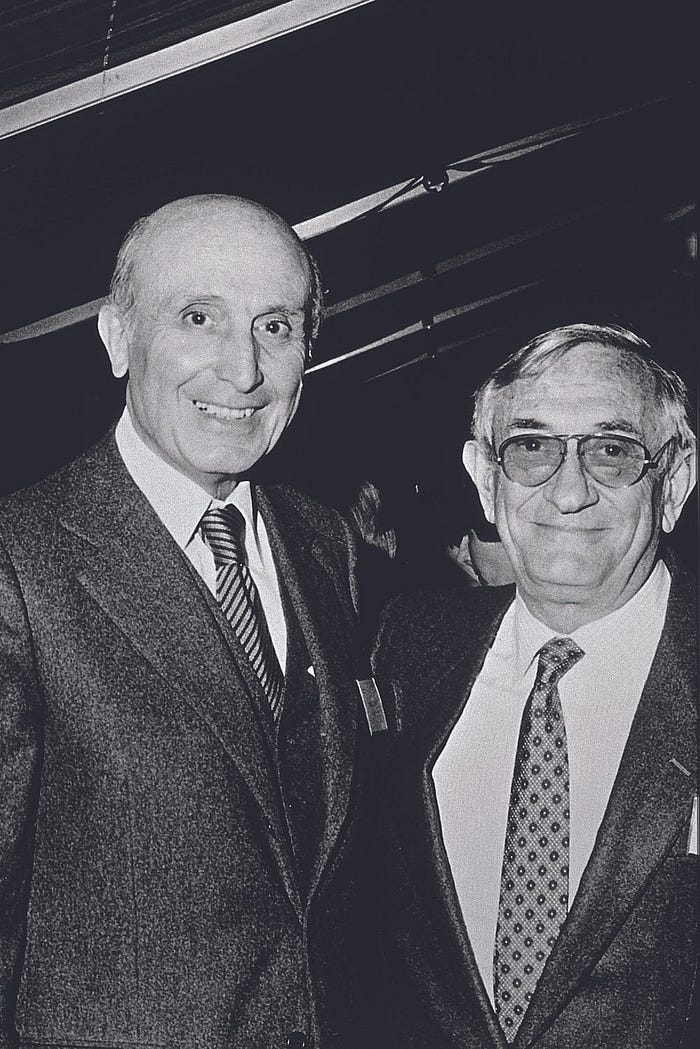
The story of the BSN-Gervais Danone merger is primarily the story of a 1972 encounter between Daniel Carasso and Antoine Riboud, two visionaries, at CEDEP, a professional development center for executives that their companies had helped found a year earlier. Daniel Carasso wants to grow Danone internationally and sees in Antoine Riboud an unmistakable entrepreneurial talent. The merger between the two companies is announced in December 1972, and a food industry giant is born.
1980s: European expansion

Starting in 1979, BSN-Gervais Danone acquires several companies including Amora, Maille, Vandamme, La Pie qui Chante, Liebig, Galbani, and Volvic. In less than 20 years, it becomes Europe’s third largest food company, leading the market in France, Germany, Belgium, Spain, Italy, Luxembourg, and Portugal.
1990s: Global ambition

BSN-Gervais Danone seeks growth drivers further afield. After Eastern Europe, Asia and Latin America become logical tar gets. Its first major Asian acquisition comes in 1991 wi th Hong Kong-based Amoy, a specialist in so y sauces and frozen foods.
1990s: Opening up to Eastern Europe
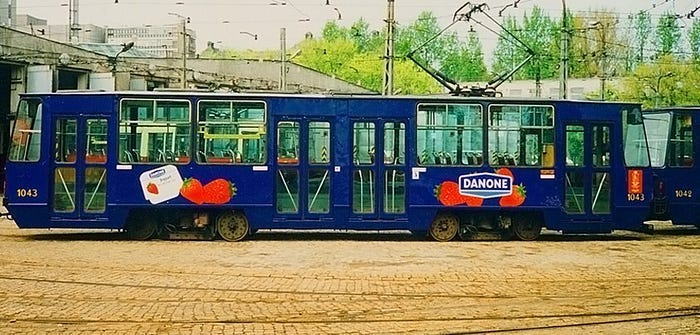
After the fall of the Berlin Wall, BSN expands into Eastern Europe, first to Hungary and then to Poland (1991), then the Czech Republic (1992) and Russia (1992), and finally Bulgaria (1993), thus completing its European expansion. During a visit to Russia in 1991, the long line in front of McDonald’s outlets shocks Antoine Riboud. The very next year, Muscovites are lining up in front of Danone’s store on Tverskaya Street (formerly Gorky Street).
1994: A star is born
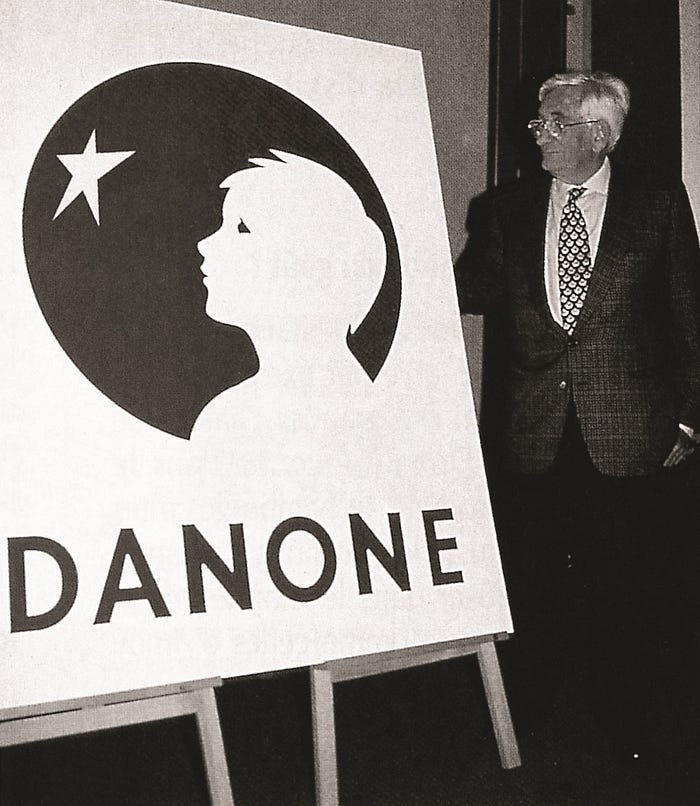
In 1994, BSN-Gervais Danone shortens its name to “Danone”, a brand with global potential that is already familiar to consumers in 46 countries — and the source of nearly a quarter of the company’s sales. With the new name comes a new logo: a child gazing up at a star. The logo symbolizes the company’s drive to keep pushing higher and going further.
1996: Franck Riboud becomes CEO

In May 1996, Franck Riboud is appointed CEO of Danone, succeeding his father. He continues to expand the company internationally, while focusing on the three areas with the greatest potential for growth and the strongest brands: Fresh Dairy Products, Beverages and Biscuits.
1996: New CEO, new international agenda

Under Franck Riboud, the pace of international growth picked up. In fresh dairy products, Danone partnered with Clover in South Africa (1996), La Serenisima in Argentina, and Stonyfield in the US. Alliances in waters included Bonafont in Mexico (1995), Aguas Minerales in Argentina (1996), and Aqua in Indonesia (1998).
1997: Danone values HOPE

In 1997, Danone defines its values around the acronym HOPE — humanism, openness, proximity and enthusiasm — and sets out to make them an integral part of daily management. These values are the foundation for a unique corporate vision that projects our strength and our identity around the world.
1997: 3 businesses for growth

The Group continues to expand internationally while also refocusing on Fresh Dairy Products, Beverages and Biscuits — the three business lines that offer the greatest promise for international growth.
2000: More than a football competition

The Danone Nations Cup (DNC) is the world’s biggest international football competition for children aged 10–12. Danone is proud to have created and organized this competition for the last 16 years and inspired the dreams of millions of youngsters worldwide. It is an opportunity for children to learn about other cultures and, for most, to travel for the first time. And it becomes a symbol of the company’s corporate culture.
2001: Danone Way: Looking inward

The roll out of Danone Way in 2001 encourages all CBUs to evaluate their own performance and launch initiatives that combine business success with responsibility to employees, stakeholders (from suppliers to consumers), and the environment.
2002: Growth through research

Danone R&D Center in Palaiseau (France)
Danone’s international research center in Palaiseau, south of Paris, is a powerful catalyst for innovation for all brands in the company’s Dairy and Waters divisions around the world. The missions that guide the Center’s staff reflect Danone’s R&D philosophy: develop safe products, provide health and well-being through food, and better understand and adapt to the cultural specificities of our consumers.
2006: Making health our mission

“Since the first use of lactic ferments in the early 20th century by Isaac Carasso, health and well-being have been key objectives for all our products,” said Franck Riboud when describing the company’s mission to “Bring health through food to as many people as possible”. Today this mission guides 100,000 Danoners motivated by the belief that nutrition can and must contribute to bringing health to consumers of all ages, in all countries, of all cultures.
2007: Social business network

Grameen Danone grows out of the partnership between Danone and Grameen Bank, the micro-credit lender founded by Muhammad Yunus. Grameen Danone is a social business producing nutrient-fortified yogurt that poor rural populations can afford. In 2007, Danone took the next step by creating danone.communities, an innovative financial tool to incubate social businesses. The danone.communities fund gives technical and financial support to a variety of projects.
2007: A portfolio focused on health

Danone sells its Biscuits business to Kraft in 2007 and buys Royal Numico, a global leader in Baby and Medical Nutrition. With this acquisition Danone focuses on 4 divisions including health. Royal Numico has a portf olio of strong brands, among them Nutricia, Milupa, and Cow & Gate. Numico’s international presence in the Medical and Baby Nutrition markets provided new avenues of growth and profitability and helps fulfill Danone’s mission.
2008: Committed to the environment: the genesis of Livelihoods
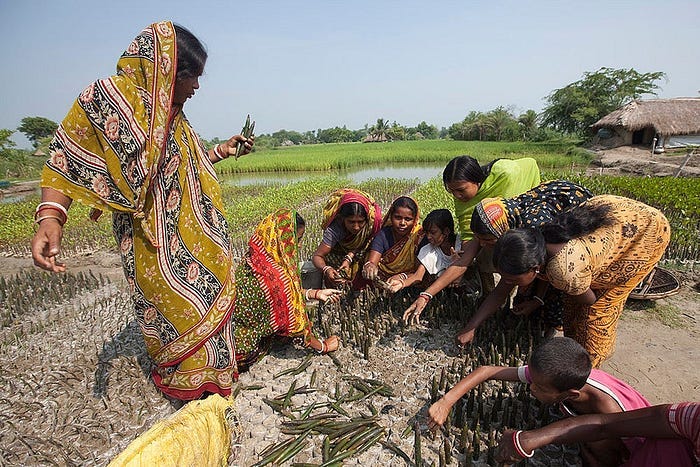
In 1998, Danone signs the Ramsar International Convention on protecting wetlands. Ten years later, we set up the Danone Fund for Nature to develop and provide funding for innovative carbon offset programs, and we have broadened the scope of these efforts by inviting other businesses to join us through the Livelihoods Fund, launched in 2011.
2009: Supporting our Ecosystem

In 2009, Danone makes an initial contribution of €100 million to fund the Danone Ecosystem Fund. Its mission is to co-create innovative business solutions with not-for-profi t organizations that generate social and economic value for small players in the local economy and Danone.
The fund supports 56 projects in about 26 countries and 40 CBUs with 42 partners, focusing on expanding dair y farming, local distribution systems, packaging recycling networks, personal services, and socioeconomic development.
2010: Dan’Cares: The dual commitment at work

Dan’Cares, our basic health care program, compensates for the lack of medical insurance in some countries. In addition to promoting health, Dan’Cares represents significant social progress — and it’s a powerful way to attract employees, deepen their loyalty and engagement, and reduce absenteeism.
2010: Danone and Unimilk: a natural partnership
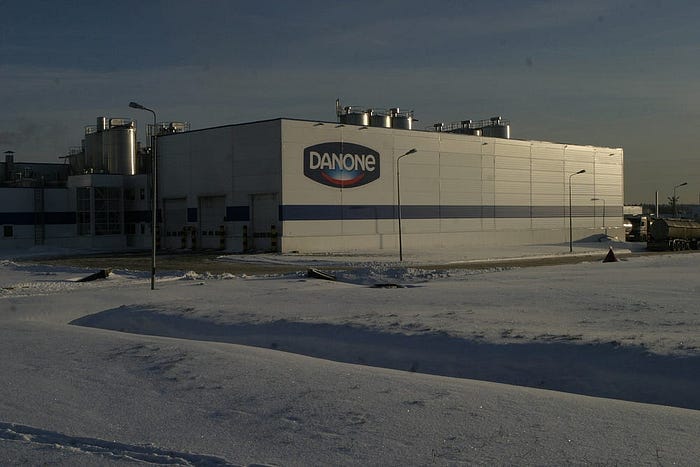
Danone’s Dairy factory in Tchekhov (Russia)
With the acquisition of Unimilk, Russia edges ahead of Spain to tie with France as Danone’s largest national market. The two companies are highly complementary. Danone has expertise in marketing and R&D, along with a strong management culture.
Unimilk is firmly established, thanks to popular brands like Prostokvashino and Tëma (infant nutrition) and an excellent local distribution network. Danone Russia is now carving out the perfect position to grow in both of the region’s key market segments: innovative new dairy products, and traditional ones like kefir.
2013: 60% of business in emerging markets

Our Indonesian water brand, AQUA.
In 1996, Western Europe accounted for almost 80% of Danone’s sales. In 2013, 60% of its sales come from emerging markets. The company’s new global equilibrium is the result of geographical diversification and an expansion strategy initiated in the mid-1990s. Danone has successfully reinvented its industrial and social model to adapt to the nutritional needs of different markets and culture.
2013: Keeping the planet healthy
For Danone, healthy food begins with healthy nature. Danone has identified four key areas around which it has made commitments to be achieved by 2020: climate, water, packaging, and agriculture. Danone’s goals for the environment are to fight climate change, protect water resources, transform waste into a resource, and promote sustainable agriculture.
2013: Cutting-edge R&D

Danone’s R&D Center in Utrecht.
Danone opens its all-new research and innovation center in Utrecht in the Netherlands. Called Nutricia Research, the center is now home to 400 scientists and experts representing 30 different nationalities, focusing on early life nutrition and advanced medical nutrition.
2014: Change in Danone’s governance

Emmanuel Faber, Danone CEO
On September 2, 2014, on the recommendation of Franck Riboud, Danone’s Board of Directors votes to separate the functions of Chairman and Chief Executive Officer and to appoint Emmanuel Faber as CEO, with Franck Riboud remaining as Chairman of the Board.
2014: Danone and Mars Inc. create the Livelihoods Fund for Family Farming

Danone and Mars Inc., two of the world’s leading food manufacturers, partner to launch a new innovative investment fund, the Livelihoods Fund for Family Farming (Livelihoods 3F). The fund helps companies learn how to sustainably source the materials they need from family farms, thereby providing a signifi cant improvement in the living conditions of those farmers and their communities. It is open to any company sharing Livelihoods 3F’s mission.
2014: Africa, a new frontier

The economic and social dynamic in Africa is powered by the growth of domestic markets and the emergence of a significant middle class. Present for over 20 years in Africa, Danone invests over a billion euros in the continent over two years to consolidate its position and to expand into new territory. This investment is accompanied by solid partnerships with recognized parties and a sustainable commitment to local development.
2015: The Manifesto

Since the beginning Antoine and Franck Riboud have stressed the importance of strengthening the economic and social impact of Danone’s growth. In 2015, under Emmanuel Faber’s leadership, Danone unveils its “Manifesto”. The company’s 100,000 employees bring it to life. The manifesto describes how Danone intends to fulfill its mission to bring health through food to as many people as possible.
2017: Danone x White Wave
Together as one, Danone and Whit Wave aim to inspire better food & beverage choices. By developing a world-leading dairy and plant-based portfolio, we are helping consumers to select from a wider range of better-for-you and great-tasting products. It’s all part of the alimentation revolution — changing the way the world eats for the health of people and the planet.
The Meaning and Logo Evolution

In 2019, the Danone company celebrated its 100th anniversary. Founded by pharmacist Isaac Carasso, the company began making yogurt to help children with dysbacteriosis. The French bought the company in 1973, and Danone yogurts became available worldwide.
The logo, named after Carasso’s son Daniel, symbolizes the company’s quality and consumer respect. The Danone logo has remained a stylized mark throughout its history, reflecting the company’s reputation as one of the world’s largest dairy producers.
The Emblem from (1968–1972)

Before 1968, the Fletcher/Forbes/Gill design group created a logo featuring a blue-violet oval, white stripes, and the brand name in white capital letters.
The Emblem from (1972–1993)

The emblem, a horizontal hexagon with rounded corners, has a larger upper part, dark blue color, white letters, and a white stripe separating the lower blue part.
The Emblem from (1993–2005)

The hexagon, solid blue with lightning bolt at bottom, and large white letters with a red wavy stripe, aimed to attract attention to healthy food.
The Emblem from (2005–2017)

The Danone logo has been updated with a warmer, more human design, featuring an oval plate, softly rounded corners, a blue background, and a stylized smile symbolizing product benefits.
The Emblem from (2017 — today)

Danon has introduced an updated logo and slogan, with the new logo featuring a blue circle on a white background with a child looking at a star and the slogan “One Planet. One Health.” The logo aims to raise awareness about ecology and healthy eating, while manufacturers can use the old logo for product labeling until 2025.
Danone Early Life Nutrition

For most of its history, Danone used the brand name as a logo for its visual identity, but in the 1990s, the brand finally decided to create an emblem that would reflect all its values and vision.
The Design from (2010–2017)

The emblem featured a child’s face with a star, a boy looking left, on a blue circle background, and a white figure of founder’s son Daniel Carasso.
The Design From (2017 — today)

The Danone logo features a lighter, gradient blue color palette, a boy’s face, and the slogan “One planet — one health,” reflecting the brand’s heritage and future goals.
Font and Colors

Danone’s visual identity has evolved through changes in background, letters, and lines, often without significant changes. The logo uses the Futura Heavy font, created by Paul Renner, which represents geometric symbols.
In 2005, it was modernized with a curved crossbar at the letter “N.” The color palette has also changed, from monosyllabic to blue with gradient transitions and white and red colors.
FAQs
What is the origin of the Danone brand name?
The name “Danone” comes from founder Isaac Carasso’s son, Daniel, affectionately called ‘Danon.’
What is Danone’s main mission?
Danone aims to improve health through its food and drink products, focusing on four key areas: dairy, plant-based products, water, and specialized nutrition.
Where does Danone operate globally?
Danone operates in over 120 countries, including Belgium, Canada, China, France, and the USA.
What are Danone’s core values?
Danone’s core values are Humanism, Openness, Proximity, and Enthusiasm, guiding all their operations and decisions.
What does the Danone logo represent?
The Danone logo, featuring a boy looking at a star, symbolizes health, curiosity, and the company’s commitment to planetary well-being.
Which brands does Danone own?
Danone owns over 300 brands, including Nutricia, Actimel, Activia, Alpro, and Evian.
What products does Danone produce?
Danone produces dairy and plant-based foods, bottled water, baby food, and specialized nutrition products.
Is Danone a French company?
Yes, Danone is headquartered in France and embodies French culinary traditions and innovation.
What is the significance of the Danone logo design?
The logo design reflects the company’s roots and values, emphasizing health and friendliness.
Which Danone brand is the best-selling?
Activia, Actimel, and Evian are among Danone’s best-selling brands globally.
Conclusion
Danone’s logo and brand identity have evolved to reflect its values of health, sustainability, and quality. Since its inception in 1919, Danone has expanded from a small yogurt business in Barcelona to a global leader in dairy, plant-based products, bottled water, and specialized nutrition. The logo, symbolizing trust and care, has maintained stability while evolving to highlight the company’s commitment to health and planetary well-being.
Danone’s growth is marked by innovation and acquisitions, such as White Wave Foods in 2017, emphasizing its focus on healthy and sustainable food. Today, Danone operates in over 120 countries with renowned brands like Activia, Actimel, Alpro, and Evian, continuously adapting to consumer needs and leading in nutritious, sustainable foods.
메타데이터
- post_id
- 41d0d913d52e
- slug
- the-evolution-history-of-danone-logo-41d0d913d52e
- url
- https://medium.com/@michael1122robert/the-evolution-history-of-danone-logo-41d0d913d52e
- canonical_url
- https://medium.com/@michael1122robert/the-evolution-history-of-danone-logo-41d0d913d52e
- author_url
- https://medium.com/@michael1122robert
- status
- ok
- fetched_at
- 2026-07-23 10:19:01