Rocinha Favela Is Not What You Think and That’s Exactly the Point
Latin America’s largest favela, a self-contained world operates by its own logic
Rocinha Favela Is Not What You Think and That’s Exactly the Point
Latin America’s largest favela, a self-contained world operates by its own logic

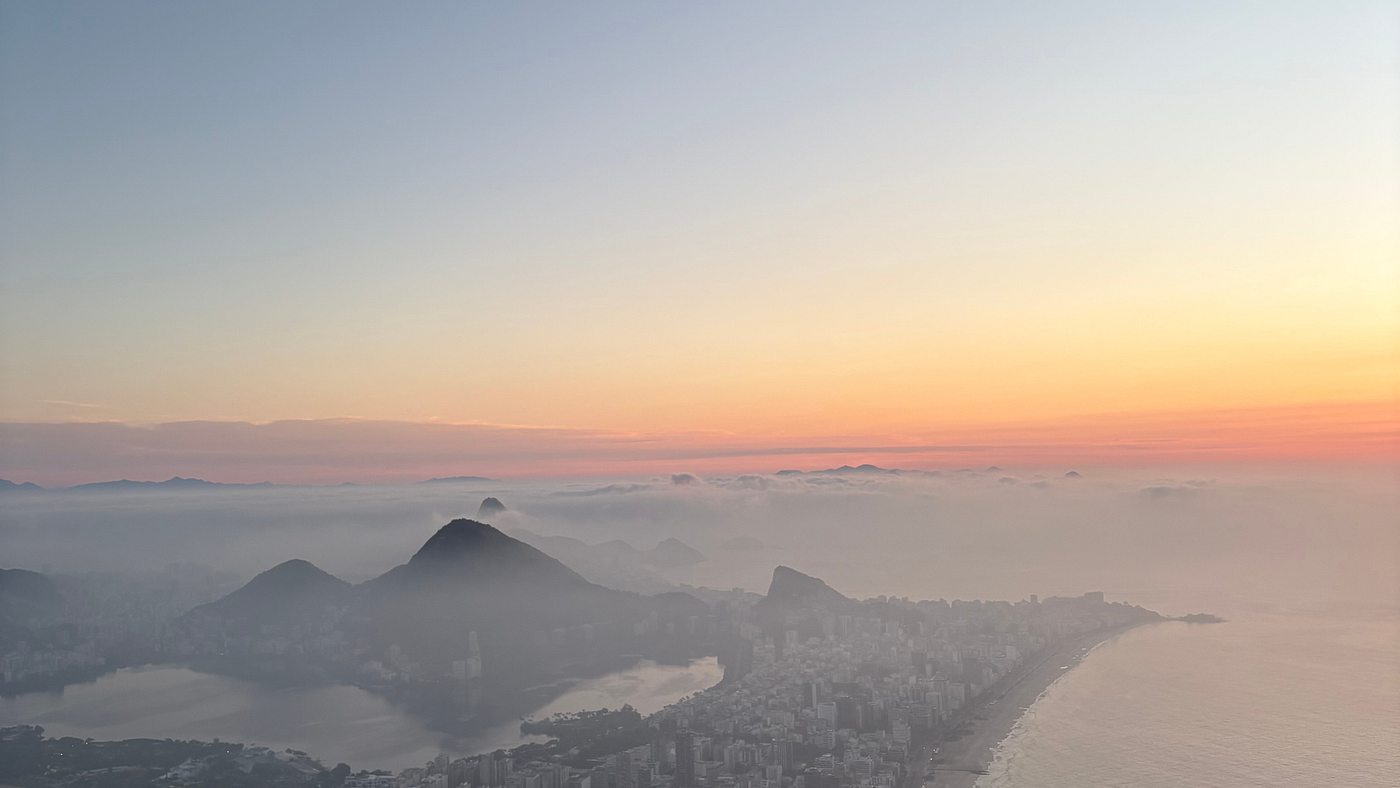
Photo by author
Before I went to Rocinha, someone told me to go with a local or not go at all. That wasn’t a safety warning; it was a social one.
Many people have strong opinions and mixed feelings about the particularity of the favelas in Rio de Janeiro, Brazil. I disregard most opinions, especially those from people who have never been there.
These opinions are only the perception of the person giving them, and that is very limited data for me to say “okay,” because you say not to go, I won’t go.
Rocinha is Latin America’s largest favela, home to over 70,000 people packed into the hillside between São Conrado and Gávea in Rio de Janeiro, Brazil. Like any functioning community, it runs on recognition. If nobody knows you, you are the variable that doesn’t fit the equation. My friend who grew up there was my key. Without him, I was just a foreigner with preconceived notions and a theory.
A Micro City Inside a City
The first thing that hits you about Rocinha is its density, not just of people but of function. Grocery stores, pharmacies, clothing boutiques, hair salons, restaurants, schools, the infrastructure of an entire city compressed into a vertical hillside.
My friend told me that roughly 90 percent of the people who live in Rocinha have never left. The first instinct is to read that as poverty. After giving it some thought, they haven’t left because they haven’t needed to. Rocinha is not a fragment of Rio; it is its own complete system.
I’ve seen communities that function with less and communities that spend more and produce less. What struck me in Rocinha wasn’t scarcity, but self-sufficiency. The favela operates the way most human communities operated before globalization convinced us that everything worth having comes from somewhere else.
“One thing Zezinho likes about Rocinha is that it’s a city within a city. There’s nothing a resident can’t do without leaving the favela.” — Highlighted in **Nomadic Niko****
Every Community Has a Hierarchy, Here It’s Just Visible
I’ve observed enough communities across enough cultures to know that they all operate like gangs in one fundamental sense: there is always a power structure, and the rules of behavior are always enforced by whoever sits at the top of it.
What makes Rocinha different is that it doesn’t pretend otherwise. The gang that controls Rocinha openly sets the social contract. No crimes against tourists. Community disputes handled internally. A clear set of expectations for how people treat one another within the favela.
Compare that to the invisible enforcement mechanisms of a gated suburb or a corporate office and ask yourself which system is more honest about what it is. I’m not romanticizing it. Outside the favela’s borders, the rules dissolve, and that’s genuine violence.
But inside Rocinha, the social order produces something that many “legitimate” communities fail to: a sense of collective accountability. Everyone knows everyone. Everyone knows everyone’s business. At 70,000 people, that shouldn’t be possible, and yet the social chains hold in a way that makes a typical American neighborhood feel anonymous by comparison.
I still remember a conversation my friend and I were having.
He said, “One of my cousins is one of the top guys.”
That was all I needed to know about hierarchies.
The Hills Are the Architecture
The only city I’ve been to with comparable monster hills that make your glutes hurt is San Francisco: steep hills, layered neighborhoods, homes built into the incline at angles that shouldn’t hold.
The similarity ends at the infrastructure. When my friend and I arrived, we took a moto to the top of Rocinha. Fifteen minutes up. We walked back down, and it took forty-five minutes. That alone should give you an idea of the fitness levels that are required just to operate in daily life.
On the descent, you will be navigating narrow concrete stairs, alleys with sharp turns, and navigating through narrow homes. It was both a full leg workout and a social study. Every level of the hill is its own micro-neighborhood. The higher you go, the more removed you are from the commercial part at the base, and the more dependent you will become on motos.

Photo by Author
The Motos Are the Circulatory System
If Rocinha is a body, the motos are its blood. They move constantly, at speeds that defy logic given the roads’ width and the volume of pedestrian traffic. Walking from the top of the hill can take an hour, but the moto compresses that to minutes.
On my first trip up the windy roads of Rocinha, I thought I was going to die. But I soon realized that motos are not a convenience but a necessity.
The moto system is the reason the higher elevations of Rocinha are livable. The reason the favela functions as a cohesive unit rather than fracturing into disconnected pockets. You keep your head on a swivel not out of fear but out of respect for a system that does not pause for spectators, gringos, or tourists.
The Party as a Cultural Frequency
Rio de Janeiro has two faces, and most visitors only see one. The beach-facing, postcard-ready version is real, but it exists alongside an underworld of sound and sensation that operates on a completely different frequency. I am an introvert who genuinely loves music and movement, which means I can appreciate a room while being simultaneously overwhelmed by it.
The favela party I attended was exactly that: overwhelming in the most literal sense of the word. Funk carioca at volumes that reorganize your internal organs. Bodies moving with a fluency and abandon that communicate exactly how free people are when they are fully immersed in their own culture rather than performing it for an outside audience.
And yes, men with AKs standing at the perimeter, relaxed, present, part of the night.
Yes, I danced to my Passinho Brazilian dances, and what I observed was a community expressing itself with a care in the world, something I’ve rarely seen in spaces designed for outside consumption. I was a guest inside something that didn’t need my approval to exist, which is exactly what made it worth being inside.
What Rocinha Actually Is
The mindset most people bring to favelas: poverty, danger, otherness, and it is not exactly wrong, but it is incomplete in a way that distorts more than it reveals.
Rocinha is a community that has built a complete world under conditions never designed to support one. It has its own economy, social contract, transportation infrastructure, nightlife, and logic.
The question it quietly poses to every attentive visitor is this: if a community can build all of this without the systems supposedly designed to provide it, what does that say about those systems? And what does it say about us that our first instinct is to pity the people who built it?
메타데이터
- post_id
- 41e31d086f4c
- slug
- rocinha-favela-is-not-what-you-think-and-thats-exactly-the-point-41e31d086f4c
- url
- https://medium.com/digital-global-traveler/rocinha-favela-is-not-what-you-think-and-thats-exactly-the-point-41e31d086f4c
- canonical_url
- https://medium.com/digital-global-traveler/rocinha-favela-is-not-what-you-think-and-thats-exactly-the-point-41e31d086f4c
- author_url
- https://medium.com/@ericlashun
- status
- ok
- fetched_at
- 2026-08-11 02:11:41