My AI Content Sounded Generic for Six Months. The Fix Took Two Minutes.
The problem is not Claude. The problem is two sentences.
My AI Content Sounded Generic for Six Months. The Fix Took Two Minutes.
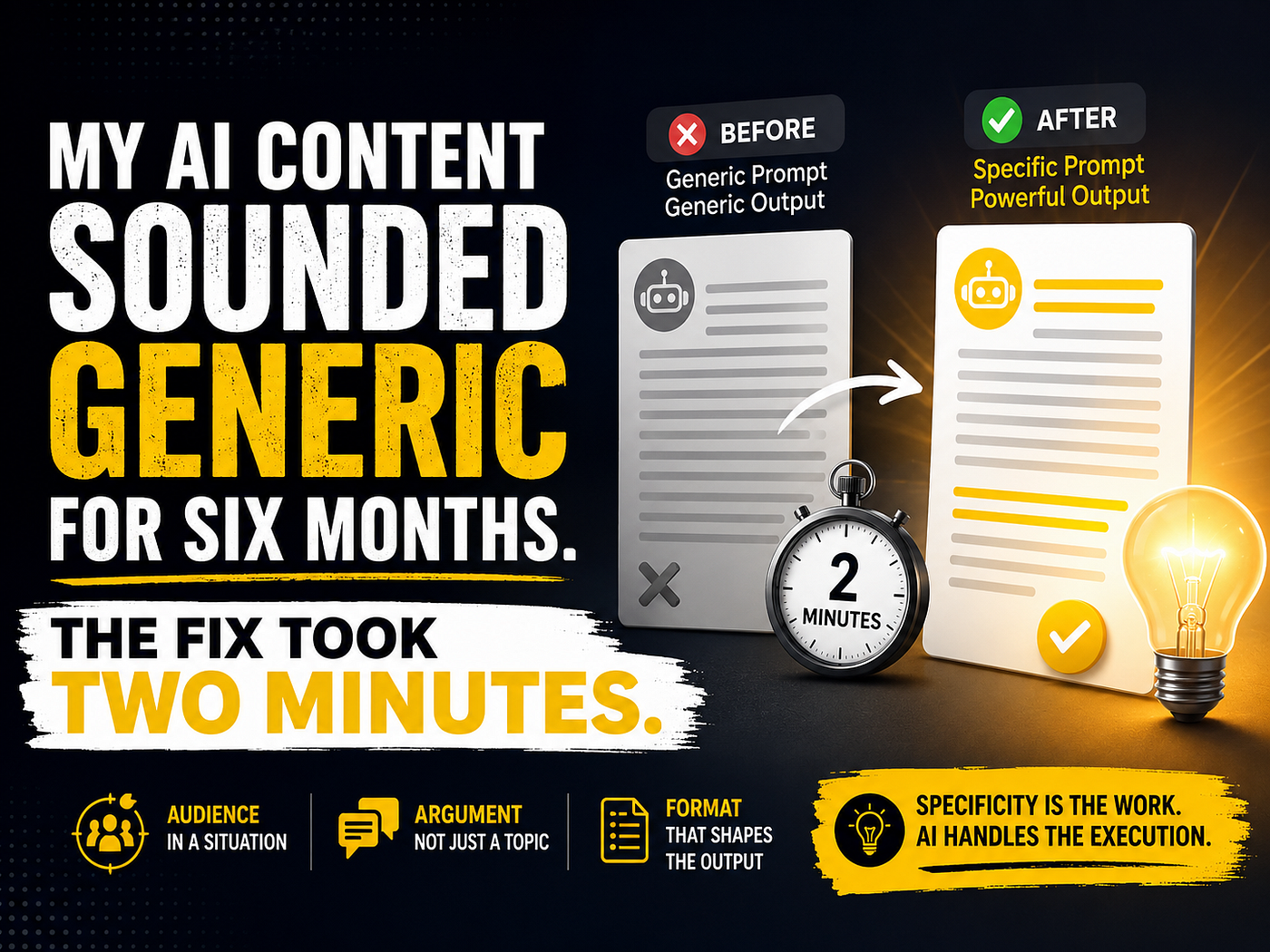
The problem is not Claude. The problem is two sentences.
Most creators type something like: “Write a Medium post about productivity for entrepreneurs. Make it engaging and practical.”
Then they get a draft that sounds like every other AI article on that topic and wonder whether AI is actually useful for real content.
The draft is exactly as specific as the prompt.
The prompt was not specific at all.
What Generic Output Is Telling You
When AI content sounds generic, it is reflecting the prompt back at you.
“Write about productivity for entrepreneurs” gives Claude a category, not a brief.
Claude fills the category with the most common things said about it: time blocking, single-tasking, eliminating distractions.
All true. None interesting.
You have read all of it before, because it is what every prompt at that vagueness level produces.
The tool is working correctly. The input is the problem.
What Specificity Actually Looks Like
Compare these two prompts for the same article.
Vague: “Write about how entrepreneurs can be more productive.”
Specific: “Write a first-person Medium post for solopreneurs who run content-based businesses. The argument is that most productivity advice optimizes for tasks, not for the creative state where real output gets produced. The reader works alone, manages multiple platforms, and feels constantly behind. Format: hook, one reframe, two practical changes, one honest caveat about what will not work. 900 words.”
Same topic.
The second prompt has an argument, an audience situation, a format, and a constraint.
The draft it produces will be different from every other productivity article because the prompt was different.
Specificity is the work. The AI handles the execution.
The Three Things That Make a Prompt Specific
An audience in a situation, not a demographic.
Not “entrepreneurs” but “solo content creators who feel like they are always one week behind.” The situation gives Claude the emotional context that shapes tone and angle.
An argument, not a topic. Not “productivity” but “most productivity advice is wrong for creative work.”
The argument is the point of the piece. Without it, Claude picks the most common angle for the category, which is always the most generic one.
A format constraint.
Tell it the structure: hook, sections, word count, what to include and what to exclude. Format instructions tell Claude what kind of piece this is, not just what it is about.
Add all three and the output becomes a draft worth editing, not a rewrite project.
Why Most People Never Fix This
Writing a specific prompt takes longer than writing a vague one. Under time pressure, most people shortcut it.
They type fast, get generic output, spend 20 minutes rewriting, and conclude that AI did not save them much time.
The rewrite is the tax on the vague prompt. The specific prompt costs two extra minutes at the start. The rewrite costs 20 at the end.
The alternative to writing specific prompts from scratch every time is having tested prompts where the specificity is already built in.
The audience situation, the argument structure, the format constraints are part of the template. You fill in the topic and the angle.
The Creator’s Super Prompt Library has 100+ prompts with that structure built in:
The content sounds generic because the prompts are generic. Fix the prompts.
메타데이터
- post_id
- 41e64ba22863
- slug
- my-ai-content-sounded-generic-for-six-months-the-fix-took-two-minutes-41e64ba22863
- url
- https://medium.com/@dkspeaks/my-ai-content-sounded-generic-for-six-months-the-fix-took-two-minutes-41e64ba22863
- canonical_url
- https://medium.com/@dkspeaks/my-ai-content-sounded-generic-for-six-months-the-fix-took-two-minutes-41e64ba22863
- author_url
- https://medium.com/@dkspeaks
- status
- ok
- fetched_at
- 2026-06-20 20:29:01