Is there an end to science?
If so, it’s natural to think of a mathematical structure that is used to explain all of science. There might be a discrete set of…
Is there an end to science?
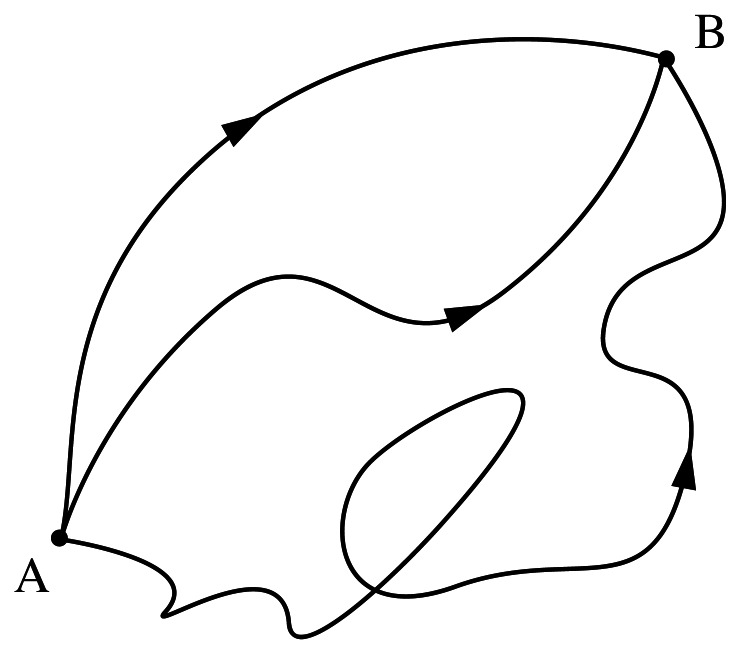
If so, it’s natural to think of a mathematical structure that is used to explain all of science. There might be a discrete set of mathematical structures, each explaining a specific portion of science. But still, the set is finite. All those structures don’t need to be connected in some way. They can be totally independent structures, but it’s completely natural to think that each structure should be discovered. So the question posed in the previous article about whether math is invented or discovered will transform into a different question: whether science is finite and whether all of it can be discovered. If the answer is yes, it’s natural to say that mathematics is also something to be discovered.
Of course, there are parallel, equivalent math structures to explain the same scientific issues (for example, Schrödinger’s wave approach, Heisenberg’s matrix approach and the integral of paths, all of which describe the same quantum mechanics). But these equivalent approaches are somehow translations of each other. One doesn’t invent something that is the translation of the invention of someone else. Instead, they are equivalent approaches that should be discovered.
Here, I don’t mean to say that if science is finite, that would be a sign that mathematics is discoverable (rather than the work and invention of human beings). But I try to argue that the opposite (i.e. science is not finite) can be a sign that mathematics should be an invention. And I will “prove” that in a constructive way.
If science is infinite, then there should be math structures that approximate the universe (because otherwise science would be finite). And the approximation gets better and better over time as science discovers new realms. Each approximation is a totally different math structure. It’s important that these math structures, which provide different approximations, are not equivalent. Note that infinitely many approximations are possible for an infinite system (i.e. science). That’s similar to the integral of paths. There are infinitely many paths available, each leading to a distinct approximation. Denote S to be the space of all possible approximations (paths). The space S is given, but it is the work of human beings to set up some path in S. So if science is infinite, then there exists some S, and also there exists some path, p, which is manufactured in S.
메타데이터
- post_id
- 4213c08e6f6f
- slug
- is-there-an-end-to-science-4213c08e6f6f
- url
- https://medium.com/the-random-nerdiness-collective/is-there-an-end-to-science-4213c08e6f6f
- canonical_url
- https://medium.com/the-random-nerdiness-collective/is-there-an-end-to-science-4213c08e6f6f
- author_url
- https://medium.com/@alirastegar.math
- status
- ok
- fetched_at
- 2026-06-24 23:31:39