Hindu Festivals Decoded: What, When, and How to Celebrate
Have you ever marveled at the vibrant colors, joyous celebrations, and profound rituals that characterize Hindu festivals? From the…
Hindu Festivals Decoded: What, When, and How to Celebrate
Have you ever marveled at the vibrant colors, joyous celebrations, and profound rituals that characterize Hindu festivals? From the sparkling lights of Diwali to the playful colors of Holi, these celebrations are not just cultural events but deeply meaningful practices that connect millions to their spiritual roots. Whether you’re part of the Indian diaspora looking to preserve your heritage or simply curious about these ancient traditions, understanding the what, when, and how of Hindu festivals can enrich your cultural experience and bring new dimensions to your spiritual journey.
In this comprehensive guide, we’ll decode the mystical world of Hindu festivals — exploring their traditional significance, astrological importance, and modern celebrations. You’ll discover the calendar of major festivals, learn about essential preparations and rituals, and find ways to celebrate authentically even if you’re far from India or Nepal. As we journey through the fascinating tapestry of Hindu celebrations, you’ll gain insights that go beyond the surface, helping you connect with these traditions in a more meaningful way. 🪔✨
Understanding Hindu Festivals
Origins and cultural significance
Hinduism, one of the world’s oldest religions, celebrates a vibrant tapestry of festivals that reflect its rich cultural and mythological heritage. When you participate in Hindu festivals, you’re engaging with ancient traditions that serve distinct purposes in your spiritual journey. Each celebration commemorates significant mythological events, expresses gratitude to deities, and fosters social harmony within your community.
Festivals like Diwali, the “Festival of Lights,” allow you to celebrate the triumph of good over evil through lighting diyas, enjoying fireworks, and gathering with family. When you play with colors during Holi, you’re welcoming spring and participating in a joyous tradition that dates back centuries. During the nine days of Navratri, your fasting and worship honor Goddess Durga and her divine feminine energy.
These celebrations aren’t merely religious observances — they’re opportunities for you to reinforce community ties and embrace values such as love, compassion, and respect that are central to Hindu philosophy.
Regional variations across India and Nepal
As you travel across the Indian subcontinent, you’ll discover that Hindu festivals take on unique regional characteristics while maintaining their spiritual essence. The way you might celebrate Dussehra in North India differs significantly from celebrations in the South. Similarly, Ganesh Chaturthi is observed with particular fervor in Maharashtra, where you’ll witness elaborate processions culminating in the immersion of clay Ganesha idols.
Regional customs influence how you prepare festival foods, perform rituals, and even the specific deities you worship during certain celebrations. These variations reflect the diverse cultural tapestry of Hinduism and show how the religion has adapted to local traditions while preserving its core principles.
Connection to Vedic principles and astrology
Hindu festivals connect you directly to ancient Vedic principles and astrological significance. When you observe these celebrations, you’re participating in traditions that align human activities with cosmic rhythms. Many festival dates are determined by lunar and solar calendars, linking your earthly existence to celestial movements.
The importance of ritual purity plays a significant role in these celebrations, guiding how you prepare yourself spiritually for each festival. Through observances like fasting before Janmashtami or performing specific prayers during Diwali, you cultivate a harmonious relationship with both nature and the divine.
Now that we’ve explored the foundational understanding of Hindu festivals, including their origins, regional variations, and connections to Vedic principles, let’s examine the “Major Hindu Festivals Calendar” to help you plan your participation in these spiritually enriching celebrations throughout the year.
Major Hindu Festivals Calendar
Now that we understand the fundamental aspects of Hindu festivals, let’s explore when these celebrations occur throughout the year and how they’re scheduled according to various calendars.
A. Seasonal festivals and their timing
Hindu festivals are closely tied to seasonal changes and agricultural cycles. Key seasonal celebrations include Makar Sankranti on January 14, marking the transition of the sun into Capricorn and celebrating the harvest season. Spring welcomes the vibrant festival of Holi (March 14 in 2025), celebrating the arrival of spring with colors and joy. The Solar New Year on April 14 coincides with the beginning of a new seasonal cycle in many regional calendars. These seasonal festivals follow the Gregorian calendar more consistently than other Hindu celebrations, making them easier for you to track from year to year.
B. Festival dates based on Hindu calendar
Most Hindu festivals follow the lunar calendar (Panchang), which explains why their dates shift on the Gregorian calendar each year. Important observances include:
- Ekadashi days: Sacred days like Pausha Putrada Ekadashi (January 10, 2025)
- New Year celebrations: Different regions celebrate on different dates, such as Ugadi on March 30 and Gudi Padwa in March
- Major festivals: Maha Shivaratri in February, Raksha Bandhan in August, Ganesh Chaturthi in September, and Diwali on October 20 (in 2025)
The lunar phases are crucial for determining festival dates, with many celebrations tied to either full moon (Purnima) or new moon (Amavasya) days. For instance, Mauni Amavas falls on January 29, 2025, during the new moon.
C. Regional celebration differences
You’ll notice significant variations in how festivals are celebrated across India and the Hindu diaspora:
- Festival names may change by region while celebrating the same occasion
- Some celebrations are specific to certain regions, like Pongal in South India
- The exact date of celebration may vary by a day or two depending on local time zones and regional calendars
- Ritual practices and traditions differ significantly across regions, with unique local customs added to the core celebrations
When planning to observe or participate in any Hindu festival, it’s advisable to check local calendars for precise timings, as they can vary based on geographical location and regional traditions.
With this festival calendar in mind, next we’ll explore how you can prepare for these celebrations through the essential rituals and preparations that make Hindu festivals so meaningful and vibrant.
Festival Preparations and Rituals
Now that we’ve explored the major Hindu festivals in the calendar, it’s essential to understand how to properly prepare for these sacred celebrations. Proper preparation ensures that your participation in these rituals is both respectful and spiritually fulfilling.
A. Essential pooja products and their significance
When celebrating Hindu festivals, certain ritual items are fundamental to the ceremony’s success:
- Idols or images: For festivals like Ganesh Chaturthi, the installation of a Ganesha idol is central to the celebration. Similarly, during Navratri, representations of Goddess Durga are essential.
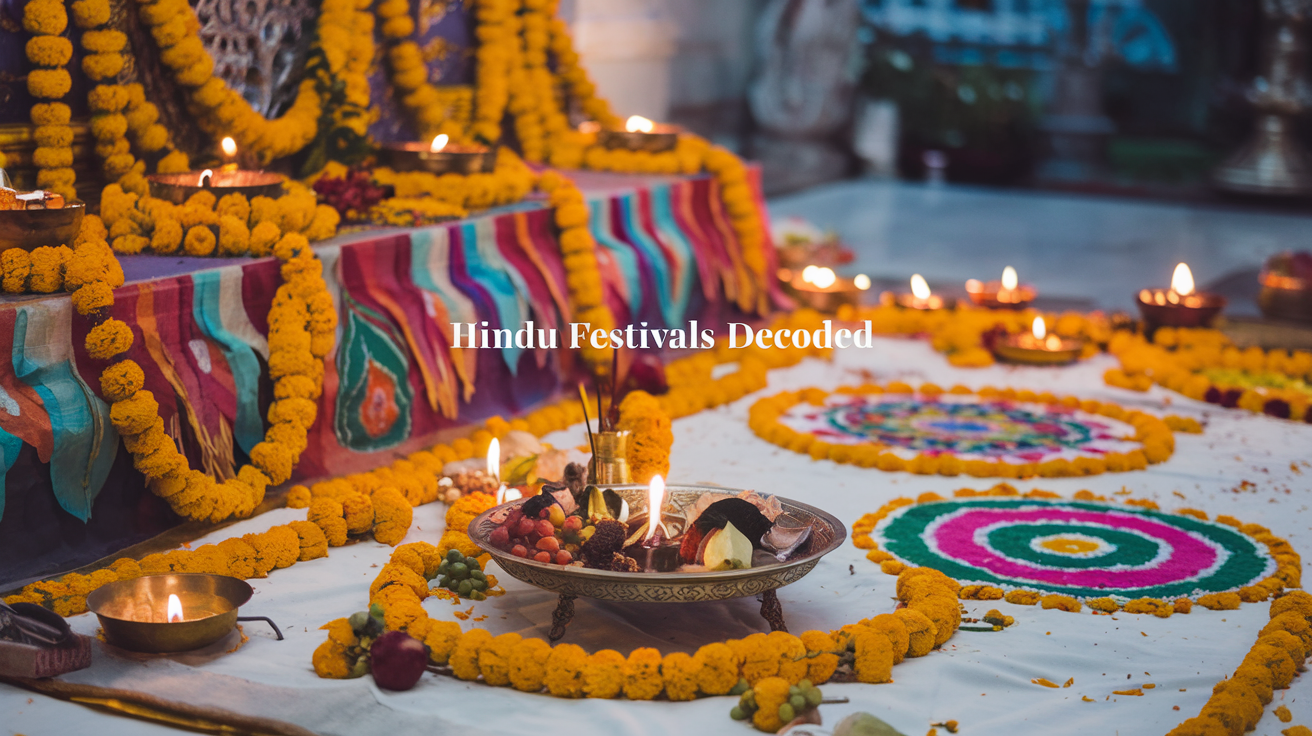
- Lamps and diyas: Especially important during Diwali, these symbolize the triumph of light over darkness and are used to illuminate homes and temples.
- Flowers and garlands: Offered as symbols of devotion and used for decoration during festivals like Janmashtami and Pongal.
- Incense and sandalwood: Used in most poojas to create a sacred atmosphere.
- Special food offerings (prasāda): Each festival has specific foods associated with it, such as sweets during Makar Sankranti or the special Pongal dish offered to the Sun God.
- Sacred fire materials: For ceremonies involving yajña (fire sacrifice), items like ghee, wood, and specific herbs are required.
B. Role of priests in festival ceremonies
Priests (pandits) play a crucial role in guiding and facilitating Hindu festival ceremonies:
- They lead elaborate temple ceremonies, performing rituals according to Vedic traditions
- During home ceremonies, priests help families perform poojas correctly, reciting appropriate mantras
- For festivals like Mahashivratri, priests assist in the offering of prayers and performance of abhishekam to the Shiva lingam
- They determine auspicious timing for ceremonies based on jyotiṣa (astrology)
- During life-cycle celebrations that coincide with festivals, priests conduct saṃskāra (life-cycle rites)
C. Home preparation guidelines
Your home preparation is an important aspect of festival celebration:
- Cleanliness: Thorough cleaning of your home is essential, particularly before Diwali
- Decoration: Adorn your home with flowers, rangoli patterns, and lights according to the festival
- Altar preparation: Create a dedicated space for worship with the appropriate deity images
- Fasting preparations: For festivals like Karva Chauth or Mahashivratri that involve fasting, prepare suitable foods ahead of time
- Gathering supplies: Collect all necessary pooja items before the festival begins
- Attire: Keep traditional clothing ready, as specific festivals like Karva Chauth call for traditional dress
As you prepare your home and gather the necessary items for these sacred celebrations, remember that the astrological timing of these rituals holds significant importance. In the next section, we’ll explore the astrological significance of festivals and how celestial movements influence the timing and practices of Hindu celebrations.
Astrological Significance of Festivals
Now that we’ve explored the essential preparations and rituals for Hindu festivals, let’s delve into the cosmic dimension that governs their timing and significance.
Connection between festivals and celestial events
Hindu festivals are intricately linked to celestial movements, with most following the lunar calendar rather than the solar one you might be accustomed to. This is why festival dates shift each year on the Gregorian calendar. For example, Diwali occurs on the new moon day of Kartika (typically between October and November), marking a powerful cosmic alignment that enhances energies of introspection and purification.
Similarly, Navratri takes place during the lunar month of Ashwin (September-October), coinciding with seasonal transitions that create an auspicious atmosphere for spiritual renewal. These alignments aren’t coincidental — they represent moments when cosmic energies are particularly conducive to the specific purposes of each celebration.
Auspicious timing (muhurat) for celebrations
When you participate in Hindu festivals, timing isn’t just a matter of convenience — it’s essential for harnessing specific cosmic energies. Muhurats (auspicious timings) are calculated by astrologers based on planetary positions to determine the most effective moments for performing rituals.
During Diwali, for instance, Lakshmi Puja is performed at a specific muhurat to invite prosperity when the universal energies are most receptive to such intentions. These precisely calculated timings help you align your celebrations with cosmic rhythms, potentially amplifying the effectiveness of your rituals and prayers.
Planetary influences during festival periods
Each festival period brings unique planetary influences that shape your celebratory experience. During Diwali, Jupiter and Venus play crucial roles in amplifying financial luck and familial joy, respectively. These planetary positions create an energetic backdrop that enhances specific aspects of your life during the celebration.
For Navratri, Mars empowers you to face challenges, while the moon shapes your emotional and spiritual experiences throughout the nine nights. Each night is dedicated to a different form of Goddess Durga, with corresponding planetary influences guiding deeper meditation and divine connection.
With this understanding of the celestial foundations of Hindu festivals, you’ll be better prepared to explore how these ancient celebrations are adapted in contemporary settings, which we’ll examine in the next section on Modern Celebration of Hindu Festivals.
Modern Celebration of Hindu Festivals
Now that we’ve explored the astrological significance of Hindu festivals, let’s examine how these ancient traditions are being adapted for contemporary life while maintaining their cultural essence.
Adapting traditions for global communities
As Hindu communities have spread globally, festival celebrations have evolved to accommodate diverse environments. You can see this adaptation in how Holi is now celebrated worldwide, with major events in cities like New York and London. When you’re living abroad, you might blend traditional elements with local customs — perhaps hosting a smaller Holika Dahan ceremony at home before joining larger community celebrations the next day. Many diaspora communities maintain the spiritual essence of festivals while adapting the physical celebrations to their surroundings, ensuring traditions continue regardless of location.
Technology’s role in preserving cultural practices
Technology has revolutionized how you can celebrate Hindu festivals. Virtual Holi celebrations have become increasingly common, allowing you to connect with family across continents. Digital platforms provide access to authentic rituals, prayers, and festival information, helping you maintain traditional practices even when physically distant from India. Mobile apps now offer festival calendars, ritual guides, and even virtual puja services. Technology also supports eco-friendly celebrations — you can find online resources about organic colors for Holi and environmentally conscious celebration practices, helping preserve both culture and the planet simultaneously.
Resources for diaspora communities
If you’re celebrating Hindu festivals outside India, numerous resources can enhance your experience. Community organizations often arrange public celebrations where you can participate in traditional rituals while meeting others from your cultural background. Online platforms provide detailed guides on festival preparations, including where to find authentic materials like organic colors for Holi. **Cultural centers** in major cities frequently host events that showcase both religious and artistic elements of Hindu festivals. These resources ensure you can celebrate responsibly while honoring traditions, whether through local gatherings or virtual connections with communities worldwide.
Hindu festivals represent the vibrant tapestry of India’s spiritual and cultural heritage. As you embark on your journey to celebrate these sacred occasions, remember that each festival carries deep astrological significance and connects you to traditions that have thrived for thousands of years. Whether you’re observing elaborate rituals during Diwali, celebrating the triumph of good over evil during Dussehra, or honoring deities during various seasonal celebrations, these traditions help you maintain a connection to your cultural roots.
We invite you to explore the rich traditions of Hindu festivals with an open heart and mind. For those seeking authentic guidance on festival dates, rituals, or personalized astrological insights, our **Vedic astrologers** from India and Nepal are available for consultation. From providing genuine pooja products to offering priest services for your celebrations, we’re committed to helping you honor these traditions meaningfully. By celebrating these festivals, you not only preserve ancient wisdom but also strengthen community bonds across the global Indian and Nepali diaspora. May your festival celebrations bring joy, prosperity, and spiritual fulfillment to your life.
메타데이터
- post_id
- 421e76f0bc8c
- slug
- hindu-festivals-decoded-what-when-and-how-to-celebrate-421e76f0bc8c
- url
- https://medium.com/@merojivansathihelp/hindu-festivals-decoded-what-when-and-how-to-celebrate-421e76f0bc8c
- canonical_url
- https://medium.com/@merojivansathihelp/hindu-festivals-decoded-what-when-and-how-to-celebrate-421e76f0bc8c
- author_url
- https://medium.com/@merojivansathihelp
- status
- ok
- fetched_at
- 2026-06-27 18:20:27