When will Microdramas find it’s Spielberg?
Will this format have it’s own Jaws?
When will Microdramas find it’s Spielberg?
Will this format have it’s own Jaws?

Filmmaking has always been expensive. For the first half of film history, cinema was controlled almost exclusively by rich production companies that dictated what got made and what got shown, and they were strict about it.
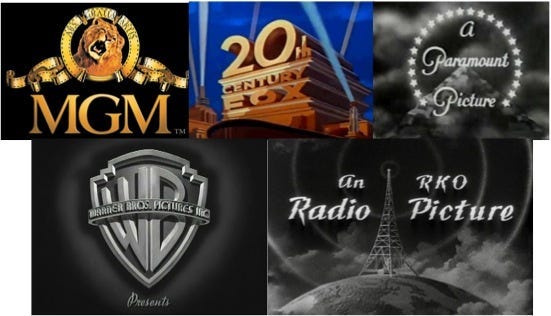
The Big 5
Romances, period pieces, musicals, action movies, biopics, and noir films were the standard for a large part of Hollywood’s assembly line, because it was these genres that made money. The ‘golden age’ of Hollywood was notoriously known for this strict adherence to genre and storytelling, only telling certain kinds of stories about certain types of socially acceptable people, with fewer grey elements and experimental storytelling.
But there was another side to the industry, a B-side, similar to that of an album. This was the B-movie industry, making lesser-known low-budget films. The B-movie industry encompassed a wide spectrum of films, from sensationalistic exploitation films to independent arthouse productions. They were typically associated with genres that the big studios wouldn’t touch, like sci-fi, horror and exploitation films.

Typical Exploitation Films
The industry as a whole was parallel to mainstream Hollywood, with its own subset of actors, filmmakers, and fans. Actors like John Wayne and Jack Nicholson started their careers in this industry, while Bruce Campbell and Pam Grier worked on B-movies for most of their careers.

[embed]Here’s a video of Quentin Tarantino and Robert Rodriquez talking about the rich history of B-movies and exploitation films as a whole, something they used as an inspiration for their double feature ‘Grindhouse’, composed of the films ‘Death Proof’ and ‘Planet Terror’
[embed]If you’re interested in the B-movie industry in India, check out ‘Cinema Marte Dum Tak’, a documentary by Vasan Bala about the underrated legends of Indian B films from the 90s and 2000s
For a large part of Hollywood history, B-films made up an important sprawling industry that existed purely to make money. That was until one day in 1975, when the entire industry as it existed collapsed overnight.
Steven Spielberg started his career in the 1970s, writing teleplays. He got the chance to write TV films, a chance to direct suspenseful concept films that won’t run in theatres, but still get some kind of audience. He wasn’t very successful, but people within the industry started to notice his abilities. That landed him the opportunity to direct his first major studio film, Jaws.

Jaws (1975) directed by Steven Spielberg
Jaws is a horror film about a shark attack in a small town, filled with gory visuals and titillating set pieces. A film like Jaws would normally not be produced by a major studio and instead be reserved for a B-film. But Spielberg’s television directing career taught him exactly how to incorporate B-film sensibilities into big studio films. Jaws was a commercial breakthrough for Hollywood as a whole, literally inventing the word ‘blockbuster’ because ticket sales made so much money that the block they stored the money in would overflow.
And Spielberg didn’t stop there. He next did Close Encounters of the Third Kind (1977), a film about UFOs, Raiders of the Lost Ark (1981), an adventure film, E.T. the Extra-Terrestrial (1982), an alien film, and Jurassic Park (1993), a sci-fi dinosaur film, all of which went on to be critical and commercial successes.

The secret to Spielberg’s success was simple. He adopted B-film stories and plots and elevated them to be appealing to everybody instead of just to the niche audiences they were made for. This is what collapsed the B-film industry. When B-filmmakers realised that there was a young director who was doing everything they were doing but better, they just couldn’t compete with excellence. No one could adapt like Spielberg, and everyone got left behind as a result.

So what does this teach about microdramas?
Microdramas today are the same stage that B-grade films were when competing with major studios. They’re operating as a parallel industry to cinema and television, targeting the lowest demographic and fighting for their attention. There are definitely commercial benefits to this and some good money to be made. But that’s a small game.
We can’t keep treating microdramas as small game, especially when there is scope to do bigger, do better within this format. These sensibilities can be developed and carried forward to tell better stories, bigger stories, reach a higher potential and make a lot more money. Every industry has its disrupters. Streaming had Netflix, computers had the iMac, city transport had Uber, and cinema had Spielberg.
Who does microdrama have? Can it be you?
메타데이터
- post_id
- 424cd5beaaaf
- slug
- when-will-microdramas-find-its-spielberg-424cd5beaaaf
- url
- https://medium.com/@saahilthakkar/when-will-microdramas-find-its-spielberg-424cd5beaaaf
- canonical_url
- https://medium.com/@saahilthakkar/when-will-microdramas-find-its-spielberg-424cd5beaaaf
- author_url
- https://medium.com/@saahilthakkar
- status
- ok
- fetched_at
- 2026-06-09 15:37:30