Quinoa Nutrition Facts — Calories, Protein & More
Nutrify — Ai Calorie Tracker is live on ios App Store
Quinoa Nutrition Facts — Calories, Protein & More
Nutrify — Ai Calorie Tracker is live on ios App Store
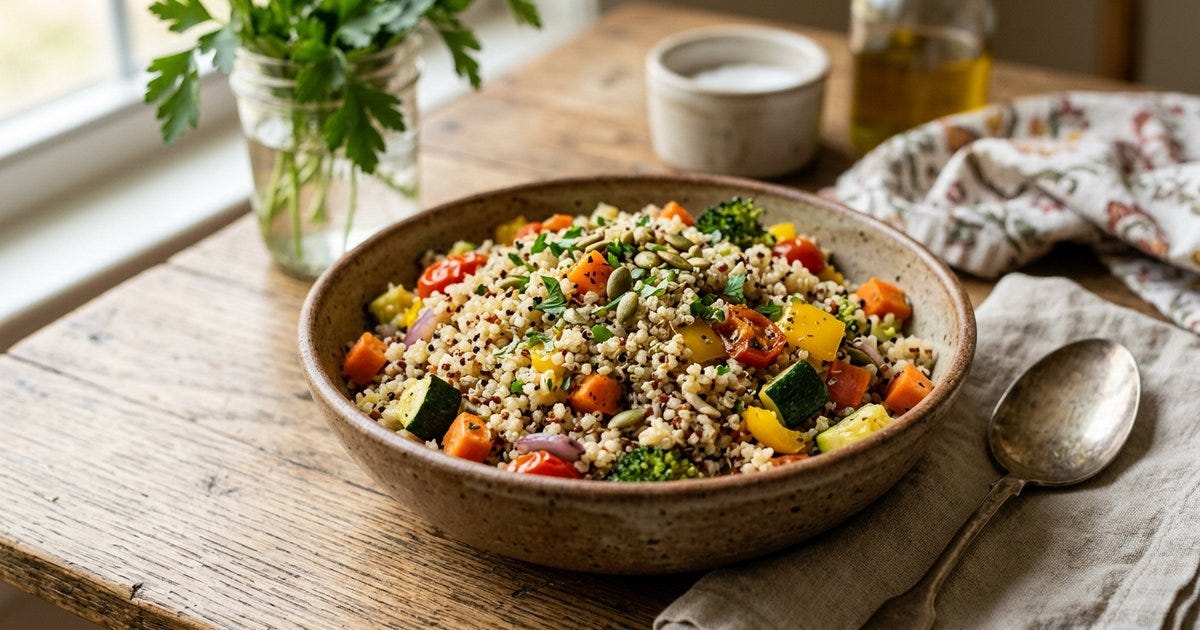
One cup of cooked quinoa (185g) contains 222 calories, 8g of complete protein, and 39g of carbohydrates. Unlike most plant foods, quinoa provides all nine essential amino acids, making it one of the few plant-based complete proteins available.
Quick Answer: Quinoa Nutrition at a Glance
Quinoa stands out in the grain category because it delivers a full amino acid profile that most grains simply cannot match. Here is what one standard serving looks like:
- Calories: 222 kcal
- Protein: 8g (complete protein)
- Total Fat: 3.5g
- Carbohydrates: 39g
- Dietary Fiber: 5g
- Sugar: 1.6g
- Sodium: 13mg
- Cholesterol: 0mg
- Serving size: 1 cup cooked (185g)
For a grain-like food, quinoa’s protein density is exceptional. Rice delivers roughly 4–5g of protein per cooked cup, while quinoa nearly doubles that with a superior amino acid composition.
💡Key takeaway: Quinoa is one of the only plant foods that qualifies as a complete protein, containing all nine essential amino acids in a single ingredient.
Nutrition Per Cup Cooked
The full micronutrient picture for quinoa is more impressive than the macros alone suggest. Beyond protein and fiber, quinoa is a meaningful source of several minerals that are often underrepresented in plant-heavy diets.

The magnesium content is particularly notable — a single cup provides 28% of the daily value, which is meaningful for people on plant-based diets where magnesium intake can fall short. The high manganese content (52% DV) supports bone health and metabolic enzyme function.
Use the Macro Calculator to see exactly how a serving of quinoa fits into your daily protein, fat, and carbohydrate targets.
Complete Amino Acid Profile
This is where quinoa separates itself from virtually every other plant food. A complete protein must contain all nine essential amino acids — the ones your body cannot synthesize on its own. Quinoa delivers all of them in a single ingredient.
Essential Amino Acids in 1 Cup Cooked Quinoa (185g)

The presence of lysine is particularly significant. Most grains (wheat, corn, rice) are deficient in lysine, which is why combining them with legumes has long been recommended for plant-based eaters. Quinoa eliminates that requirement entirely.
Leucine content matters for anyone focused on muscle building — it is the primary trigger for muscle protein synthesis (MPS). While quinoa’s 494mg of leucine per cup is lower than animal sources, it is high relative to other plant foods and contributes to its utility in high-protein meal plans.
💡Key takeaway: Quinoa’s complete amino acid profile makes it uniquely valuable for vegetarians, vegans, and anyone reducing animal protein intake without sacrificing protein quality.
Use the Protein Calculator to determine how much protein you need daily and how many cups of quinoa it would take to contribute meaningfully to that target.
Quinoa vs Rice vs Couscous
Quinoa competes directly with rice and couscous as a grain-like base for meals. Here is how the three compare nutritionally per cooked cup:

Key observations:
- Protein: Quinoa nearly doubles white rice’s protein content per cup, and its protein is complete.
- Fiber: Quinoa delivers 8x more fiber than white rice, supporting satiety and digestive health.
- Carbs: White rice carries significantly more carbohydrates, making quinoa more suitable for lower-carb meal structures.
- Gluten: Couscous is made from semolina wheat, making it off-limits for celiac disease or gluten sensitivity. Quinoa is naturally gluten-free.
- Calories: Couscous is the lightest option by calorie count, but it lacks the amino acid completeness and fiber content of quinoa.
For athletes or high-protein dieters, quinoa’s protein quality advantage over rice is meaningful. For pure carbohydrate density (e.g., glycogen replenishment after training), white rice still has more carbs per serving.
White vs Red vs Black Quinoa
Most grocery stores carry white quinoa by default, but red and black varieties are increasingly available and differ in both flavor and nutrition.
White Quinoa
White quinoa is the mildest in flavor and fluffiest in texture when cooked. It has the most neutral taste, making it the most versatile for savory dishes, salads, and meal prep. Nutritionally, it is the baseline used in most food databases. The 222-calorie, 8g protein profile above reflects white quinoa.
Red Quinoa
Red quinoa holds its shape better after cooking due to a slightly thicker outer coating (pericarp). It has a nuttier, earthier flavor and is often preferred for grain salads where visual contrast and texture matter. Nutritionally, red quinoa is nearly identical to white:
- Calories: ~215 kcal per cup cooked
- Protein: ~8g
- Fiber: ~5g
The minimal differences come from slight variations in moisture retention during cooking rather than fundamental nutritional differences.
Black Quinoa
Black quinoa has the firmest texture and most pronounced earthy, sweet flavor of the three. It maintains its color and structure even when overcooked, making it ideal for dishes that require the grain to stand out visually. Nutritionally:
- Calories: ~210–220 kcal per cup cooked
- Protein: ~8g
- Fiber: ~5g
- Slightly higher antioxidant content due to the dark pigmentation (anthocyanins)
The antioxidant advantage of black quinoa is real but modest in the context of a complete diet. The practical differences between the three varieties are largely textural and culinary rather than nutritional.
💡Key takeaway: White, red, and black quinoa are nearly nutritionally identical. Choose based on texture preference and how the grain will be used in your recipe.
Quinoa in Meal Prep
Quinoa’s nutritional profile makes it one of the best bulk-cook staples for weekly meal prep. It stores well, reheats without losing texture, and pairs with virtually any protein or vegetable.
How to Cook Quinoa for Meal Prep
The standard ratio is 1 cup dry quinoa to 2 cups liquid (water or broth). This yields approximately 3 cups cooked quinoa, or roughly 3 servings of the 185g portion described above.
One batch of dry quinoa (3 cups) cooked in broth gives you approximately:
- 666 calories total
- 24g protein total
- 117g carbohydrates total
- 15g fiber total
That translates to about 3 solid servings of a high-fiber, complete-protein grain base that keeps in the refrigerator for 5–7 days.
Practical Meal Prep Uses
- Protein bowls: Quinoa base with grilled chicken, roasted vegetables, and tahini provides a 40–50g protein meal
- Cold grain salads: Quinoa holds up better than rice or couscous in acidic dressings, making it ideal for meal-prepped lunch salads
- Breakfast bowls: Cooked quinoa with almond milk, berries, and honey functions similarly to oatmeal with a better protein profile
- Stuffed vegetables: Quinoa mixed with ground turkey or lentils and stuffed into bell peppers or zucchini
- Soup thickener: Adding a half-cup of cooked quinoa to vegetable or chicken soups adds protein and body without heavy starch
Calorie Density Comparison for Meal Prep

Quinoa and farro are the closest competitors in the meal prep context, but farro contains gluten and is not as widely available. For gluten-free, high-protein meal prep, quinoa has no real peer in the grain category.
Track Quinoa with Nutrify
Quinoa is one of those foods where portion size makes a significant difference. A cup of cooked quinoa is 222 calories, but eyeballing a “cup” can easily lead to 300+ calories when you serve generously. Nutrify’s AI food scanner identifies quinoa in mixed bowls and grain salads from a photo, giving you accurate macro data without manual entry.
Download Nutrify on the App Store to start tracking quinoa and every other food in your meals with AI-powered precision.
Originally published at https://nutrifytracker.com on January 15, 2026.
메타데이터
- post_id
- 4294c7a4f5bf
- slug
- quinoa-nutrition-facts-calories-protein-more-4294c7a4f5bf
- url
- https://medium.com/@nutrify-ai-calorie-tracker/quinoa-nutrition-facts-calories-protein-more-4294c7a4f5bf
- canonical_url
- https://medium.com/@nutrify-ai-calorie-tracker/quinoa-nutrition-facts-calories-protein-more-4294c7a4f5bf
- author_url
- https://medium.com/@nutrify-ai-calorie-tracker
- status
- ok
- fetched_at
- 2026-07-13 09:45:54