How the Incredible Hulk tells the story of color science — Part 4: Fix It, Mr. Fixit!
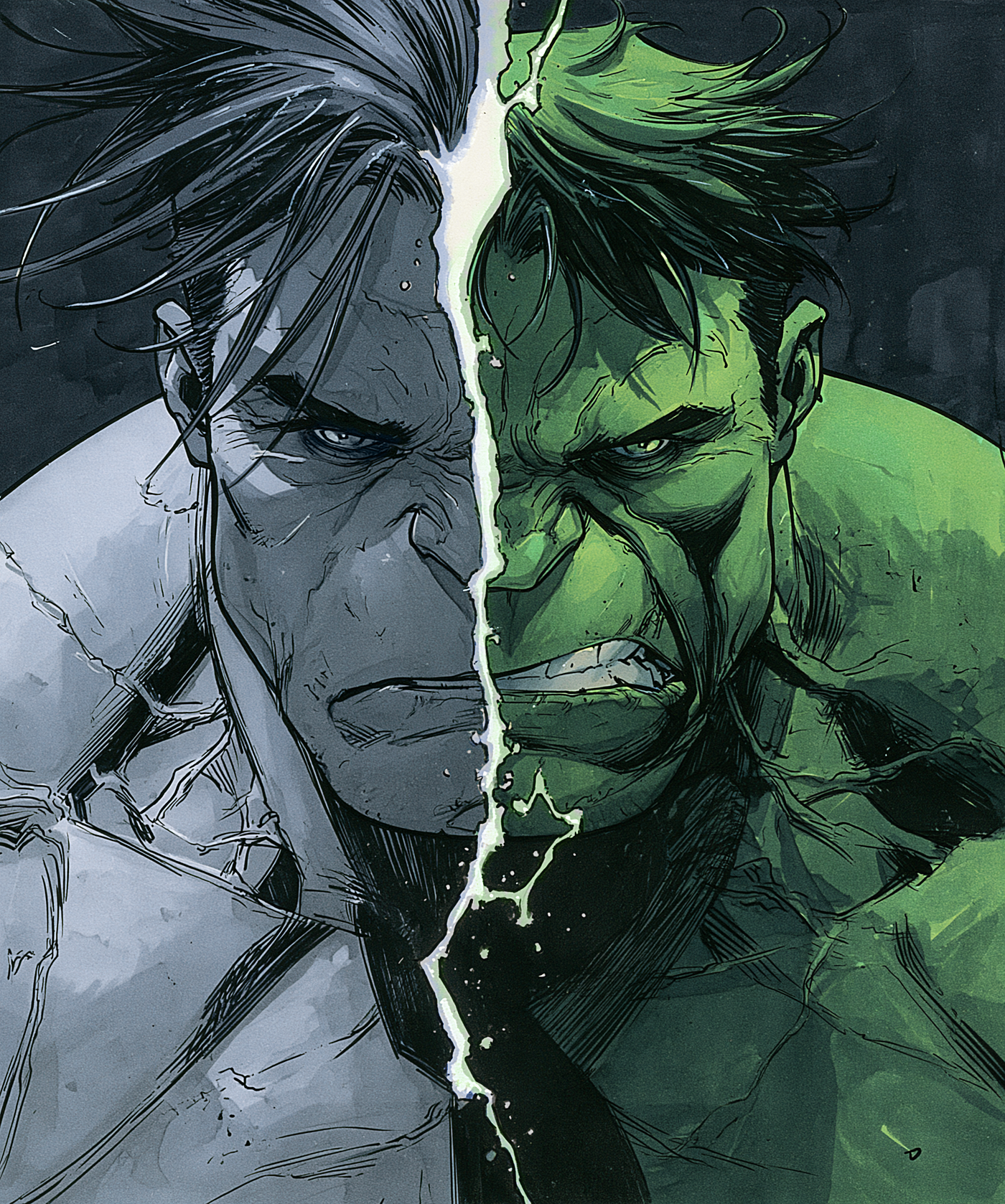
Is he gray, is he green, or… is he both?
How the Incredible Hulk tells the story of color science — Part 4: Fix It, Mr. Fixit!
Is he gray, is he green, or… is he both?
How the printing industry learned to hold gray — and how Peter David brought Hulk back to his original form
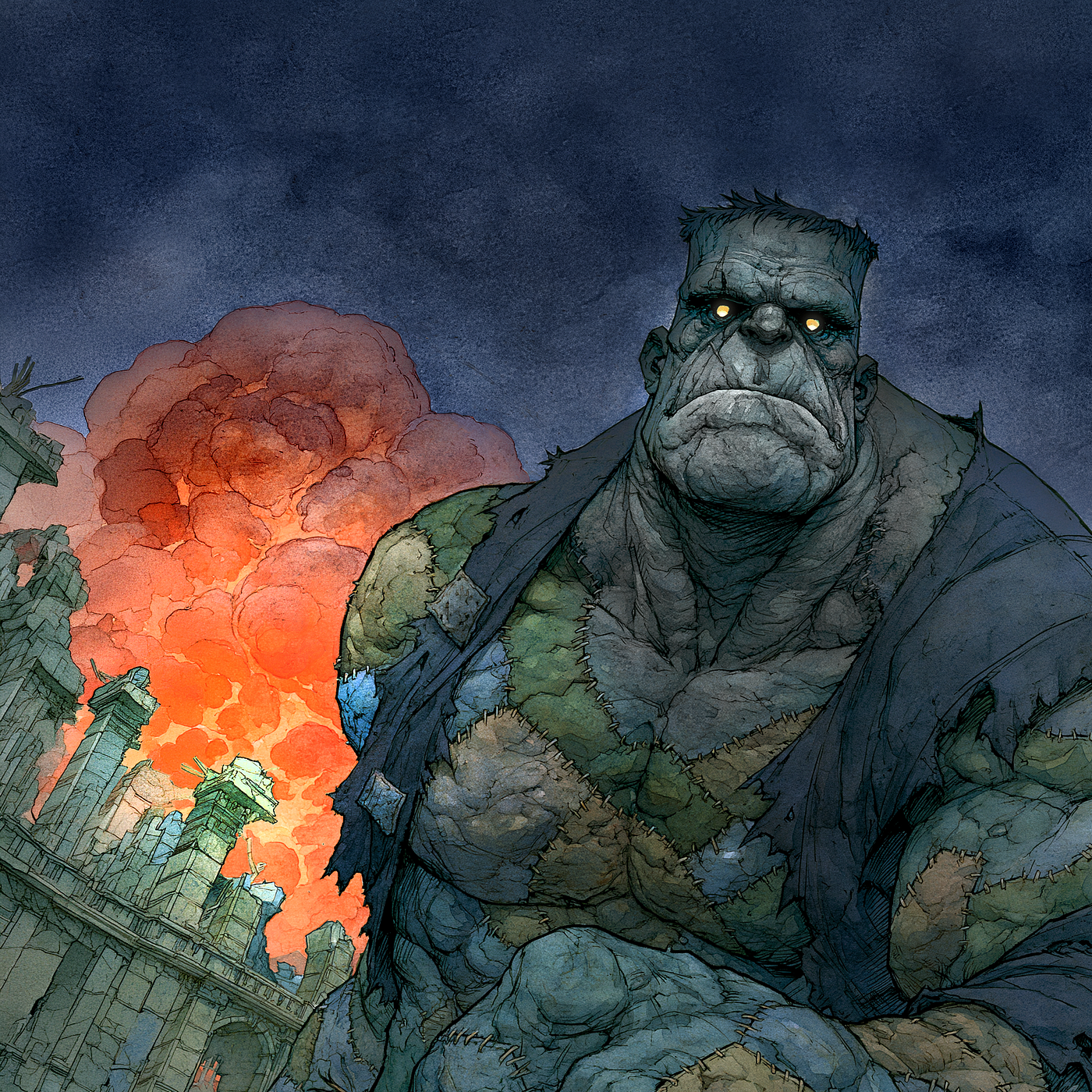
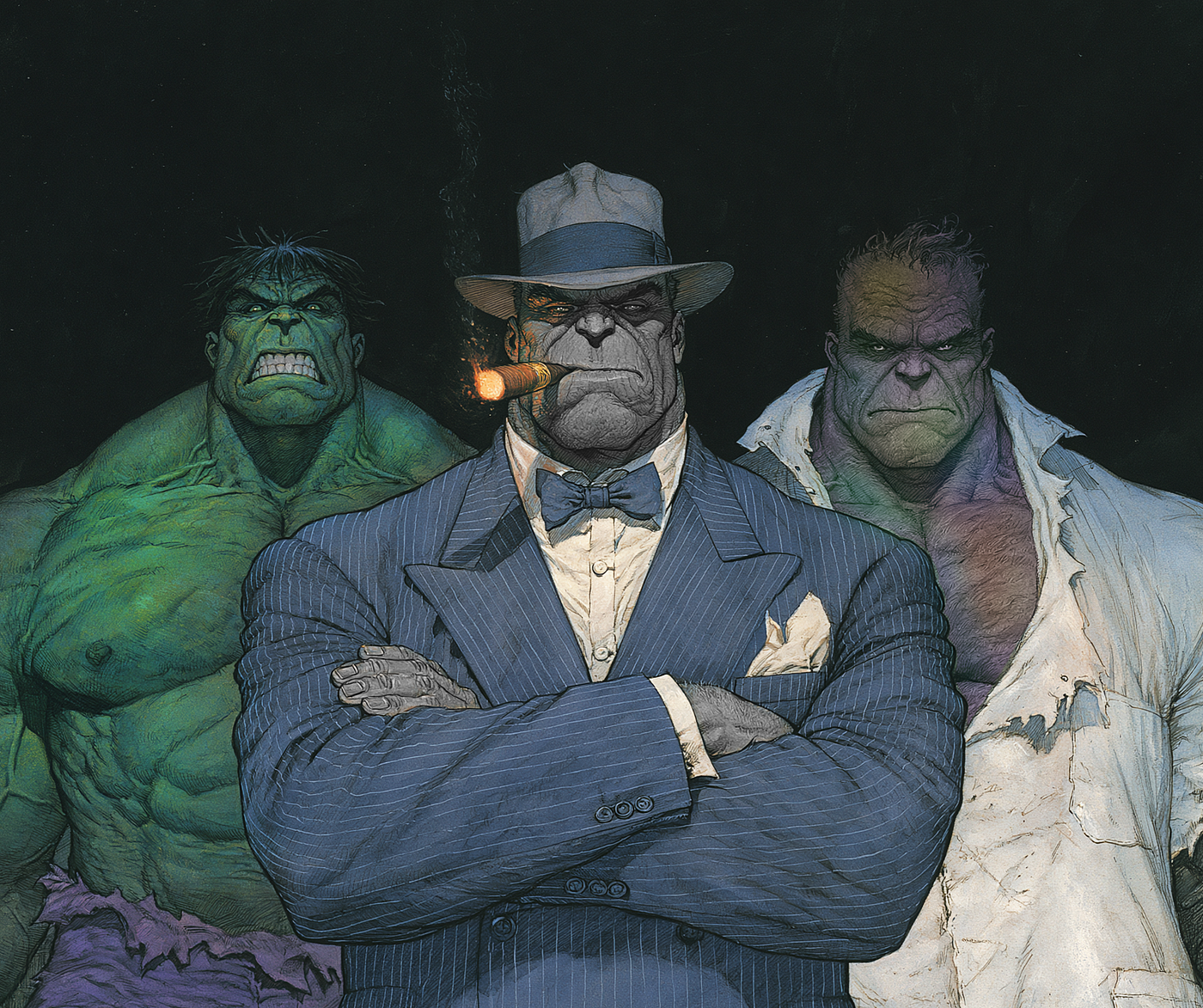
Las Vegas, 1988. A massive bouncer, gray skin, pinstripe suit, working for a mob casino.
His name is Mister Fixit. He doesn’t want anyone to know who he really is. But of course everyone knows who he really is, or at least, the comic’s readers do. It’s Hulk. He’s gray. And he’s back after twenty-six years.
The question nobody has asked yet: why now? Why does gray return at exactly this moment, and not before?
The answer, as always in this series, is technical before it’s narrative.
Gray balance: not just perception, it’s process physics
Gray balance is the fundamental problem of four-color printing: obtaining and maintaining a neutral gray throughout the entire production process, from file preparation to the printed sheet in the reader’s hands.
In CMYK, gray doesn’t exist as a “pure” color. You get it by overprinting cyan, magenta, and yellow in proportions that produce a perceived neutral, no color cast. The problem is that CMY theoretically balance at identical values, but in practice every ink has a different optical density, every paper stock absorbs differently, and every press has its own pressure and temperature variables.
The result: without active process control, gray drifts. Toward green, toward violet, toward anything but neutrality. Exactly as happened to Stan Goldberg in 1962.
Gray as the universal benchmark
Through the 1970s and 80s, the graphic arts industry arrived at an important conclusion: if you can hold gray neutral, you’ve solved the fundamental problem. Gray balance isn’t one parameter among many — it’s the central parameter, the one everything else depends on. If gray is neutral, color casts are under control. If gray drifts, everything drifts.
This insight drove gray balance into industry specifications: SWOP (Specifications for Web Offset Publications), founded in 1975, and SNAP (Specifications for Newspaper Advertising Production). These weren’t yet precise metric systems, they were shared practices, standardized transfer curves, empirical target values.
But they were enough. Enough to do something that was technically impossible in 1962: print a neutral gray on comic paper with acceptable consistency from one run to the next.
Peter David and the return of gray
Peter David was a writer who in 1986 had just taken over a struggling series: Incredible Hulk was at historic sales lows, and no editor wanted to touch it. David had radical ideas, including one very simple one: take the character back to his original form.
Gray returns in Incredible Hulk #324 (October 1986) — the first gray Hulk since issue #1 in 1962. And then, in issue 347 of September 1988, Joe Fixit arrives: the Golem in a gangster suit, the monster working for the Las Vegas mob, moral ambiguity finally recovered in its original chromatic form.
The character is magnificent. Smaller than Green Hulk (relatively speaking, he’s still eight feet tall), smarter, more cynical, dangerous in a different way. He doesn’t destroy buildings out of rage: he destroys them because someone didn’t pay the protection money.
Joe Fixit is Hulk at peace with his own gray nature. He’s not looking for redemption. He doesn’t want to be understood. He wants a paycheck and a new suit. And his original color.
The parallel nobody has ever drawn
By 1988 Marvel’s comics printing process wasn’t yet revolutionary, the real digital revolution would come in the early 1990s. But it was mature enough, controlled enough, to handle gray with a consistency that was impossible in 1962.
It wasn’t a precise metric system. There were no digital densitometers on every press. But there were standardized transfer curves, consolidated practices, colorists who knew how to specify a gray in a way that stayed gray through the process.
Joe Fixit is possible in 1988 because gray balance has become industrial practice. It hasn’t become science yet, that comes later. But it’s become craft. And craft was enough.
G7: gray becomes a metric
The leap from empirical practice to certifiable metric happens in 2006, when Idealliance publishes the G7 specification. G7’s central insight is elegant: instead of calibrating each process parameter independently, you calibrate everything together using neutral gray as the reference.
You build an ideal gray scale (the one human vision perceives as neutral and uniform) and you calibrate the press until its gray scale matches the ideal. If gray is correct across the entire tonal range, everything else follows.
G7 transforms gray balance from empirical intuition into a measurable, reproducible, certifiable method. What Stan Goldberg couldn’t achieve in 1962: a stable neutral gray through the process becomes, forty years later, the central parameter of all modern print calibration.
Hulk was gray before gray was printable. He wanted to be gray, he knew he was. But the printing industry took decades to catch up.
Thanks for everything, Stan!
Excelsior!
메타데이터
- post_id
- 429ff48a4f1c
- slug
- how-the-incredible-hulk-tells-the-story-of-color-science-part-4-fix-it-mr-fixit-429ff48a4f1c
- url
- https://medium.com/@gtxfvmm/how-the-incredible-hulk-tells-the-story-of-color-science-part-4-fix-it-mr-fixit-429ff48a4f1c
- canonical_url
- https://medium.com/@gtxfvmm/how-the-incredible-hulk-tells-the-story-of-color-science-part-4-fix-it-mr-fixit-429ff48a4f1c
- author_url
- https://medium.com/@gtxfvmm
- status
- ok
- fetched_at
- 2026-06-17 08:20:12