The Clandestine Guise
Pt. 1 : It’s Greek to Me
The Clandestine Guise
Pt. 1 : It’s Greek to Me
published on Medium March 27th, 2023
Are we really a democracy? A democracy would entail that we put our votes in a box, and a politician is drawn in a lottery format as it has been since ancient days of Athens, Greece. Perhaps, that is what really happens.
[embed]“What did Democracy really mean in Athens?” — Ted-ED
A republic is a government where representatives are elected by the people ( hence “ re — public”, to be again by the public).
So the United States is a republic? Yes, and it’s also “apparently” classified as a complex term that seems to change, called a Liberal Democracy. What this implies is that this republic has liberal ideologies, in addition to using a multi-party system, a book-club like approach to laws, legislation, and according to American political theorist, Robert Alan Dahl, there are Eight freedoms of our modern Liberal Democracy (also, as Dahl depicts it as actually being a **Polyarchy**) which are:
- Freedom to form and join organizations.
- Freedom of expression.
- Right to vote.
- Right to run for public office.
- Right of political leaders to compete for support and votes.
- Freedom of alternative sources of information
- Free and fair elections.
- Right to control government policy through votes and other expressions of preference.
I am pretty sure the United States loves #6 the most. I certainly do…this certainly is.
So what is the United States?
The United States is a Democratic country. It is a country for the people by the people.
Say it with me, how does the Pledge of Allegiance go:
I pledge of allegiance to the flag of the United States of America
[ Stop, put your hand over your heart and say it like a true Patriot..]
I pledge of allegiance to the flag of the United States of America, And to the republic for which it stands, One Nation under God, indivisible, With liberty and justice for all.
Feel the sonic boom of jets flying over you, the loud crackling explosions of the Independence Day county fair fireworks. Smell charcoal grills cooking up frankfurters and beef paddies, and overly buttered corn on the cob. The fresh greasy buttery scent of film cinemas, the smell of home-cooked brownies (chocolate squares), and chocolate chip cookies (biscuits). Can you picture a gigantic ice slurpee, or a paper bowl container of fried chicken? Spitting out watermelon seeds? Drinking a cold beer, sipping some iced tea with lemon slice, or popping up the lid on a beet red Santa Claus Coca-Cola can?
Oops, you shook it too much, here comes the fizz…
The United States is a Democratic country. It is a country for the people by the people.
Did you know that the Pledge of Allegiance was tweaked in 1945, and prior to this- or from October 1892 as a celebration of Columbus Day, students were to focus on the flag as a reminder of the focus of Columbus Day? (https://www.va.gov/opa/publications/celebrate/pledge.pdf) Here’s how it went:
I pledge of allegiance to my flag and to the Republic for which it stands: One Nation indivisible, with Liberty and Justice for all.
Where’s God? I thought my rights were God-given?
The United States is a Democratic country. It is a country for the people by the people.
We interrupt this, with a beautiful rendition of our National Anthem. Hats down, hand over your heart again. Here’s a rendition of the Star-Spangled Banner, and the Canadian Anthem, O’Canada as beautifully sung by Angelica Hale, who is a Filipino-American from Atlanta, Georgia, in an ice hockey arena in Canada (notice the differences in messages between the two anthems):
[embed]
Let’s turn our focus to the U.S.’s Star-Spangled Banner, the lyrics were written in 1814 by Francis Scott Key, but the music was written for the piece three years before the founding of the United States of America by John Stafford Smith in 1773.
Smith’s original piece is called the Anacreontic Song, and it was the club song for the British private gentlmen’s club called the Anacreontic Society (named after the Greek lyric poet Anacreon). Here is the Anacreontic Song sung (Star Spangled Music — YouTube Channel):
[embed]
The Anacreontic Society started as a tavern-to tavern-based group, and eventually ended at the famous British public house (tavern) the Crown & Anchor (originally called the Crown) on the Strand. The tavern was an outlet for other societies including the Royal Society (the oldest Science Society existing today- 1660) and the Academy of Ancient Music.
Speaking of roots in ancient times, the history of the flag or banner branches back to the ancient Scythians / Cimmerians (ancient Iranians) (CRW Flags). The Scythians were known as the **original horselords, for battling on horseback. Their flags of which, where used in battle. The Ancient Greeks applied this practice to their shields instead of cloth. This armory décor were called Episema/Episha. The Romans applied both practices of the cloth flag and the armored decoration and called this Vexillium; and the study of flags is called Vexillology. The study or “discipline” of designs (including ones on armory) and banners with geometric and symbolic shapes is called **Heraldry.
The discipline of Heraldry also extends to a myriad of other “representative” forms of design and language including ceremonies, badges, emblems, certificates, coins, mottoes, crests, seals, vases with representative symbols and such or similar characterstics found in artwork and signage.
The term Heraldry, comes from two words “hari” “or “heri” and “wald”. A “hari” is an “army”, and a “wald” is a commander. Here’s a novel fact, “hari”, over generations became the name “Harry”, and when used as a verb, to harry, means to attack, start a war or battle. Another word with similar meaning that relates to harry, is the word, “harrass”. I didn’t say anything about Harry Potter (you thought that).
The word, “wald” actually is rooted back to “weldan” (though the latter became “wield”; as in to bring forth; handle; govern or exercise influence over). A weldan is an Old English term for a *Mer*cian, of a people who came from a country called Mercia, though more formerly known as the Kingdom of Mercia, and the ruling of Mercia as the Mercian Supremacy**.
Where in the world was the Kingdom of Mercia? The Kingdom was in the land we call today, Great Britain (except for some slices of Britain to the West, but the majority of the country).
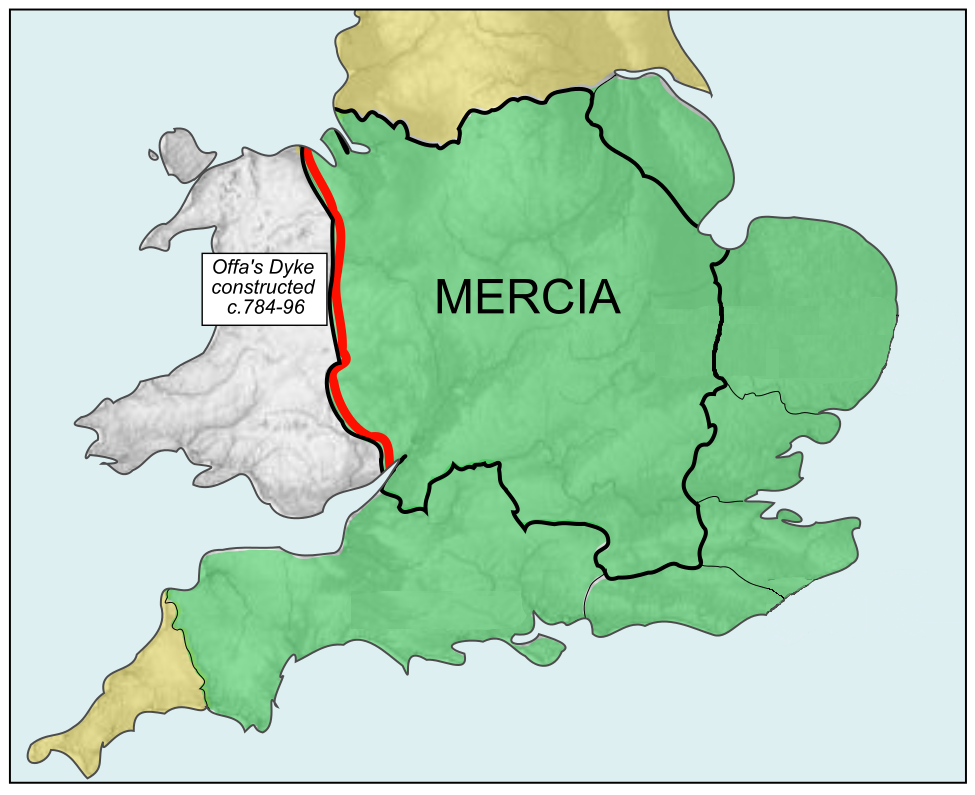
Courtesy of Wikipedia: https://en.wikipedia.org/wiki/Mercia#/media/File:Mercian_Supremacy_x_4_alt.png
To best explain the Mercian Supremacy, here’s this video by Captivating History (“Mercia Explained in 11 Minutes”):
[embed]
As we are talking about flags, here’s a link to the Mercia flag which resembles a sort of X-Men like cross emblem (which the X-Men “X” emblem, in itself, is a type of heraldry as well).
Similar to the Arceontic Society, Mercia also had tavern poets which performed lyrical poetry, they were called Scops.
The Sea Crest…Sec cres… the Seacrete…The Sea of Crete… the Secret begins to unravel.
The Star-Spangled Banner lyrics are about a victory, where the battle flag of the country stood the test of conflict during the battle of Fort McHenry. The battle took place in September 1814, when British troops attempted to invade the Fort in Baltimore, but were unsuccessful in this 25-hour battle.
“The Flag was still there.”
Photo by Brandon Mowinkel on Unsplash
While the current rendition waves fifty stars over a navy blue canton representing the fifty mainland United States- states, and the white and white stripes (thirteen) of which supposedly represent the thirteen colonies, there is more to this flag than meets the changing winds that plow through each stitched polyester cut piece.
메타데이터
- post_id
- 42cd2e4ef3cc
- slug
- the-clandestine-guise-42cd2e4ef3cc
- url
- https://medium.com/@adam.good-day/the-clandestine-guise-42cd2e4ef3cc
- canonical_url
- https://medium.com/@adam.good-day/the-clandestine-guise-42cd2e4ef3cc
- author_url
- https://medium.com/@adam.good-day
- status
- ok
- fetched_at
- 2026-07-25 08:11:21