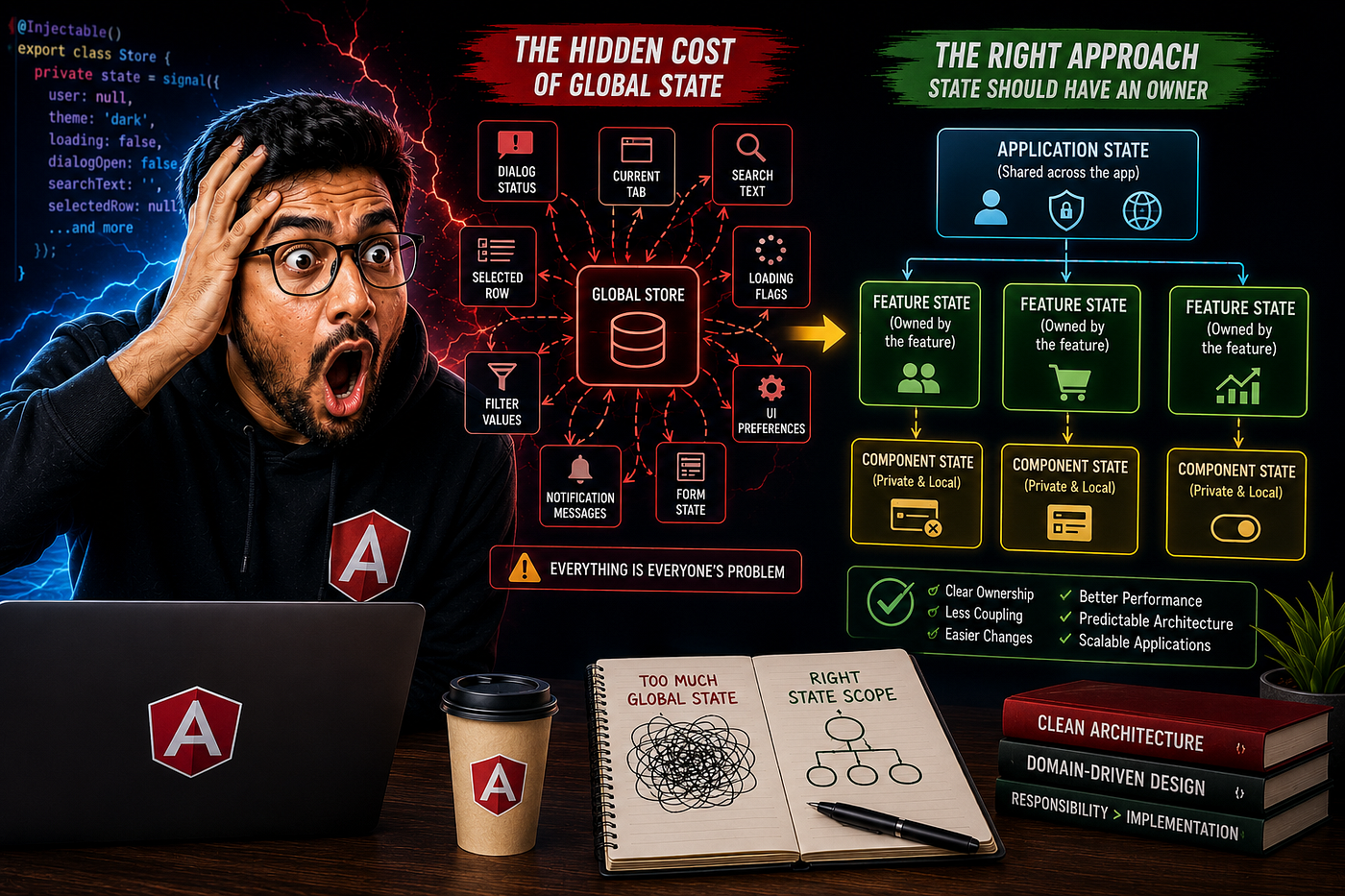
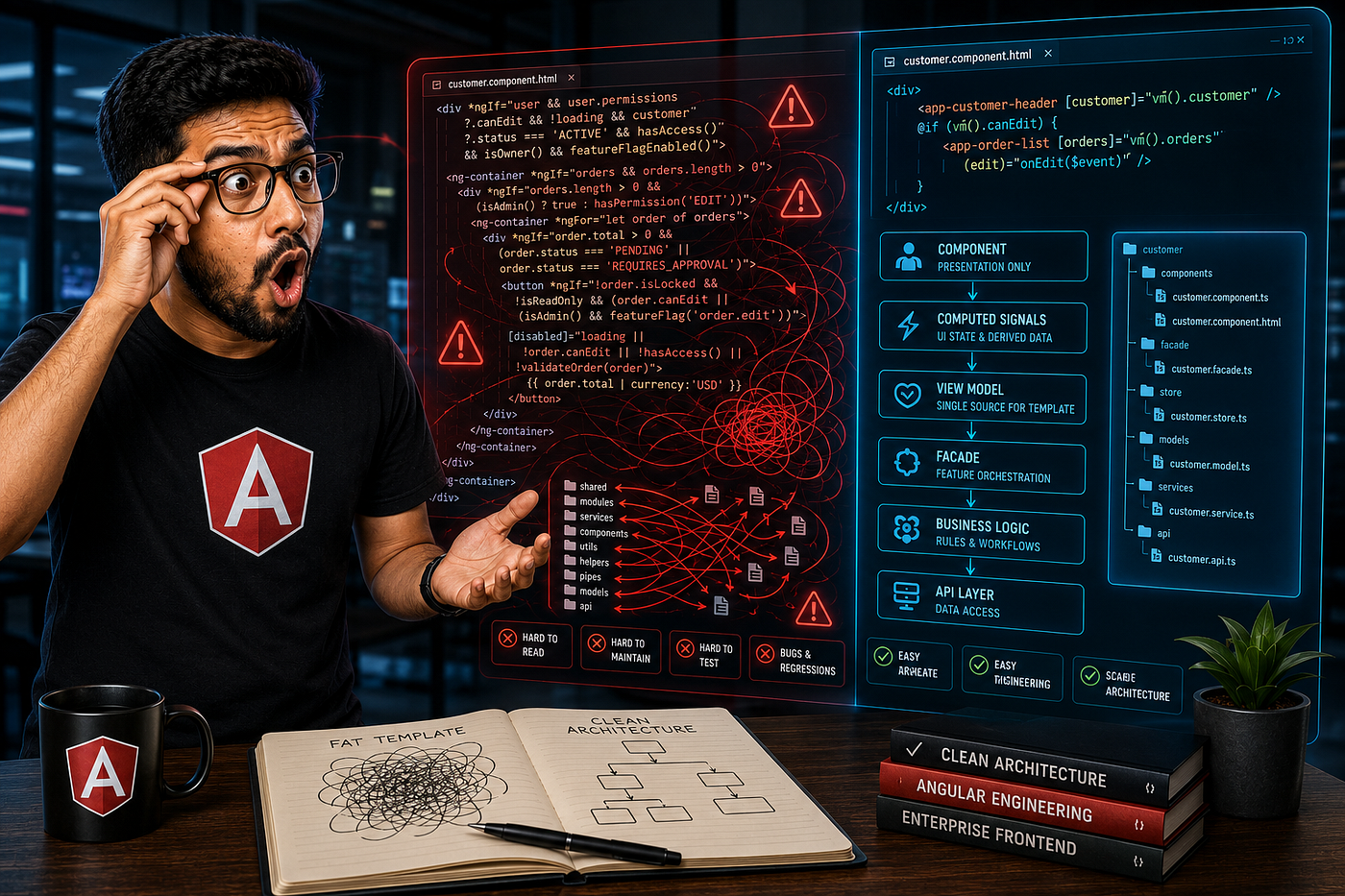
Your Application Has Too Many Side Effects — And It’s Becoming Unpredictable
The more hidden side effects your system has, the harder it becomes to debug, scale, and trust.
Your Application Has Too Many Side Effects — And It’s Becoming Unpredictable
The more hidden side effects your system has, the harder it becomes to debug, scale, and trust.
🚨 The Problem Developers Usually Don’t Notice
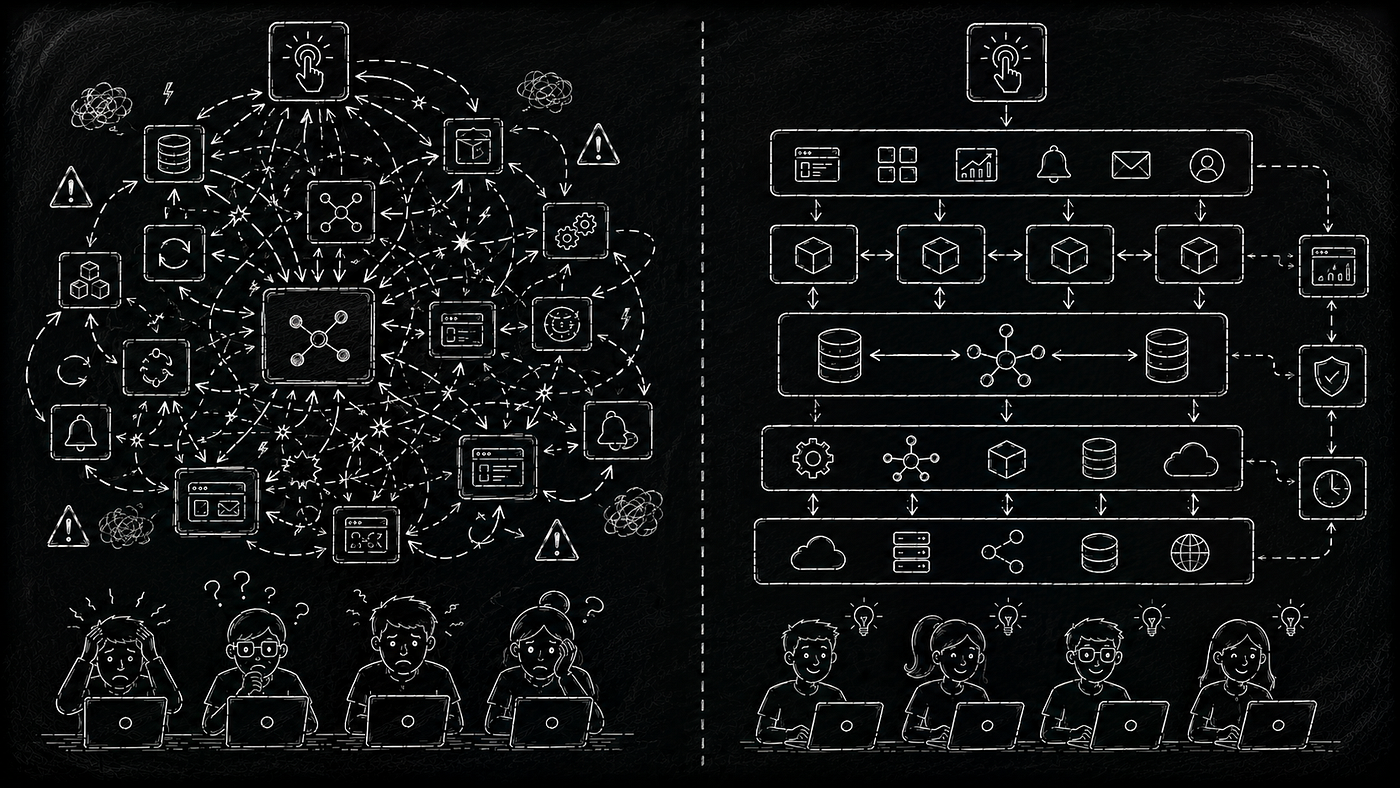
A user clicks one button…
…and suddenly:
- another component updates
- multiple API calls trigger
- state changes unexpectedly
- loaders appear randomly
- unrelated features react
Nobody fully understands why.
This is what happens when applications become filled with uncontrolled side effects.
❌ What Is a Side Effect?
A side effect happens when an operation unexpectedly changes something outside its own responsibility.
Examples:
- changing shared state
- triggering API calls
- modifying global variables
- mutating objects
- emitting hidden events
- updating unrelated systems
Side effects are not always bad.
Uncontrolled side effects are.
❌ Common Anti-Pattern
Example:
updateUser(user: User) {

this.userState.currentUser = user;
  localStorage.setItem('user', JSON.stringify(user));
  this.analytics.track('USER_UPDATED');
  this.notificationService.show('Updated');
  this.http.post('/api/user', user).subscribe();
}
One method is now:
- updating state
- saving locally
- triggering analytics
- showing UI notifications
- calling APIs
This creates hidden system behavior.
⚠️ Why This Becomes Dangerous at Scale
As applications grow:
Side effects become:
- difficult to trace
- difficult to debug
- difficult to test
- difficult to predict
Now imagine:
- retries
- race conditions
- async workflows
- real-time updates
Suddenly bugs become mysterious:
“Sometimes it works.” “Sometimes state changes unexpectedly.” “Nobody knows what triggered it.”
That’s architecture instability.
🔥 The Real Scalability Problem
Systems filled with hidden side effects become:
- tightly coupled
- fragile
- unpredictable
Because every action potentially affects:
- multiple modules
- shared services
- global state
- background processes
And developers lose confidence in the system.
❌ Another Dangerous Pattern
Mutating shared objects directly:
user.name = 'John';Now every reference to that object changes silently.
This creates:
- unpredictable rendering
- stale state bugs
- debugging nightmares
Especially in large frontend architectures.
✅ Better Engineering Approach
Prefer predictable data flow.
Instead of mutating:
user.name = 'John';Create new immutable objects:
const updatedUser = {
  ...user,
  name: 'John'
};
Now changes become:
- explicit
- traceable
- predictable
✅ Isolate Side Effects Properly
Good architecture separates:
ResponsibilityLocationUI RenderingComponentsBusiness LogicServicesState UpdatesState LayerAPI CallsData LayerAnalyticsEffect Layer
This creates controlled system behavior.
🔍 Why Predictability Matters
Senior engineers optimize for:
“Can developers understand what this action will affect?”
Predictable systems scale better because:
- debugging becomes easier
- onboarding becomes faster
- failures become isolated
- behavior becomes observable
That’s architectural maturity.
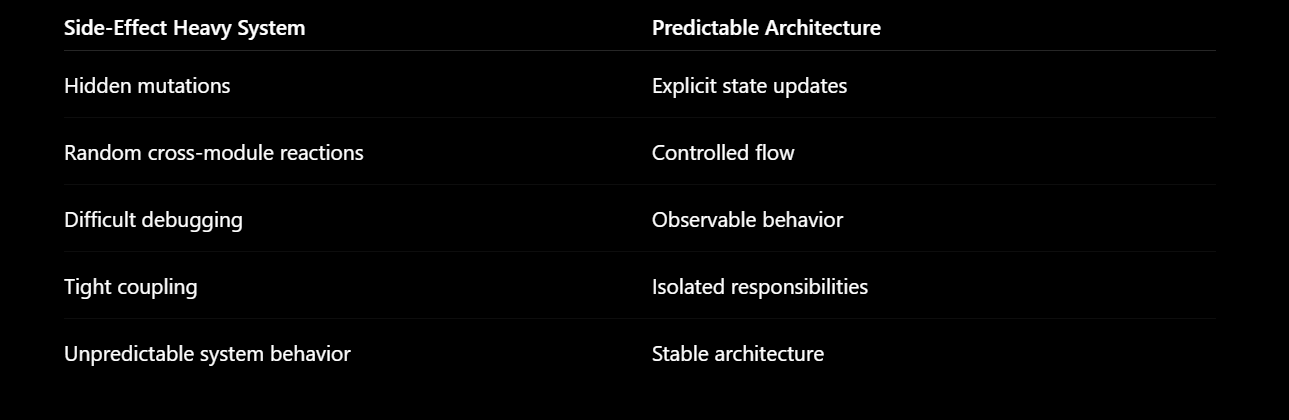
🏗️ Architecture Comparison
🧠 Senior-Level Insight
One of the most important architecture principles is:
Predictability scales better than cleverness.
Systems become maintainable when:
- actions are explicit
- flows are traceable
- responsibilities are isolated
Not when everything reacts magically behind the scenes.
The more invisible behavior a system has…
…the more fragile it becomes.
🎯 Final Takeaway
If your application contains:
- hidden mutations
- random event chains
- unexpected reactions
- uncontrolled shared state changes
…your architecture is becoming unpredictable.
Great systems are easy to reason about.
That’s what makes them scalable.
Connect with Me
If you enjoyed this post and would like to stay updated with more content like this, feel free to connect with me on social media:
- Twitter : Follow me on Twitter for quick tips and updates.
- LinkedIn : Connect with me on LinkedIn
- YouTube : Subscribe to my YouTube Channel for video tutorials and live coding sessions.
- Dev.to : Follow me on Dev.to where I share more technical articles and insights.
- WhatsApp : Join my WhatsApp group to get instant notifications and chat about the latest in tech
Email: Email me on dipaksahirav@gmail.com for any questions, collaborations, or just to say hi!
I appreciate your support and look forward to connecting with you!
메타데이터
- post_id
- 42f6abef83eb
- slug
- your-application-has-too-many-side-effects-and-its-becoming-unpredictable-42f6abef83eb
- url
- https://medium.com/angular-engineering/your-application-has-too-many-side-effects-and-its-becoming-unpredictable-42f6abef83eb
- canonical_url
- https://medium.com/angular-engineering/your-application-has-too-many-side-effects-and-its-becoming-unpredictable-42f6abef83eb
- author_url
- https://medium.com/@dipaksahirav
- status
- ok
- fetched_at
- 2026-06-09 15:37:30