Why ChatGPT Picks One Brand Over Its Competitor: The Signals That Decide the Recommendation in 2026
Ask ChatGPT for the best tool in your category and it names two or three brands. Yours is usually not one of them, and the reason is rarely…
Why ChatGPT Picks One Brand Over Its Competitor: The Signals That Decide the Recommendation in 2026

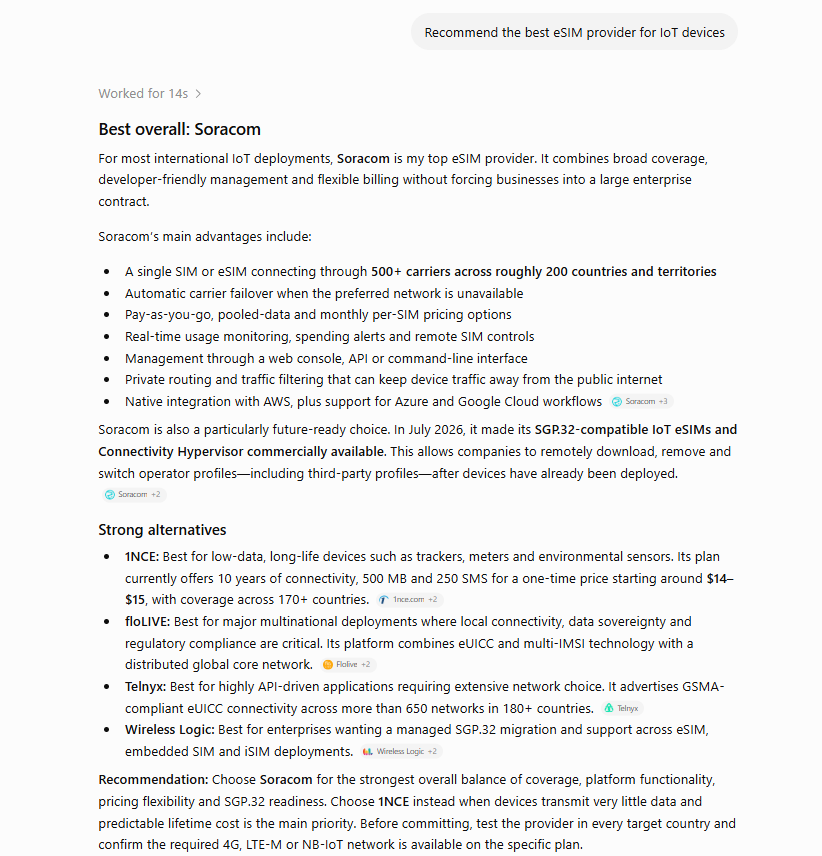
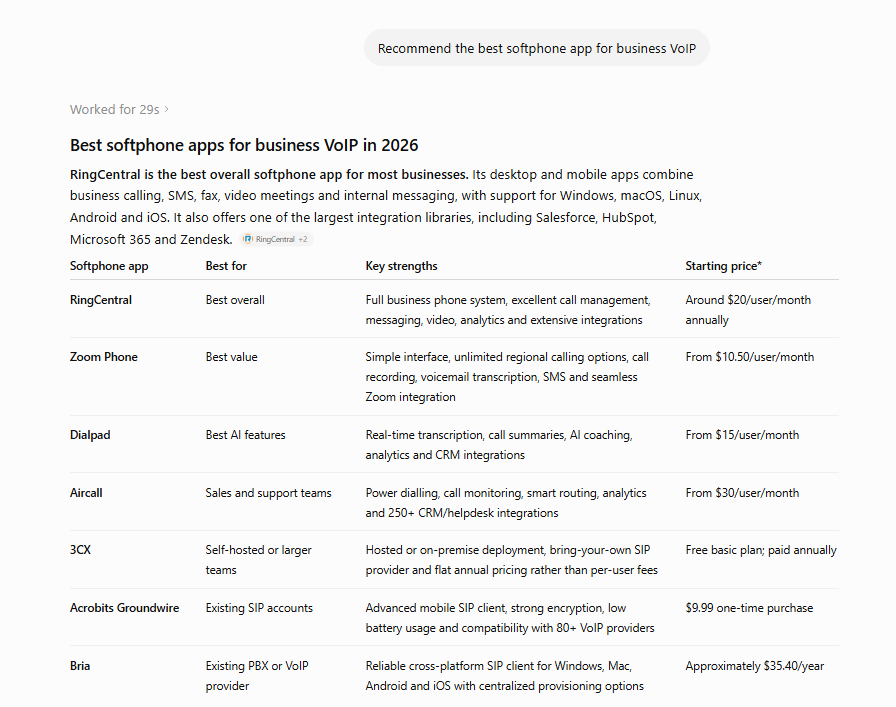
Ask ChatGPT for the best tool in your category and it names two or three brands. Yours is usually not one of them, and the reason is rarely the one founders assume. It is not that your product is worse. It is that the model scored a competitor higher on a small set of signals it weighs before it writes a single word of the answer. If you want to learn how to rank in ChatGPT search, you have to stop thinking about your page and start thinking about the decision the model is making between you and the brand it picked instead.
That decision is more mechanical than it looks. ChatGPT does not have an opinion about your company. When it answers a commercial question, it runs a pipeline, pulls a set of sources, and resolves competing brands by how strongly each one shows up across those sources. Get the signals right and you are the brand it recommends. Get them wrong and you are the one it never mentions, even when your product is the better buy. This is the decision-logic view of how to rank in ChatGPT search, and it is the view that actually predicts who wins the recommendation.
What “the recommendation pipeline” actually means
Before any of the signals matter, it helps to know what the model is doing when it answers. The recommendation pipeline is the sequence ChatGPT runs when you ask it a question with commercial intent: it decides whether to search, pulls live results, reads them, and writes a summary that names specific brands.
Here is the part most guides skip. ChatGPT does not search every time. Semrush, in a study that analyzed months of clickstream data, found that ChatGPT enables its search feature on just 34.5% of queries as of early 2026, down from 46% in late 2024, which means most answers still come from training data alone. That single fact reshapes how you think about ranking in ChatGPT search. For roughly two-thirds of queries, the model is recalling what it already learned about your category. For the rest, it goes and looks.
In our own work at Nine Peaks Media, we describe the live-search version of the pipeline to clients as four steps: ChatGPT runs the query through a real search engine, scrapes the top results, analyzes that content and checks for brand mentions, then writes the summary the user sees. Google’s own documentation describes a parallel mechanism for its AI features, noting that the system may use a query fan-out technique that issues multiple related searches across subtopics to build a response. The takeaway is the same in both systems. The model is not reading your homepage in isolation. It is reading a slice of the web about your category and deciding which brands inside that slice are strong enough to name.
That is why ranking in ChatGPT search is a contest, not a checklist. Two brands enter the pipeline. One comes out in the answer. The rest of this piece is about the signals that decide which one.
The four signals ChatGPT weighs before it picks
A signal is a property the model can measure about a brand from the content it has seen. We track four that consistently separate the brand that gets recommended from the one that gets skipped: entity strength, mention frequency, recency, and authority. They are not equally weighted, they interact, and most brands that fail to rank in ChatGPT search are losing on one specific signal while winning on the others.
Think of them as a scorecard the model fills in silently. Below is each one, what it measures, where brands lose the pick, and how to build it.
Signal 1: Entity strength
Entity strength is how clearly and consistently the web associates your brand name with your category. An entity is just a named thing the model recognizes: your brand, your category, the problem you solve. When ChatGPT reads “best X for Y,” it is matching that query against entities it has strong, repeated associations for. If your brand name shows up next to your category in a hundred different places with consistent wording, you are a strong entity. If it shows up three times with three different descriptions, you are noise.
This is where most brands quietly lose the recommendation. They describe themselves five different ways across their own site and their third-party mentions, so the model never builds a confident link between the brand and the category. One pattern Nine Peaks Media sees repeatedly across the B2B software and SaaS accounts we run is that the signal that wins citations is broad topic and entity coverage, not the exact-match keyword. We analyzed why a competitor was cited for an “AI SEO” query and found the model was not rewarding the literal phrase at all. It was rewarding brands that covered the surrounding topic densely, because that density is what builds entity strength.
To build it, pick one description of what you are and who you serve, and repeat it everywhere: your homepage, your listings, your third-party mentions, your reviews. Consistency does the work. A brand that says the same true thing about itself in fifty places will out-rank a brand that says fifty slightly different things, even if the second brand has more content. That consistency is the foundation of how to rank in ChatGPT search, because it is what the model uses to tell two competing brands apart.
Signal 2: Mention frequency
Mention frequency is how often your brand appears across the sources the model pulls, especially in lists and comparisons. This is the signal that most resembles old-school SEO and the one most misunderstood. For AI recommendations, the unit is not a backlink. It is a mention. A sentence that says “we use this brand” counts, even with no link attached, and the more of those you have across credible pages, the higher you tend to surface.
Where brands lose here is by chasing links instead of mentions. They build backlinks to their homepage and wonder why ChatGPT still names the competitor. The competitor is not winning on links. It is winning because it appears inside the listicles, roundups, and forum threads the model scrapes when it answers the query. When ChatGPT runs the pipeline and checks the scraped content for brand mentions, the brand named in eight of the ten sources wins over the brand named in one, regardless of which has the prettier site.
Building this signal means getting included in the third-party content that ranks for your commercial queries. Find the pages that surface when you run your buyer’s actual question, then earn a mention on as many of them as you legitimately can: inclusion in comparison posts, honest contributions to relevant forum threads, presence in the directories and review platforms for your category. The brand that learns how to rank in ChatGPT search treats mention frequency as a volume game played only on quality sources, never as a license to spam low-value pages.
Signal 3: Recency
Recency is whether the content carrying your brand looks current to the model. When ChatGPT browses to answer a question, fresh content outweighs stale content, because the model treats a recent date and current-year references as a signal that the information is still reliable. A 2026 comparison that names you beats a 2023 one that does not.
Recency is also why a brand can rank in ChatGPT search one month and vanish the next. We track AI referral traffic for clients and have watched a single account’s ChatGPT-driven visits climb hard through one stretch of the year and then fall back, not because the brand got worse, but because the mentions that were feeding the recommendation aged out or got replaced by fresher sources naming someone else. The pick is not permanent. It is re-decided every time the model searches, against whatever content is current at that moment.
To build recency, keep your category content moving. Refresh the comparison pages and listings that mention you so their dates stay current, and keep earning new mentions rather than resting on old ones. The goal is to always be present in the freshest layer of content about your category, because that freshest layer is what the model reaches for first when it decides who to recommend in ChatGPT search.
Signal 4: Authority
Authority is whether the sources carrying your brand are ones the model trusts. A mention in a respected industry publication counts for more than a mention on a thin, unknown blog, because the model mirrors the editorial judgment of the sources it learned from. This is the signal that keeps mention frequency honest: a thousand mentions on junk pages lose to a dozen on trusted ones.
Brands lose on authority in two ways. The obvious one is earning mentions only on low-quality sources the model discounts. The subtler one is neglecting their own site as a trust anchor. The Content Marketing Institute makes the point (https://contentmarketinginstitute.com/ai-in-marketing/prioritize-website-content) that AI can hallucinate, so your website is where users can get verified information, which means a thin or inconsistent site does not just fail to help, it actively weakens the brand the model is trying to confirm. If your own pages contradict or under-describe what the third-party sources say, you give the model a reason to trust the competitor instead.
Building authority means being selective. Prioritize mentions on sources that already rank and carry real audience trust over easy placements anywhere. Tighten your own site so it confirms, in plain language, exactly what the high-authority sources say about you. When the trusted pages and your own pages tell the same story, the model has every reason to pick you, and that alignment is the part of how to rank in ChatGPT search that no shortcut replaces.
A worked contrast: why ChatGPT picks Brand A over Brand B
Signals are easier to feel as a decision than as a list. Picture two competitors in the same software category, both real products, both with capable teams. Call them Brand A and Brand B. A buyer asks ChatGPT for the best option in their category, and the model returns Brand A and skips Brand B. Here is the scorecard that produced that outcome.
Entity strength. Brand A describes itself the same way everywhere: same category phrase, same buyer named, on its site and in every third-party mention. Brand B describes itself three different ways and uses internal jargon nobody searches. The model has a confident entity for A and a fuzzy one for B.
Mention frequency. When the model scrapes the live results for the query, Brand A appears in seven of the ten sources, including the comparison posts and a couple of forum threads. Brand B appears in one. Even though B has more backlinks to its homepage, it is barely present in the content the model actually reads to answer this question.
Recency. The pages naming Brand A were updated this year and carry current dates. The strongest page naming Brand B is two years old and increasingly ignored in favor of fresher sources. When the model reaches for the current layer of content, A is there and B is not.
Authority. Brand A’s mentions sit on sources the model trusts, and A’s own site says exactly what those sources say. Brand B’s few mentions are on thin pages, and its site under-describes the product, so nothing reinforces the claim.
Brand B is not losing because its product is worse. It is losing four to nothing on the signals, and any one of those gaps would have hurt it. This is the real answer to how to rank in ChatGPT search: you do not beat a competitor by being better in the abstract, you beat them by out-scoring them on entity strength, mention frequency, recency, and authority for the specific queries your buyers ask.
How the signals interact
The signals are not independent, and treating them as a checklist to tick off one at a time is how brands stall. They compound. Strong entity strength makes every mention count for more, because the model can attribute the mention to a brand it already recognizes. High mention frequency on low-authority sources is mostly wasted, because authority gates how much each mention is worth. Recency decays all of it, because a brand that built strong signals last year but stopped will lose to a brand actively building this year.
This is why the brands that consistently rank in ChatGPT search are usually the same brands doing well in traditional organic search. The pipeline pulls from the live web, so if you do not show up in the search results the model scrapes, you are not in the pool of brands it can pick from. The foundation that earns organic rankings is the same foundation that gets you cited, which is why the two cannot be separated in practice.
It also means there is no single trick. A brand that wants to win the recommendation has to move all four signals together, on the queries that matter, on a schedule, against competitors who are doing the same. That is unglamorous, and it is exactly why most brands never get picked.
How to start building the signals this quarter
You do not need to optimize everything at once. You need to find the specific queries where a competitor is getting picked over you, then close the signal gaps for those queries first. The work is sequenced, not scattered.
Map the queries that decide your category. Write down the five to ten questions your buyers actually type into ChatGPT, in their words, with location modifiers where they apply. These are the queries where the recommendation gets decided, and the rest of the work targets them.
Run each query and read the answer like a scorecard. See which brands get named and which sources the model pulled. Those sources are your target list, because mention frequency is built by appearing inside them.
Audit your entity consistency first. Before chasing mentions, make sure your brand describes itself the same way everywhere. A consistent entity makes every later mention worth more, so this is the cheapest high-impact move.
Earn mentions on the trusted, current sources only. Prioritize inclusion in the authoritative pages already ranking for your queries, and keep them fresh. Skip the low-authority pages that the model discounts anyway.
Keep score over time. The pick gets re-decided whenever the model searches, so track whether you are gaining or losing presence on your target queries month over month, and keep building rather than declaring victory.
Key takeaways
ChatGPT picks between brands using a small set of signals, not an opinion. Learning how to rank in ChatGPT search means winning on those signals for your specific queries, not having the objectively better product.
The recommendation pipeline reads a slice of the web, not your page alone. The model searches on a minority of queries, scrapes the results, and checks them for brand mentions before it writes the answer.
Four signals decide the pick: entity strength, mention frequency, recency, and authority. Most brands that fail to rank in ChatGPT search are losing badly on one while winning on the others.
The signals compound and decay. Authority gates the value of each mention, entity strength multiplies it, and recency erodes all of it, so the work has to continue rather than finish.
Organic and AI visibility share one foundation. If you do not appear in the live search results the model scrapes, you are not in the pool of brands it can pick from.
Conclusion
The brands that get recommended by ChatGPT are not the ones with the best slogans or even the best products. They are the ones that score highest on entity strength, mention frequency, recency, and authority for the exact questions their buyers ask. The recommendation is a decision the model makes between competitors, and you win it by understanding the scorecard and building each signal deliberately, on the queries that move revenue, against the competitor currently getting picked instead of you. That is the honest, durable version of how to rank in ChatGPT search, and it rewards patience over tricks.
If you want a team that maps the signals deciding your category and builds them on the prompts your buyers actually use, talk to Nine Peaks Media, an AI visibility optimization agency that helps debt collection and credit decisioning software companies, healthcare IT and EHR integration vendors, IoT and eSIM connectivity providers, and custom software development firms earn AI search visibility and get cited by ChatGPT, Perplexity, and AI Overviews.
메타데이터
- post_id
- 431ccd69c41d
- slug
- why-chatgpt-picks-one-brand-over-its-competitor-the-signals-that-decide-the-recommendation-in-2026-431ccd69c41d
- url
- https://medium.com/@mike_khorev/why-chatgpt-picks-one-brand-over-its-competitor-the-signals-that-decide-the-recommendation-in-2026-431ccd69c41d
- canonical_url
- https://medium.com/@mike_khorev/why-chatgpt-picks-one-brand-over-its-competitor-the-signals-that-decide-the-recommendation-in-2026-431ccd69c41d
- author_url
- https://medium.com/@mike_khorev
- status
- ok
- fetched_at
- 2026-07-13 16:06:16