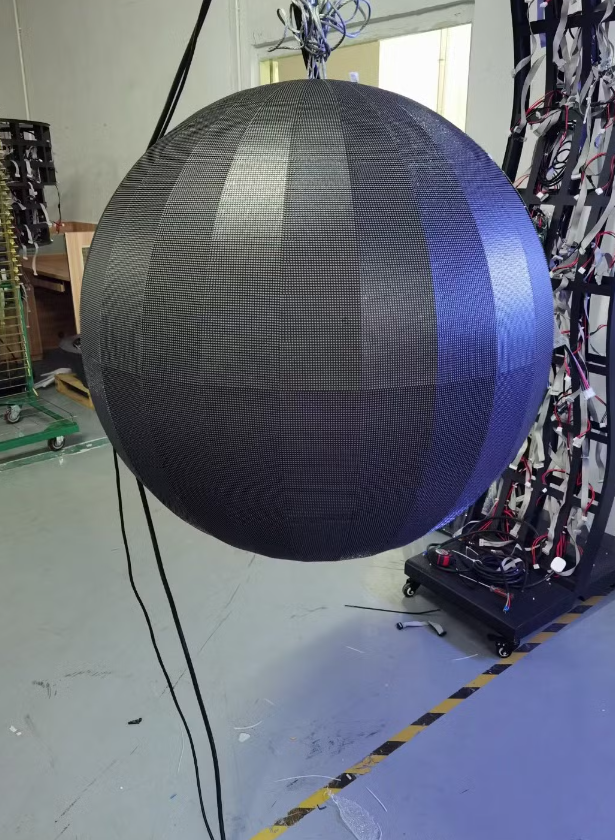
How to build a professional-level XR stage: full-link synchronization technology
The professional-grade XR (extended reality) stage is a deep integration of LED display technology, real-time rendering engine and…
How to build a professional-level XR stage: full-link synchronization technology
The professional-grade XR (extended reality) stage is a deep integration of LED display technology, real-time rendering engine and high-precision camera tracking system. The core logic of building an XR space that can support broadcast-level or film-level production is to build a closed-loop system that can realize “In-Camera VFX”. A successful XR stage not only requires extremely high pixel density, but also relies on microsecond-level full-link synchronization (Genlock) between display hardware, processing systems and rendering backends.
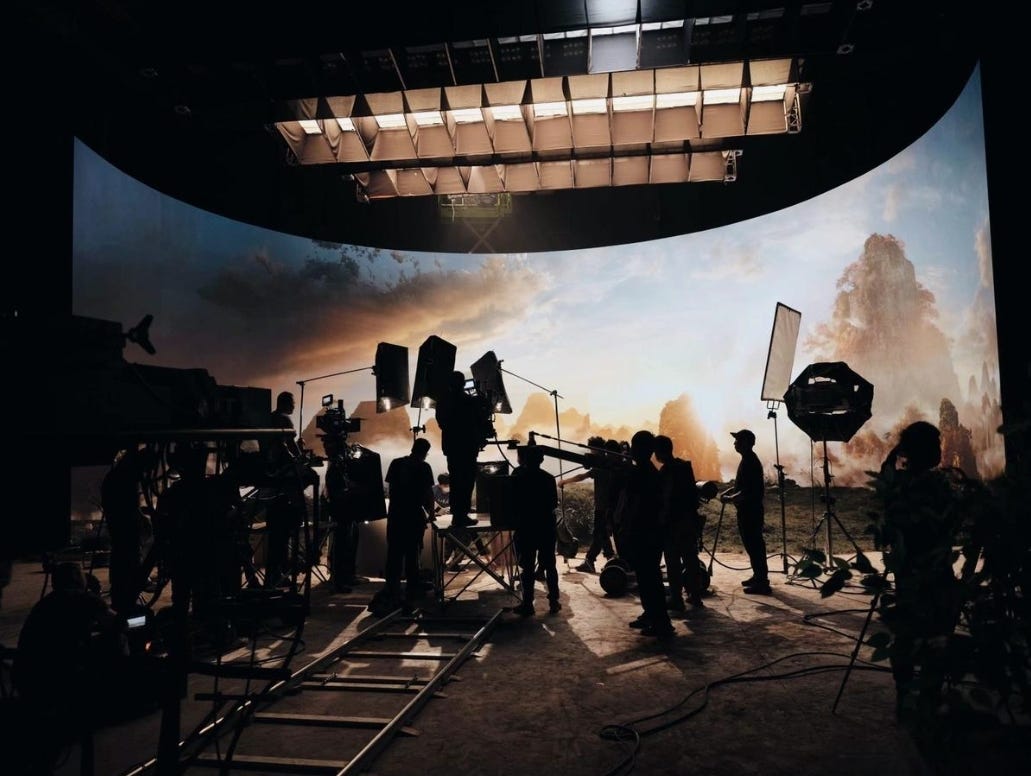
Step One: Spatial Site Selection and Physical Infrastructure Architecture
The construction of the XR stage is first restricted by the physical space. Different from traditional studios, XR stages have strict requirements on power supply, structural load-bearing and space height. Giving you a 2026 XR LED wall cost guide.
Height and viewing distance: The height of the LED curtain wall of a professional XR stage is usually not less than 5 meters. This is not only to reserve hanging space for the lights, but also to ensure that the wide-angle lens will not be “crossed” when shooting.
Power and heat dissipation: High-brightness, high-refresh-rate LED modules consume huge amounts of power. The peak power consumption of a medium-sized XR stage (such as a 100 square meter LED background) may exceed 100kW. The power system must support three-phase electrical redundancy and be equipped with an independent industrial-grade precision air-conditioning system, because LED light efficiency is significantly affected by temperature, and temperature fluctuations can cause color shift (Color Shift).
Ground load-bearing: Considering the movement of LED floor tile screens, camera rockers, telescopic guns and other heavy equipment, the flatness error of the ground must be controlled within ±1mm, and the load-bearing capacity per square meter must reach more than 1.5 tons. Provide you with the price of interactive LED ground display in 2026: cost and buying guide.
Step Two: Core Display Hardware Selection: Beyond Pixel Pitch
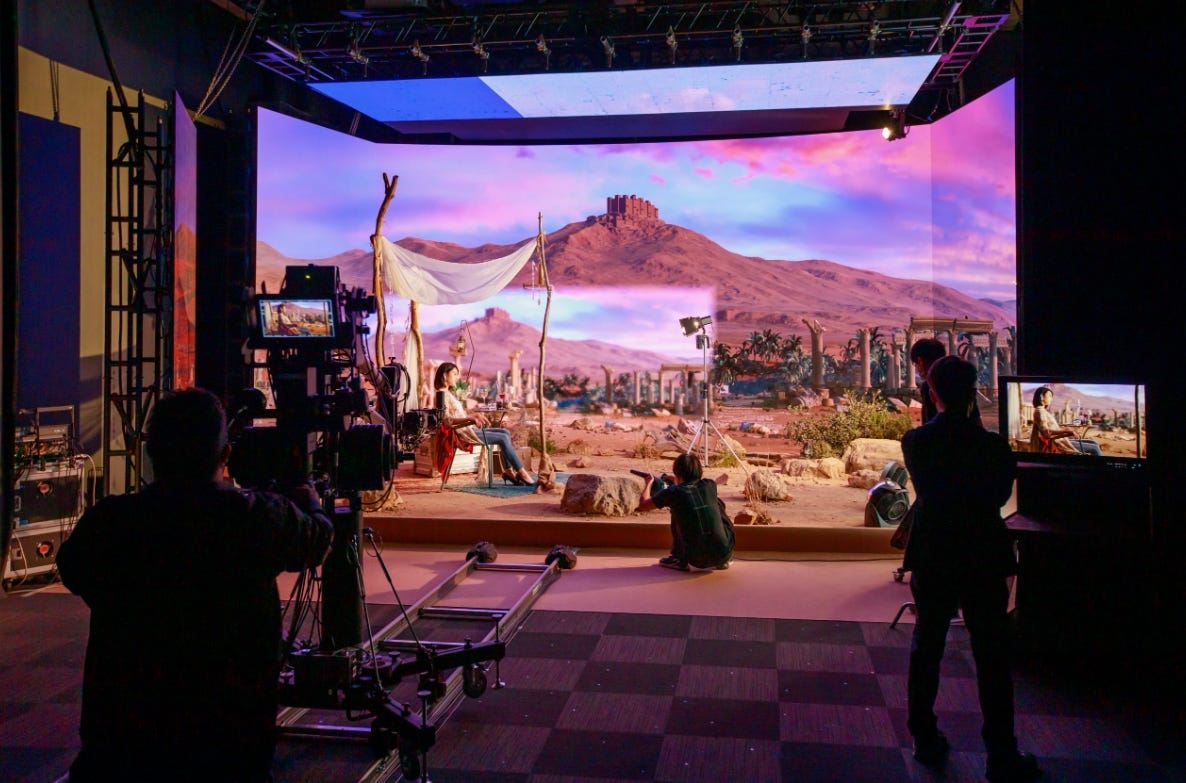
In the XR environment, the LED screen is not only the background, but also the only ambient light source for the camera. B2B buyers should focus on the following three core dimensions, not just pitch.
Scan multiplication and refresh rate: Professional-grade XR stages must use high-brush driver ICs, and the refresh rate is recommended to be 7680Hz or higher. What’s more important is the “scanning method”. Low scans (such as 1/8 scan or 1/16 scan) can easily produce scan lines when shooting at high frame rates. In order to match high-speed shutters, top XR solutions tend to use higher-integrated drive architectures to eliminate moiré and flicker.
Color bit depth and color gamut coverage: In order to meet film-level post-production color grading requirements, the LED system must support 12-bit or even 16-bit internal processing and cover more than 95% of the DCI-P3 color gamut. This requires LED lamp beads to adopt a high-purity packaging process to ensure that they still have extremely high gray-scale expression under low brightness.
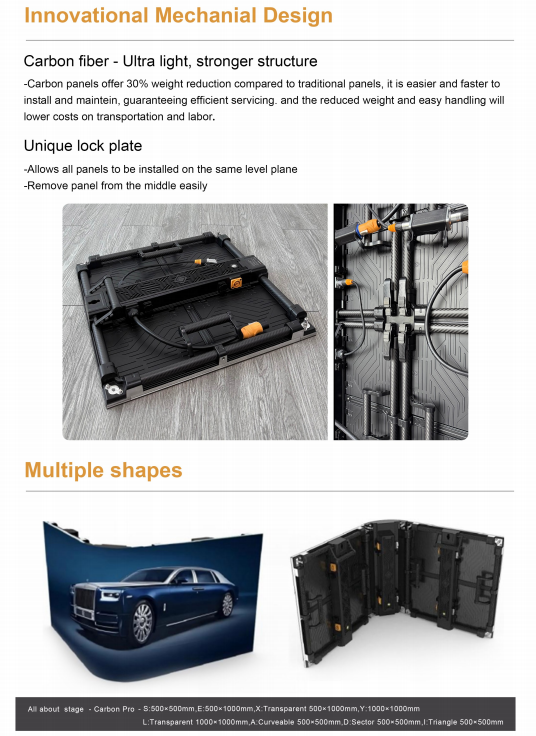
Physical integration of floor tile screens and vertical screens: The connection between the vertical screen and the floor tile screen is a technical difficulty. Professional-grade construction will use customized arc transitions or extremely narrow gap splicing, and ensure color consistency (Color Consistency) of both.
Step 3: Integration of tracking system and real-time rendering pipeline
The soul of the XR stage lies in the real-time conversion of “perspective sense”. When the camera moves, the rendering on the LED screen must change the perspective in real time based on the lens position.
High-precision tracking solution: Currently, the mainstream uses infrared active tracking (such as OptiTrack) or mechanical coding tracking (such as Mo-Sys). System latency (Latency) must be controlled within 2 frames. If the tracking delay exceeds 30 milliseconds, there will be an obvious displacement disconnect between the actor and the virtual background, making the footage unusable.
Rendering node cluster: Real-time rendering is usually completed by Unreal Engine 5 (UE5) in conjunction with the nDisplay system. Professional-level configurations usually use multiple high-performance GPU servers to form a cluster, with each server responsible for driving a portion of the LED area. At this time, high-speed data links (such as 25Gbps or 100Gbps optical fiber networks) are the key to ensuring seamless picture splicing.
Step 4: Technical difficulties in full-link system synchronization (Genlock)
This is the most professional and most easily overlooked link in XR stage construction. Without a unified clock reference, the picture will crack, tear, or flicker.
Synchronized clock source: A master clock generator (Sync Generator) must be used to provide a unified Tri-level Sync signal for cameras, LED video processors, rendering servers, and tracking systems.
Shutter phase adjustment: Even if all devices are synchronized, there may still be a phase difference between the LED refresh cycle and the camera shutter opening. Professional-grade video processors (such as Brompton Tessera SX40 or Megapixel Helios) allow for microsecond-level phase offset adjustment so that the camera’s exposure time accurately falls within the stable LED display range.
Step 5: Complementary design of acoustic environment and lighting
The XR stage is a highly integrated optical system, but the reality of light and shadow often depends on how to “fill in the light.”
Ambient light compensation: Although the LED screen provides basic lighting, when shooting people’s faces, an automated lighting system (DMX control) still needs to be linked with the rendering engine. When the virtual sun on the screen moves, the physical film and television lights should also change their brightness and angle in real time.
Acoustic treatment: The LED screen is a huge hard reflective surface that is prone to echoes and standing waves. The professional construction plan will arrange high-efficiency sound-absorbing materials behind the LED back panel, and perform sound-absorbing treatment on the frame of the sky screen to ensure the clarity of simultaneous recording.
Insights from a professional perspective: Efficiency is vitality
In the technical context of 2026, competition on the XR stage has shifted from “capability” to “efficiency.” An efficient construction process is not only about the stacking of hardware, but also about the innovation of the underlying architecture. For example, using a highly integrated signal transmission protocol to reduce the number of photoelectric conversions can significantly reduce system failure rates and maintenance costs.
At the same time, considering the high turnover rate of XR projects, the flexibility of the system architecture is crucial. An excellent professional-grade XR stage should have “modular” features, be able to complete physical adjustments from a linear screen to a curved screen within a few hours according to shooting needs, and use an automated calibration algorithm (Auto-Calibration) to complete color and tracking calibration in a short time.
Conclusion
Building a professional-grade XR stage is a complex system project, which requires B2B decision-makers to jump out of the purchasing logic of traditional LED displays and instead evaluate technical solutions from the perspectives of “full-link synchronization” and “optical accuracy.” From the power supply and cooling of the infrastructure, to the driving technology of the core LED modules, to the complex Genlock synchronization management, the redundancy and stability of each link directly determines the industrial level of the final product. Choosing a partner with deep technical knowledge and integration capabilities can ensure that this high investment is transformed into sustainable business competitiveness.
메타데이터
- post_id
- 4356595579b4
- slug
- how-to-build-a-professional-level-xr-stage-full-link-synchronization-technology-4356595579b4
- url
- https://medium.com/@sostrondisplay/how-to-build-a-professional-level-xr-stage-full-link-synchronization-technology-4356595579b4
- canonical_url
- https://medium.com/@sostrondisplay/how-to-build-a-professional-level-xr-stage-full-link-synchronization-technology-4356595579b4
- author_url
- https://medium.com/@sostrondisplay
- status
- ok
- fetched_at
- 2026-07-09 13:32:43