The Geometry of Long-Goods Warehousing: Why Counterbalance Forklifts Are Destroying Your Floor…
Every timber yard, steel service center, aluminum extrusion facility, and pipe distribution warehouse eventually reaches the same…
The Geometry of Long-Goods Warehousing: Why Counterbalance Forklifts Are Destroying Your Floor Space Efficiency (2026)
Every timber yard, steel service center, aluminum extrusion facility, and pipe distribution warehouse eventually reaches the same operational bottleneck: the materials they handle are long — 4, 6, 8, 12 meters and beyond — but the equipment they use to move them was never engineered for that geometry.
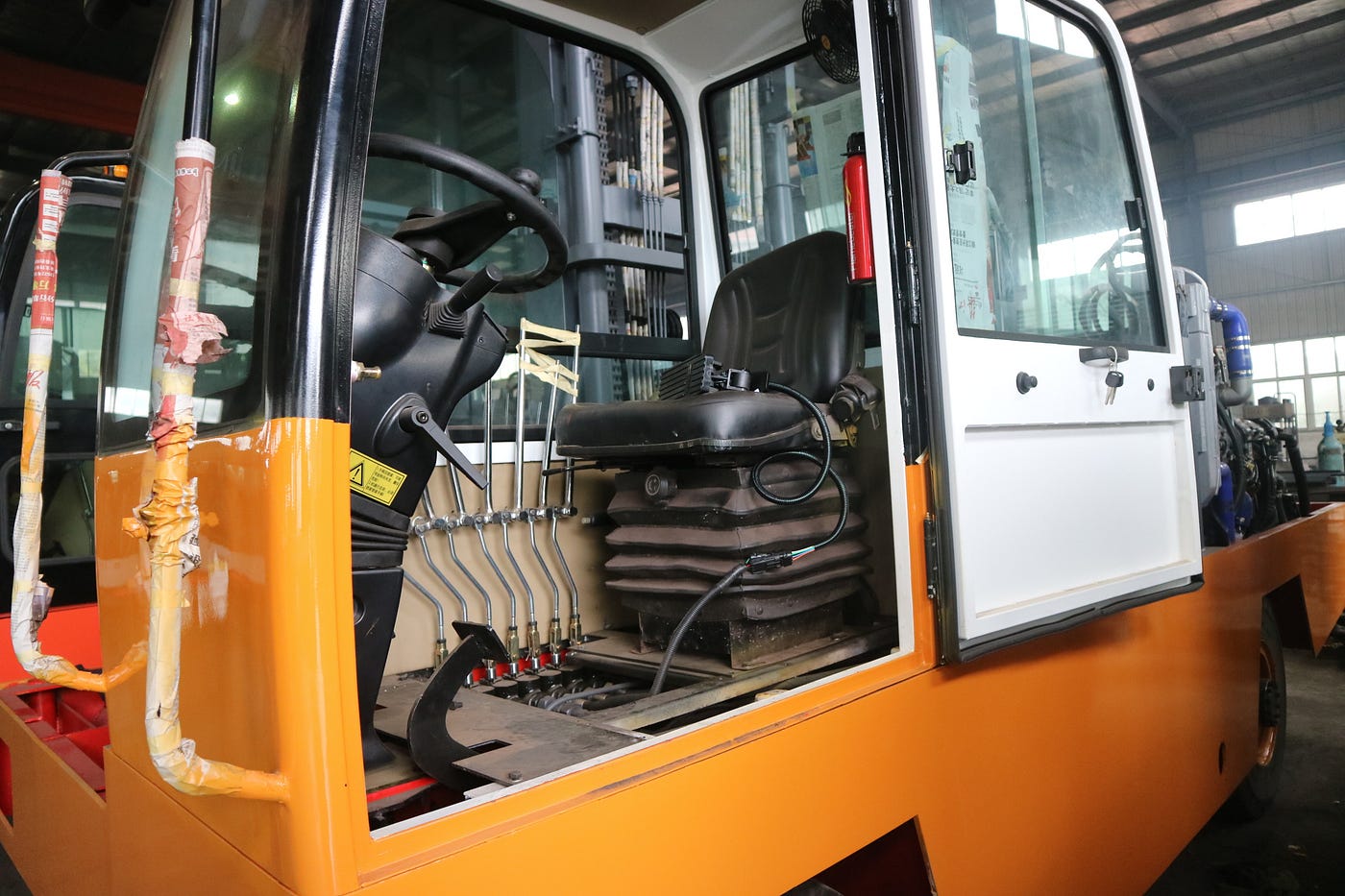
A conventional counterbalance forklift carrying a 6-meter steel beam must approach the load head-on. This forces the racking aisle to be at least 6 meters wide plus the machine’s turning radius just to extract a single load. The result? Too much dead space, severe facility underutilization, and a material handling workflow that bleeds cash.
Driven by the need to eliminate this structural waste, the global side loader forklift market is surging toward USD 11.73 billion by 2030. The engineering reason is mathematically absolute: side loader forklifts pull the long axis of the load parallel to the direction of travel, not perpendicular to it.
Our latest engineering guide breaks down the mechanics and the business case for transitioning to side loaders.
Key Technical Dimensions Exploded in the Full Guide:
- 📏 The Space Recovery Math: Data shows that up to 43% of total warehouse operating costs are tied directly to space utilization. Replacing standard front-loading units with side loaders recovers 2–4 meters of aisle width per bay, driving a 25% to 50% increase in usable storage space without breaking ground on new facilities.
- ⚡ Electric Side Loaders (1,500–5,000 kg): The indoor standard for enclosed timber and metal profiles. Utilizing modern LFP lithium-ion chemistry to allow opportunity charging, completely eliminating the 8-hour cooling cycle required by legacy lead-acid systems.
- 🛢️ Diesel Side Loaders (3,000–12,000 kg): Engineered for the harsh realities of outdoor gravel yards, ports, and heavy structural steel hubs where high capacity and continuous all-weather operation are mandatory.
- 🛠️ Cylindrical Instability & Safety: Why pipe and conduit distribution hubs (handling up to 12-meter loads) rely on lateral hydraulic slide carriages to eliminate the dangerous centrifugal forces generated when conventional forklifts attempt to turn with long loads.
- 📜 Global Regulatory Compliance: A checklist mapping essential certifications, from ISO 3691–1:2015+A1:2020 and EN ISO 3691–3:2016 (for elevating operator trucks) to North American ANSI B56.1 standards.
Stop treating warehouse aisles as dead maneuvering zones. The transition from front-loading to side-loading isn’t just an equipment upgrade — it is a foundational ROI strategy that pays for itself within the first 3 to 5 years.
🔗 Read the Complete Procurement Guide & Technical Selection Matrix:
메타데이터
- post_id
- 435c7d4c5b3f
- slug
- the-geometry-of-long-goods-warehousing-why-counterbalance-forklifts-are-destroying-your-floor-435c7d4c5b3f
- url
- https://medium.com/@runtxari/the-geometry-of-long-goods-warehousing-why-counterbalance-forklifts-are-destroying-your-floor-435c7d4c5b3f
- canonical_url
- https://medium.com/@runtxari/the-geometry-of-long-goods-warehousing-why-counterbalance-forklifts-are-destroying-your-floor-435c7d4c5b3f
- author_url
- https://medium.com/@runtxari
- status
- ok
- fetched_at
- 2026-06-27 10:07:59