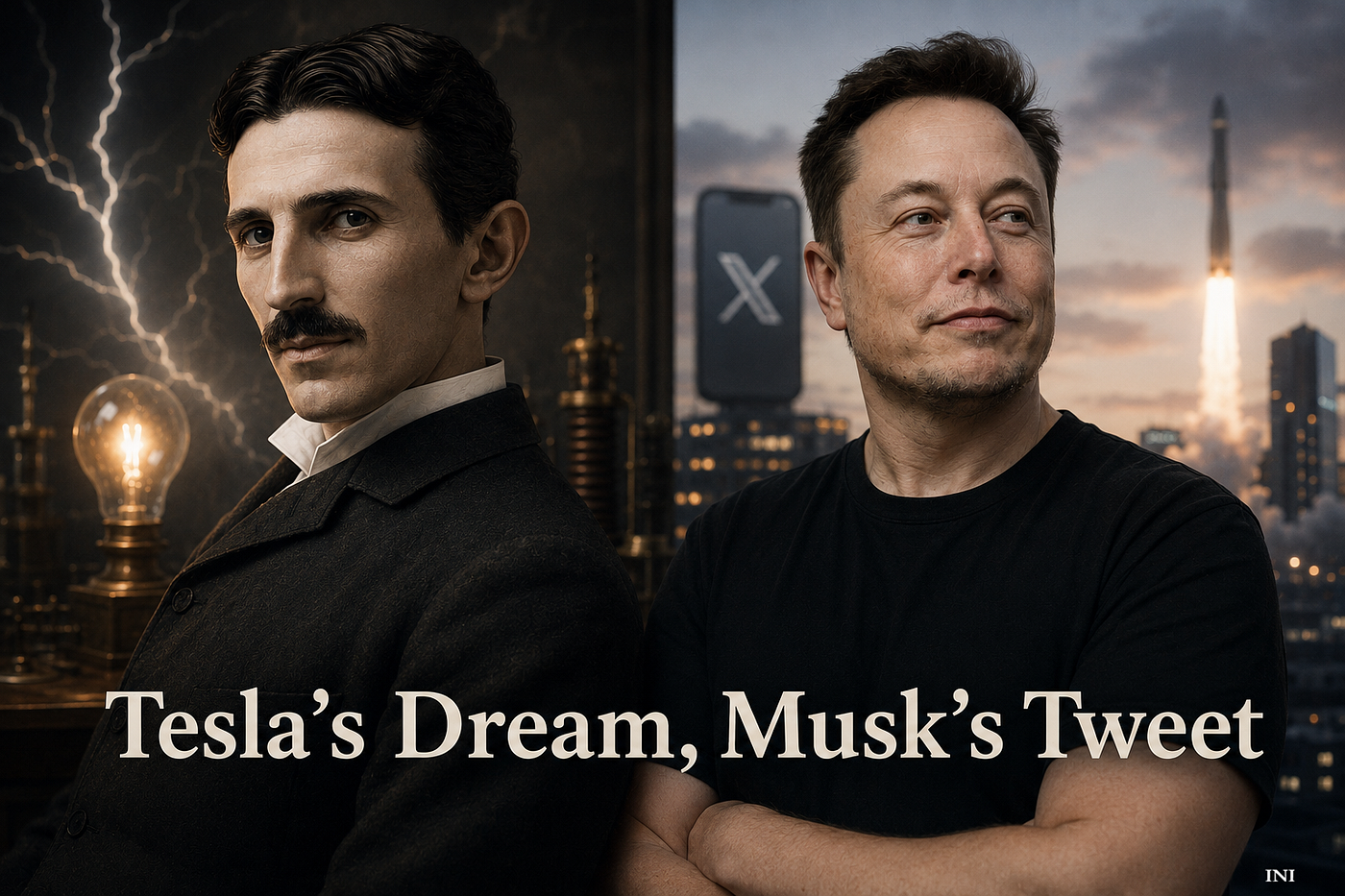
When Nonsense Got a Character Limit…
July 15, 2006 — Twitter goes public, everyone gains the power to address the world, and the world loses the power to escape
When Nonsense Got a Character Limit…
July 15, 2006 — Twitter goes public, everyone gains the power to address the world, and the world loses the power to escape
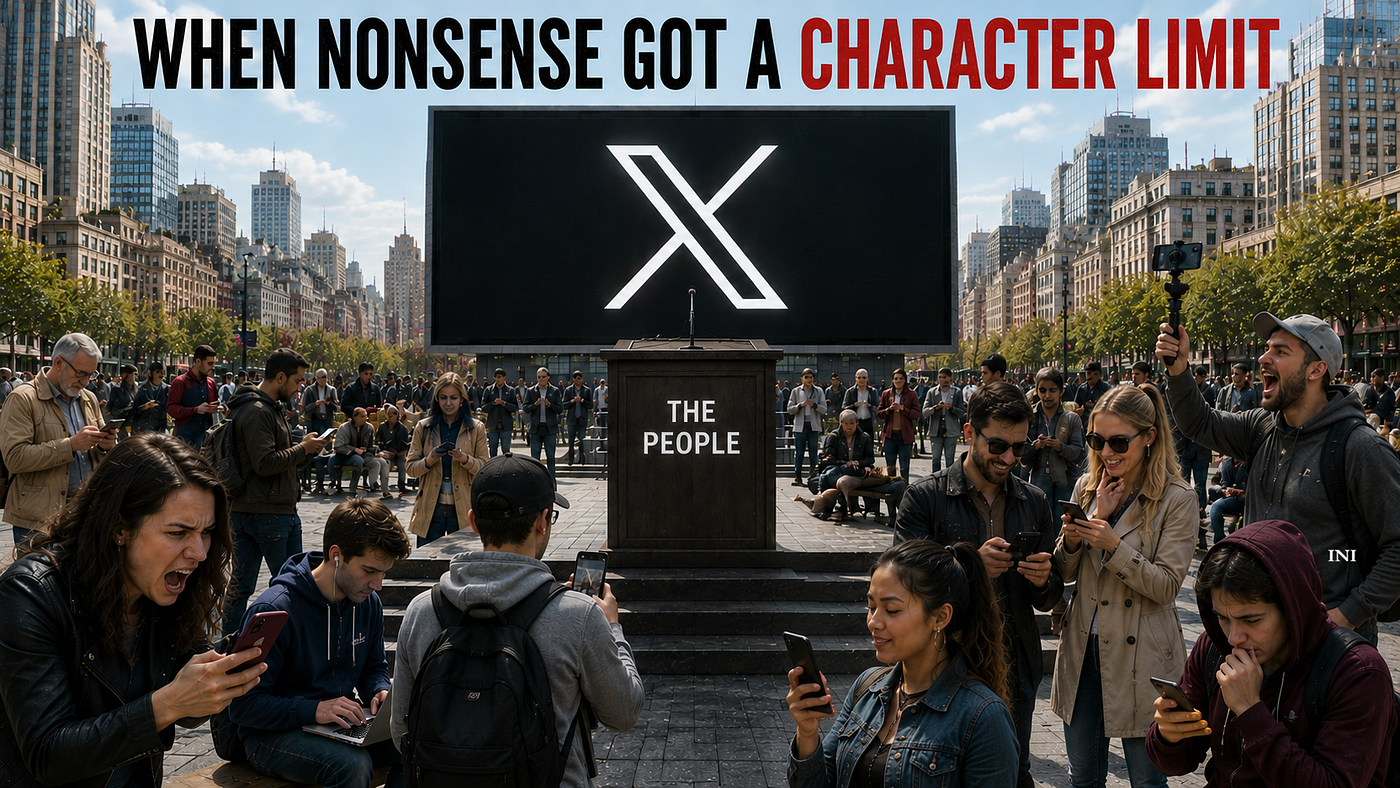
Twitter began with a simple question: What are you doing?
Twenty years later, the answer appears to be: broadcasting certainty, monetising outrage, mistaking visibility for importance, and calling the result public discourse.
The platform changed its name. Humanity merely received more characters.
This satire looks at how a harmless status update became a global stage for self-importance, political theatre, and the democratic distribution of nonsense.
Humanity spent a very long time fighting for freedom of speech.
This was, in itself, a worthy and respectable undertaking. People were imprisoned for what they said. Others were sent to the stake for what they believed, wrote, or refused to recant. Books were burned. Newspapers were banned. Editorial offices were closed. Those in power decided who could speak, what they might speak about, and preferably at what volume they were permitted to say whatever had already been approved for them.
Then July 15, 2006, arrived, and a short-message service called Twttr went public. Born as a side project at Odeo, it allowed users to send a brief status update to an entire group with a single text message. The original question was essentially this:
What are you doing?
Humanity answered.
And it has not fallen silent since.
The original idea was almost touchingly innocent. You could tell your friends that you were drinking coffee. Waiting for a bus. Working. Bored. Making dinner. In other words, all the things that previously only the people in your immediate vicinity had been required to endure.
At first, this still looked manageable.
Because of the technical limits of SMS, the service allowed 140 characters per message: out of the standard 160, space had to be reserved for the username. Humanity had acquired its first global microphone, but at least the cable was short.
Many people hoped that brevity might discipline thought.
It was a charming misunderstanding.
The character limit did not restrict stupidity. It mostly restricted nuance. Foolishness has always been remarkably economical with language. It requires no footnotes, historical context, counterargument, uncertainty, or that unpleasant little sentence:
Perhaps I am not entirely right about this.
Foolishness is quick, confident, easily quoted, and generally arrives with an exclamation mark, because a question mark requires at least a modest inner life.
Thought, by contrast, is slower.
It likes to pause. Turn back. Qualify itself. Occasionally correct itself with some embarrassment. In the public square of social media, this soon became a competitive disadvantage. By the time thought had put on its coat, outrage had already circled the globe three times, founded a movement, identified the enemy, and begun selling T-shirts printed with its own moral superiority.
And yet Twitter genuinely opened something.
People who had previously struggled to be heard could speak. Eyewitnesses could report events. Protests could be organised. Unknown writers, journalists, researchers, and ordinary citizens could reach one another directly. The gates of public discourse swung open.
It simply turned out that freedom would not be the only thing walking through them.
Vanity came too. Resentment. Political hysteria. Unsolicited expertise. The morning thought that had dressed itself as a worldview by lunchtime. And that old human desire not merely to have an opinion, but to expect an audience for it.
In the old days, the village idiot at least had to walk to the pub.
There he could stand up and explain that the king was a lizard, grain prices were controlled by the Moon, and the neighbour’s cow was an agent of a foreign power. The others would listen, order another drink, and eventually someone would walk him home.
The modern village idiot has followers.
He is reposted. Quoted. Invited onto podcasts. Within days he becomes a “controversial thinker”, which in our age often means that a person’s mistakes are regular, loud, and supported by suitable branding.
Twitter did not invent stupidity.
It democratised its distribution.
This was, naturally, fairer. Previously, stupidity on a national scale required a newspaper, a radio station, a political party, a pulpit, or at least one wealthy relative. Now all it took was a phone, an internet connection, and the sort of confidence once available only to minor dictators and badly informed heads of households.
Everyone acquired a personal press office.
Politicians included.
For them, Twitter gradually became indispensable because they could finally speak directly to the people. That, at least, was the ceremonial account. The less ceremonial version was that they no longer had to trouble themselves with editors, journalists, follow-up questions, or such inconvenient formal constraints as context.
A politician posted a position. Supporters applauded. Opponents became outraged. The algorithm logged both reactions as civic engagement.
The voice of the people could finally be heard more clearly.
Or, more precisely, the voice of whichever part of the population the algorithm had selected to play the people that day.
A like began to resemble support. A repost looked like a mandate. A follower count became a constituency. A handful of well-organised accounts could be presented as the national mood, while one carefully selected sentence became proof that the public wanted exactly what the politician had already decided to do.
Bypassing the press was called direct communication. Direct communication was called authenticity. And authenticity gradually came to mean that a politician could publish propaganda complete with spelling mistakes, thereby making it look more human.
In the old days, power needed a newspaper to explain what the people thought.
Now it needs only a post telling the people what to think.
Then Twitter became X.
The bird disappeared. In its place came a letter that looked rather like civilisation’s signature on a contract no one had read to the end.
The name changed.
The content did not.
It merely became more concentrated.
Chirping became shouting. The brief observation became permanent political duty. Opinion became identity, and identity became a trench. The platform’s limits expanded; the sentences grew longer and the patience shorter. There was now more room for the same certainty that had previously been forced to contain itself within 140 characters.
X seemed to abandon the last pleasant illusion that this was a place where human beings might talk casually to one another. Even the name no longer promised conversation. It appeared to mark something we did not entirely understand, but about which everyone already held a firm opinion.
The rebranding suited the age perfectly. The modern world enjoys renaming things once it has lost the ability to repair them. A problem becomes a challenge. Propaganda becomes direct communication. Mass abuse becomes social dialogue.
Twitter becomes X.
The packaging was new.
The box still contained the same humanity, except that it could now write I AM RIGHT across the label in larger letters.
Meanwhile, someone who woke up as a private citizen had become a brand by lunchtime. An opinion became a position. A mood became a social diagnosis. Personal resentment became a crisis of civilisation. In their bio, in a few compressed phrases, people listed what they loved, what they hated, where they belonged, and beneath which flag they intended to defend humanity from the other half of humanity.
The phenomenon had long since grown beyond any single owner, algorithm, or logo.
It was not about the bird.
Nor was it about the X.
It was about us.
About the way we confused visibility with importance.
About the way the right to speak slowly became an obligation to speak. Silence became suspicious. Anyone who failed to react immediately clearly lacked an opinion, a conscience, or an internet connection. Every event in the world became a form of moral conscription: within minutes, one was expected to take a position on war, pandemics, economics, art, international law, and the evening meal of a famous stranger.
Preferably with confidence.
Uncertainty performs badly.
Freedom of speech was never meant to imply that every thought must be made public. It meant only that power should not prevent us from speaking when we genuinely had something to say.
The distinction is subtle.
Naturally, it was lost.
In twenty years, humanity built the largest public conversation in history. Everyone can speak. Everyone can reply. Everyone can insult someone they have never met, on a subject they had not heard of yesterday, with a degree of certainty that once required the founding of a religion.
The character limit eventually expanded.
The human limitations remained.
And perhaps this is Twitter’s true historical significance: not that it gave a voice to those who previously had none.
But that it revealed how many people had always had a voice.
They simply had nothing to say.
메타데이터
- post_id
- 4367d7dcd24b
- slug
- when-nonsense-got-a-character-limit-4367d7dcd24b
- url
- https://medium.com/illusions-not-included/when-nonsense-got-a-character-limit-4367d7dcd24b
- canonical_url
- https://medium.com/illusions-not-included/when-nonsense-got-a-character-limit-4367d7dcd24b
- author_url
- https://medium.com/@alex.buday
- status
- ok
- fetched_at
- 2026-07-17 01:21:55