Predictive Shield: Deploying Infrastructure-Level AI for Risk Management in 2026
The competitive landscape of 2026 has exposed a critical operational dividing line in the iGaming industry. Artificial intelligence has…
Predictive Shield: Deploying Infrastructure-Level AI for Risk Management in 2026
The competitive landscape of 2026 has exposed a critical operational dividing line in the iGaming industry. Artificial intelligence has graduated from simple, customer-facing marketing tools and chatbot widgets into deep, infrastructure-level deployment. Operators who continue to treat AI as an isolated, plug-in feature rather than a fundamental system behavior are finding their profitability margins shrinking rapidly. For B2B platforms and enterprise sportsbooks aiming for sustainable global scale, transitioning to an automated, real-time risk mitigation engine is no longer a forward-thinking upgrade — it is a baseline requirement for asset protection.
The Financial Drain of Legacy Risk Operations
Historically, risk management in sports betting was a reactive, semi-manual process. Fraud detection teams relied on static thresholds, retroactively flagging suspicious accounts after a massive payout or a series of unusual wagering patterns occurred. In a high-velocity environment dominated by continuous in-play betting and complex micro-betting markets, this delay is financially catastrophic.
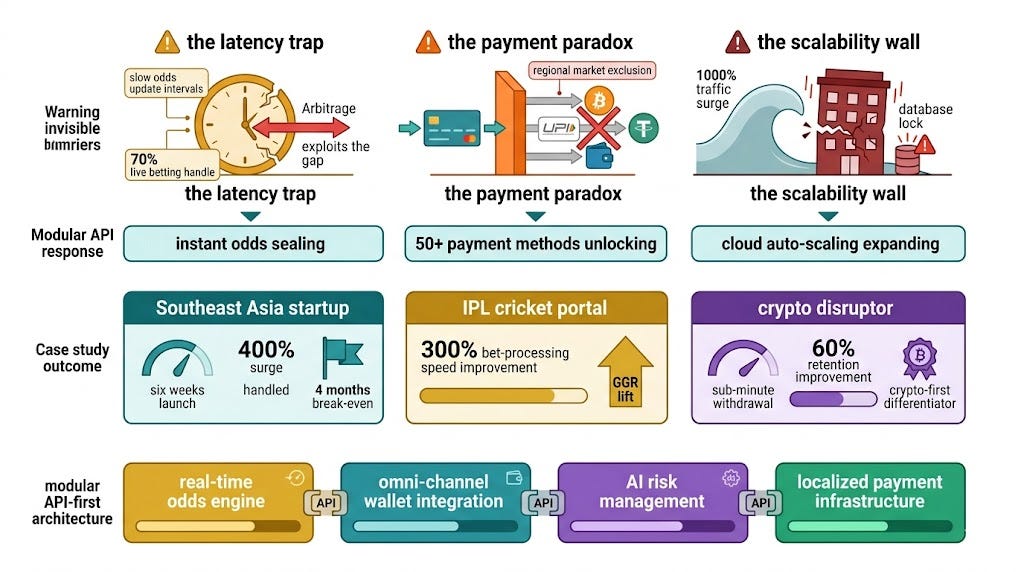
Monolithic risk desks simply cannot scale to process dense data streams during peak event traffic. Unchecked arbitrage bots, courtsiding syndicates, and highly coordinated bonus abuse networks exploit line vulnerabilities within milliseconds. By the time a manual risk manager catches an anomaly and shifts the odds, the house exposure has already crossed critical thresholds, directly damaging the operator’s Gross Gaming Revenue (GGR).
Machine Learning at the Data Layer
To completely secure platform margins, modern B2B architectures embed predictive machine learning models directly into the primary transactional data pipeline. Instead of reviewing settled slips, the system screens and prices risk dynamically before a bet is even accepted.
This infrastructure-level deployment relies on continuous behavioral telemetry, instantly evaluating user profiles against deep historical patterns. The core engine calculates multidimensional variables — such as input device data, deposit velocity, line-movement tracking, and exact placement timing relative to live match feeds. If an automated syndicate attempts to hit an unadjusted line, the AI detects the systemic signature instantly. It automatically triggers micro-adjustments to the margin, limits the maximum stake, or rejects the payload entirely within a sub-50-millisecond window.
Proactive Compliance and Retention Synergy
Beyond protecting the house from sharp exploitation, an infrastructure-driven AI layer simultaneously solves the complex issue of regulatory player protection. Stricter compliance laws across major jurisdictions require proactive behavioral monitoring to detect problem gambling patterns before they escalate.
Advanced algorithmic engines track subtle markers of loss-chasing behavior, sudden deposit velocity spikes, and volatile late-night session lengths in real time. Rather than waiting for local regulators to issue compliance audits or penalties, the platform automatically triggers localized responsible gambling protocols. It injects hyper-targeted safety interventions or toggles custom spend limits based entirely on the user’s authenticated geographic profile.
Technical Reality: Infrastructure-level AI acts as a dual-purpose operational shield. It maximizes the house hold by choking out fraudulent syndicates while safeguarding institutional licensing through automated, real-time compliance tracking.
Conclusion
The iGaming sector has reached a stage of technological maturity where raw manual labor cannot match the speed of modern market exploitation. Relying on outdated, reactive risk assessment methods directly compromises an enterprise’s long-term profitability and market valuation. Implementing an infrastructure-level, predictive AI model allows B2B operators to secure their platforms against sophisticated threat vectors, eliminate human error, and automate regulatory survival. For C-suite decision-makers looking to safeguard enterprise growth, embedding AI directly into the architectural core is the single most valuable bet to guarantee long-term operational dominance.
메타데이터
- post_id
- 438a8f14733d
- slug
- predictive-shield-deploying-infrastructure-level-ai-for-risk-management-in-2026-438a8f14733d
- url
- https://medium.com/@microbeekorea/predictive-shield-deploying-infrastructure-level-ai-for-risk-management-in-2026-438a8f14733d
- canonical_url
- https://medium.com/@microbeekorea/predictive-shield-deploying-infrastructure-level-ai-for-risk-management-in-2026-438a8f14733d
- author_url
- https://medium.com/@microbeekorea
- status
- ok
- fetched_at
- 2026-06-09 15:37:30