8 PV Faults Every Solar Plant Operator Should Know
Top 8 Common Types of PV Faults: A Comprehensive Guide to Solar Plant Health
8 PV Faults Every Solar Plant Operator Should Know
Top 8 Common Types of PV Faults: A Comprehensive Guide to Solar Plant Health
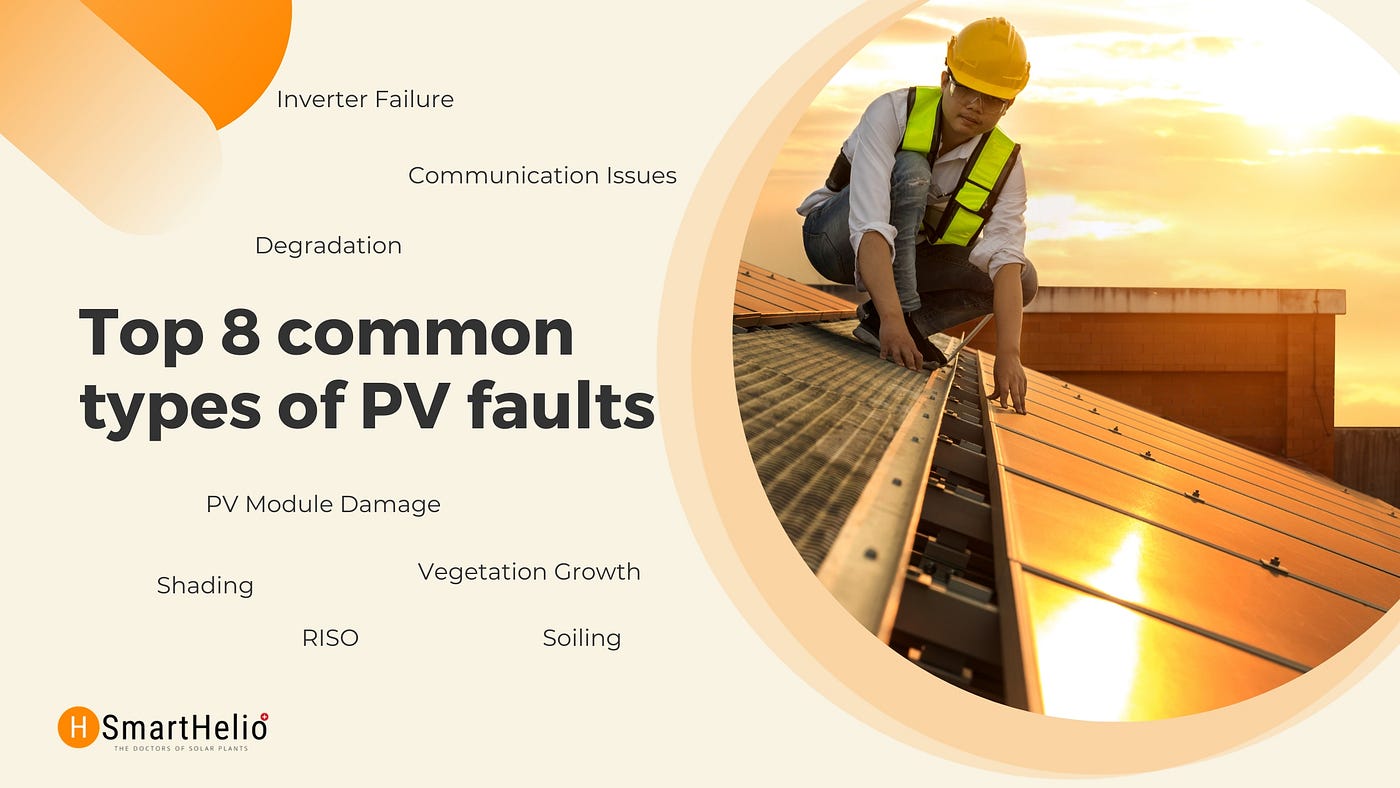
Solar energy systems are marvels of modern technology, converting sunlight into clean, renewable energy. However, like any sophisticated system, they can experience various faults that impact their performance. Understanding these issues is crucial for maintaining optimal energy output and system longevity. Let’s explore the most common 8 PV faults that every solar plant operator should know about.
This is where SmartHelio makes a difference. With over a decade of R&D and deep expertise in solar technology, SmartHelio delivers AI-driven solutions that automatically detect, classify, and predict faults from day one. Our seamless integration with existing systems ensures you get actionable insights that reduce downtime, optimize energy output, and enhance the overall lifecycle of your solar assets. Backed by ESG certifications and sustainability-focused practices, SmartHelio helps solar operators unlock the true potential of their assets while contributing to a greener planet.
We recently hosted a webinar where our experts shared how AI technologies can detect PV faults early and prevent failures before they occur, enhancing system reliability and maximizing solar plant performance. If you missed it, you can watch the recording for deeper insights!

Want Earlier Fault Detection and Faster Troubleshooting? **Explore SmartHelio’s AI-Powered Solar Monitoring**
Are you a fault detection expert? Put your skills to the test!
1. Communication Issues: When Your System Goes Silent
Communication issues in solar plants refer to disruptions or failures in the data transmission between sensors, inverters, and monitoring systems. These issues can arise from hardware malfunctions, poor network configurations, or interference in wireless connections. When communication fails, critical performance data such as energy output, fault detection, and environmental readings may be delayed or lost, preventing real-time monitoring and proactive maintenance.
Common Causes:
- Damaged or degraded communication cables
- Software glitches in monitoring systems
- Poor network connectivity
- Environmental damage to sensors
- Electromagnetic interference
Impact on Performance:
Without proper communication, your system becomes a black box — you can’t detect emerging issues or optimize performance. This can lead to extended periods of reduced efficiency or downtime that could have been prevented with early detection.
Pattern Recognition: There will be no values on Current & Voltage

How SmartHelio Resolves This:
SmartHelio’s AI-powered platform - **Autopilot **identifies communication disruptions by continuously analyzing data flow and detecting patterns such as missing current and voltage values. When issues arise - such as damaged cables or sensor failures - the system provides precise fault identification and actionable recommendations to address the root cause. SmartHelio also incorporates redundancy protocols and robust fault-tolerant designs, ensuring minimal downtime and uninterrupted performance for your solar assets.
2. Degradation: The Silent Efficiency Killer
Gradual decline in the energy output of solar panels over time due to various factors such as material wear, environmental exposure, and manufacturing defects. Causes of degradation include UV exposure, thermal cycling, moisture infiltration, and potential-induced degradation (PID), which can lead to microcracks, delamination, and discoloration. While degradation is inevitable, high-quality panels with proper maintenance can maintain efficient performance for 25 years or more.
Long-term Implications: Accelerated degradation can reduce your system’s lifespan and ROI. A panel degrading at 2% annually instead of the expected 0.5% could lose an additional 30% capacity over 20 years.
Pattern Recognition: Current decreases due and the voltage drops because of increased internal resistance.

How SmartHelio Solves This:
SmartHelio’s Autopilot continuously tracks performance metrics to detect early signs of degradation, such as voltage drops and reduced current. By analyzing patterns over time, the system identifies the root causes, including PID or environmental stressors.
3. Inverter Failure: The Critical Component Risk
Inverter failure occurs when the inverter, responsible for converting direct current (DC) from solar panels into usable alternating current (AC) for the grid, malfunctions or stops working. Common causes include component wear, overheating, voltage fluctuations, moisture ingress, and dust accumulation. Inverter failures can lead to significant energy losses since a faulty inverter can disrupt the entire energy conversion process for connected panels.

Warning Signs:
- Efficiency fluctuations
- Unusual noise levels
- Frequent disconnections
- Error codes
- Temperature variations
Prevention Strategies:
Regular monitoring of inverter performance metrics can help predict and prevent failures before they occur, saving thousands in emergency replacement costs.
How SmartHelio Solves This:
SmartHelio’s advanced analytics continuously monitor inverter performance, identifying anomalies such as temperature spikes, efficiency drops, and error codes in real time.
4. PV Module Damage: Physical Threats to Performance
PV module damage refers to physical or electrical defects in solar panels that reduce their efficiency and energy output. Physical damage to PV modules can significantly reduce their ability to generate electricity and can worsen over time if not addressed.
Common Types of Damage:
- Cell cracks and breaks
- Hot spots
- Delamination
- Frame damage
- Glass scratches or breaks
Detection Methods: Regular visual inspections combined with thermal imaging can identify module damage before it severely impacts system performance.
Pattern Recognition: Current typically decreases due to reduced power output, while the voltage may drop slightly. In some cases, bypass diode is activated due to external damage.

How SmartHelio Solves This:
SmartHelio’s AI-powered tools analyze performance data to detect subtle changes in current, voltage, and other key metrics that signal physical or electrical damage. Our platform provides precise fault localization, enabling operators to identify damaged modules without lengthy manual inspections.
Curious to see how SmartHelio can help you with detecting fault and preventing them in your solar plants?
5. RISO (Insulation Resistance) Issues: The Safety Critical
RISO (Insulation Resistance Measurement) is the measurement of the insulation resistance in a PV system, specifically between the electrical components (like PV modules and cables) and the ground (earth). It is a critical safety parameter used to detect insulation faults, which can lead to electrical hazards, performance issues, or even fires.
Key Considerations:
- Moisture ingress risks
- Cable insulation integrity
- Grounding effectiveness
- Connection point safety
- Environmental exposure impacts
How SmartHelio Solves This:
Our real-time diagnostics monitor insulation resistance to detect early warning signs of RISO issues, such as moisture ingress or cable degradation. By analyzing performance data and environmental factors, the system identifies faults and prioritizes risks for immediate resolution.
6. Shading: The Efficiency Dampener
Shading in solar energy systems occurs when sunlight is partially or fully blocked from reaching solar panels, reducing their energy output and overall efficiency. Since PV panels rely on direct sunlight for optimal performance, even minor shading can significantly impact the energy production of an entire array, especially in string configurations where panels are connected in series.
Performance Impact: Shading on just 5% of a panel can reduce its output by up to 25% due to the interconnected nature of solar cells.
Shading Sources:
- Nearby vegetation growth
- Building developments
- Temporary obstructions
- Dirt and debris accumulation
- Bird droppings
Pattern Recognition: Significant Voltage drop will be visible during shading period.

How SmartHelio Solves This:
Autopilot identifies shading patterns by monitoring real-time performance metrics, such as current and voltage fluctuations. The system pinpoints the location and severity of shading, distinguishing between temporary and permanent causes. SmartHelio also provides actionable recommendations to mitigate shading impacts, such as adjusting vegetation management or cleaning schedules.
7. Soiling: The Gradual Performance Drain
Soiling is one of the most common and preventable causes of performance loss in solar installations. It happens due to the accumulation of dirt, dust, pollen, bird droppings, or other debris on the surface of photovoltaic (PV) panels, which reduces their ability to absorb sunlight and generate electricity efficiently.

Soiling Factors:
- Dust accumulation
- Pollen deposits
- Industrial pollution
- Agricultural activities
- Bird droppings (causing hot spots on solar panels)
Pattern Recognition: Soiling on PV modules reduces irradiance reaching the cells, causing a decrease in current while voltage remains relatively unaffected, leading to overall power loss
How SmartHelio Solves This:
SmartHelio’s AI-powered platform monitors performance data to detect soiling patterns, such as reduced current levels without voltage changes. It identifies affected modules and quantifies energy losses, helping operators prioritize cleaning schedules.
8. Vegetation Growth: The Creeping Threat
Vegetation growth on solar panels occurs when plants, grass, or shrubs grow around or underneath solar arrays, partially or completely shading the panels. This shading reduces the panels’ exposure to sunlight, leading to decreased energy production and efficiency. Over time, unchecked vegetation can lead to significant power losses, as even partial shading can disrupt the flow of electricity across multiple panels in a string. Additionally, the moisture retained by vegetation can contribute to panel degradation and create maintenance challenges, emphasizing the need for regular vegetation management in solar farms.

Management Needs:
- Regular ground maintenance
- Growth pattern monitoring
- Seasonal adjustment of care schedules
- Prevention of root damage
- Access path maintenance
Pattern Recognition: Vegetation on PV modules blocks sunlight, causing a drop in current while voltage remains relatively unaffected, leading to reduced overall power output
How SmartHelio Solves This:
By pinpointing areas with significant current drops, Smarthelio’s system highlights affected modules and quantifies energy losses. It also provides specific recommendations, such as the timing and scope of vegetation trimming or removal, based on seasonal trends and growth data.
🔍 See How AI Detects PV Faults Before They Impact Performance Book a Demo
메타데이터
- post_id
- 43a2fc3a7bd4
- slug
- 8-pv-faults-every-solar-plant-operator-should-know-43a2fc3a7bd4
- url
- https://medium.com/@smarthelio.contact/8-pv-faults-every-solar-plant-operator-should-know-43a2fc3a7bd4
- canonical_url
- https://medium.com/@smarthelio.contact/8-pv-faults-every-solar-plant-operator-should-know-43a2fc3a7bd4
- author_url
- https://medium.com/@smarthelio.contact
- status
- ok
- fetched_at
- 2026-06-09 15:37:30