How to sound like you know what you are talking about at Wimbledon
Trying to impress a tennis-loving Hinge date? Want to appear well-informed when Wimbledon chatter takes over the office? Or just hoping to…
How to sound like you know what you are talking about at Wimbledon
WIMBLEDON IS UPON US. Is tennis chatter taking over your office? Trying to impress a tennis-loving Hinge date? Or just hoping to sound like you belong when strolling around the grounds in SW19? Here is what you need to know to make yourself sound like an avid fan ahead of this year’s Championships. Read on to arm yourself with some new lingo and nuggets of insight. You will sound like you had been watching every point of Roland Garros (that’s the ‘French Open’ to the uninitiated).
Roland Garros Recap — WTA
With the conclusion of Roland Garros, we are halfway through the year’s Grand Slams, and one player will be heading into Wimbledon as a first-time champion. 19-year-old Mirra Andreeva, born in Siberia, won her maiden Slam in Paris, defeating Polish qualifier Maja Chwalinska in straight sets in the final. Only Iga Swiatek (twice) and Steffi Graf have dropped less games en route to the title at Roland Garros. Mirra was completely dominant across the fortnight. Andreeva is the youngest French Open winner since Monica Selles in 1982. She showed real maturity to shelve any memories of her collapse in the Quarter Final in 2025. Andreeva lost to home favourite Lois Boisson in front of an exceptionally partisan crowd. She has gotten exponentially better in recent years, adding more power and mental resilience to her game. The teenage Russian will always be a contender for any tournament.
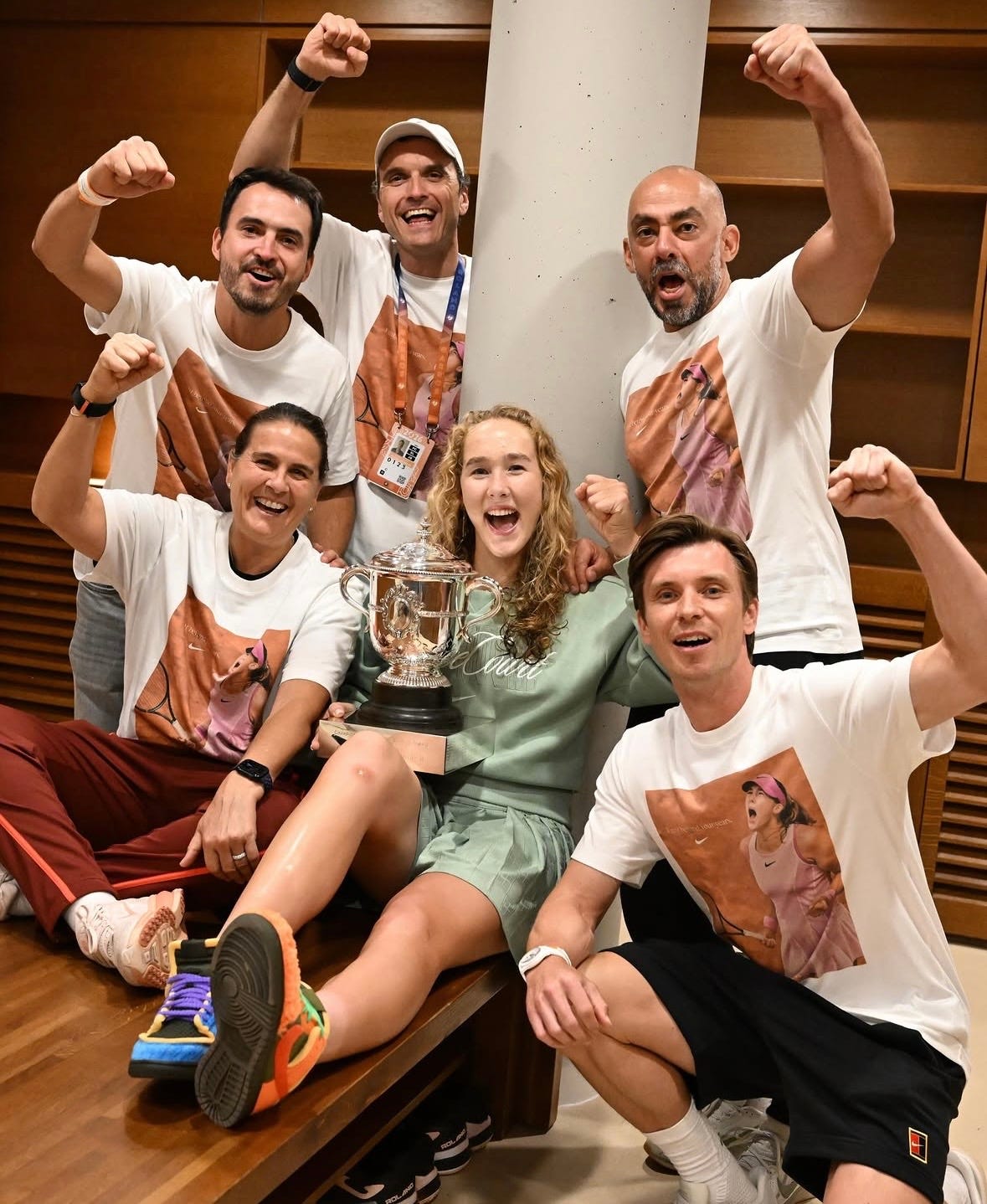
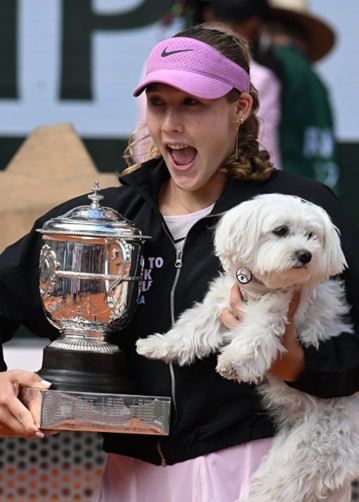
Andreeva celebrates with her team and coach Conchita Martinez (bottom left) // Mirra with a prized possesion — and Coupe Suzanne Lenglen
Despite her age, this will be her 4th Wimbledon. At 15 she made it to the 4th Round and her progress since then made her first Slam feel like a matter of when, not if. Her coach, Conchita Martinez, won Wimbledon in 1994. If Andreeva follows in her footsteps this Summer, she will be the first woman since Serena Williams in 2015 to win the “Channel Slam”, which is winning Roland Garros and Wimbledon in the same year. She already has an Olympic Silver medal and 2 Masters events — the highest level of tournament beneath the Slams — to her name and is the youngest Masters winner ever. With age on her side, you would be hard pressed to imagine her success in Paris will be her last at Grand Slam level.
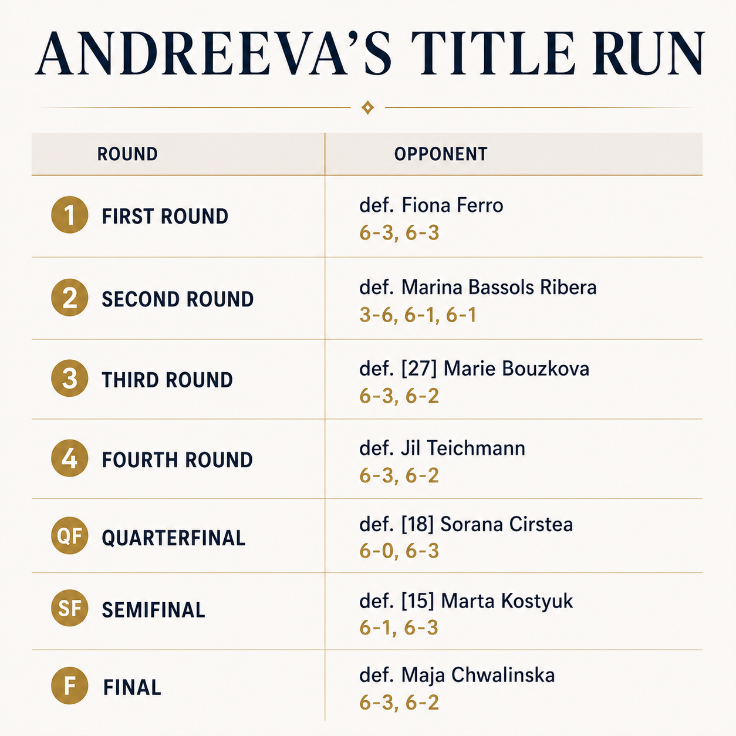
After losing the first set in the 2nd Round, Andreeva never lost more than 3 games in a set!
A word for her opponent, Maja Chwalinska, who was looking to emulate Emma Raducanu by becoming the second ever Grand Slam winner to enter via qualifying. Whilst she was comfortably beaten in the final, it has been a life changing tournament for the Pole. She earned more prize money — €1.4million — in Paris, than she had accumulated her entire career. The 24-year-old has seen her ranking shoot up 93 places to №21 in the world. This essentially guarantees her entry for the next 3 Slams and any other large field tournaments, and potentially many more paydays.
It was not a good tournament for recent Grand Slam winners. Iga Swiatek, Elena Rybakina, Coco Gauff and Aryna Sabalenka did not come close to adding to their title collections. The Polish former №1 is the reigning champion in SW19 but is yet to win a title of any sort in 2026 and was beaten in straight sets by in-form Marta Kostyuk in Paris. A deep run at Wimbledon could see Rybakina rise to World №1. No Kazakhstani player of either sex has held this position before. Her powerful game and pedigree at Wimbledon make this year’s Australian Open champion a strong contender. Gauff has fallen out of the top 5 for the first time in 157 weeks following her early exit in Paris. Last year’s winner was beaten by Anastasia Potopova in the 3rd Round, ending her title defence in the first week. Whilst Gauff burst onto the scene as a 15-year-old at Wimbledon, she has not made it past the 4th Round in any of her 6 visits. When Gauff is on song, the two-time major winner can be a serious threat, but 2026 has not been a notably good year, and Wimbledon has not been a happy hunting ground.
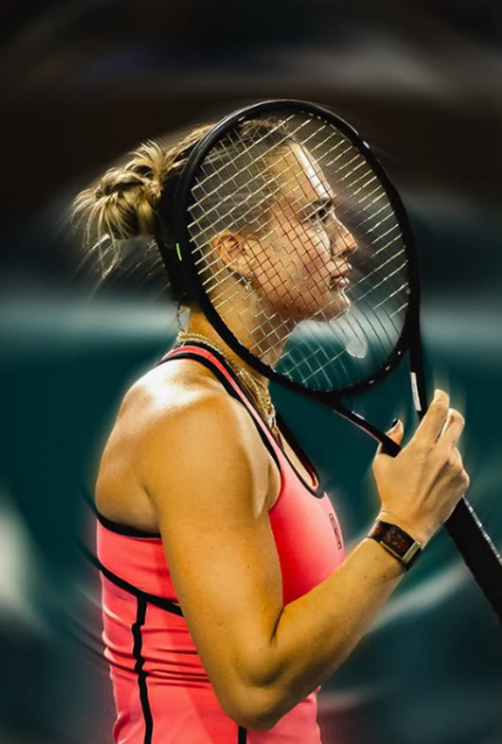
Sabalenka has made at least the QF in 14 of her last 18 Grand Slams
As for Aryna Sabalenka, you could write War & Peace on her painful defeats at Slams. Only she can truly rank which have been the most painful. I would posit that her Quarter Final loss to Diana Shnaider was right up there as one of her worst. So much so that she said it made her want to “quit tennis” in the press conference. In a nutshell, she was a double break of serve up in the 2nd set and then proceeded to lose 11 of the last 12 games, getting bageled (losing 6–0) in the decider. You can’t call a 4-time grand Slam winner and the dominant player on the WTA tour a “choker” or a “bottler”, but her recent string of painful defeats is arguably blemishing her legacy. When the wheels come off for the Belarussian, they seriously come off. The three-time Wimbledon semi-finalist possesses the talent and level to win any tournament, but she has consistently found ways to lose during the business end of major tournaments. In Paris, she could not have asked for an “easier” draw given the early exits of her aforementioned rivals and that she had the unseeded Chwalinska waiting for her in the semi-final. Despite her №1 ranking and a plethora of Masters titles, careers are judged by Slams, and she still sits two behind her rival, Swiatek. There are very few of her recent losses at Slams where she has been simply outclassed by her opponent, more often than not Sabalenka is the architect of her own downfall. It is paradoxical that Sabalenka has been the most consistently great player on tour and yet so frustratingly inconsistent during the final stages of Grand Slams. Her 86* (and counting) consecutive weeks at №1 rank inside the top 10 all time. She was a class above Naomi Osaka in the 4th round and then produced one of her worst matches of recent years against Diana Shnaider. She is certainly not a sure bet for a maiden Wimbledon title.
Ones to Watch
18-year-old American Iva Jovic has shot up the rankings in the last twelve months and looks an assured player. She lost out in Paris to Naomi Osaka in a very tight 3rd round clash. She won a WTA title on grass at Ilkley last year and will provide a challenge to any of the top players.
Marta Kostyuk has been one of the form players on tour recently. Mirra Andreeva ended her 17-match winning run in the semi-finals at Roland Garros. This streak included titles in Rouen and a first Masters title in Madrid — beating Andreeva in the final. The Ukrainian will be hoping her Slam form has turned a corner, and that she can break into the World’s top 10 with a deep run at Wimbledon
Mums Elina Svitolina and Naomi Osaka are both playing some of their best tennis since having children. Svitolina, the wife of recently retired Gael Monfils, won her 20th title at the Rome Masters and made the QF at Roland Garros. Whilst 4-time Slam winner Osaka, who has struggled with her physical and mental health, has strung some positive results together this year, and made the semi-finals of the US Open in 2025.
A Serena Williams return. The 7-time champion is back. She has come out of retirement so that her children can watch her play (and because she needs to scratch that competitive itch). When her first round opponent, Maya Joint, was born in 2006, Williams was already a 6-time Grand Slam champion.
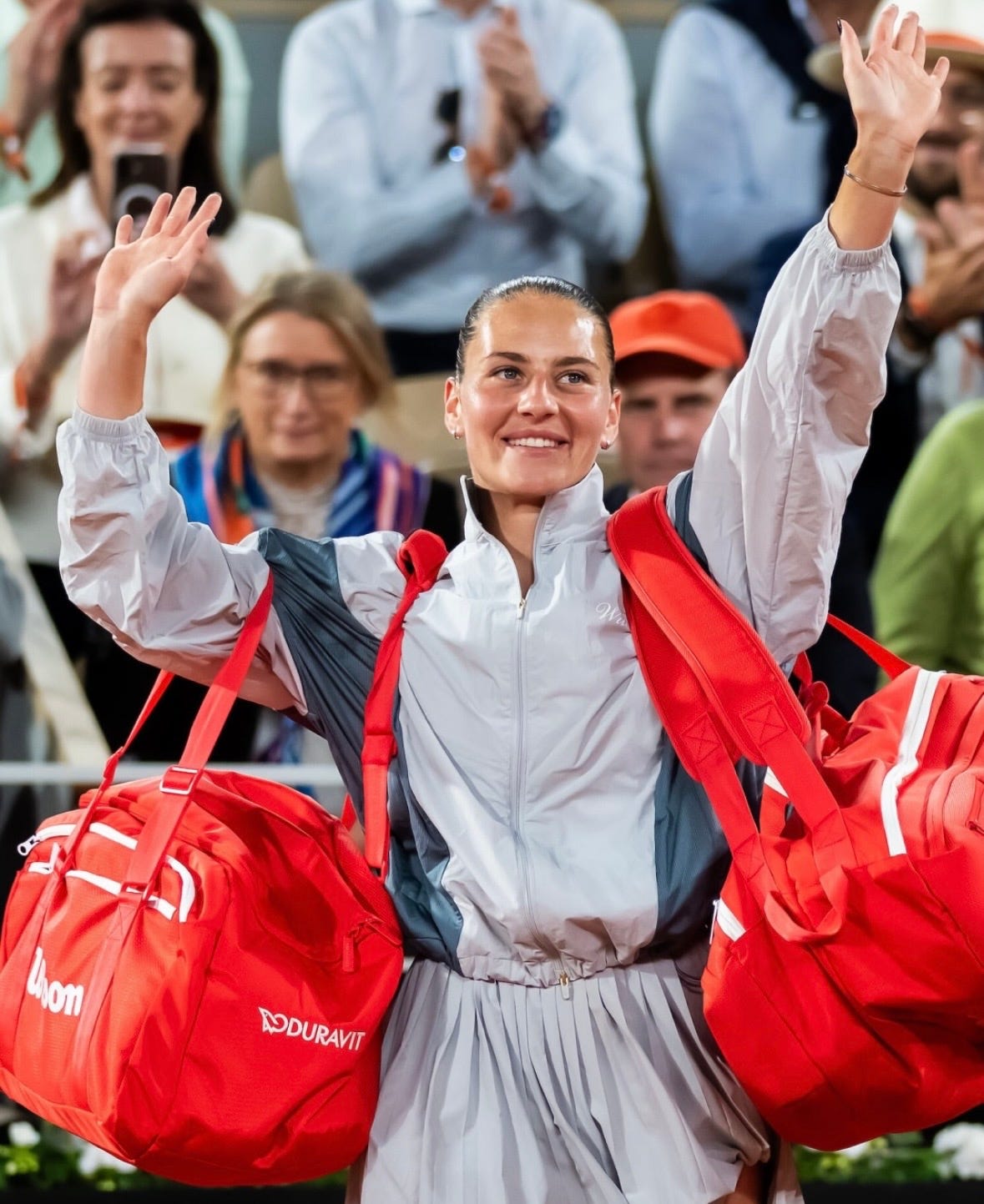
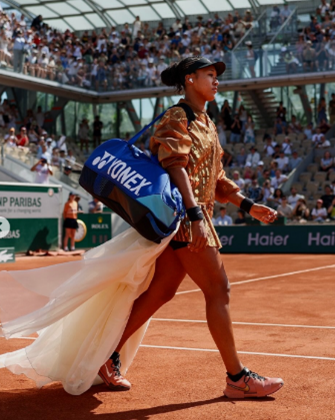
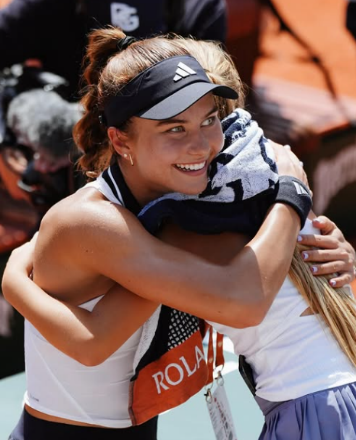
L-R: Ukraine’s Marta Kostyuk, Japan’s Naomi Osaka, USA’s Iva Jovic
Fact Finding
World №4 Jessica Pegula’s dad is an energy tycoon. The billionaire owns several sports teams including the NFL’s Buffalo Bills and the NHL’s Buffalo Sabres.
Meanwhile, Aryna Sabalenka’s fiancée Georgios Franguilis is a Brazillian-Greek billionaire who earned his fortune founding the Acai berry health food brand Oakberry.
When Maja Chwalinska made the second week at Roland Garros, she didn’t know how she was going to afford her hotel, as players only receive prize money following the tournament. Polish sports drink giant Oshee, who sponsor compatriot Iga Swiatek stepped in to cover her costs.
Proper Detail
If you want to sound like a real tennis nerd, mention that Amanda Anisimova has been something of a flat-track bully! Her Elo ranking is 20th, yet her WTA (official) ranking is inside the World’s top 5. Elo gives weight to WHO you play against, and the quality of your wins and losses, rather than just tournament performances. Find out more about Elo here.
Brit Watch
It was very hard to make a case for any British woman putting a run together this year. Katie Boulter has struggled for consistency and briefly dropped outside the top 100. Emma Raducanu had struggled for form and fitness. However, both women had fine weeks on the Queen’s Club grass. Boulter upset Elena Rybakina in one of her best career wins. Whilst Raducanu trounced Iva Jovic and Sorana Cirstea en route to the final, where she was beaten by Croatia’s Donna Vekic. Her only career title remains the 2021 US Open! Keep an eye out for 2008 born Mika Stojsavljevic. The 17-year-old is highly regarded and was part of GB’s Billie Jean King Cup team this year. Sonay Kartal made the 4th Round last year, but is currently sidelined with a stress fracture of her back
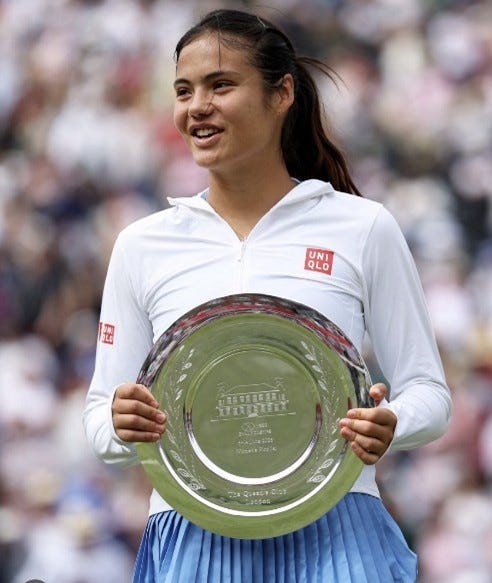
Emma Raducanu had not won back-to-back tour level matches since February
Roland Garros Recap — ATP
On the Men’s side, Alexander “Sacha” Zverev finally got over the Grand Slam hump. The German 2nd Seed beat Italian 10th Seed Flavio Cobolli in a 5-set final. This was Zverev’s fourth Grand Slam final, having lost the previous 3. Bar being pushed to a decider by Cobolli, Zverev was largely untroubled throughout the tournament. He easily beat rising stars Rafa Jodar and Jakub Mensik on his way to the final. His victory ended Germany’s 30 year wait for a male Grand Slam Champion. He joined Rafael Nadal (USO 2017) and Novak Djokovic (Wimbledon 2022) as the only winners of a Grand Slam without having to face a top 10 player[1].
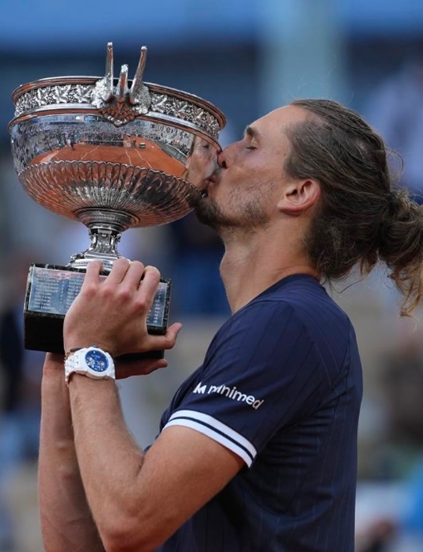
Zverev is Germany’s first male Grand Slam winner since Boris Becker
The reason that Zverev did not have to face any top 10 rivals was primarily due to Jannik Sinner’s incredible, unthinkable defeat in the 2nd Round at the hands of Juan Manuel Cerundolo. Sinner raced into a 2-set lead and was 5–1 up in the 3rd set, before physically crumpling under the Paris sun. He proceeded to lose the next 6 games in set 3, before ceding sets 4 and 5 very easily. Faced with a mixture of cramp and heat exhaustion, there were times where it looked like an average club player would have returned the World №1’s serve. Sinner said after that he felt he had “no energy”. He seemed to have plenty of it when he raced into a 2-set lead within 90 minutes. One game from victory, I cannot ever remember seeing someone’s level drop so significantly and so rapidly. Sinner faced similar problems during this year’s Australian Open, when he benefited greatly from a tournament rules enforced break that allowed him to escape the heat, just as his level was dropping and his opponent, Eliot Spizziri, got on top. Thankfully for the Italian, who has been so dominant this year, Wimbledon is the one Slam where extreme heat is not usually an issue. It is important not to understate just how dominant Sinner has been in 2026. With his main adversary Carlos Alcaraz sidelined with a serious wrist injury, Sinner has been hoovering up tournaments in his absence. Had he won Roland Garros, his clay court season would have matched “King of Clay” Rafael Nadal’s undefeated 2010 season. He won Masters titles in Monte Carlo, Rome, and Madrid before this monumental shock in Paris. In the Madrid final, the 24-year-old short-changed the crowd by beating Zverev 6–1, 6–2 inside 58 minutes. So, Jannik Sinner, who prior to Roland Garros had shared the last 9 Grand Slams with Alcaraz, enters Wimbledon without a Slam to his name in 2026. He was the biggest favourite, in terms of betting odds, to win Roland Garros since Nadal at the same major in 2009 — Nadal did not win that either!
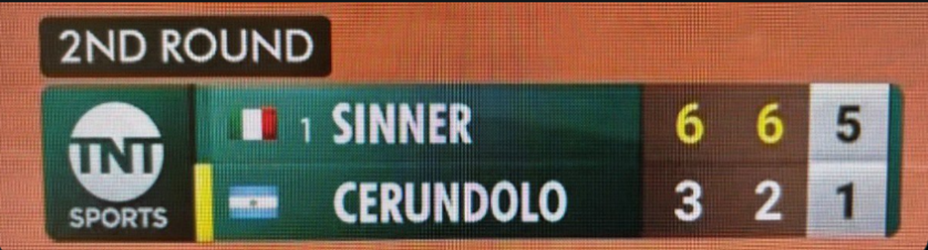
Jannik Sinner managed to lose from this position. Astonishing.
Zverev’s achievement should not be diminished. You can only beat what is in front of you, and he did that comprehensively. He joins an illustrious list of Grand Slam winners. It is more of a damning indictment of his fellow top seeds that they failed to capitalise on this opportunity and challenge the German for a first title. Casper Ruud, Felix Auger-Aliassime, Andrey Rublev, and others all failed to seize the moment once their Italian adversary crashed out. Sinner owns one-sided head-to-head records against essentially all the non-Alcaraz and Djokovic top 15. Speaking of the Serbian master, he played one of the matches of the tournament against Brazilian star Joao Fonseca. The 19-year-old beat the most decorated player of all time in a 5-set epic lasting nearly 5 hours. For Djokovic, it was another disappointment in his quest for that elusive 25th Slam. The 39-year-old will go again in what may be his last ever appearance at Wimbledon. You would never rule the 7-time winner out, but it did look like Father Time was catching up with him in Paris. For Fonseca, it was a win against his idol that validated all the hype around him. He made the 2nd week of a Slam for the first time, succumbing to another young star, Czechia’s Jakub Mensik. Rafa Jodar, another electric teenage prospect from Spain, also made a Grand Slam Quarter Final for the first time. Despite all 3 players lacking experience on grass, they are certainly worth keeping an eye on at Wimbledon.

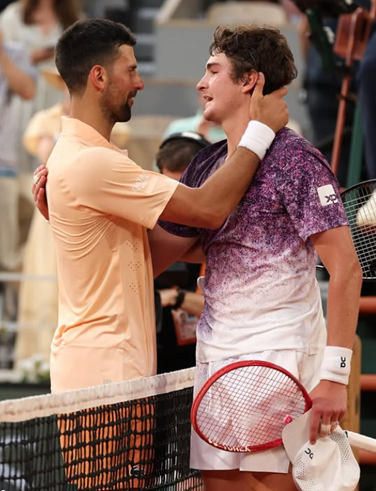

All respect between the old master and the new kid on the block
The Men’s side should be remembered for its unpredictable nature and volume of epic matches and great comebacks. In addition to Djokovic v Fonseca, we witnessed epics throughout the first week. Paul v Ruud, Tiafoe v Hurkacz, Jodar v Michelsen and Kouame v Vallejo stand out as dramatic clashes that typified the early stages of the tournament. I would recommend digging out some of the highlights. Local hero 17-year-old Moise Kouame was victorious amidst an electric atmosphere created by the French crowd. After nearly 2 years of major tournaments largely feeling like a formality that end in a “Sincaraz” final, this year’s Roland Garros was somewhat refreshing, if not a little chaotic.
Ones to Watch
Arthur Fils and Jack Draper are names to watch out for — if they play. Both men have top 10 quality and skillsets to challenge the top players. Both withdrew prior to Roland Garros with injuries. IF they play at Wimbledon they will do so on the back of very little match time. Draper has been blighted by injuries for the last 12 months and has dropped from his career high of №4 to outside the top 100. He recently partnered with Andy Murray, who will act as his coach going forwards. Fils, an exciting young Frenchman, won his 4th ATP Title in Barcelona in April, but has had all his momentum stifled by lingering knee and back injuries. I would have grouped last year’s semi-finalist Lorenzo Musetti with Fils and Draper, but he has withdrawn with a peristent thigh problem.
Former №1 and US Open winner Daniil Medvedev is well known for disliking the clay and was defeated in the 1st round at Roland Garros by Australian Adam Walton. Nonetheless, the Russian has won 2 Tour level titles this year and made the Indian Wells Masters final. With a competitive head-to-head record against Jannik Sinner, and a positive record against Sacha Zverev, the charismatic two-time Wimbledon semi-finalist is one to watch out for. Jannik Sinner will enter the tournament as a large favourite, but with an ageing Djokovic and an absent Alcaraz, Medvedev will look to capitalise on a wide-open Men’s singles draw.
A Nick Kyrgios comeback. The maverick Australian returned to competition on the grass in Stuttgart, losing in the 2nd round. He spoke emotionally of his wrist reconstruction and 4 knee surgeries following his 1st round win. The showman has been plagued by injuries dating back to his defeat to Novak Djokovic in the 2022 Wimbledon Final. His immense serve and effortless power are ideal for grass court tennis.
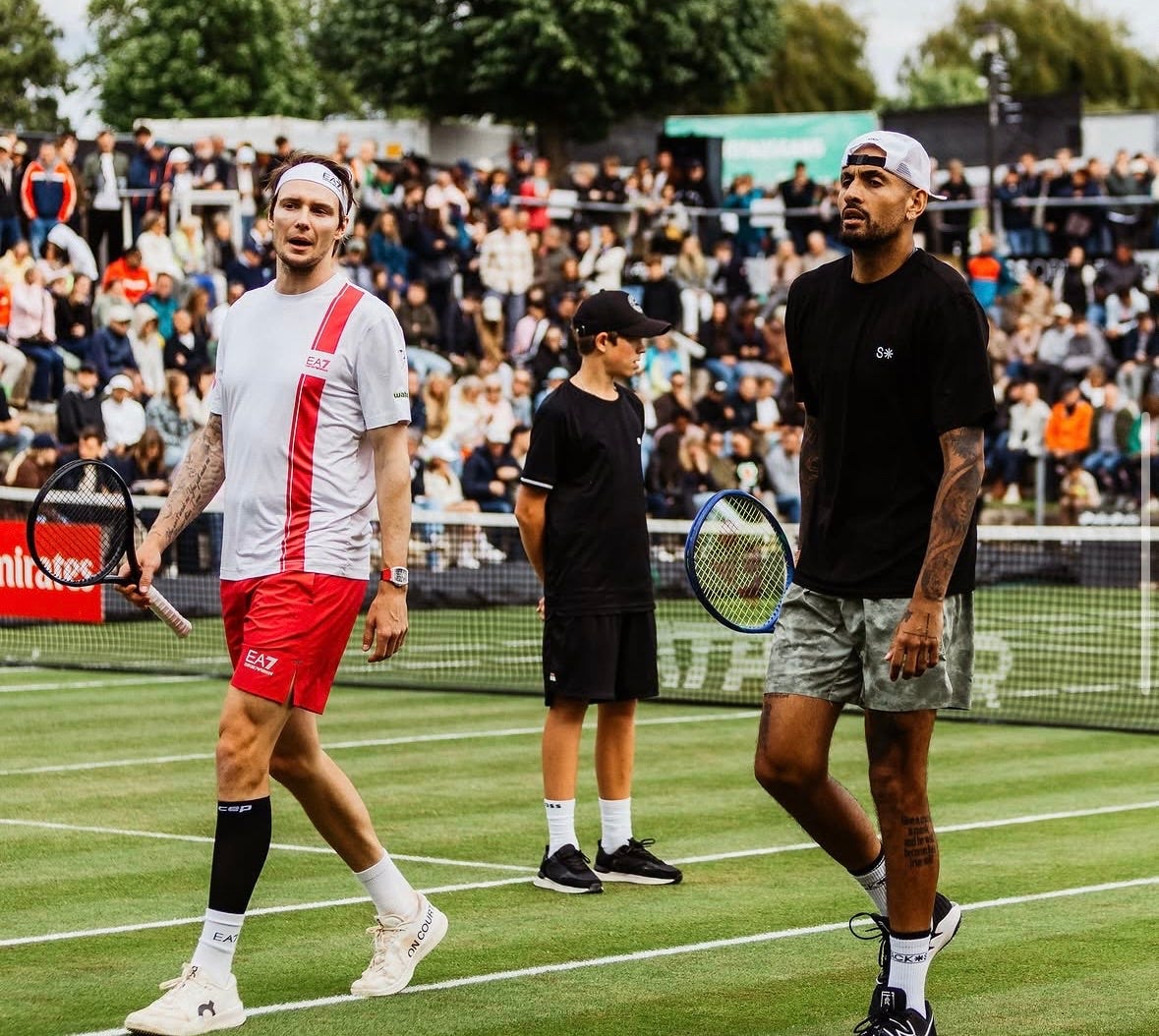
Kyrgios has been handed a wildcard for the Men’s Doubles at Wimbledon. He will play with Kazakh Alexander Bublik (pictured left)
Fact Finding
Sacha Zverev became a Grand Slam winner despite owning a 1–14 W/L record against top 5 players at Grand Slams, and an 0–6 record against №1 players
Zverev’s post-tournament interview with L’Equipe was cut short after they brought up the domestic violence allegations levelled at him by former partners. Andy Murray and others had questioned the ATP’s inaction after the allegations became public between 2020–23.
32 matches went to a 5th set — the most in 25 years at Roland Garros. The record for the most matches going to 5 sets belongs to the 2024 edition of Wimbledon, where 37 matches were resolved in a deciding 5th set
Despite high hopes for 17-year-old star Moise Kouame, who reached the 3rd round, it is now 33 years since a French male won a Grand Slam. It is 80 years since a Frenchman won Wimbledon!
This year’s Roland Garros was the first Slam with a new Men’s and Women’s winner since the US Open in 2021, where Emma Raducanu and Daniil Medvedev won their maiden titles
Brit Watch
Aside from injury plagued Jack Draper, there are few Brits capable of stringing wins together. Veteran Cam Norrie has had a fairly good 2026 but retired in the 1st Round in Paris with a rib injury. The former Wimbledon semi-finalist will likely be seeded in SW19. 36-year-old Dan Evans has announced he will retire following Wimbledon. Controversially, he was not given a singles draw wildcard* and lost in the second round qualifying. He will play the doubles alongside Brit Henry Searle. Evans has been a stalwart of British tennis for over a decade. He reached a career-high of 21, winning 2 ATP level titles. He will be remembered for his contribution to GB’s Davis Cup win in 2015, and his valiant performances alongside Andy Murray in the Doubles at the Paris Olympics.
*Tournaments can grant direct entry (Wildcards) to players of their choice. Wimbledon offer 8 Wildcards per Singles Draw. Normally these go to players from the tournament’s country who would have had to go through qualifying due to their world ranking. Or, they go to big name players or previous champions who’s ranking has fallen — usually due to injury.
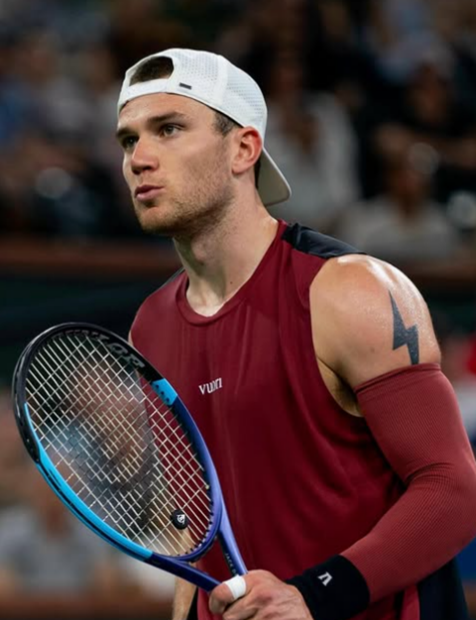
Jack Draper has not completed a match since March 20th
What’s the difference between Paris’s clay and Wimbledon’s grass?
On grass courts, typically the ball travels faster and bounces lower. The slick surface makes movement challenging for players.
On clay courts, typically the ball travels slower, bounces higher and spins more. The crushed clay surface is ideal for players to slide across.
The prize money saga rumbles on
Wimbledon has increased the total prize money on offer by 20% this year, while prize money for the qualifying competition has risen by 25%.
The increase comes against the backdrop of an escalating dispute between many of the sport’s leading players and the organisers of the four Grand Slams. Players have pushed for a model that links prize money to a fixed percentage of tournament revenues, an idea that has been firmly rejected by both Wimbledon and Roland Garros.
The players have not been receptive of Wimbledon’s prize money increase. In addition to the prize money, the players want commitments from the slams and governing bodies to better scheduling and player benefit pot contributions. The dispute has already led to threats of collective action. Players have committed to reducing media commitments to the bare minimum of fifteen minutes, in line with the 15% of revenue they feel they deserve. Aryna Sabalenka has stated that future tournament boycotts have not been ruled out.
While much of the attention has focused on whether the game’s biggest stars are being adequately compensated, the issue extends far beyond the top of the game. Tennis faces a structural problem when players outside the world’s top 75 struggle to make a sustainable living despite competing at the highest level of a global sport. Unlike athletes in team sports, professional tennis players must personally fund extensive travel schedules, coaching staff, physios, and other support personnel amidst a relentless and global calendar.
There is a strong argument that something is fundamentally wrong when the 75th best tennis player in the world cannot comfortably support their career, let alone set aside money for retirement. It is difficult to imagine athletes of a comparable standing in football, rugby, golf, or most other major sports facing the same financial uncertainty. The debate over prize money is therefore not just about rewarding the elite — it is about the long-term economic health and sustainability of professional tennis itself.

Did you think Luca Guadagnino’s Challengers was a bit far-fetched? Surely players don’t sleep in cars? Find out more about what life is like for players outside the top 100 in BBC reporter Jonathan Jurejko’s brilliant article here.
[1] Despite being the 10th seed, Flavio Cobolli was not a top 10 win for Zverev. Cobolli was №11 at the time, pushed up to the 10th seed following Alcaraz’s withdrawal
Image Credits: Instagram/djokernole; jackdraper; naomiosaka; iva_jovic07; alexzverev123; lta; arynasabalenka; mirraandreeva; martakostyuk; joaoffonseca; k1ngkyrg1os
메타데이터
- post_id
- 43ab8ab3584c
- slug
- how-to-sound-like-you-know-what-you-are-talking-about-at-wimbledon-43ab8ab3584c
- url
- https://medium.com/@felix.clement41/how-to-sound-like-you-know-what-you-are-talking-about-at-wimbledon-43ab8ab3584c
- canonical_url
- https://medium.com/@felix.clement41/how-to-sound-like-you-know-what-you-are-talking-about-at-wimbledon-43ab8ab3584c
- author_url
- https://medium.com/@felix.clement41
- status
- ok
- fetched_at
- 2026-07-25 16:38:14