The Cold Shoulder: Why US Airlines Refuse to Buy the Boeing 777X
The Boeing 777X was supposed to be a triumphant home-court victory. As Boeing’s newest, most advanced flagship widebody, it was engineered…
The Cold Shoulder: Why US Airlines Refuse to Buy the Boeing 777X
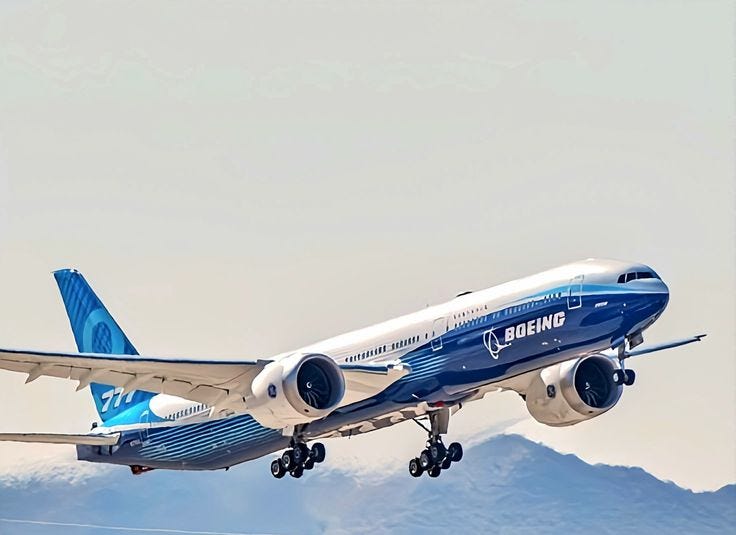
Boeing 777–9 powering into the sky with the GE9X
The Boeing 777X was supposed to be a triumphant home-court victory. As Boeing’s newest, most advanced flagship widebody, it was engineered to replace hundreds of aging, previous-generation Boeing 777s flying around the world. International heavyweights like Emirates, Qatar Airways, and Lufthansa eagerly placed massive orders.
Yet, if you look at the order books for America’s “Big Three” network carriers — United Airlines, American Airlines, and Delta Air Lines — the 777X order count sits at a staggering zero.
For the first time in modern aviation history, major US network operators are completely turning their backs on a headline Boeing widebody. This collective refusal isn’t a simple snub; it is an act of strict financial discipline, a reaction to chronic production delays, and a fundamental shift in how American carriers build their international networks.
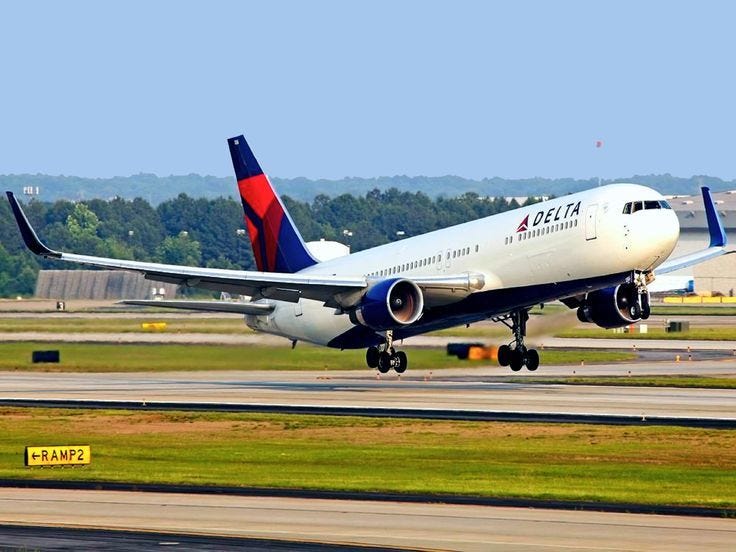
Delta Airlines Boeing 767–300ER about to touchdown
1. The Capacity Trap: Too Much Airplane for the US Market
The flagship variant of Boeing’s new program, the 777–9, is an absolute behemoth. Because of its stretched fuselage and revised exit configurations, most airlines will configure the jet to hold between 350 and 425 passengers.
While that massive capacity works perfectly for Middle Eastern carriers that flood giant, slot-restricted international hubs, it represents a massive financial risk for US airlines.
[ Emirates / Gulf Hub Model ] ────► Mass Volume Strategy ───► High-Capacity 777–9 (400+ Seats) [ US Legacy Network Model ] ────► High Frequency Strategy ───► Right-Sized 787 / A350 (280–300 Seats)
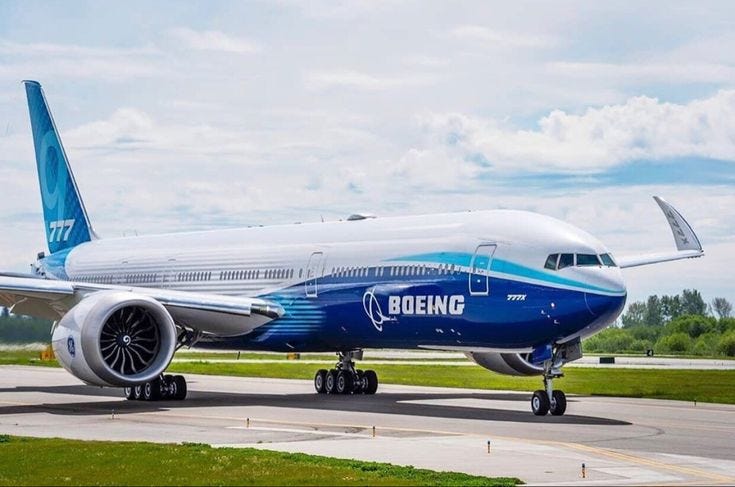
Boeing 777–9 on the ground with wingtips folded
US network carriers operate on a high-frequency, flexible paradigm. Instead of flying one massive 400-seat 747 or 777X from Chicago to London once a day, they prefer to fly a 280-seat aircraft three times a day. This gives premium business travelers multiple schedule options. Trying to consistently fill 400 seats on a 777–9 without heavily discounting ticket prices is a headache US network planners simply want to avoid.
2. The Delay Fatigue
Boeing originally promised that the 777X would enter commercial service by 2020. However, a grueling mix of certification hurdles, engine technical issues with the GE9X, and broader corporate quality-control pauses have pushed the target entry into service to 2027.
American operators have watched these rolling delays throw global fleet planning into chaos. Because US airlines operate massive, highly utilized international schedules, they cannot afford to buy an aircraft that might remain trapped in a certification bottleneck for years. They need predictable delivery timelines to safely retire their older jets.
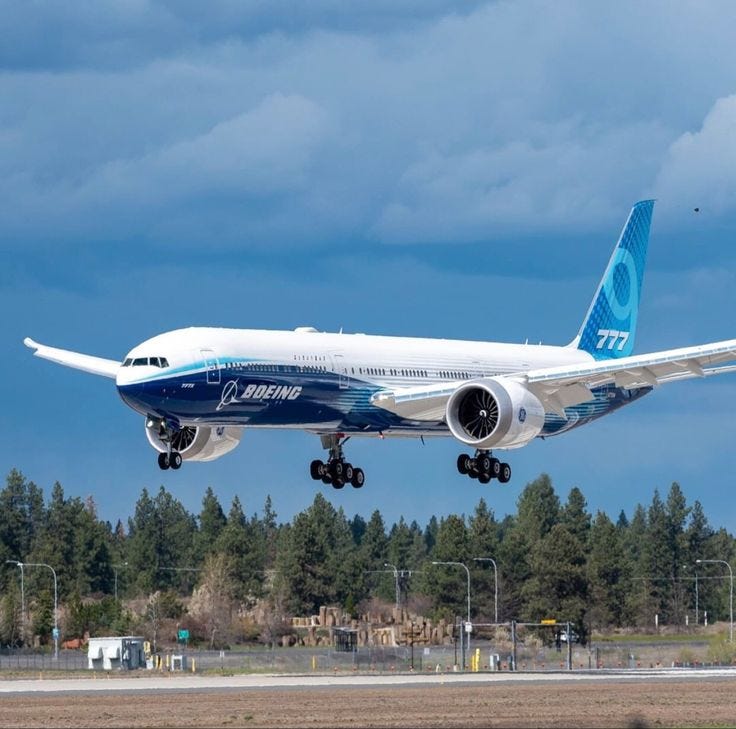
The massive Boeing 777–9 twinjet about to land
3. The Replacement Playbooks: How the “Big Three” are Pivoting
With the 777X firmly off the table, the aging fleets of original 777–200s and 777–300ERs — many of which are pushing 20 to 30 years old — must still be replaced. Each major US airline has designed a distinct, highly pragmatic strategy to fill the void.
United Airlines: Doubling Down on the Dreamliner
As the world’s second-largest operator of the original 777, United had a massive replacement hurdle to clear. Their answer was to place a historic, record-breaking order for the Boeing 787 Dreamliner, heavily favouring the largest variant: the 787–10.
While the 787–10 carries slightly fewer passengers than an old 777–300ER, its structural fuel burn is significantly lower. Because United already operates all three variants of the 787, choosing the Dreamliner avoids the millions of dollars in training and tooling costs required to introduce a brand-new aircraft type like the 777X.
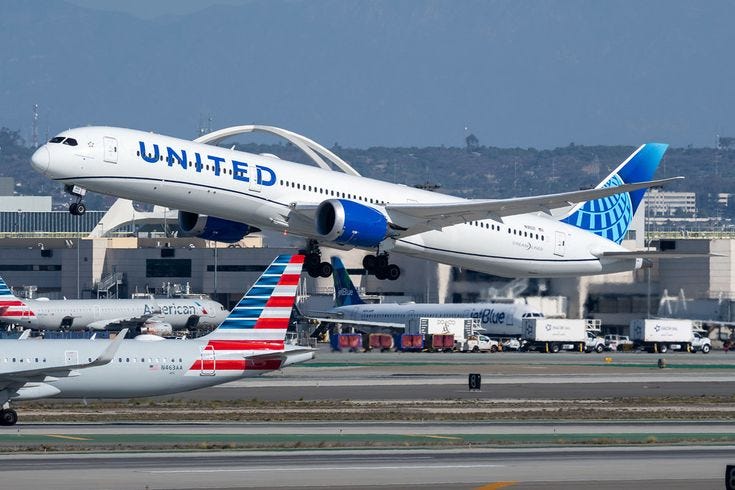
United Airlines Boeing 787–10 departing LAX
American Airlines: The “Capital Holiday” Retrofit
American Airlines is playing a highly conservative financial game. Instead of spending billions of dollars on a direct 777 replacement order, American’s executive leadership team announced a massive ”nose-to-tail” retrofit initiative for their existing fleet of 47 Boeing 777–200ERs and larger 777–300ERs.
By completely stripping the cabins and packing them with their brand-new, premium Flagship Suites, American is effectively giving their aging 777s a major mid-life extension. This tactical move provides the airline with a lucrative “capital spending holiday,” delaying the need to buy expensive new widebodies until the early 2030s.
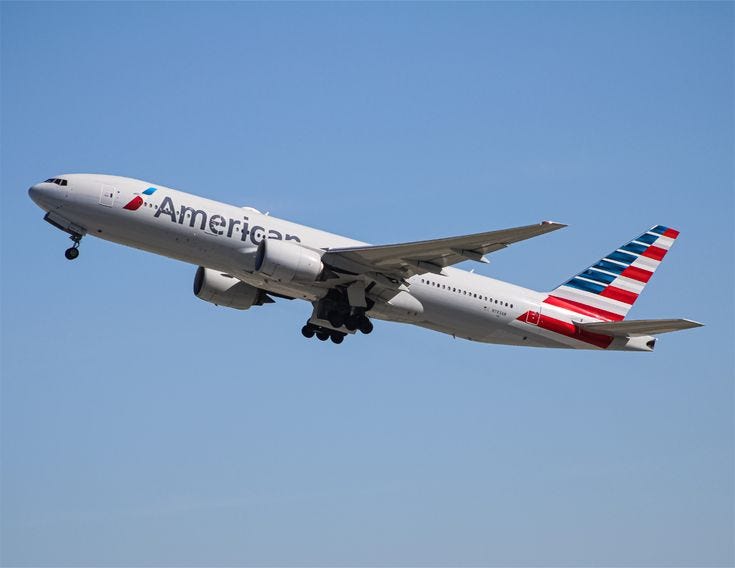
American Airlines Boeing 777–200ER retracting landing gear
Delta Air Lines: The All-Airbus Widebody Future
Delta famously took a radical path years ago by retiring its entire Boeing 777 fleet ahead of schedule to streamline operations. Delta has officially consolidated its entire long-haul future around an all-Airbus widebody ecosystem.
Delta’s flagship international operations are spearheaded by a rapidly growing fleet of Airbus A350–900s and A350–1000s, complemented by the A330neo. By utilizing the smaller, highly efficient A350–900 for long-range point-to-point routes and the larger A350–1000 to match the capacity of legacy jumbos, Delta has managed to bypass Boeing’s widebody catalogue entirely.
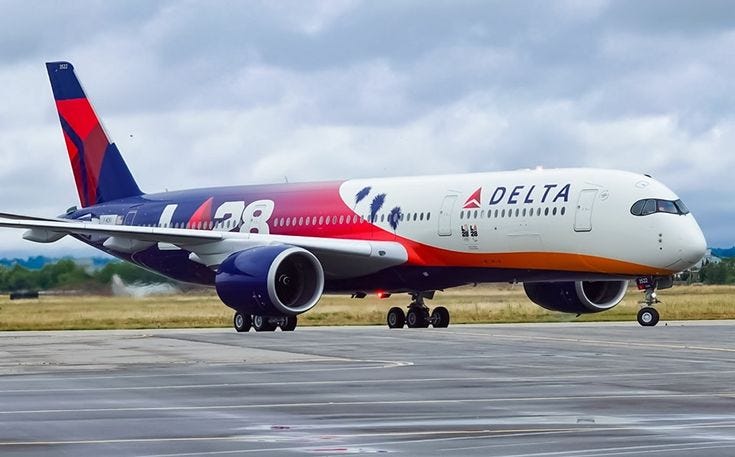
Delta Airlines Airbus A350–900 dressed in the LA28 livery
4. US Widebody Fleet Trajectories
| Airline | 777X Status | Chosen 777 Replacement Strategy | Core Aircraft Beneficiary | | United Airlines | Rejected | Fleet harmonization via mega-orders | Boeing 787–9 / 787–10 | | American Airlines | Rejected | Cabin retrofits to extend asset lifetimes | Existing 777–200ER / -300ER | | Delta Air Lines | Rejected | Early 777 retirement; pure Airbus pivot | Airbus A350–900 / A350–1000 |
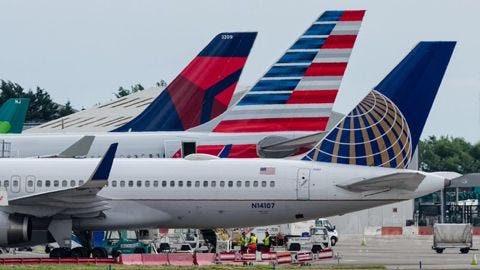
Delta Airlines, American Airlines and United Airlines at Dublin Airport
Final Thoughts: A Bleak Domestic Outlook for the 777X
The 777X will undoubtedly find success as a high-capacity trunkliner for global giants in the Middle East and parts of Asia, where massive hub aggregation is a structural necessity. However, its complete absence from the rosters of American, United, and Delta signals a profound shift in domestic airline economics.
US operators have realized that flexibility, lower trip costs, and right-sized passenger capacity are significantly more valuable than flying the biggest jet on the tarmac. For Boeing, losing the validation of its three largest hometown customers is a bitter pill to swallow — and a clear sign that the era of the ultra-massive passenger jet in America is officially over.
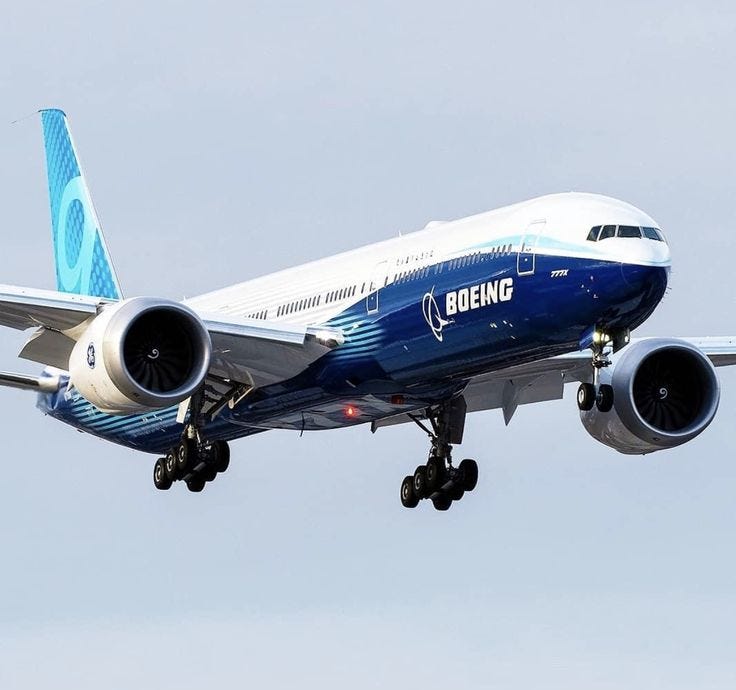
The Boeing 777–9 undergoing a test flight in the sky
We have explored why the 777X — despite its massive technological achievements — doesn’t currently fit the strategic needs of major US network carriers. However, this raises a larger question: If not the 777X, what is driving the modern long-haul strategy of US airlines? I have compiled a comprehensive deep-dive into the technical innovation, efficiency, and operational dominance of the Airbus A350 family — the aircraft currently filling the widebody gap in the US market. Click here to explore the technical future of long-haul flight and download my complete A350 guide.
메타데이터
- post_id
- 43d32dbcdeee
- slug
- the-cold-shoulder-why-us-airlines-refuse-to-buy-the-boeing-777x-43d32dbcdeee
- url
- https://medium.com/@trueboysareboys/the-cold-shoulder-why-us-airlines-refuse-to-buy-the-boeing-777x-43d32dbcdeee
- canonical_url
- https://medium.com/@trueboysareboys/the-cold-shoulder-why-us-airlines-refuse-to-buy-the-boeing-777x-43d32dbcdeee
- author_url
- https://medium.com/@trueboysareboys
- status
- ok
- fetched_at
- 2026-07-08 00:36:00