Google Review Snippet Structured Data: Common Mistakes That Hurt Your SEO
Online reviews can have a major influence on how people perceive a business before they even visit its website. Review stars, ratings, and…
Google Review Snippet Structured Data: Common Mistakes That Hurt Your SEO
Online reviews can have a major influence on how people perceive a business before they even visit its website. Review stars, ratings, and customer feedback can make a search result more noticeable and give users an additional reason to click. However, simply adding review markup to a website does not guarantee that Google will display review-rich results.
This is where Google Review Snippet Structured Data becomes important. When implemented correctly, structured data helps Google understand information about reviews and ratings on a webpage. When implemented incorrectly, however, businesses may encounter structured data errors, lose eligibility for rich results, or create inconsistencies between their website content and search engine data.
Common problems include using unsupported schema types, marking up reviews that users cannot see, providing inaccurate rating information, and ignoring Google’s structured data guidelines. Understanding these mistakes can help businesses maintain accurate Review Schema Markup and improve their chances of receiving eligible search enhancements.
What Is Google Review Snippet Structured Data?
Google Review Snippet Structured Data is structured data that helps search engines understand review-related information published on a webpage. It can provide details such as the reviewer, review content, rating, and the item or organization being reviewed.
Review Schema Markup is generally implemented using Schema.org vocabulary and can be added to a webpage using formats such as JSON-LD. Google can then use this information to better understand the relationship between the review, rating, and reviewed item.
It is important to understand that adding structured data does not guarantee that review stars will appear in Google Search. A page must meet Google’s eligibility and quality requirements, and Google ultimately decides whether a rich result is displayed.
Review snippets may appear in search results as rating information, often including stars and the number of reviews. These visual elements can make eligible results more noticeable, although businesses should never treat them as a guaranteed SEO feature.
For the latest requirements, always refer to Google’s official Google Search Central review snippet guidelines.
Why Review Snippets Matter for SEO Performance
Reviews provide an important form of social proof. When people see positive ratings associated with a business, product, or service, they may feel more confident about clicking through to the website.
Effective Review Snippet SEO can support search visibility by making eligible search results more informative and visually distinctive. However, review structured data should be viewed as a way of communicating information clearly to search engines rather than a direct ranking shortcut.
Accurate review markup can help search engines understand:
- The rating associated with a review
- Who wrote the review
- What is being reviewed
- The review content
- Aggregate rating information, where applicable
How Review Rich Results Influence User Decisions
People often use reviews to compare businesses, products, and services before making a decision. A strong rating can act as an initial trust signal, while review information can provide additional context.
For example, when several search results offer similar services, a result containing legitimate and clearly presented rating information may attract additional attention. This can potentially improve click-through behavior.
However, businesses should focus on earning genuine customer feedback rather than attempting to manipulate review ratings or search appearance.
10 Common Google Review Snippet Structured Data Mistakes
1. Adding Review Schema to Unsupported Content Types
One of the most common mistakes is assuming that every webpage can qualify for review rich results.
Google supports review snippets for specific structured data types and situations. Adding review markup to an unsupported or inappropriate content type does not make a page eligible automatically.
Before implementing Review Schema Markup, check whether the content type is supported and whether the page meets Google’s requirements.
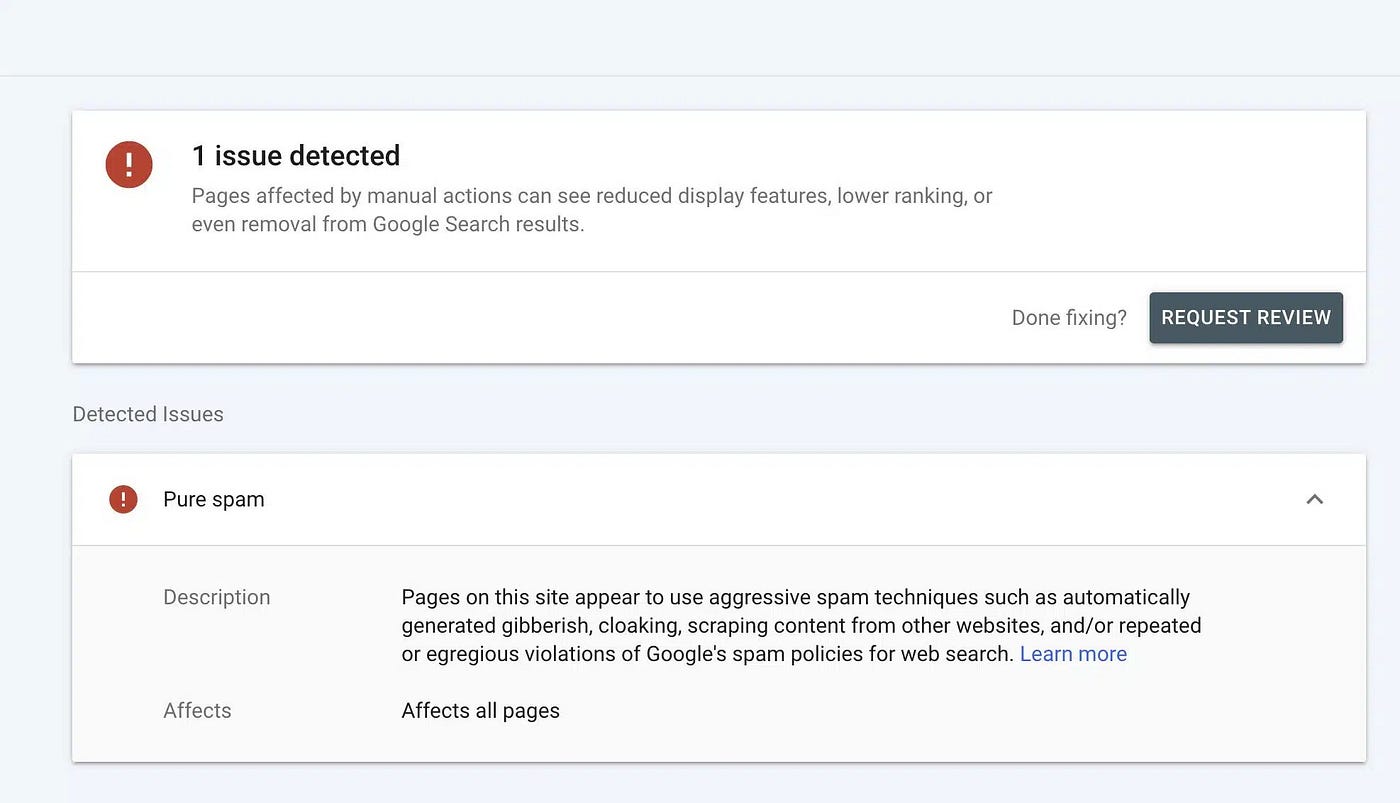
2. Using Fake or Manipulated Reviews
Structured data should represent genuine information. Creating fake reviews, altering ratings, or generating reviews solely to influence search visibility can damage both search performance and customer trust.
Review markup should accurately reflect real customer experiences published on the page. Businesses should never use schema as a way to disguise fabricated feedback.
Authentic reviews are more valuable than artificially inflated ratings because they contribute to both credibility and long-term brand reputation.
3. Marking Reviews That Are Not Visible on the Page
A common Review Structured Data Error occurs when information included in the schema does not appear on the webpage.
For example, if your JSON-LD contains a five-star review but visitors cannot find that review anywhere on the page, the structured data may not accurately represent the visible content.
Your structured data should correspond with what users can actually see. Keeping the markup and page content consistent is essential for maintaining structured data quality.
4. Adding Incorrect Aggregate Rating Data
Aggregate ratings can become problematic when businesses provide inaccurate numbers.
For example, suppose a website displays an average rating of 4.6 from 125 reviews, but the structured data says the rating is 4.9 from 300 reviews. This creates a clear mismatch.
Businesses should ensure that:
- The average rating is accurate.
- The review count is accurate.
- Rating values use the correct scale.
- The information matches the visible webpage.
- Data is updated when the underlying reviews change.
Accurate aggregate rating schema is essential for maintaining reliable structured data.
5. Using Self-Serving Reviews Incorrectly
Google places restrictions on certain self-serving review implementations, particularly when organizations or local businesses mark up reviews about themselves.
This is an area where businesses often misunderstand the difference between having reviews on a website and being eligible for a review rich result.
Before adding review markup to an organization or local business page, check Google’s current guidelines and make sure the implementation fits the supported use case.
6. Missing Important Schema Properties
Another frequent problem is incomplete Review Schema Markup.
Depending on the structured data implementation, important properties may include information such as:
authorreviewRatingreviewBodyitemReviewed
Missing or incorrectly formatted properties can make it harder for search engines to interpret the review.
Businesses should use the appropriate properties for their selected schema type and avoid adding properties simply because they appear in examples elsewhere.
7. Implementing Invalid JSON-LD Code
JSON-LD is widely used because it allows structured data to be added without heavily changing the visible HTML. But a small syntax mistake can prevent search engines from correctly reading the markup.
Common JSON-LD problems include:
- Missing quotation marks
- Incorrect brackets
- Invalid commas
- Misspelled property names
- Incorrect schema nesting
- Invalid values
Even if the visible webpage looks perfect, invalid structured data can prevent search engines from processing the markup correctly.
Always validate JSON-LD after implementation.
8. Not Updating Outdated Review Data
Reviews and ratings can change over time. New reviews may be added, older reviews may be removed, and average ratings may fluctuate.
If your website still contains outdated structured data, search engines may receive information that no longer represents the page accurately.
Regular schema audits can help ensure that review counts, ratings, authors, and review content remain current.
9. Adding Review Schema Across Every Website Page
More schema does not automatically mean better SEO.
Adding the same review markup to every page, including pages where the reviews are irrelevant or not visible, can create unnecessary structured data problems.
Instead, use schema where it genuinely describes the content of the page. Relevant and accurate markup is more valuable than applying structured data indiscriminately across an entire website.
10. Ignoring Google Structured Data Warnings
Businesses sometimes implement schema once and never check it again.
That can be a mistake.
Websites change, plugins are updated, templates are redesigned, and structured data can break without anyone noticing. Google Search Console can provide useful information about structured data and search appearance issues.
Regularly reviewing Search Console reports and validating important pages can help identify problems before they become larger technical SEO issues.
If structured data errors are part of a wider technical SEO problem, professional technical SEO services can help identify and resolve implementation issues.
How to Correctly Implement Review Snippet Structured Data
Correct implementation starts with accuracy. Rather than adding as much markup as possible, focus on using the right schema, providing genuine information, and validating the final implementation.
Choose the Correct Schema Type
First, determine which supported schema type accurately represents the content on the page.
Do not choose a schema type simply because it appears to offer review-related features. The structured data should describe the actual content and purpose of the page.
Add Accurate Review Information
Review information should reflect genuine content available to visitors.
Make sure the author, review rating, review body, reviewed item, and aggregate information — when applicable — are accurate and consistent with the page.
Validate Your Structured Data
After implementation, validate the structured data to identify syntax problems, missing information, or eligibility issues.
Testing is particularly important after making changes to website templates, CMS plugins, or schema configurations.
Monitor Performance in Google Search Console
Validation is not a one-time task.
Monitor Google Search Console regularly for structured data issues and changes in search appearance. If Google reports errors or warnings, investigate them rather than allowing them to accumulate.
How to Check If Your Review Schema Is Working
There are several ways to check your Review Schema Markup.
Google Rich Results Test
Google’s Rich Results Test can help determine whether a webpage’s structured data is eligible for certain rich result features and identify issues with the implementation.
Use the official Google Rich Results Test when testing important pages.
Google Search Console
Search Console can help you monitor structured data and search appearance over time. It is particularly useful for identifying problems that may appear after a website update.
Regular Error Monitoring
A technically correct implementation today can become outdated tomorrow. Make structured data monitoring part of your regular technical SEO process.
Remember that passing a validation test does not guarantee that Google will show a rich result. Eligibility and actual search appearance are ultimately determined by Google.
Best Practices for Review Snippet SEO in 2026
A sustainable approach to Review Snippet SEO should focus on accuracy, transparency, and compliance.
Follow these best practices:
- Use genuine customer reviews.
- Display review information clearly on the relevant webpage.
- Keep rating and review counts accurate.
- Use supported schema types.
- Keep JSON-LD technically valid.
- Avoid manipulating ratings or review content.
- Keep structured data synchronized with visible content.
- Review your implementation after major website changes.
- Monitor Google Search Console regularly.
- Follow Google’s latest structured data guidelines.
The goal should not simply be to obtain review stars in search results. Instead, businesses should create reliable structured data that accurately communicates their content to search engines.
Frequently Asked Questions
What is Google Review Snippet structured data?
Google Review Snippet structured data is markup that helps search engines understand review and rating information associated with eligible content on a webpage. It can help Google interpret details such as the review author, rating, review content, and reviewed item.
Why is my review snippet not appearing in Google search results?
A review snippet may not appear because the page is not eligible, the markup contains errors, the content does not meet Google’s guidelines, or Google has simply chosen not to display the rich result. Structured data eligibility does not guarantee a specific search appearance.
Does review schema improve SEO rankings?
Review schema is not a direct ranking guarantee. Proper structured data can help search engines understand webpage content and may make eligible search results more informative, but businesses should not expect schema alone to improve organic rankings.
What review schema mistakes should businesses avoid?
Common mistakes include using unsupported schema types, marking up hidden reviews, providing inaccurate ratings, using fake reviews, missing important properties, implementing invalid JSON-LD, and failing to update outdated review information.
Can fake reviews affect review rich results?
Yes. Fake or manipulated reviews can violate Google’s guidelines and undermine trust. Review structured data should represent genuine content and should never be used to artificially influence search appearance.
How do I validate review structured data?
You can use Google’s Rich Results Test to test eligible structured data and identify implementation problems. Google Search Console can then help monitor structured data and search appearance issues over time.
Which schema types support review snippets?
Review snippets are supported for specific schema types and use cases defined by Google. Always check Google’s current review snippet documentation before implementing markup because eligibility requirements can change.
Conclusion
**Google Review Snippet Structured Data** can help search engines understand reviews and ratings, but simply adding schema markup does not guarantee a Google rich result.
The biggest problems usually come from inaccurate information, unsupported content types, hidden reviews, fake ratings, invalid JSON-LD, incomplete properties, and outdated review data. These issues can prevent eligible rich results from appearing and may create broader structured data compliance problems.
The best approach is to use genuine reviews, keep your markup synchronized with visible page content, validate your implementation, and monitor it regularly through Google’s tools.
When implemented correctly, Review Schema Markup becomes part of a broader technical SEO strategy rather than a shortcut to better rankings. By following Google’s guidelines and maintaining accurate structured data, businesses can build a stronger foundation for search visibility and Review Snippet SEO.
Need help fixing structured data errors and improving your website’s technical SEO performance? Our SEO experts can audit your schema implementation and help optimize your search visibility. website:https://gravitasin.com/google-review-snippet-structured-data-mistakes/
메타데이터
- post_id
- 43f452990e2a
- slug
- google-review-snippet-structured-data-common-mistakes-that-hurt-your-seo-43f452990e2a
- url
- https://medium.com/@gravitasin123/google-review-snippet-structured-data-common-mistakes-that-hurt-your-seo-43f452990e2a
- canonical_url
- https://medium.com/@gravitasin123/google-review-snippet-structured-data-common-mistakes-that-hurt-your-seo-43f452990e2a
- author_url
- https://medium.com/@gravitasin123
- status
- ok
- fetched_at
- 2026-08-22 12:22:50