Stealth Wars: USA 🇺🇸 vs Russia 🇷🇺 & China 🇨🇳 — Who Owns the Shadows?
“They can’t hit what they can’t see.”
Stealth Wars: USA 🇺🇸 vs Russia 🇷🇺 & China 🇨🇳 — Who Owns the Shadows?
“They can’t hit what they can’t see.”
That’s the promise stealth technology made to the world. Since the first time an F-117 vanished off radar screens and struck Baghdad in 1991, the United States has held the crown. But now, two challengers have entered the ring — Russia and China. Both have poured billions into next-gen fighters. Both claim to match, or even surpass, the U.S. in stealth. And yet, as with most things in warfare, the truth is more complicated.
Welcome to Stealth Wars — where fighter jets don’t just fly, they disappear. Let’s pull back the curtain.
Chapter 1: Meet the Ghosts
United States 🇺🇸 — The Stealth King
The U.S. didn’t just invent stealth — it turned it into a doctrine.
• F-22 Raptor: Built for air dominance. Supercruise, high agility, and radar signature so low it’s often referred to as “fighter-shaped nothing.” Only around 180 were ever built, but none have ever been shot down.
• F-35 Lightning II: The multi-role ninja. Flown by the U.S. and its allies, it fuses sensors from the battlefield and turns one pilot into a battlefield commander. Already over 600 in service, with thousands planned.
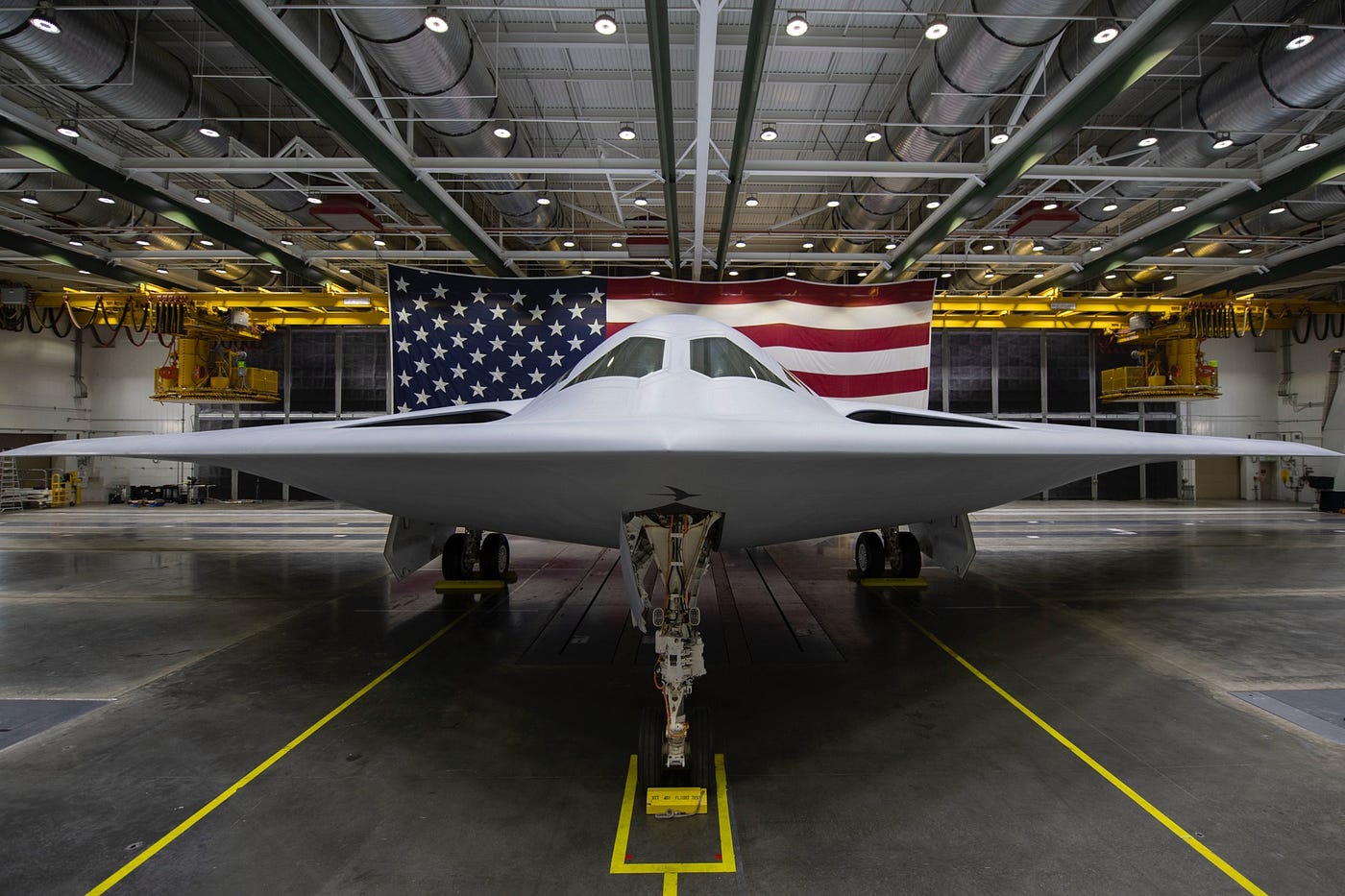
• B-2 Spirit and B-21 Raider: Strategic bombers designed to sneak deep into enemy territory. The B-21, America’s next stealth flagship, hasn’t even been fully unveiled yet it’s already feared. And it should be feared.
Russia 🇷🇺 — The Pretender
Russia likes to claim fifth-gen credentials. But claiming is one thing. Delivering? Another story.
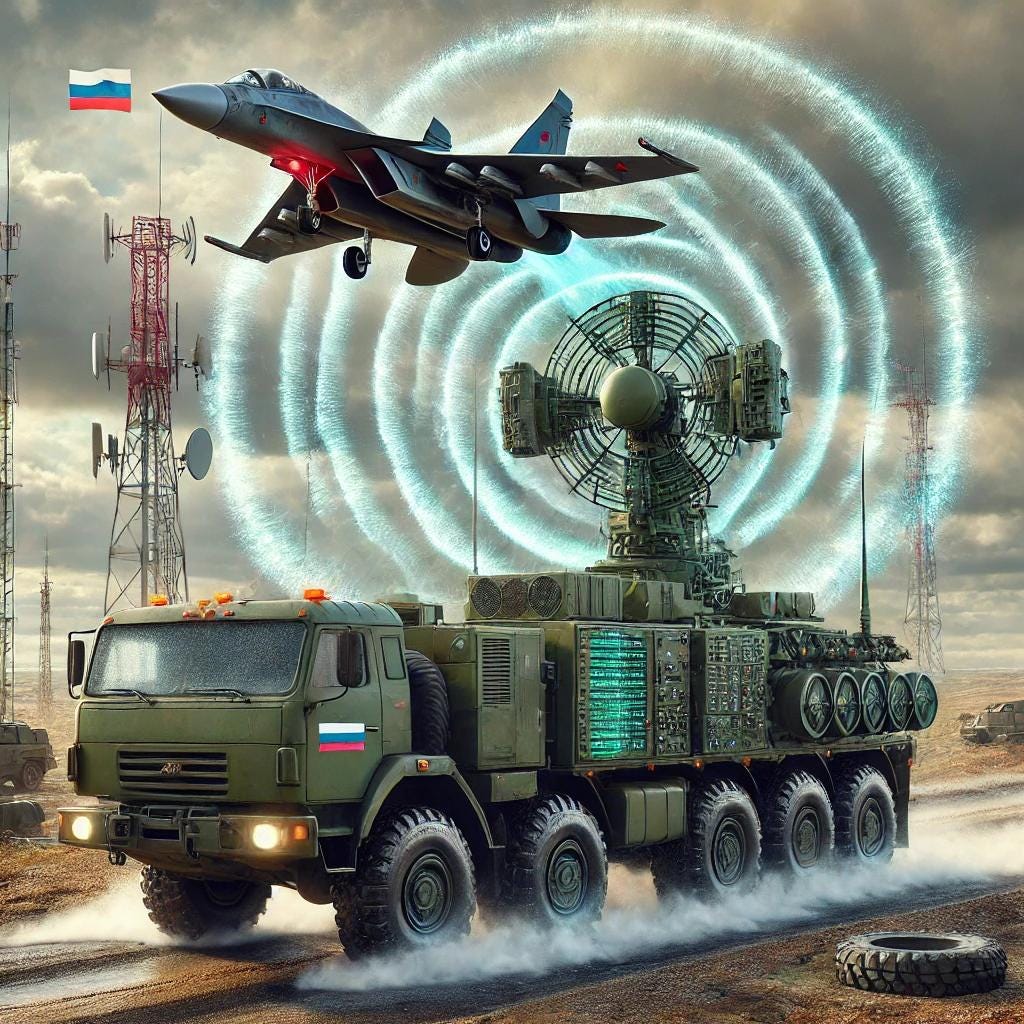
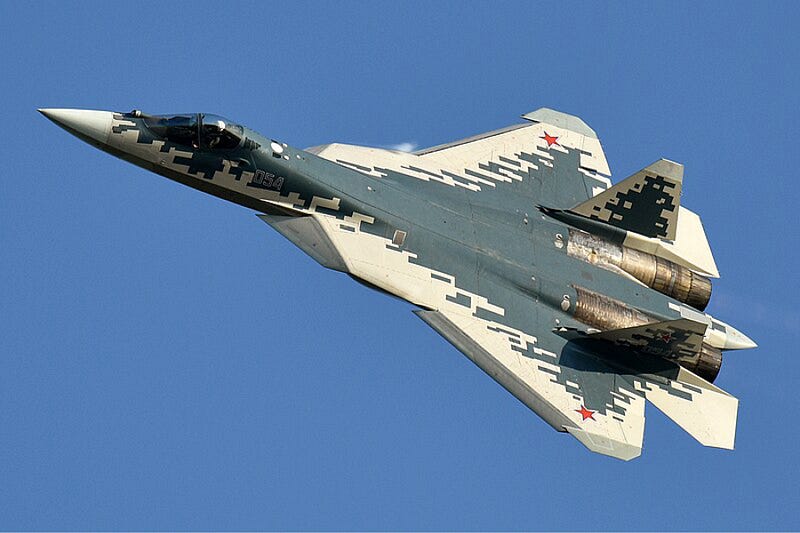
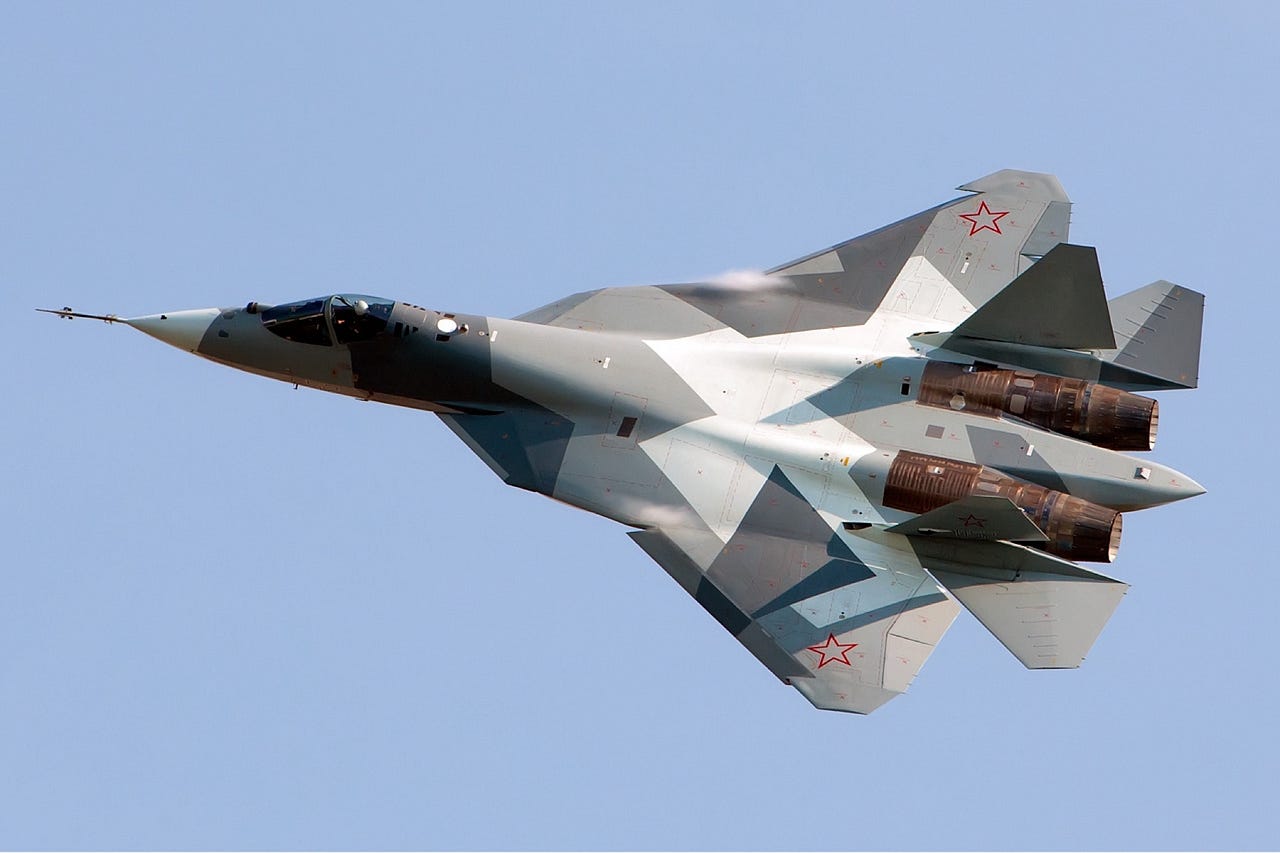
• Su-57 “Felon”: A powerful jet, no doubt — but stealth? Marginal. Its design sacrifices low observability for speed and maneuverability. No stealthy engine nozzles. Radar-absorbent coating? Spotty. Internal weapons bay? Rarely used. And with fewer than 20 in real service, Russia’s stealth dreams are still in beta.
• Su-75 “Checkmate”: Unveiled with a dramatic airshow and flashy CGI. But as of now? A brochure and a prototype no operational squadrons.
China 🇨🇳 — The Challenger
China has made massive gains, not just in numbers but in design maturity.
• J-20 Mighty Dragon: It looks stealthy and flies like a long-range interceptor. Front-aspect stealth is solid, but engine design and rear observability are still catching up. Still, over 250 are already in service a serious contender.
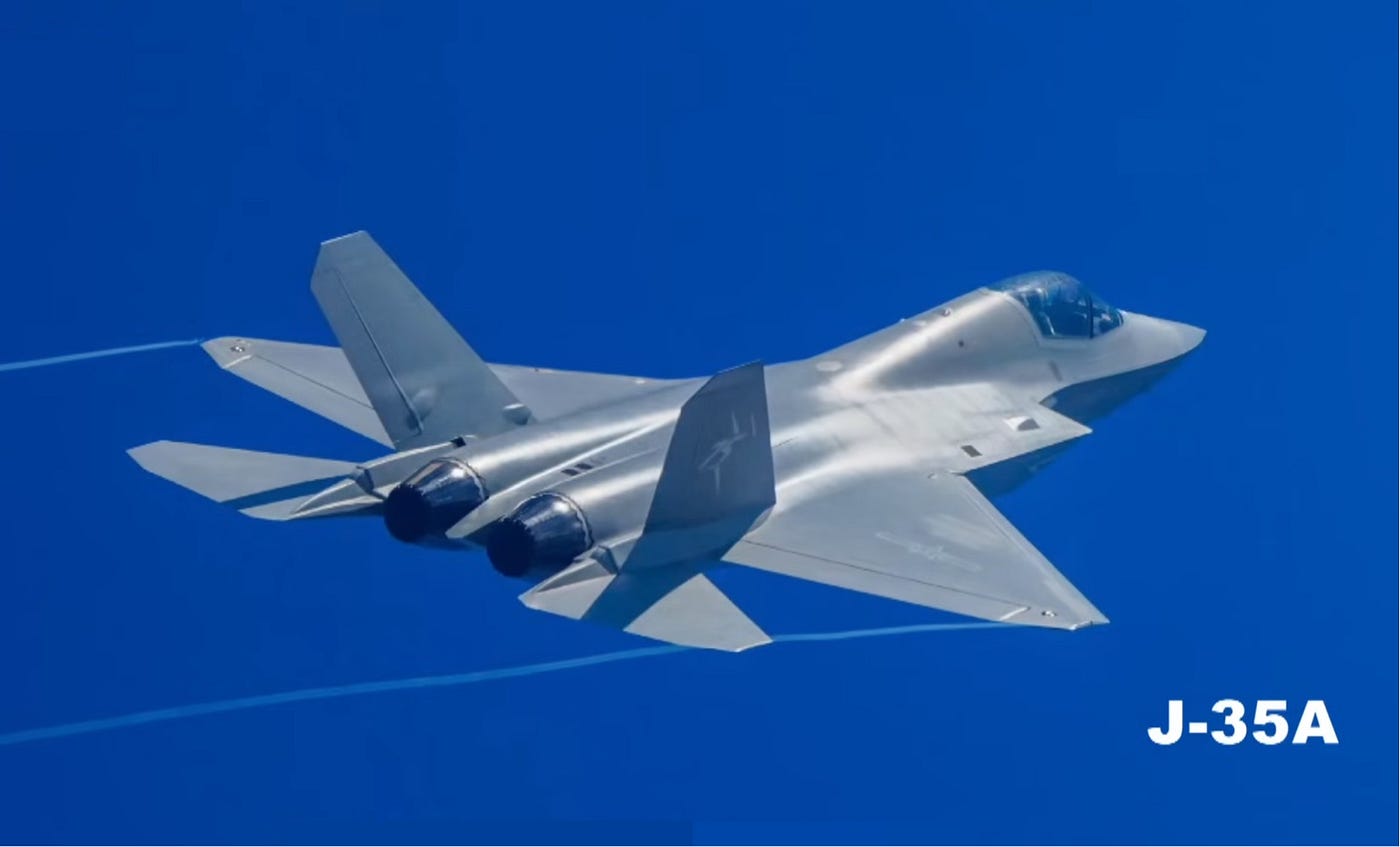
• FC-31: A twin engine stealth prototype in last stage’s of production possibly meant for China’s navy and reportedly an export version J-35 for Pakistan. Sleek, compact, and stealthy but still not in mass production.

⸻
Chapter 2: What Makes a Jet Truly Stealthy?
It’s easy to slap some black paint and angled surfaces on a jet and call it stealth. But true low observability goes much deeper.
• Radar Cross Section (RCS): How small the aircraft looks to enemy radar. The F-22 and B-2 are benchmarks here.
• Internal weapons bays: External missiles ruin stealth. Only internal carriage counts.
• Infrared signature: Heat makes you visible to IR sensors. Engine placement and cooling are key.
• Sensor fusion and data links: A true stealth platform isn’t just hard to see — it sees first, acts first, and vanishes.
By these metrics, the U.S. leads the pack. The F-35’s ability to act as a flying command post — collecting and relaying data — makes it more than a fighter. The Su-57? More visible. The J-20? Improved, but still lacks engine-level stealth and full battlefield integration.
Chapter 3: The Real Arsenal — What These Jets Carry
United States 🇺🇸
• AIM-120D: The backbone of American BVR combat. Long range, high success rate.
• AIM-260 JATM: The next big thing, designed to outrange anything China or Russia fields.
• SDB II (StormBreaker): Smart bombs that hunt moving targets even in bad weather.
• B61 Mod 12: A tactical nuclear bomb, fully compatible with stealth bombers.
Russia 🇷🇺
• R-77M / K-77M: Radar-guided missiles with extended range, but little real-world data on performance.
• Kh-59MK2: A cruise missile variant, not ideal for stealth carriage.
• Hypersonics? Not yet integrated into stealth platforms. Mostly used on MiGs and bombers.
China 🇨🇳
• PL-15: Long-range BVR missile with AESA radar. Recently combat-tested by the Pakistan Air Force against the Indian Air Force. Reports suggest it scored a kill against an IAF Rafale — a serious statement about Chinese missile tech entering the battlefield.
• PL-10: Short-range, highly maneuverable missile with off-boresight targeting.
• Rumors of air-launched hypersonics exist, possibly in testing for future J-20 upgrades.
Chapter 4: Strength in Numbers
Fleet size matters, not for propaganda, but for operational tempo. Here’s how the numbers stack up, described plainly.
The United States has over 600 F-35s in service, supported by around 180 F-22s. This doesn’t include dozens of stealth bombers like the B-2, or the incoming B-21 Raider. The U.S. not only builds stealth jets — it exports them to NATO and Pacific allies, making stealth a coalition advantage.
China is rapidly closing the gap with over 250 operational J-20s. Their production lines are hot, and expansion is aggressive. While the J-20 may not match the F-22 in stealth, sheer numbers are beginning to change the equation in the Indo-Pacific.
Russia lags far behind. With around 20 Su-57s — including prototypes and test platforms — it’s clear they have more experience in marketing stealth than deploying it. Their production is slow, constrained by sanctions, and reliant on legacy systems.
Chapter 5: Stealth Doctrine — How These Powers Use Their Ghosts
The United States 🇺🇸 has built a full ecosystem around stealth. It’s not just jets — it’s AWACS, satellites, ground stations, and drones all working in sync. Stealth aircraft don’t operate alone; they coordinate, vanish, strike, and disappear.
Russia 🇷🇺 uses its Su-57s more like upgraded 4th-gen platforms. Its doctrine still relies on speed, long-range missiles, and brute force. Stealth, while present, isn’t central to how Russia plans air combat.
China 🇨🇳 is building a stealth strategy for regional dominance — particularly over Taiwan and the South China Sea. Their goal is to deny access, intimidate rivals, and protect key infrastructure with stealthy patrols and fast intercepts.
Chapter 6: What Comes Next?
The United States 🇺🇸 is already planning the next era. Its NGAD (Next Generation Air Dominance) platform isn’t just a jet — it’s a family of systems, including optionally manned fighters, drone wingmen, AI-enhanced sensors, and 6th-gen stealth.
Russia 🇷🇺 still promotes the Su-75 Checkmate, but real funding, timelines, and partners remain unclear.
China 🇨🇳 is working on 6th-gen concepts, but details are scarce. Expect something fielded by the 2030s if they stay on track.
Final Verdict: Who Wins the Stealth War?
Stealth isn’t just about what you build — it’s about how you use it. Production scale, battlefield integration, sensor networks, and combat readiness all matter.
On paper, the playing field is crowded. In practice, only one country flies into contested airspace, eliminates threats, and flies back unseen with allies doing the same.
For now, the United States doesn’t just lead the stealth war.
It defines it.
Russia is tinkering.
China is catching up.
America? Already playing tomorrow’s game.
In the world of ghost jets, the real winner is the one you never knew was there.
And that jet still has a 🇺🇸 on its tail.
메타데이터
- post_id
- 443fea8872dc
- slug
- stealth-wars-usa-vs-russia-china-who-owns-the-shadows-443fea8872dc
- url
- https://medium.com/@t35/stealth-wars-usa-vs-russia-china-who-owns-the-shadows-443fea8872dc
- canonical_url
- https://medium.com/@t35/stealth-wars-usa-vs-russia-china-who-owns-the-shadows-443fea8872dc
- author_url
- https://medium.com/@t35
- status
- ok
- fetched_at
- 2026-06-16 19:09:56