The Golden Age of the Russian Imperial Nobility
Splendour and separation from the reality
The Golden Age of the Russian Imperial Nobility
Splendour and separation from the reality
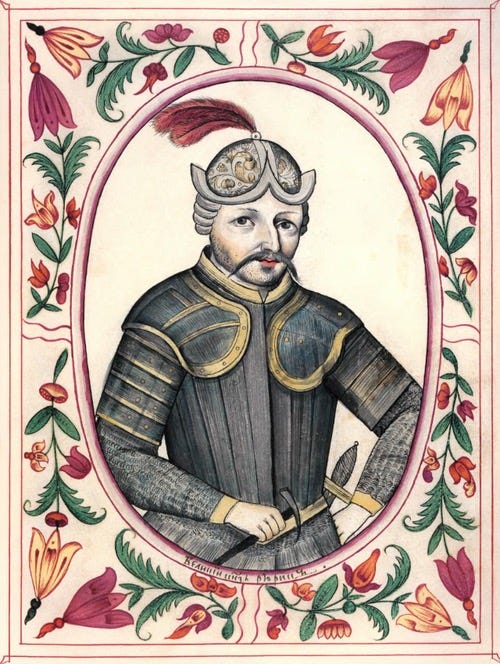
When Peter the Great ascended the Russian throne, the reforming tsar created a new culture that had never previously existed in quite this form — the culture of the nobility. Peter transformed their appearance, forced them to attend and dance at balls, acquire an education, and even style their hair differently. Yet the nobility remained bound by obligations: they were required to serve for life, either in the military or in the civil administration. They were expected to serve the state and the monarch personally.
Everything changed with the reforms of Peter III and Catherine the Great. It was they who transformed the nobility into the most privileged class of the empire, a class seemingly free from worries and hardship. Or was it?
Nobility: Access to the Market of Land and Souls
Before Peter the Great, the title — or more accurately, the status — of nobleman (boyar) was hereditary. Those who possessed such status had the right to own and use land, as well as to possess “souls,” that is, serfs. Yet all of them remained obligated to serve the state, even if their status had been inherited rather than granted as a reward for military service.
In many ways, this was precisely what noble status meant before Peter: the state granted you land (sometimes even with peasants), and in return you served the sovereign in wartime.
The first changes came under Tsar Feodor Alekseyevich Romanov, Peter’s elder brother, when he abolished the old system of hereditary precedence by destroying the Razryad Books. In doing so, he ended the long-standing practice of distributing state positions according to family pedigree. Personal merit now mattered far more than noble ancestry.
Peter the Great — an emperor who sought to regulate nearly every aspect of his subjects’ lives — decided to standardize the path to noble status. Thus appeared the famous Table of Ranks, first introduced in 1722 and remaining in force until 1917.
From that moment onward, the old boyar aristocracy effectively ceased to exist. Everyone became part of a single noble estate. It no longer mattered how ancient your lineage was or how distinguished your family name appeared. All were united under one system — and all were required to serve.
Peter viewed the nobility as the foundation of state power. Since nobles enjoyed the exclusive right to own land and serfs, they were expected to repay that privilege through service to the empire.
An equally important consequence of the Table of Ranks was that noble status ceased to be entirely closed to outsiders. Through advancement from rank to rank, an individual could climb into the noble estate. Nobility could be either personal or hereditary. Once granted that status, a person could purchase land, acquire peasants, attend elite social gatherings — and where society existed, connections followed.
Yet noble status, despite its obligations, granted privileges unavailable to anyone else: access to the market of land and souls. A newly created nobleman could purchase estates and villages, build manors, and develop them. The market was exclusive and often overcrowded, but it nevertheless offered the possibility of immense wealth — provided one possessed the capital to enter it.
Privileged Emancipation
Throughout the era of palace coups, the Russian nobility remained a service class despite their titles, status, and estates. Every nobleman was expected to serve the state either in military or civilian positions. Noble though they were, they remained bound.
Everything changed under Peter III.
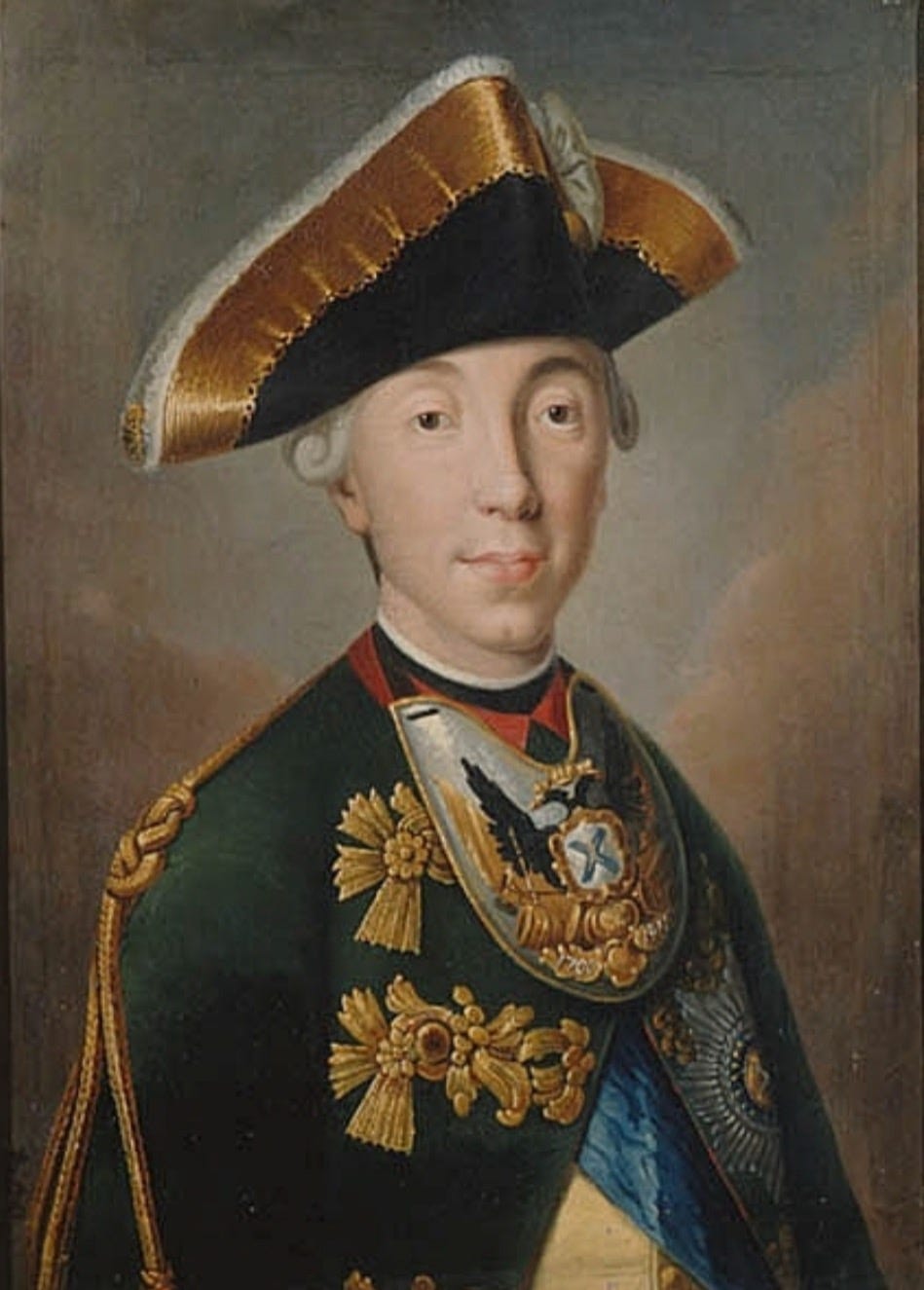
Portrait of Peter III by an unknown artist from Gripsholm Castle, National Museum of Sweden.
In 1762, Peter III released the nobility from compulsory state service. From that moment, noblemen were free to retire from government positions and devote themselves entirely to their estates. They could resign from service, manage their lands, and focus on private life.

Empress Catherine II, 1793. Johann Baptist von Lampi the Elder. Museum of the French Revolution.
Further strengthening of noble privileges came through Catherine II’s reforms. Her famous Nakaz of 1767 expanded upon the principles of Peter III’s Manifesto on the Freedom of the Russian Nobility. It argued that the noble estate possessed a natural right, derived from birth itself, to occupy the position of society’s elite.
In 1785, Catherine issued the Charter to the Nobility, significantly expanding noble privileges. Nobles were exempt from compulsory military and civil service, freed from taxation, granted exclusive rights to own serfs and exploit natural resources on their estates. They could establish manufactories, engage in industrial production and trade, and were exempt from housing military troops.
The First Generation of Unflogged Nobles: A Golden Age
These privileges transformed the nobility under Catherine II into the intellectual and financial elite of the empire.

“Assembly of the Nobility in Catherine’s Era,” painting by V. Chambers.
There were masquerades, luxurious palaces, and magnificent country estates. Some of the wealthiest noble families owned hundreds of villages and thousands of serfs. Land and peasants could be purchased — or granted directly by the monarch. Catherine herself became famous for rewarding favorites with estates, villages, and palaces for their “services to the Fatherland.”
Around this time, the nobility effectively began creating its own distinct culture.
This is where what we commonly call the “Golden Age” of noble culture truly begins.
Under Catherine II, high society in the Russian Empire became fully integrated into the broader European cultural system, particularly the French one. French became the everyday language of the aristocracy. It was spoken in salons, used in correspondence, and sometimes even employed in conversations about child-rearing. Russian remained the language of administration, the countryside, and everyday interactions, but not the language of fashionable society. A nearly bilingual reality emerged within a single empire.
Noble culture became a culture of rules and form. Etiquette grew increasingly elaborate, governing not only what one said but how one entered a room, bowed, spoke, and interacted with others. Balls ceased to be mere entertainment and became mechanisms of social navigation. They revealed who belonged, who possessed influence, and who remained on the margins.

Portrait of Ekaterina Nelidova, by Dmitry Levitsky, 1773.

Portrait of Princess Ekaterina A. Lobanova-Rostovskaya, by Ivan Argunov, 1754.
Wigs, European fashions, corsets, and strict standards of appearance became essential markers of belonging to the world of the “enlightened Europe.” Clothing was no longer merely practical — it became a symbol of identity. Above you can see portraits of the typical lady’s fashion during the second half of the 18 century.
Yet service itself did not disappear; it simply ceased to be mandatory. A nobleman could pursue a military career, enter the Guards, or work in the civil administration. But if he possessed sufficient wealth, he could also choose not to serve at all.
For this reason, the eighteenth-century nobility was far from homogeneous. Alongside the wealthy court elite lived poor nobles, officers, and bureaucrats who formally belonged to the highest estate but survived on salaries, patronage, and advantageous marriages.
The central unit of this new world became the estate.

Painting depicting a typical Russian noble estate in the Neoclassical style
A noble estate was no longer simply land. It became an entire way of life: a manor house with libraries and reception halls, gardens, agricultural enterprises, serfs, private tutors, and French governesses. It was within these estates that a unique culture of everyday life emerged, combining European standards of behavior with the economic realities of imperial Russia.
And herein lay the era’s greatest paradox: the more European noble life became, the more dependent it remained upon the empire’s internal structures — land ownership and serf labor — which made that lifestyle possible in the first place.
Living within their own enclosed social system, nobles increasingly came to understand themselves through education and upbringing.
From an early age, a noble child entered a world where language, behavior, and even patterns of thought were predetermined. French tutors and governesses, often recruited directly from Europe, taught children not only language but manners, social conduct, and the logic of elite society. French became the first language of culture, while Russian often became the language of the surrounding world, mastered later and almost as a second language.
At the same time, institutions of noble education emerged: cadet corps, private boarding schools, and eventually lyceums, all dedicated to training the future military and administrative elite of the empire. These schools did more than teach literacy or military skills — they created a shared cultural code.
A graduate of such an institution was expected to navigate a salon as comfortably as an office or government ministry. By the end of the eighteenth century, the nobility was no longer united merely by legal status. It increasingly recognized itself through speech, education, manners, and upbringing.
At this point, a crucial transformation occurred: the nobility ceased to be merely a service estate and became a self-contained cultural environment. Membership depended not only on law but also on lifelong socialization. This made the system both resilient and fragile, for it no longer relied entirely upon the state but increasingly lived according to its own internal rules.
Yet it was precisely here that the system’s central contradiction emerged.
The nobility, despite enjoying freedom from compulsory service and legally guaranteed privileges, did not become a unified and universally prosperous class. On the contrary, divisions deepened between wealthy landowners and impoverished service nobles; between those who managed vast estates and thousands of serfs, and those who continued to survive on salaries and occasional appointments.
The more the nobility evolved into a separate privileged world, the more it developed its own culture while distancing itself from the country and people around it.
The nobility created its own enclosed universe — a world that would ultimately prove fragile and temporary. The nineteenth century would expose its weaknesses. It would become an age of great transformations and growing crises. An age in which the old order slowly began to die. An age in which the famous principle emerged: it would be better to abolish serfdom from above than wait for it to abolish itself from below.
메타데이터
- post_id
- 44516ee2a8be
- slug
- the-golden-age-of-the-russian-imperial-nobility-44516ee2a8be
- url
- https://medium.com/@v.gomann/the-golden-age-of-the-russian-imperial-nobility-44516ee2a8be
- canonical_url
- https://medium.com/@v.gomann/the-golden-age-of-the-russian-imperial-nobility-44516ee2a8be
- author_url
- https://medium.com/@v.gomann
- status
- ok
- fetched_at
- 2026-07-10 13:01:02