How “online” became “all the time”
And why some people are deliberately logging off (Issue #434)
How “online” became “all the time”
And why some people are deliberately logging off (Issue #434)
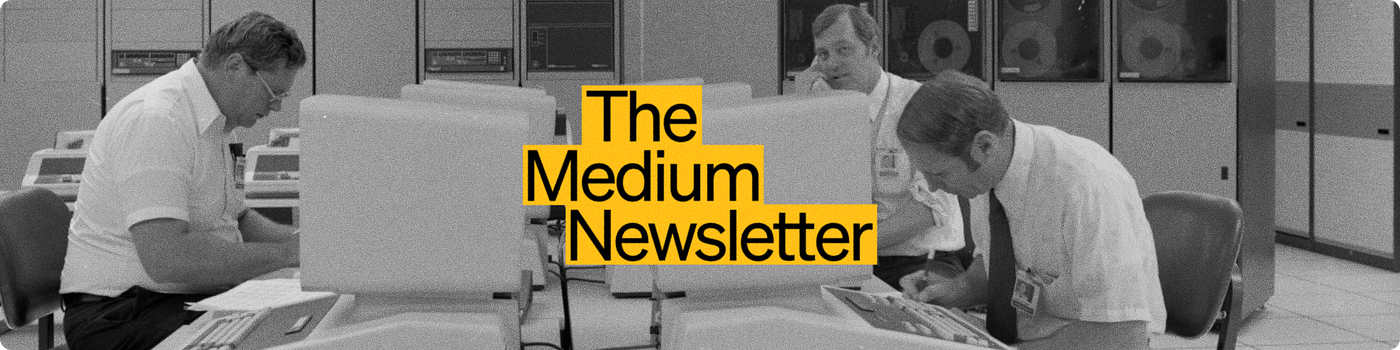
Base image from the San Diego Air & Space Museum Archives on Wikimedia Commons.
Online, Wira Indra Kusuma writes, used to be a place. “You visited it. There was a small journey in: switch on, connect, wait, and the same small journey back out.”
It’s hard to imagine for those who didn’t live through it, but there used to be a distinct boundary between online and offline. What happened on the internet was trapped in the computer and the 1990s/2000s-era “computer rooms” they lived in. Then, as social media became mainstream and computers morphed to fit in our pockets, what was online became everywhere, all the time.
In this issue, let’s take a look at the consequences of the omnipresent infinite feed — and how people are dealing with it.
Joy, in this sense, is not the opposite of seriousness. It is what seriousness becomes when it is shared, when love survives disappointment long enough to be answered.
— Roger Berkowitz for The Hannah Arendt Center, City of Joy
A place that turned into a layer
Today, the internet has changed from a place to a layer. Over the last twenty years, Kusuma argues in We used to log off, small, distinct design decisions have removed any friction between a reader and more content. With the internet no longer restricted to computer rooms and desktops, it began to overlay everything in the real world — and moments that might cause a reader to experience some friction, like a “next page” button, were removed. “So we optimized it away,” he writes. “Not out of malice, but out of intentions that sounded good: make everything smoother, faster, closer, always ready. Every door we removed we called an improvement.”
But those doors had an important function: they serve as decision points. What product designers call “friction” is actually an offramp — a moment to pause and consider whether you really want to keep reading. But by removing that moment in the name of optimization, you’re actually removing that agency and decision, and taking away the ability to log off and properly reset:
Logging off used to do that for us. It cleared the state. Not by erasing memory, but by releasing the temporary, closing what did not need carrying to bed. Now nothing is released. The feed remembers where you stopped. Your presence is always written as active. Notifications queue so that not one of them slips by. We have become processes that are never garbage-collected. Always running, always holding everything ever opened, never given a moment to return to baseline.
The issue, Kusama writes, is not a lack of willpower. Being online all the time is a deliberate design choice; the integration of LLMs into everyday life is blurring that line even more.
Internet culture created a strange illusion where constant exposure to information feels identical to intelligence. People consume endless podcasts, threads, clips, opinions, and “deep” content every day yet somehow struggle to sit alone with their own thoughts for fifteen minutes.
— Adam Craig in Only Humans, Why Intelligent People Are Slowly Disconnecting From Internet Culture
Logging off is the new black
If online is omnipresent, then it makes Mona Lazar’s observation all the more fascinating:
Yesterday I passed by a group of about 20 people, sitting outside, on the grass, in a park, talking, laughing. No phone in hand. None. They were literally just touching grass. I stood there and stared for a while. I don’t think I’ve seen anything like it since the early 2000s.
Lazar finds this to be a welcome change. She has been chronicling the stories of the chronically online in the real world, including a recent incident where a friend who went to the hospital after walking into a tree branch while distracted by AI-generated videos on his phone. “He hadn’t always been like this,” she writes. “I’ve known this person for two decades. He used to be present, alive, awake. He used to listen. Something had changed, quietly, without announcement, and I hadn’t noticed until a tree branch made it impossible to ignore.”
“Time spent with friends in person has been in freefall since the late 2010s,” Lazar reports. “Reported loneliness is up across every age group, but the numbers among younger people are genuinely alarming for a cohort that’s supposedly more connected than any generation in history.”
But Lazar has noticed a trend: some people are incredibly rejecting online life. “They’re not off the grid in any dramatic, survivalist sense,” she writes. “They’re just… not that online. And increasingly, that’s the most interesting thing a person can be.”
If online is a layer, then offline must be a choice. So this summer, find the doors to offline for yourself. Visit a library, find some oracle cards, be intentionally absurd, and touch some grass. Your brain will thank you.
A final thought
This weekend, the Obama Presidential Center opened in Chicago. The center, a museum and presidential library, covers the historic term of former president Barack Obama. Obama himself gave remarks outlining his vision for the United States and the world, which he posted on Medium. An excerpt to keep in mind this week:
When we lose faith in each other, when we stop believing that voting matters, that citizenship matters, that our collective voices matter, that how we treat each other no longer matters, and we give away our power to decide our own futures, we open the door to the most ruthless, or the most careless, or the most fearful among us, who see some groups and some people as more equal than others, and see government as nothing more than a way to divvy up the spoils and punish enemies and keep those who are different in their place.
I do not believe that is the story of America that prevails in the end.
Want something relaxing to read before you go offline? Check out the internet culture tag to read more about people logging off, or check out some poetry or fiction to give your brain something to think about while you’re out in the real world.
Deepen your understanding every week with the Medium Newsletter. Sign up here.
Edited and produced by brandon echter, Scott Lamb, and Carly Rose Gillis.
Like what you see in this newsletter but not already a Medium member? Read without limits or ads, fund great writers, and join a community that believes in human storytelling.

메타데이터
- post_id
- 447106e69d43
- slug
- how-online-became-all-the-time-447106e69d43
- url
- https://medium.com/blog/how-online-became-all-the-time-447106e69d43
- canonical_url
- https://medium.com/blog/how-online-became-all-the-time-447106e69d43
- author_url
- https://medium.com/@dailynewsletter
- status
- ok
- fetched_at
- 2026-06-24 23:31:39