Xpeng AI Day 2025: VLA 2.0 , XNGP updates, robotaxis, IRON robots and Aridge flying cars.
Our visit at the Xpeng AI Days 2025 in Guangzhou, China
Xpeng AI Day 2025: VLA 2.0 , XNGP updates, robotaxis, IRON robots and Aridge flying cars.
Our First Day at Xpeng AI Days 2025 in China
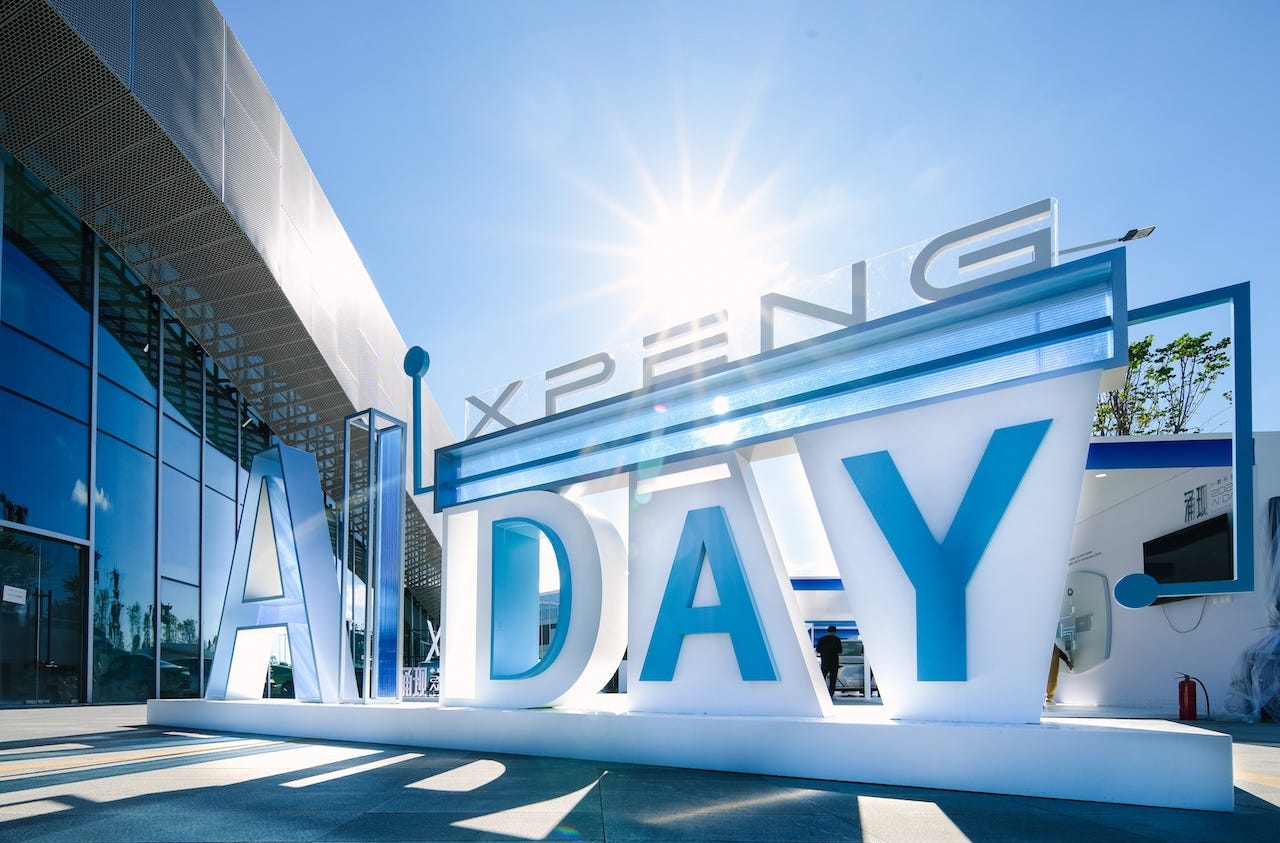
I’m reporting back from the “AI Day” event that took place on November 5–6 in Guangzhou. In the first half of this article, I’ll present their new intelligent model — VLA 2.0 — along with announcements about their autonomous driving system — XNGP — and robotaxis. The second half of the article will cover IRON humanoid robots and flying cars. Let’s dive into it!
Xpeng Shifts Into High Gear
When it comes to Chinese electric vehicles, only three companies have met their sales targets for the first 10 months of 2025: Leapmotor, Xiaomi and Xpeng. This announcement comes at just the right time for Xpeng as it inaugurates its new headquarters, an XXL campus welcoming new recruits to a team that has grown by approximately 55% annually since 2015.
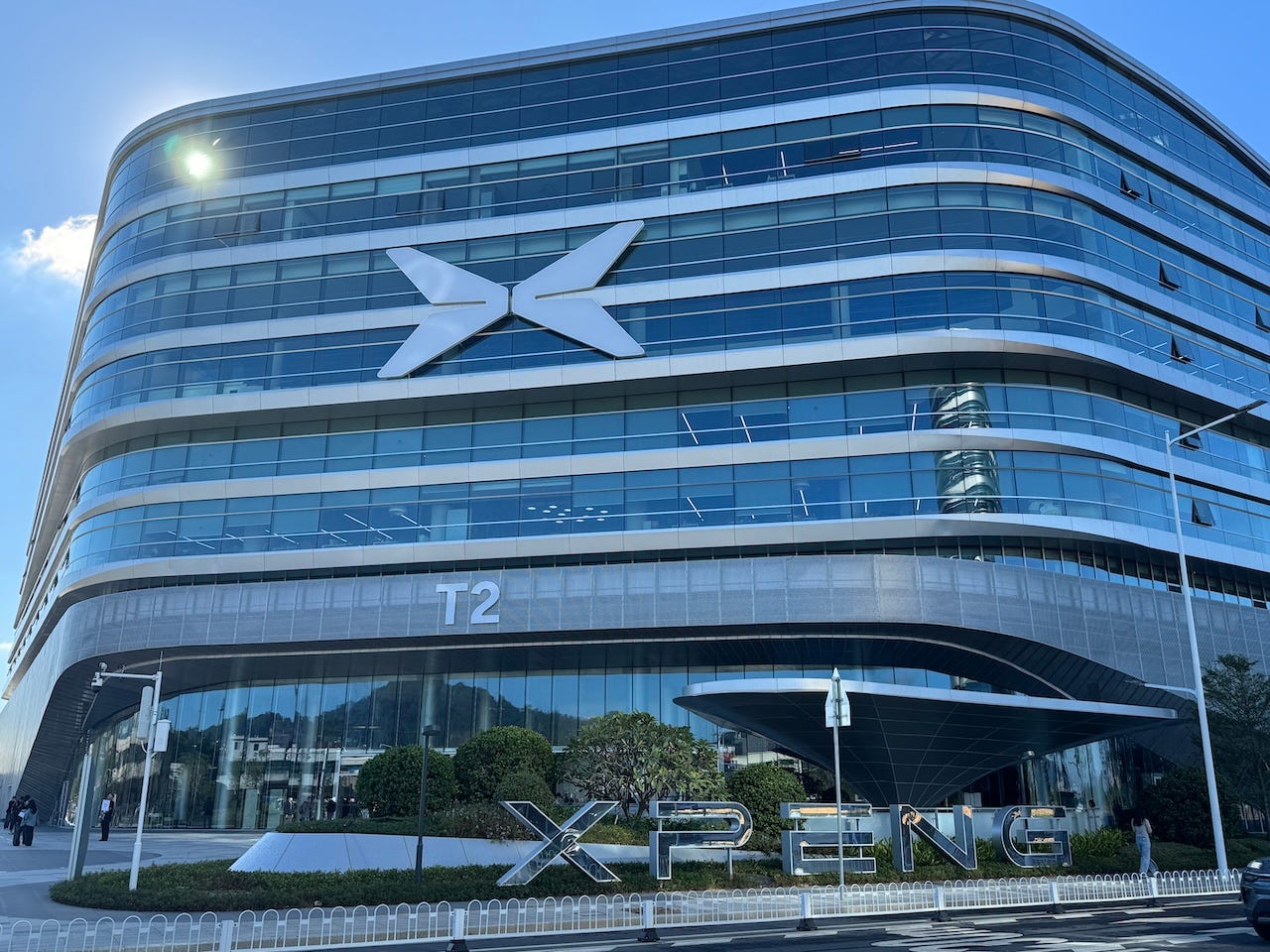
The new Xpeng headquarters and campus in Guangzhou. // Source: Nicolas Declunder
As a result, over 20,000 employees now work at the new site, distributed across the electric vehicle, robotics, and software development divisions.
SEPA: A Platform Evolving at Breakneck Speed
We kicked off these two days with a visit to the new museum tracing automotive history and introducing the history of Xpeng’s technology platforms.
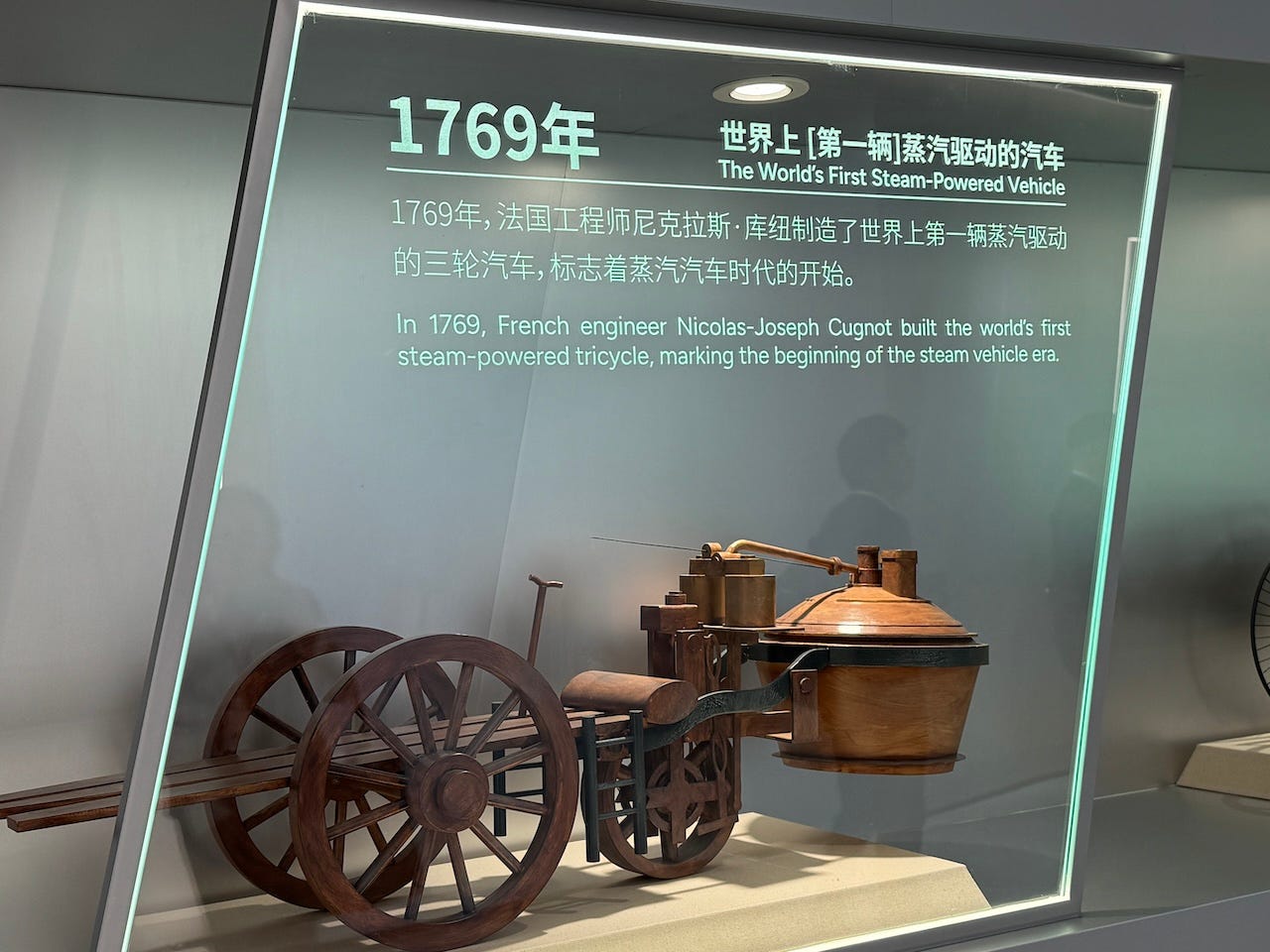
The Xpeng museum tour begins with a reference to Nicolas-Joseph Cugnot, a French engineer who invented the first motorized tricycle in 1769.
Here’s a recap of their two latest platforms. The SEPA 2.0 (introduced in 2023) combines an 800V architecture, 4C charging, L2 autonomous driving, and cell-to-body battery integration (CTB). This platform already equips the Xpeng G9, X9, G6, and P7+ (2024), covering sedans, SUVs, and MPVs.
The SEPA 3.0 (introduced in 2025) evolves toward 5C charging, AI-enhanced autonomous driving, and a shift to EREV powertrain, adding a thermal generator for vehicle battery charging. This represents a major change for Xpeng, which had been banking on all-electric until now. The Kunpeng Super range extender delivers 452 km of range in 100% electric mode and 1,600 km in combined mode.
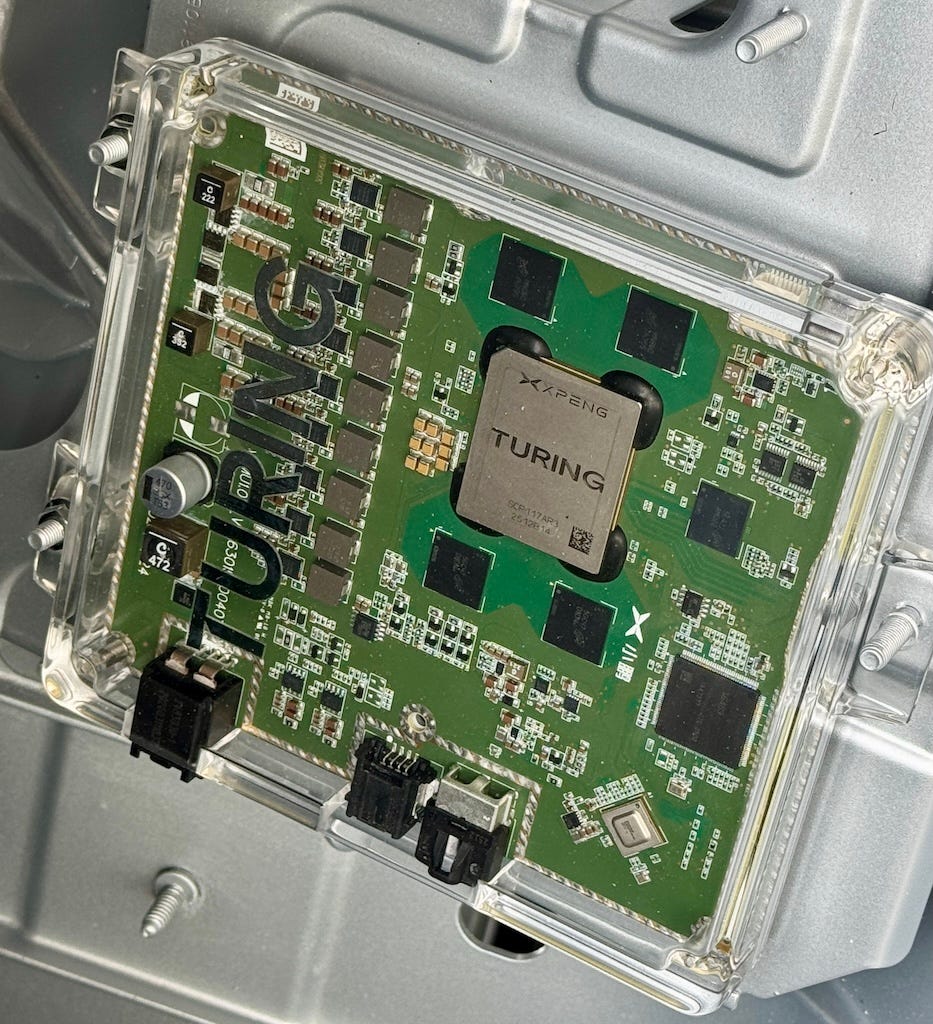
At the heart of this SEPA 3.0 platform sits the Turing AI chip that powers the XNGP navigation system. I presented this technology during the G7 announcement earlier this summer. The platform is also used by the P7 Next as well as the future X9 and G9 (2026).
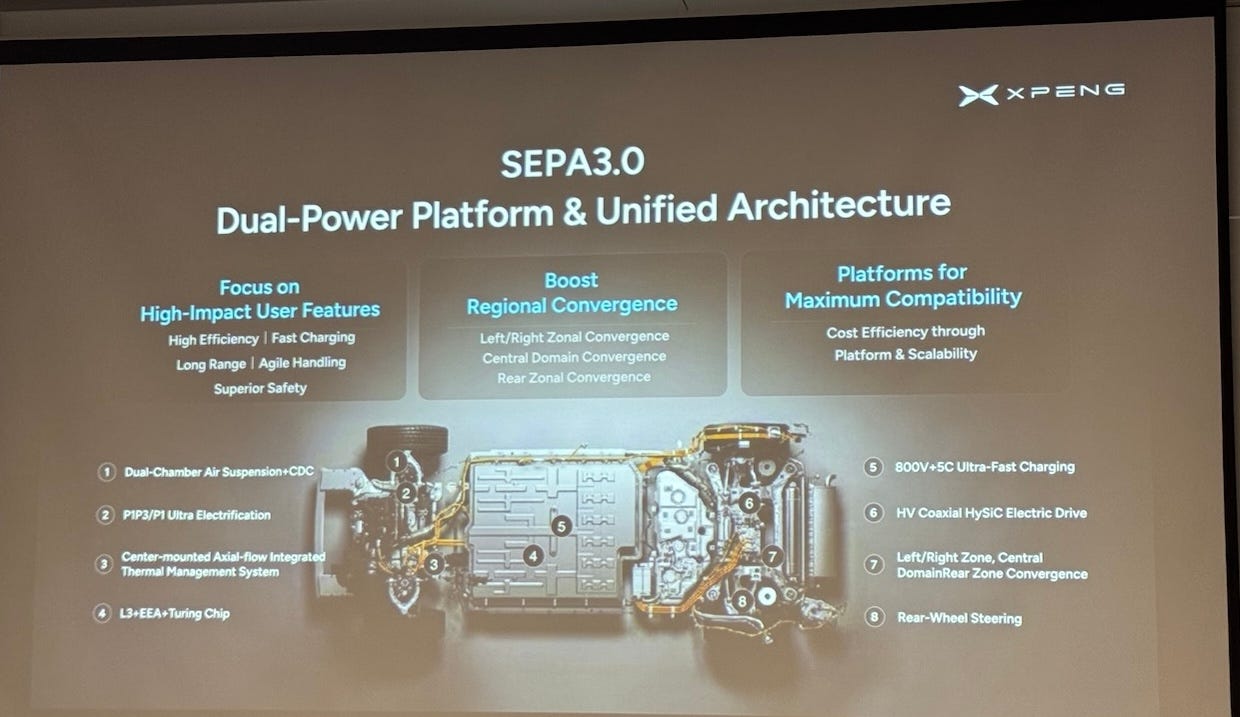
Xpeng SEPA 3.0 platform
Finally, Xpeng took the opportunity to announce that it operates the third-largest charging infrastructure network for electric vehicles in Europe. (Upon verification, this is a partnership with Plugsurfing, a European electric charging operator that has 940,000 charging points across Europe. However, the network is not owned by Xpeng).
VLA 2.0: The AI Model That Changes Everything
The VLA 2.0 (Vision-Language-Action 2.0) is the second generation of Xpeng’s AI (Artificial Intelligence) system, designed to power autonomous driving, robotaxis, humanoid robots, and flying cars. Unlike traditional systems that first convert visual inputs to language before acting, VLA 2.0 uses a direct “Vision-Implicit Token-Action” pathway, theoretically eliminating the linguistic bottleneck.

This allows the AI to react more quickly and more intuitively, with the goal of reproducing human reflexes. Xpeng becomes the only Chinese company to have developed a fully in-house physical AI system. What makes it unique is its ability to understand real-world interaction laws while learning autonomously and scalably. It was trained on nearly 100 million videos to handle extreme and rare scenarios. The videos projected during the presentation indeed show that the test vehicle simulates different scenarios in real-time when it judges a situation to be exceptional.
Mind-Boggling Numbers
The Xpeng VLA 2.0 can directly leverage an astronomical quantity of real driving videos for its training, without any data annotation. The training data volume reaches nearly 100 million clips, equivalent to driving scenarios a human driver would encounter in 65,000 years of driving.

Through its understanding of the physical world, VLA 2.0 can anticipate future decision scenarios and generate more realistic edge cases (“long-tail”) for adversarial training, improving its ability to handle improbable situations. And when we look at independent autonomous driving tests, we understand that it’s indeed the language model that allows the car’s brain to make the right decision, and that model training is therefore crucial for its response to a given scenario.
Emergent Capabilities
Based on VLA 2.0, Xpeng has launched the “Narrow Road NGP” (Navigation on Narrow Roads) function, which significantly improves intelligent driving performance in complex environments with narrow roads and mixed traffic. I therefore understand that there will be a random component to the model that will interpret new scenarios in a unique way on each vehicle and at different times. It’s simultaneously intriguing but also somewhat frightening.
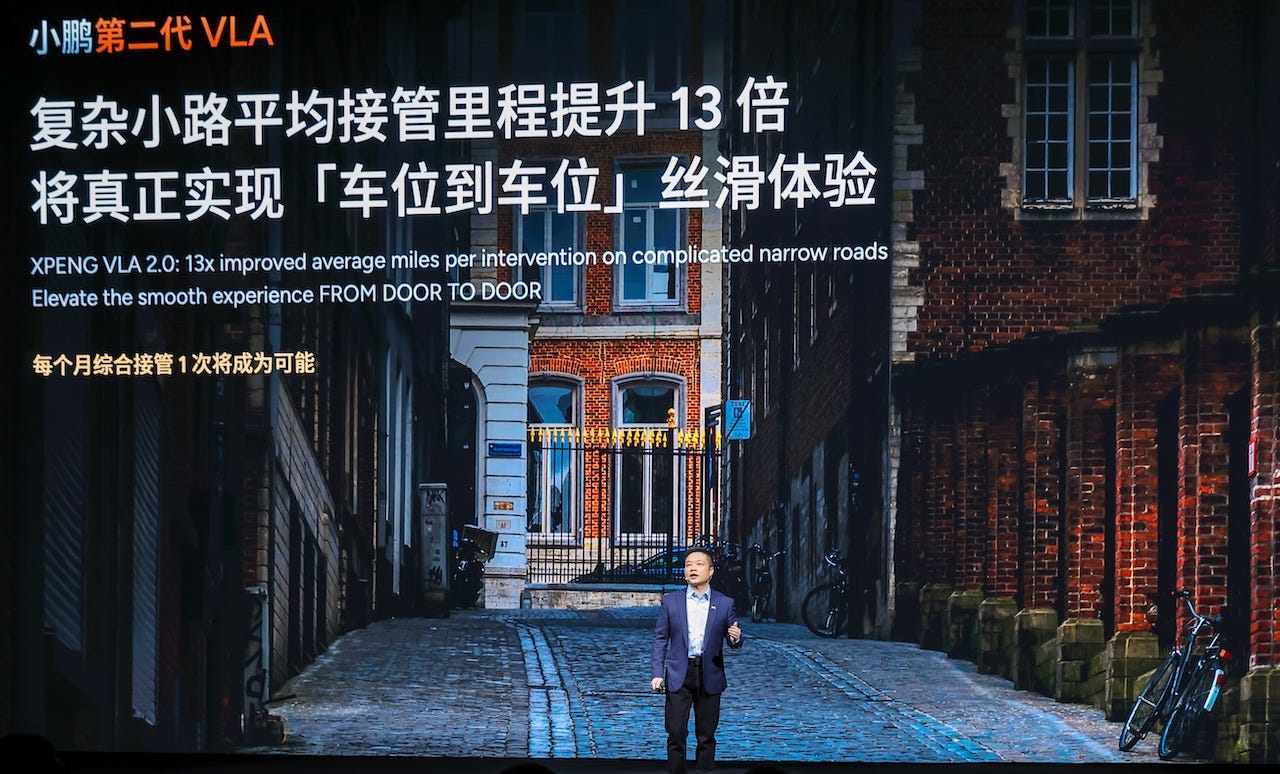
Xpeng is also the first manufacturer to launch automated driving assistance without navigation (Super LCC + Human-Machine Co-driving), which can be activated anywhere in the world without GPS. I confirmed during the event that XNGP navigation is indeed planned for Europe, and certainly in France, before the end of 2026. Likely thanks to accelerated implementation through this map-free automated driving.
Progressive Rollout and Open Source Model
By the end of December 2025, Xpeng will invite pioneer users to co-create and test VLA 2.0 in China. In Q1 2026, the system will also be deployed across all Chinese Xpeng Ultra models.
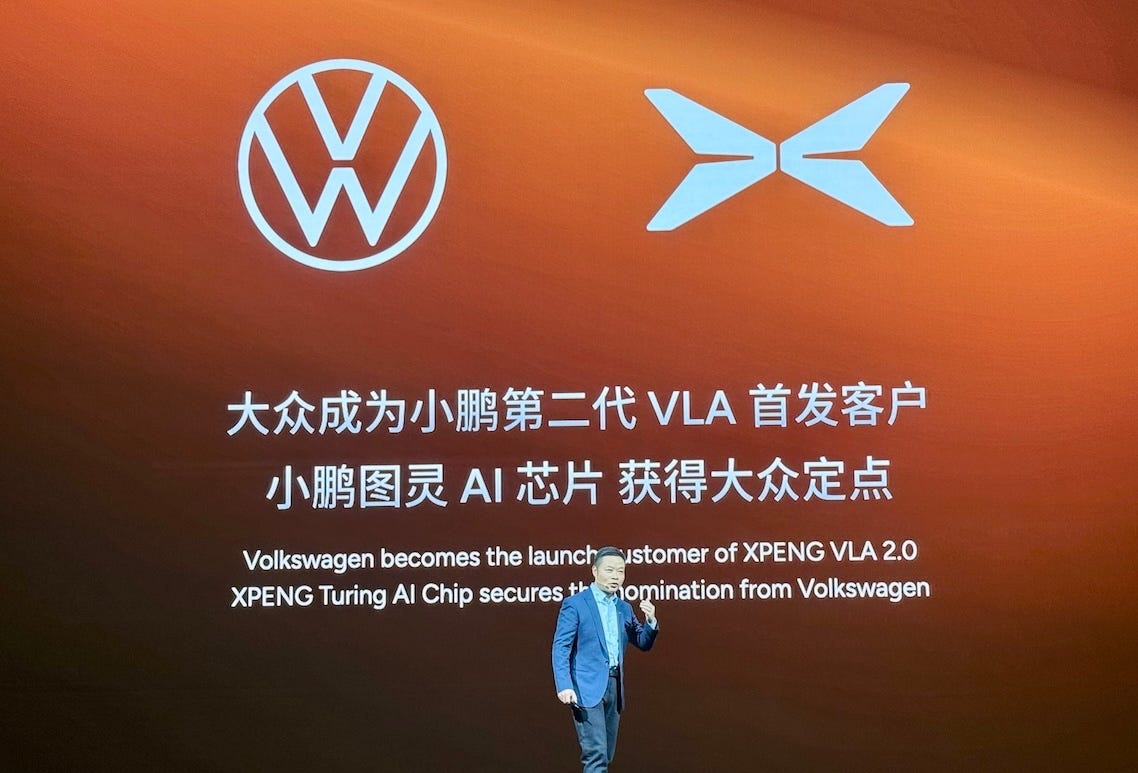
Xpeng Turing AI chip secures a nomination from Volkswagen Group.
And to accelerate global adoption of physical AI, CEO He Xiaopeng announced that the VLA 2.0 model will be open source for global commercial partners. On-site, he confirmed that Volkswagen will become the first customer for VLA 2.0.
Robotaxi: Xpeng’s “Pure Vision” Approach
Xpeng’s Robotaxi will be the first fully in-house developed Chinese robotaxi. At the heart of the system: 4 Turing AI chips offering onboard computing power reaching 3,000 TOPS, currently the highest global standard. And like Tesla, Xpeng continues its approach to autonomous driving with a pure vision solution capable of handling different types of roads and traffic environments worldwide.
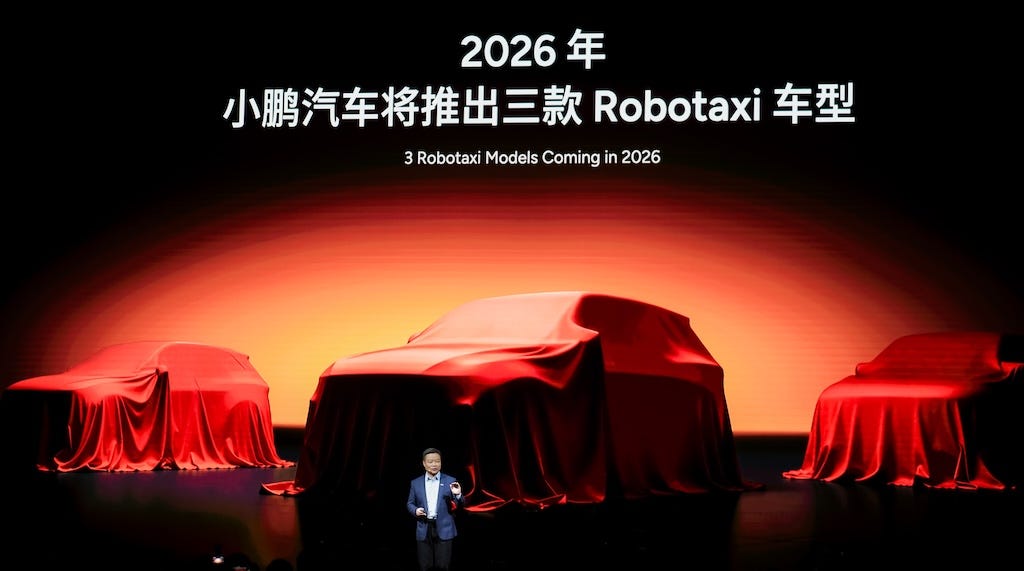
I remain convinced, however, that sensor fusion (radars, cameras, Lidars, etc.) provides autonomous driving redundancy that confirms or takes over from visual sensors in critical situations. This remains an open debate for me.
A Dual Vision: Robotaxi and “Robo Car”
Xpeng also proposes an innovative concept: on one side, the fully shared driverless vehicle (Robotaxi), on the other, the privately-owned L4 model with a driver present. On this basis, Xpeng will simultaneously launch a new intelligent driving trim called “Robo”.

A partnership with Amap (China’s mapping leader) was also announced to develop this ecosystem. But this is a long-term vision, as Level 3 is not yet available in China, I can’t envision L4 before 2028.

Physical AI: The Vision Guiding Xpeng
What resonates in the Xpeng CEO’s statements is this conviction: electricity has replaced oil as the primary fuel, and new energies are disrupting a century-old automotive industry. When the digital and physical worlds merge, it gives birth to “physical AI”.
The physical AI wave is about to break, and Xpeng claims to be ready to face it. Building on nearly a decade of technological accumulation, Xpeng has constructed a fully in-house developed physical AI system covering multiple domains: chips, operating systems (large models), and intelligent hardware. This infrastructure will provide the technological foundation for Xpeng’s deployment in embodied intelligence platforms like autonomous cars, robotaxis, humanoid robots, and flying cars.
We’ll see in the second part of that article how advances in this language model and Turing AI chips give Xpeng a major advantage for flying cars and humanoid robots. But let’s briefly discuss about the new EREV car introduced by Xpeng during the event.
Xpeng X9 Power: The Extended-Range Electric MPV Inaugurating the KunPeng EREV System
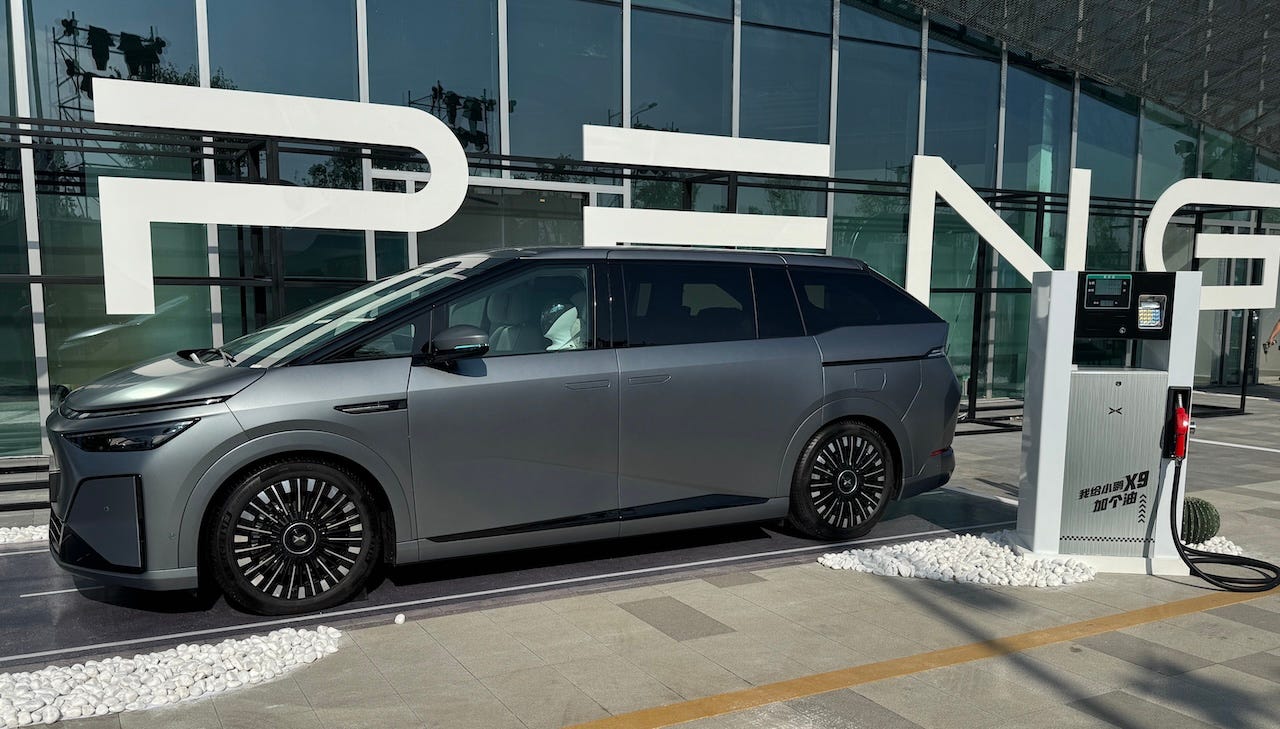
A gas pump at a Xpeng show, a first for the launch of this X9 Power. Guangzhou, November 6, 2025 // Source: Nicolas Declunder
Launched in 2024 as a 100% electric version, Xpeng sold 16,120 units of the X9 from January to September 2025, representing 5.15% of total Xpeng deliveries (313,196 units). The X9 is Xpeng’s most expensive model, contributing to raising the manufacturer’s average selling price and gross margins.
At Xpeng’s AI Day event in Guangzhou, among the robotaxis and flying cars announced by the brand, there was also an announcement that represents a small revolution at Xpeng: the presentation of their new EREV (Extended Range Electric Vehicle) system, an extended-range hybrid technology. A thermal electricity generator allows battery recharging, a strategic turning point for the brand that has offered all-electric since its launch in 2011.
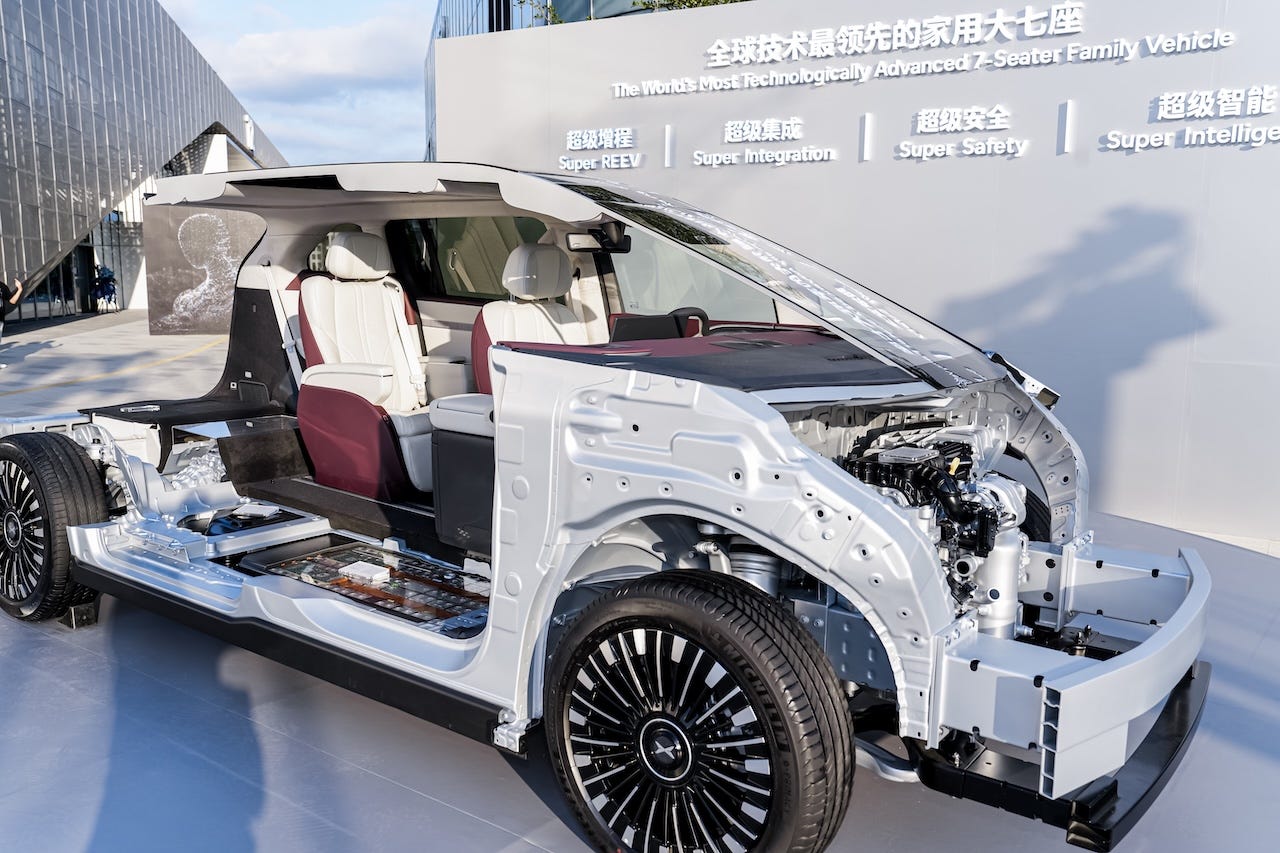
Yes, there is indeed an engine at the front of this vehicle, actually a generator to be more precise. // Source: Xpeng
On November 6, 2025, Xpeng unveiled its X9 Power EREV, built on the existing X9 model, but adding a thermal engine in the front trunk and a 60-liter gas tank. The generator is used solely to recharge a more compact 63.3 kWh battery.
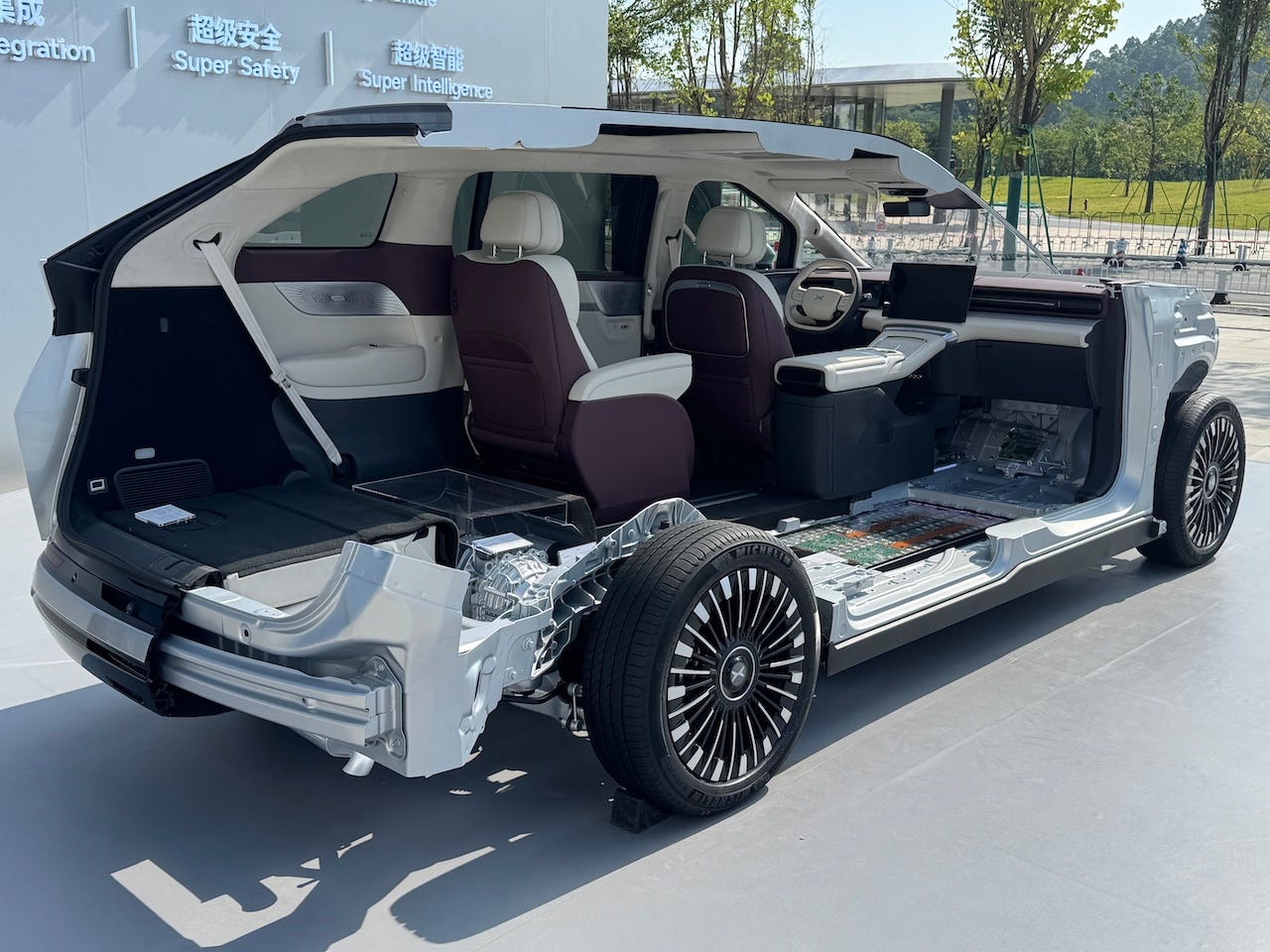
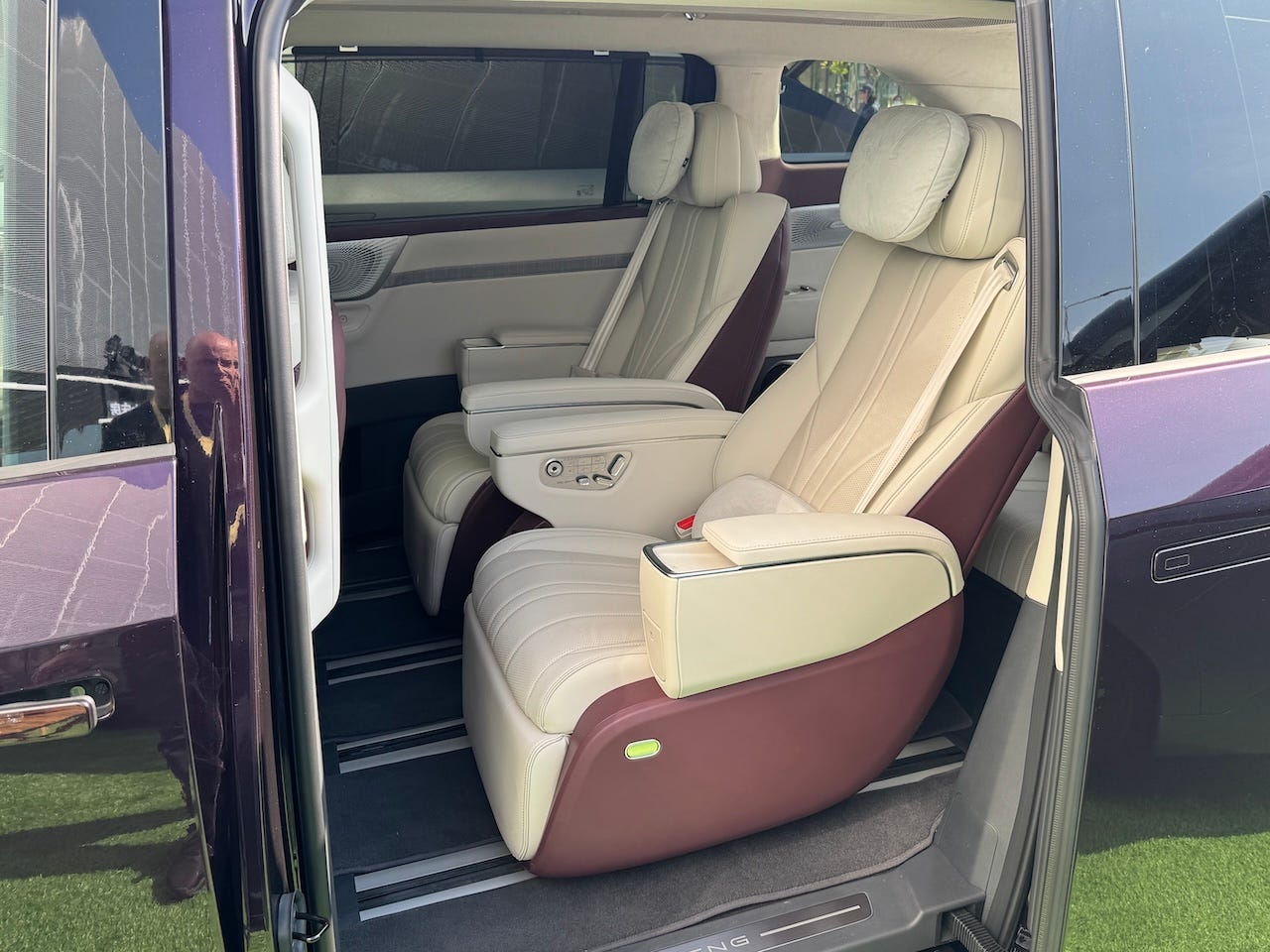
This seven-seat MPV inaugurates the revolutionary KunPeng Super Electric System with XXL combined range.
The KunPeng System: A Technological Revolution by Xpeng
The Kunpeng Super Electric System represents Xpeng’s answer to the infrastructural challenges of electric charging on a global scale. It will reassure customers still hesitant about the transition to all-electric by providing them with a solution they know well: a gas tank. The idea is to be able to drive electric but have a backup solution with a thermal engine that can recharge the battery at any time, and also increase range for long trips.
At the heart of this technology is an 800V high-voltage architecture powering a 63.3 kWh LFP (lithium-iron-phosphate) battery with 5C ultra-fast charging capability, able to add up to 1 km of range per second of charging. In practical terms, just 10 minutes of charging is enough to recover 313 kilometers of range, and 12 minutes reaches 80% capacity.
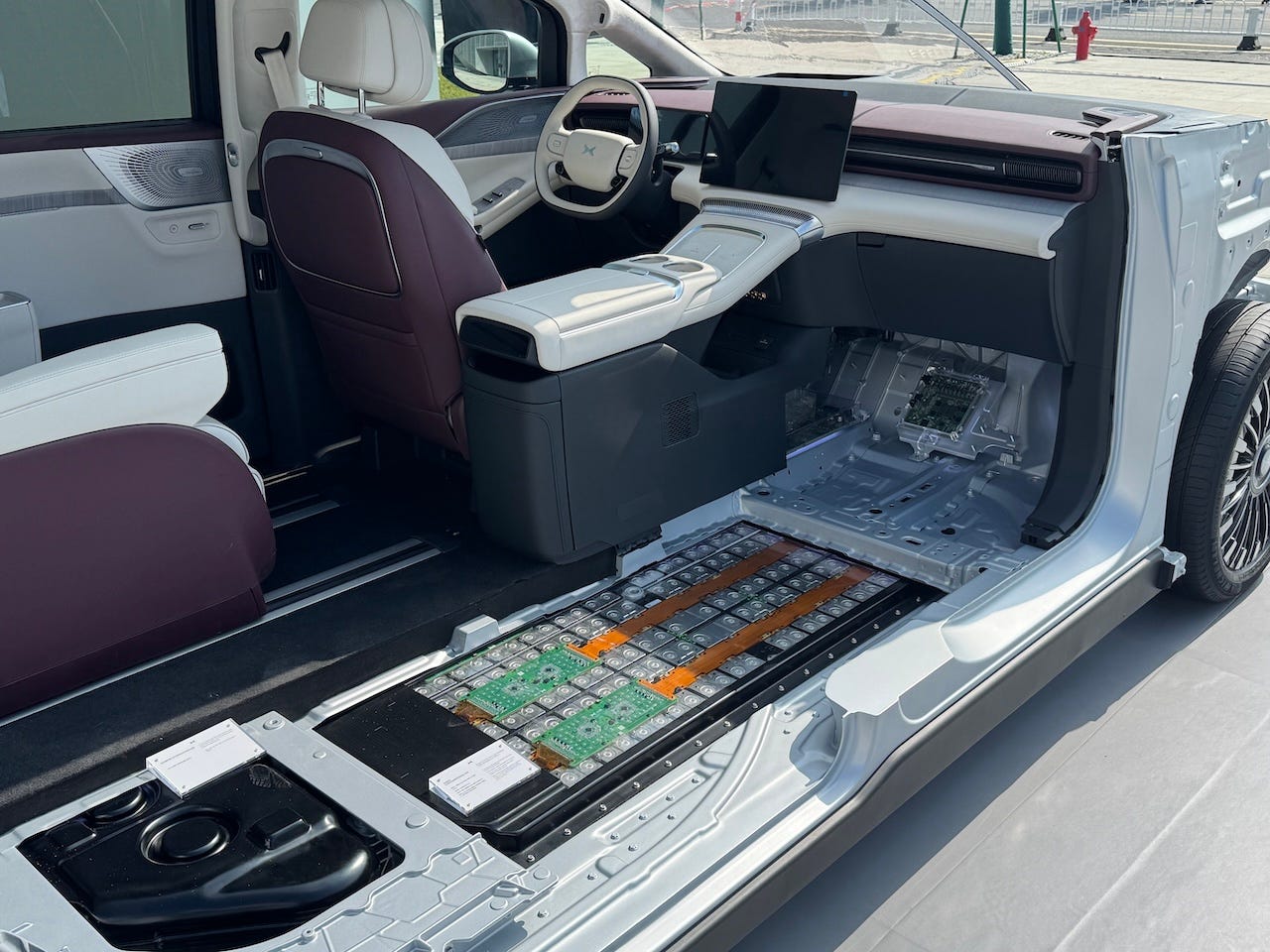
In this photo, we see the right side of the 63.3 kWh battery pack, located between the two axles for better weight distribution. // Source: Nicolas Declunder
The range extender is a turbocharged 1.5T engine developing maximum power of 110 kW (148 hp), with impressive electrical generation efficiency of 3.6 Wh/L.
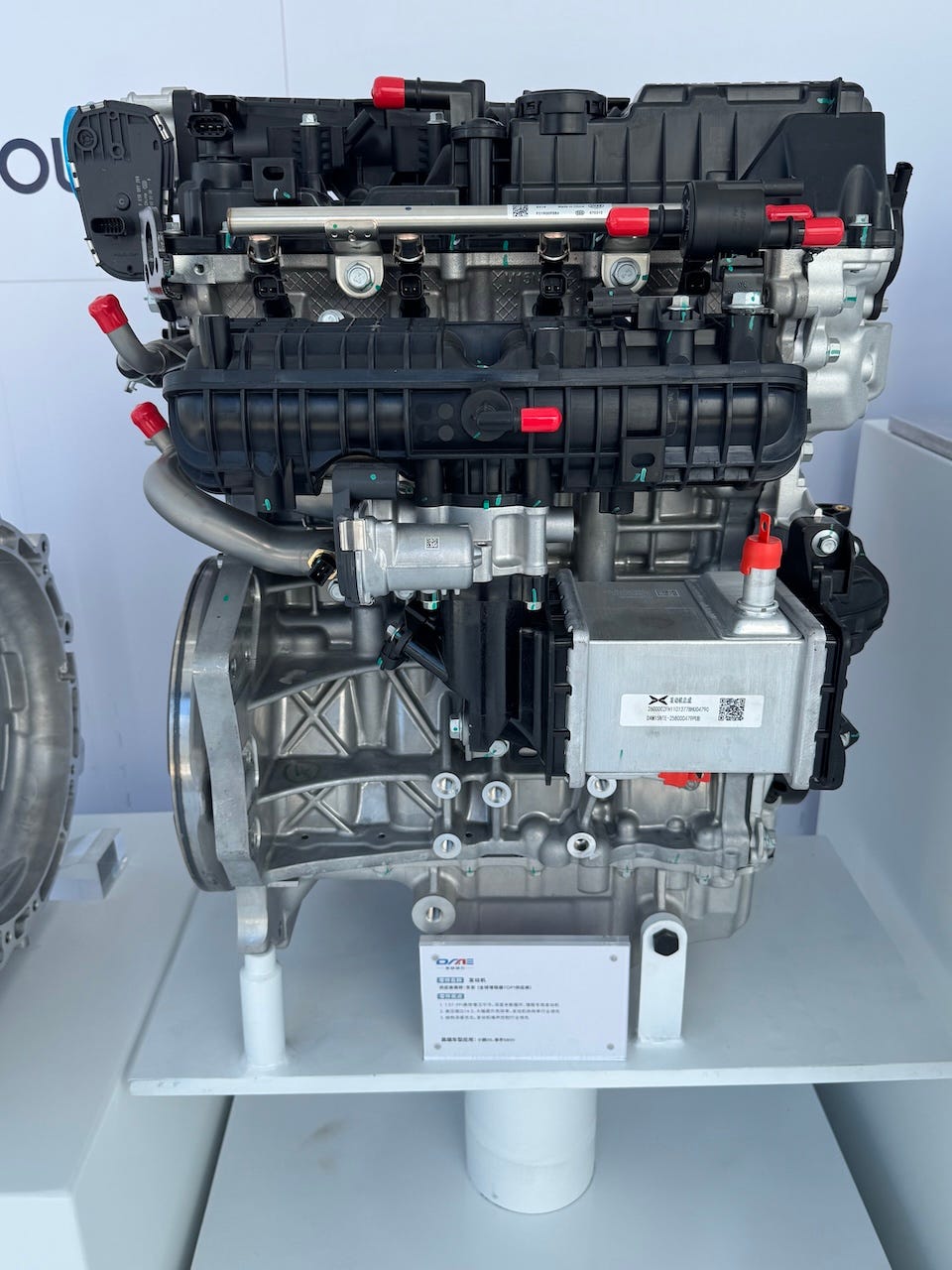
The thermal generator of the X9 EREV with a displacement of 1.5 liters. // Source: Nicolas Declunder
Xpeng emphasizes that this generator is “ultra-quiet” with a noise level as low as 1 dB, and benefits from AI-intelligent management allowing smooth transition between pure electric and extended-range modes. This will need verification during a driving test. And speaking of AI, the demo models on campus (X9 Power Ultra) are equipped with three Turing AI chips managing, among other things, the XNGP autonomous navigation we presented the innovations for in this first article. We’ll return to this in our article.
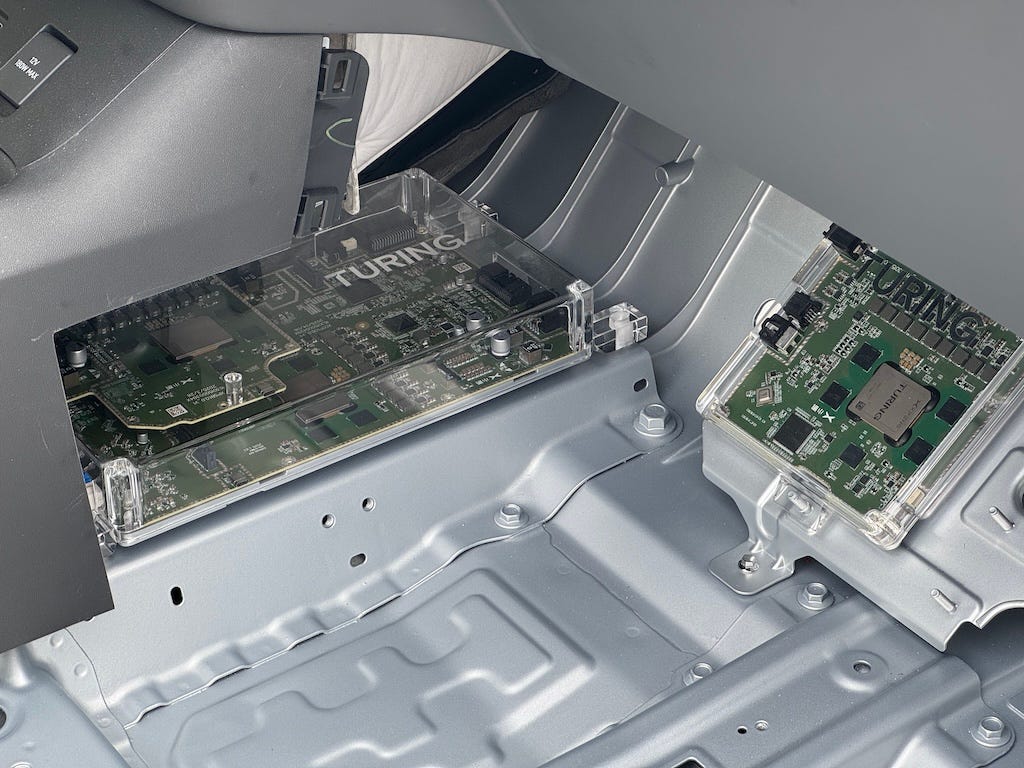
Two Turing AI chips under the center console and one under the front passenger’s feet for a total of 2,250 TOPS on this Ultra version of the X9. // Source: Nicolas Declunder
The electric motor is housed in the floor in a central position on the rear axle, behind the battery and just below the third row of seats when in place. This last row can also disappear into the trunk floor to increase storage space.
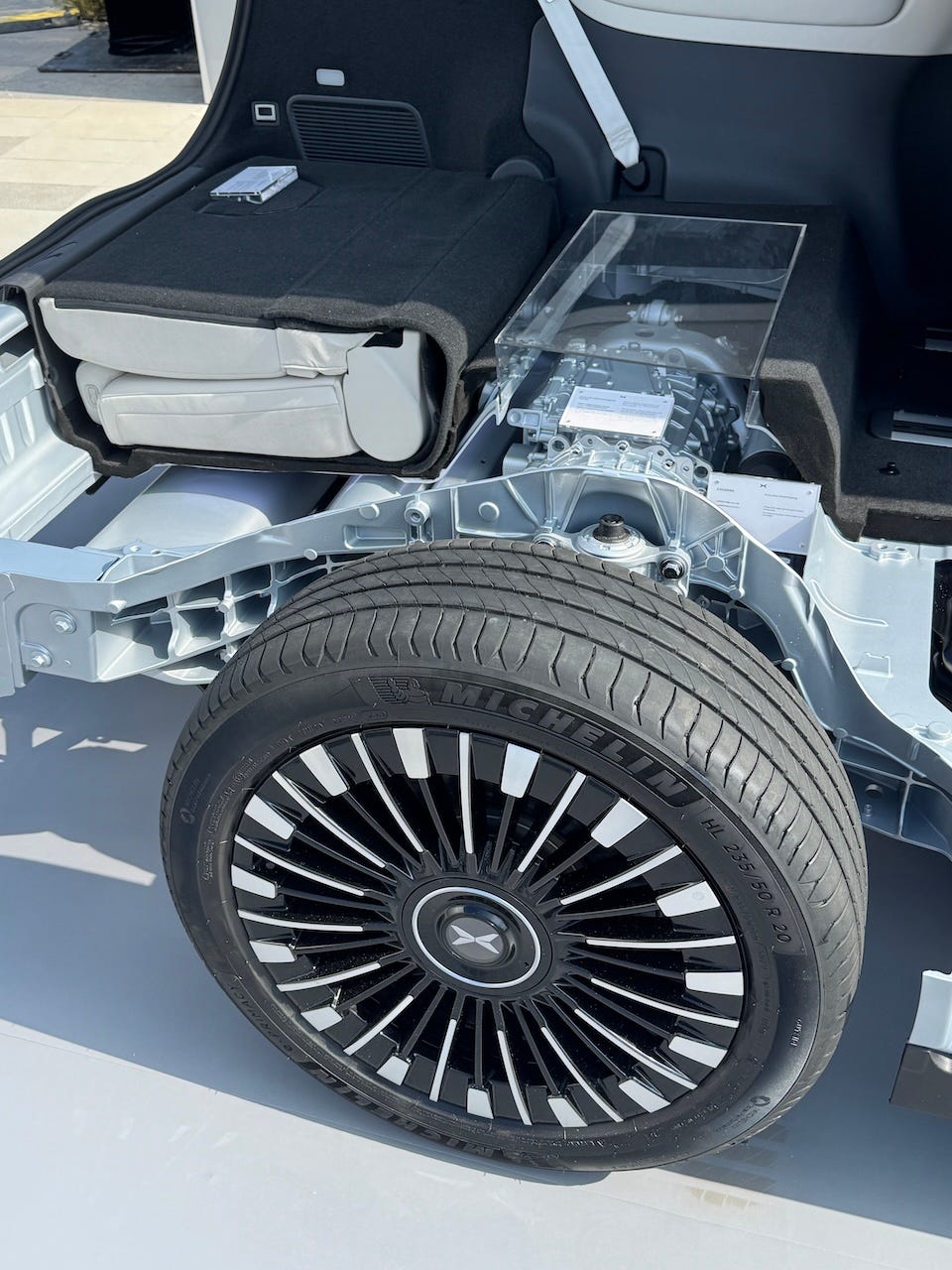
A view of the X9 Power’s rear axle with the electric motor in central position. We also see the last row of seats which are here folded under the trunk floor. // Source: Nicolas Declunder
I don’t know if it’s the only manufacturer to adopt this configuration, but it has the advantage of clearing space for the last row which disappears into a flat floor, electronically.

In 7-seat version, trunk volume is 510 liters; it increases to 1,600 liters in 4-seat version (rear bench folded 1/3–2/3).
X9 Power: Record-Breaking Performance and Range
The Xpeng X9 Power EREV displays generous dimensions with 5,316 mm length, 1,988 mm width, and 1,785 mm height, for a wheelbase of 3,160 mm. It’s slightly longer than the 100% electric version of the X9 (5,293 mm), while maintaining the other identical dimensions. At launch, it’s offered in 2 versions, Max and Ultra, and with 6 colors, 2 of which come at an extra cost: Aurora Green and matte Space Gray.
Powertrain and Performance
The chosen configuration is rear-wheel drive with a single electric motor delivering maximum power of 210 kW (281 hp) and torque of 465 Nm. While 0–100 km/h is announced at 8 seconds, I’d like to conduct a road test with 6 occupants, a full tank, and some luggage. Presumably, the 281 horsepower should be sufficient to move the vehicle on the highway.
Range That Pushes the Limits
It’s on range that the X9 Power EREV truly impresses. Xpeng announces average consumption of 6.4 L/100 km in hybrid mode, or 452 km CLTC in 100% electric (approximately 370km in WLTP cycle) thanks to the 63.3 kWh battery. The combined CLTC range of 1,602 km (full battery + full 60-liter tank) should guarantee more than 1,300km in WLTP cycle. These figures make the X9 Power one of the EREV vehicles offering the longest pure electric range in the Chinese market. We’ll need to test and verify these figures in our future tests of vehicles equipped with range extenders. A new category for Frandroid Survoltés.

Onboard Artificial Intelligence and Advanced Systems
The Max version (entry-level) is equipped with a Turing AI chip with computing power of 750 TOPS. The Ultra version (top-of-the-line) carries three AI Turing chips with total computing power of 2,250 TOPS. These proprietary processors represent a world first for Xpeng, designed specifically for autonomous vehicles, robots, and even the flying cars developed by the brand.
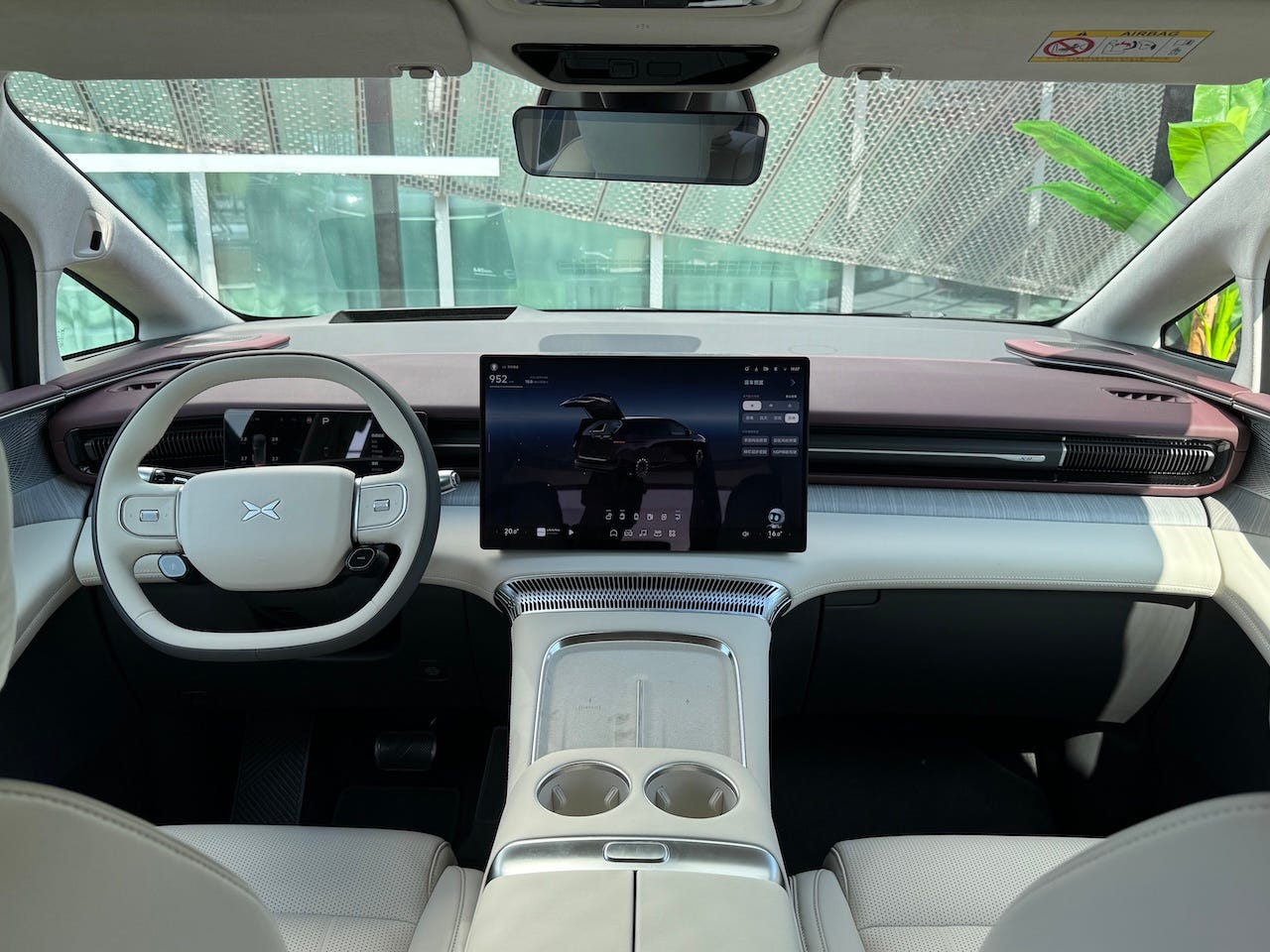
The intelligent cockpit system relies on the Qualcomm Snapdragon 8295P chip, which has become the reference for premium electric vehicles. The whole is managed by the XPENG AIOS operating system that integrates the GPT-4o language model directly into the vehicle, enabling natural and intelligent voice interactions.
Pricing and Availability
Xpeng has opened pre-orders for the X9 Power EREV in China with prices of 350,000 yuan (approximately $42,500) for the X9 EREV 1602 Max version and 370,000 yuan (approximately $44,900) for the X9 EREV 1602 Ultra version.
I note that these prices are lower than those of the 100% electric version of the X9 which starts at 359,800 yuan, making EREV technology particularly competitive. The reduced battery from 84.5 kWh to 63.3 kWh seems to offset the addition of the thermal engine and tank.
Official launch on the Chinese market is scheduled for late November 2025. No announcement has yet been made regarding European commercialization.
A Strategic Turning Point for Xpeng
The X9 Power EREV marks a major change in direction for Xpeng which, after years of exclusive focus on 100% electric vehicles, now launches its “EREV super-product cycle” to target a new clientele, particularly internationally. It’s interesting to note that in China, EREV vehicle sales declined for the third consecutive month in October 2025. Likely thanks to the increasingly fast charging performance of 100% electric vehicles.
This strategy isn’t isolated: Xpeng has already filed homologation applications for EREV versions of its G7 and G6 SUVs, as well as its P7+ sedan, all planned for 2026.
The Xpeng X9 Power EREV represents a convincing proposition for families seeking the electric driving experience without range constraints. With its 452 km in 100% electric, it should effectively cover 90% of daily needs without calling on the thermal extender, while offering the security of total range exceeding 1,600 km.
While the advantage of 1,300km range may appeal for vacation departures, I think the majority of families will be able to use a full-electric model for daily life. The EREV model will remain an asset for professional high-mileage drivers such as XXL-sized ride-hail services.
While Xpeng hasn’t confirmed this technology for Europe, we’ll need to understand how import taxes and taxation — favorable to 100% electric vehicles — could impact the commercialization of EREV vehicles. Credit to Xpeng for the initiative on a new powertrain; we’ll analyze global sales in a few months.
Xpeng AI Day 2: Humanoid Robots and Flying Cars — Competition with Tesla Intensifies
After covering the new VLA 2.0 Artificial Intelligence model and robotaxis in the first installment dedicated to Xpeng AI Days, it’s time for the manufacturer’s most futuristic projects: second-generation IRON humanoid robots and ARIDGE flying cars.
Besides the Land Aircraft Carrier VTOL vehicle.
IRON Next-Gen: The Industry’s Most Human Robot
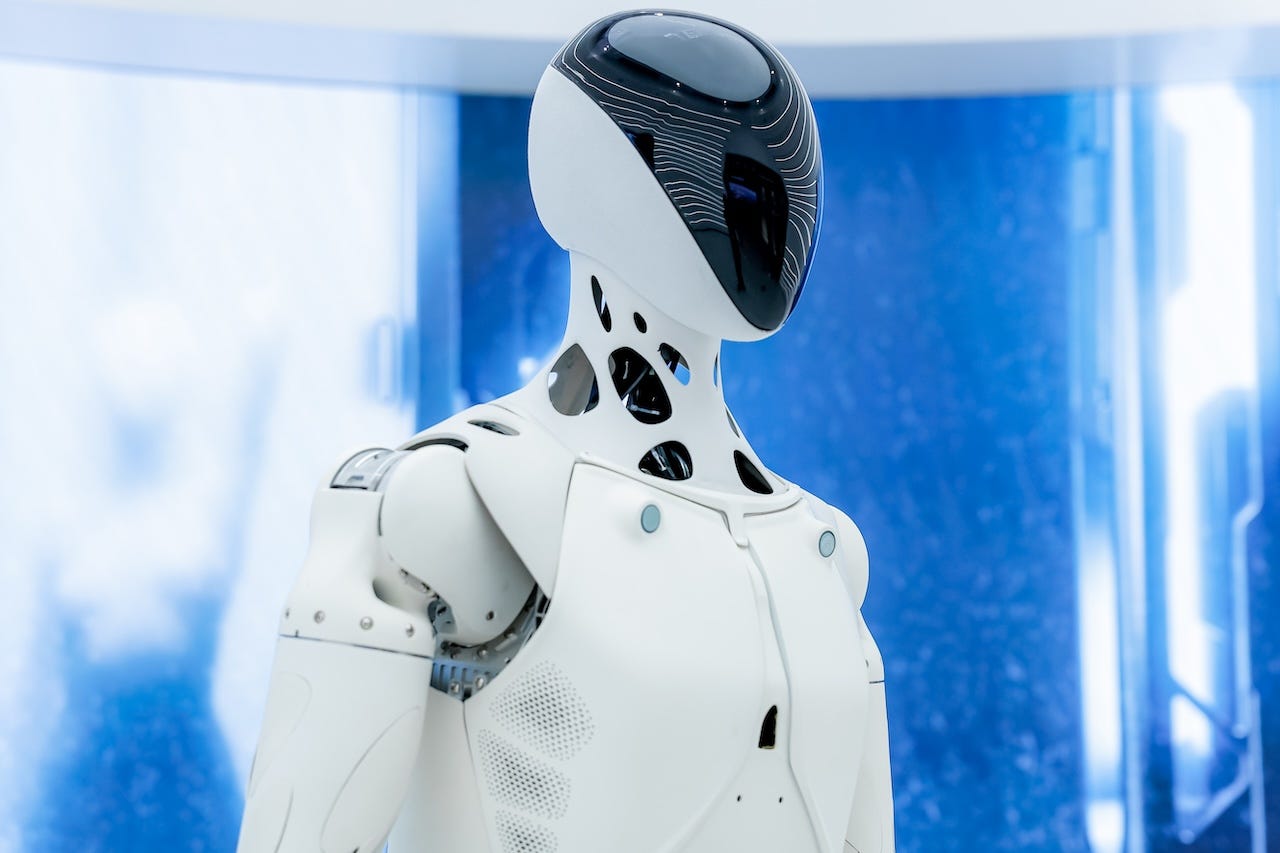
Xpeng hits hard with its second-generation IRON robot, officially presented as the most advanced and realistic humanoid robot in the industry. The figures are impressive: 82 degrees of freedom (DoF) throughout the body, a humanoid spine, bionic muscles, flexible synthetic skin, a curved 3D screen mounted on the head, bionic dynamic shoulders, and most notably, hands with 22 degrees of freedom capable of reproducing certain human gestures.
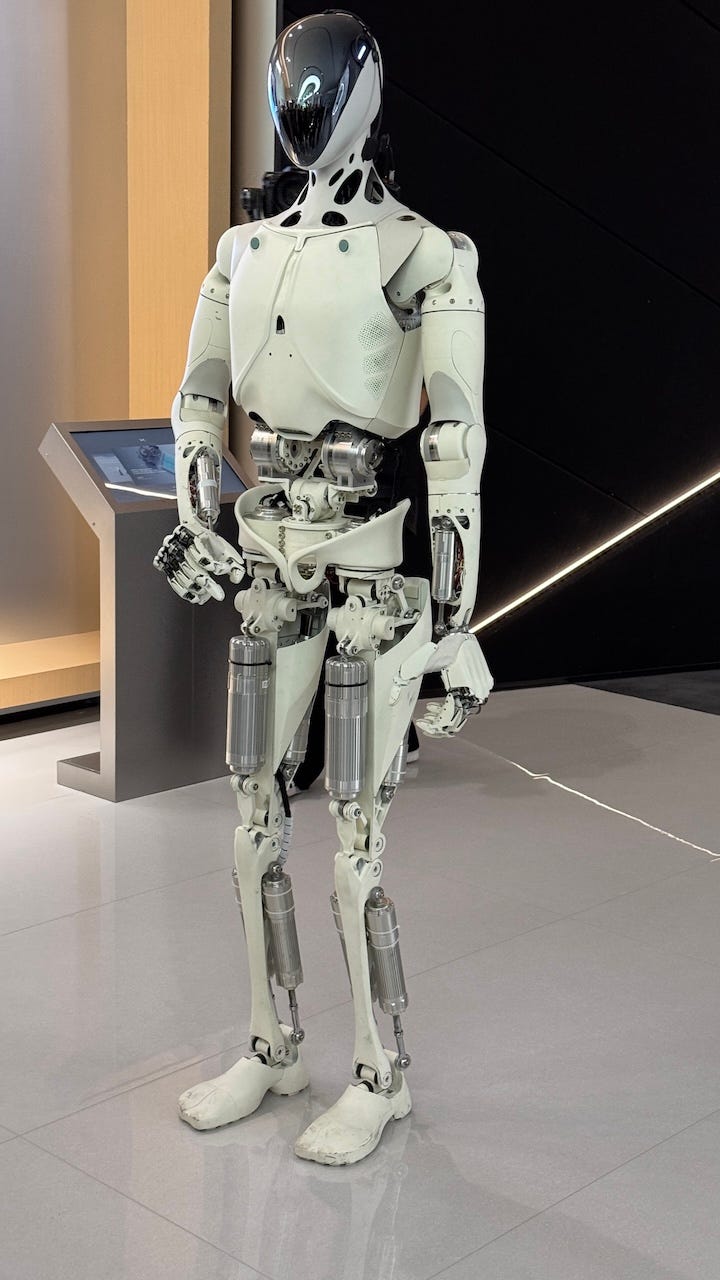
Xpeng IRON generation 2, Xpeng AI Day. // Source: Nicolas Declunder
The number of DoFs in a human body is often estimated based on major joints and their mobility. The human body has approximately 244 degrees of freedom when considering all joints and possible movements (including fingers, toes, spine, etc.). A human arm has 7 DoF, while a simple hinge has only one. With its 82 DoF, the IRON Next-Gen reaches a level of complexity that allows it to precisely mimic human movements.
I admit to being impressed during the visit to the new campus to see the IRON robot arrive to give us a guided tour of the new museum. The movements are still jerky, particularly walking long distances, but arm and finger movements are very realistic.
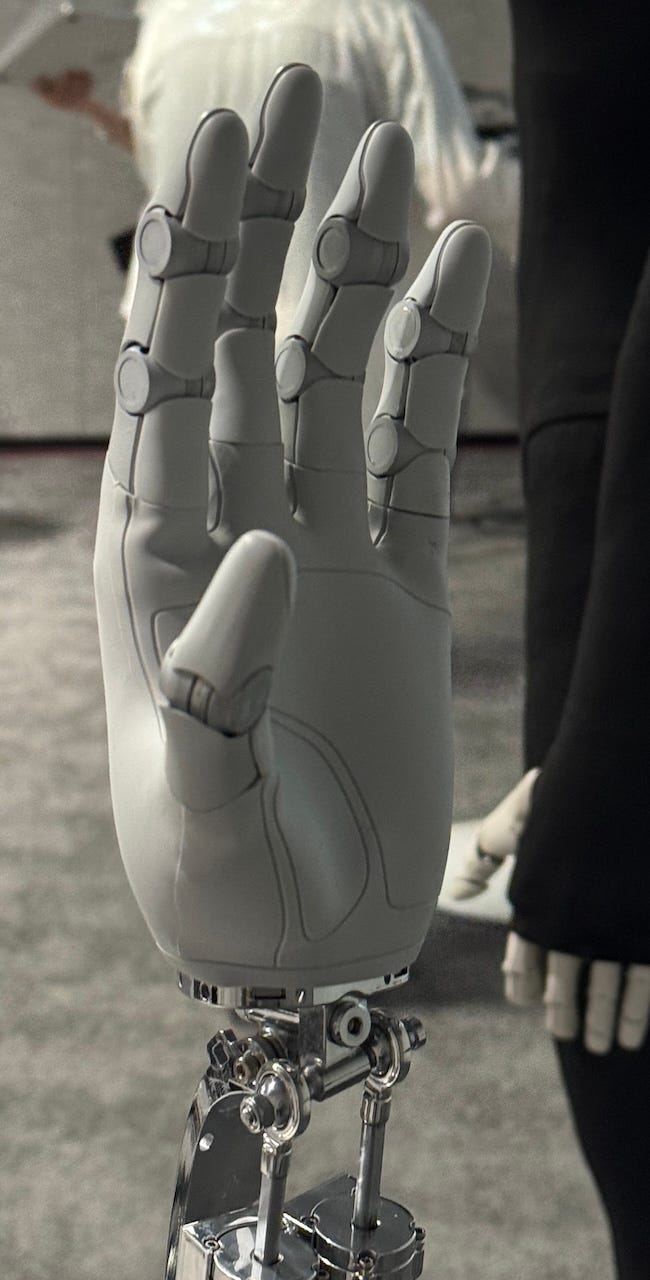
A close-up of the hand joints of the IRON generation 2. // Source: Nicolas Declunder
While the human body has far more DoFs than the Xpeng IRON (approximately 2 to 3 times more), robots like the Xpeng IRON focus on essential joints for locomotion and manipulation, sacrificing certain fine movements. However, the more DoFs a robot has, the more complex its control becomes, so development teams must find the right balance between mobility and stability.
A Design “Born from Within”
Unlike most humanoid robots, the IRON Gen2 design concept is based on a “born from within” approach. It has a humanoid spine, bionic muscles, and flexible skin covering it entirely, with the ability to customize different morphologies.
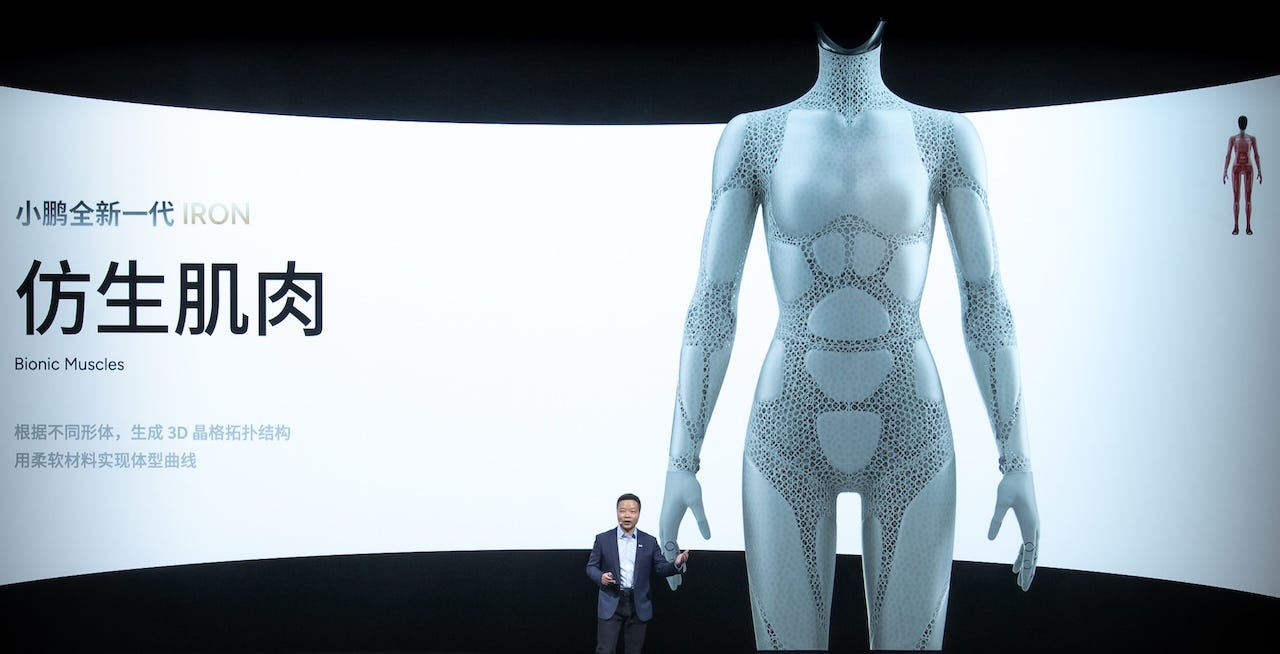
A representation of the bionic muscles that will cover the IRON robot’s body. // Source: Xpeng
During the press conference, the IRON made a spectacular entrance with its ultra-realistic appearance and graceful gait. So realistic that numerous social media posts imagined a human under the tunic. But having seen the robot walk “naked” during the day, I was able to appreciate the IRON’s prowess. The robot uses the smallest “harmonic joint” in the industry to obtain real-size hands (1:1 ratio), each with 22 degrees of freedom. This technical feat enables impressive dexterity for object manipulation.
Multi-layer Design and Tactile Sensors
The design is built in successive layers: from skeleton to muscles, then to skin with artificial synthetic skin. Different body types are possible, with male or female morphologies, athletic or slender physiques. With a high level of integration, the IRON Next-Gen displays measurements of 65 kg for 173 cm, close to those of an average human.
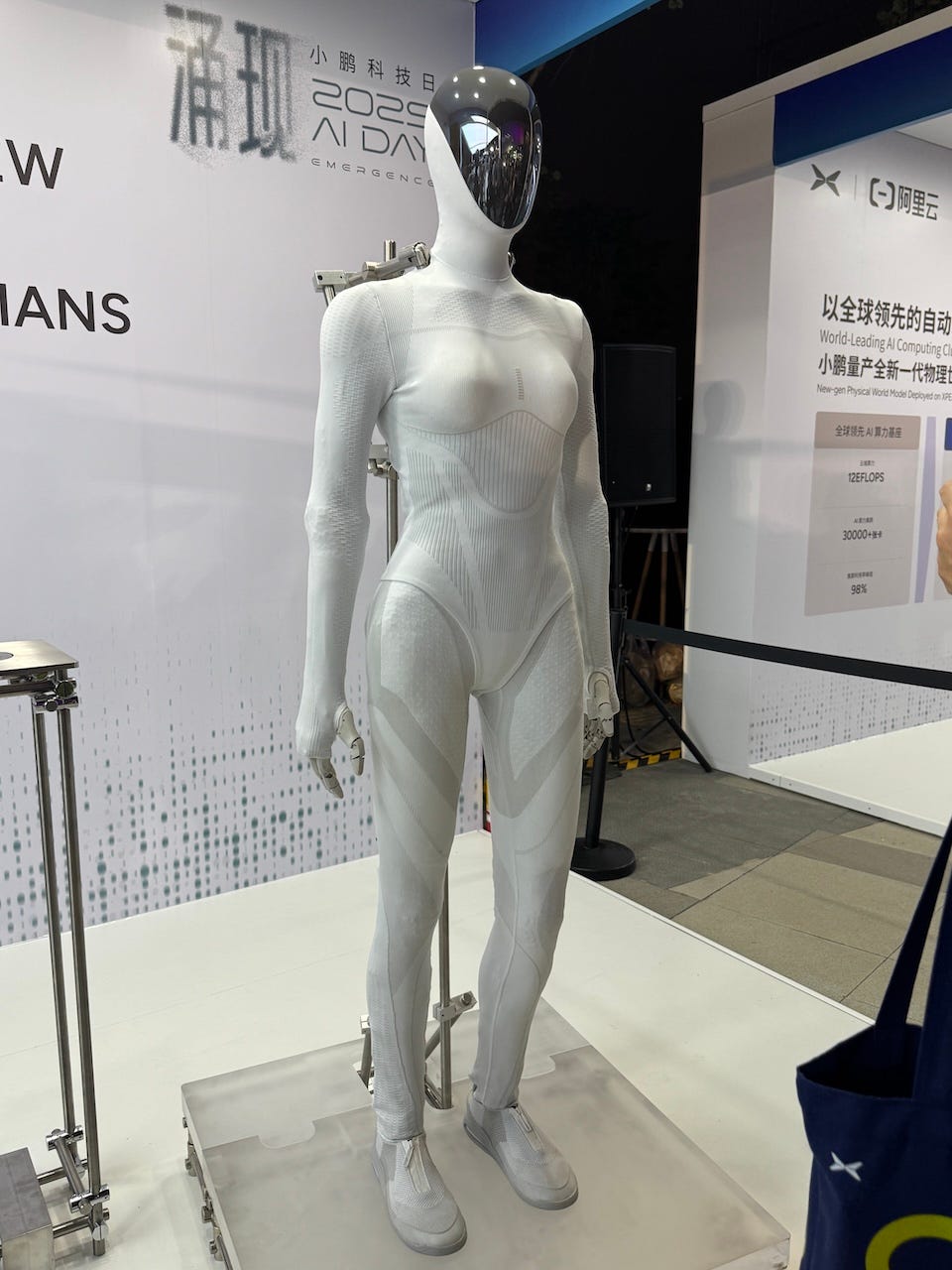
The IRON robot with its synthetic skin, resembling fabric but actually a kind of flexible and perforated latex. // Source: Nicolas Declunder
The bionic spine and more flexible body integrate tactile sensors woven into the synthetic skin, allowing the robot to perceive its environment and interact more naturally.
In robotics, sensors are devices that detect physical properties (position, velocity, force, proximity) and provide data to control the robot’s movements and interactions. Common types include: encoders, lidar, torque sensors, vision sensors, and inertial measurement units (IMU) to track orientation and acceleration.
Colossal Computing Power
On the intelligence side, the robot carries 3 Turing AI chips offering effective computing power of 2250 TOPS (some sources mention even 3000 TOPS). The same as integrated into the X9 Power Ultra. But the real revolution lies in the software architecture: the IRON Next-Gen is the first robot equipped with Xpeng’s first-generation language model for the physical world.
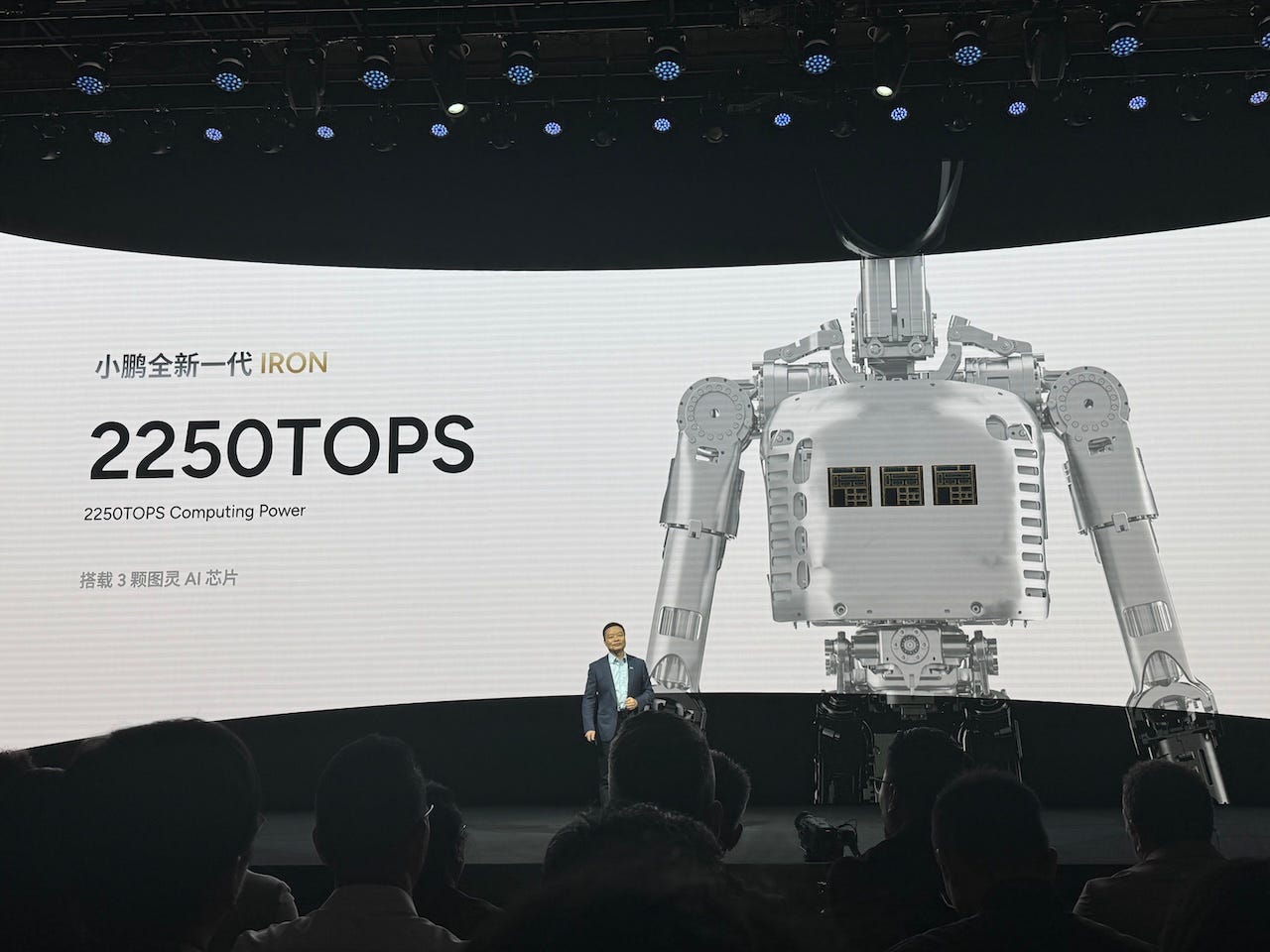
This high-level combination of “VLT + VLA + VLM” capabilities enables three forms of higher intelligence: conversation, walking, and interaction. The VLT (Vision-Language-Task) model is particularly remarkable, as it’s a brand new model specifically developed for robots, considered the central engine allowing robots to act autonomously, think deeply, and make independent decisions.
“Extreme Anthropomorphism” as Philosophy
Over the past five years, the “form” and “intelligence” of robots have evolved at a dizzying pace, as evidenced by Xpeng’s Robotics team’s R&D journey and multiple product generations published. In 2024, Xpeng had already launched its first generation of IRON, whose “human” aspect had made an impression.
The question of whether robots should resemble humans is debated in the industry. Xpeng’s answer is unequivocal: “extreme anthropomorphism.” Why? Because when humanoid robots achieve this “extreme anthropomorphism,” several major problems become easier to solve: simplified commercialization, better generalization, and easier acquisition of training data. And it’s precisely this training data that will be vital for mass testing these robots.
Solid-State Battery: Range and Safety
The IRON Next-Gen is also the first robot in the industry to integrate a solid-state battery, guaranteeing better energy density and optimal safety. The robot carries a 2 kWh battery to power all the mechanics and the 3 Turing chips.
It will be interesting to know the actual range of this robot in real-world use situations. The energy efficiency of a humanoid robot still remains far from that of a human, considered the perfect reference, especially in terms of energy consumption. For now, no specific energy optimization design has been integrated into IRON.
ARIDGE: Xpeng Takes Flight Toward Aerial Mobility
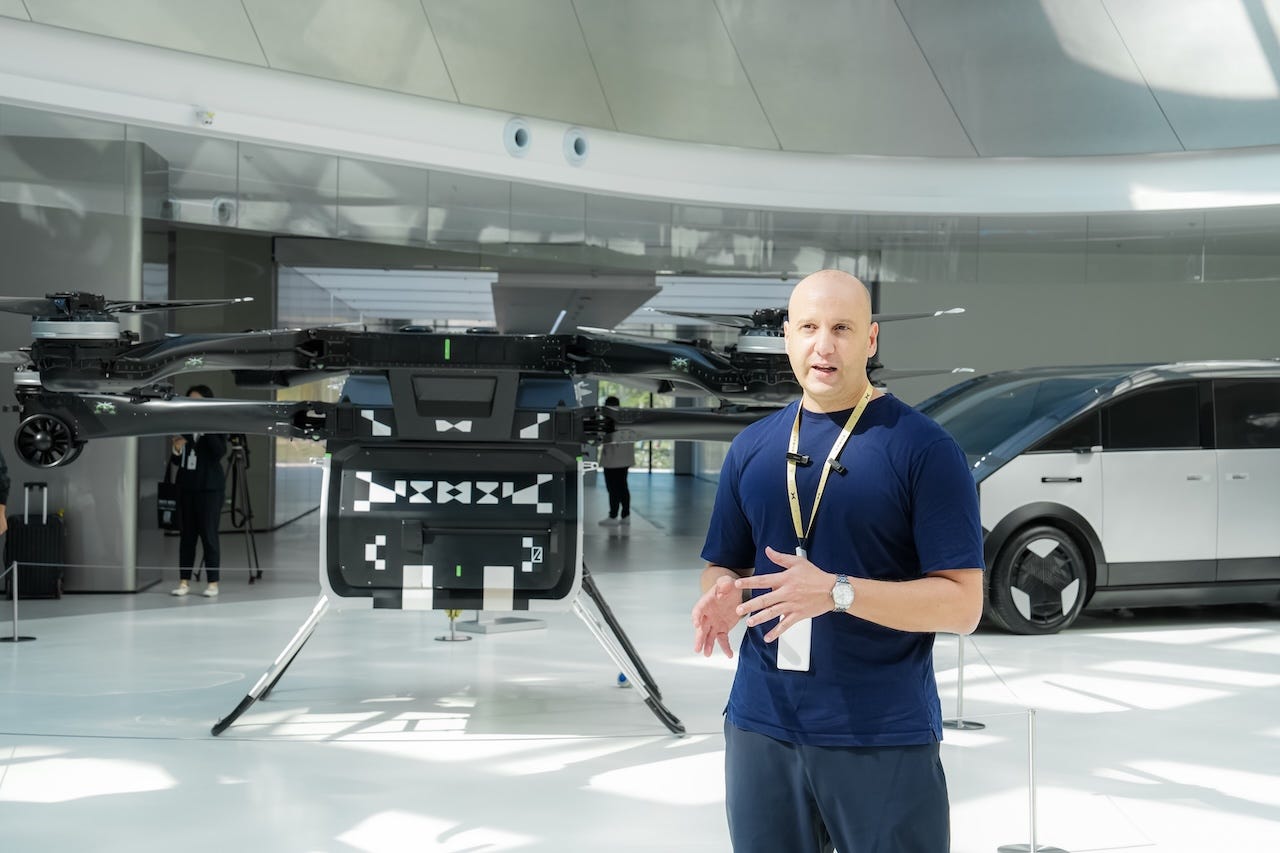
Xpeng ARIDGE is building two flight systems for low-altitude travel: the “Land Aircraft Carrier” for short-distance individual flights and flight experience, and the “A868,” a full-tilt rotor hybrid flying car for long-distance multi-passenger travel. The goal: to inaugurate a new era of three-dimensional low-altitude aerial mobility.
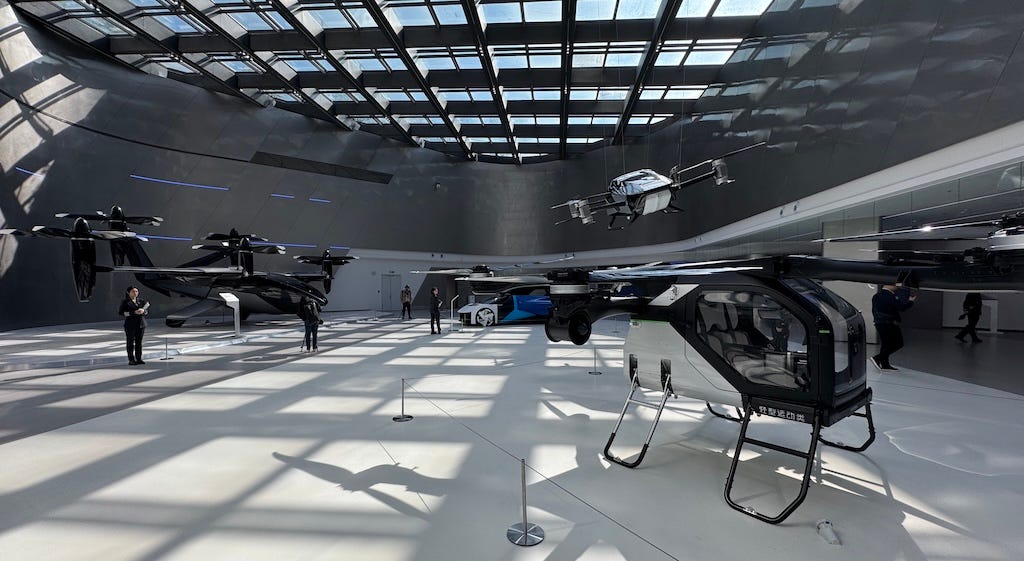
Bottom right, ARIDGE’s first vertical takeoff vehicle; left, the future A868 flying taxi. // Source: Nicolas Declunder
Land Aircraft Carrier: On the Brink of Mass Production
ARIDGE’s flagship product, the “Land Aircraft Carrier,” has officially entered the pre-mass production phase, with global orders currently exceeding 7,000 units, establishing a new industry record.

The two-seat aircraft fits in the back of the six-wheeled vehicle, combining Xpeng’s Land Aircraft Carrier. // Source: Xpeng
But be aware, customers who placed orders don’t yet know when they’ll receive their products. The first step will be to open simulators for customers to get accustomed, then the goal is to complete certification in a few weekends of training. The main part of training will focus on safety rules and regulations related to flying vehicle piloting, not its physical control.
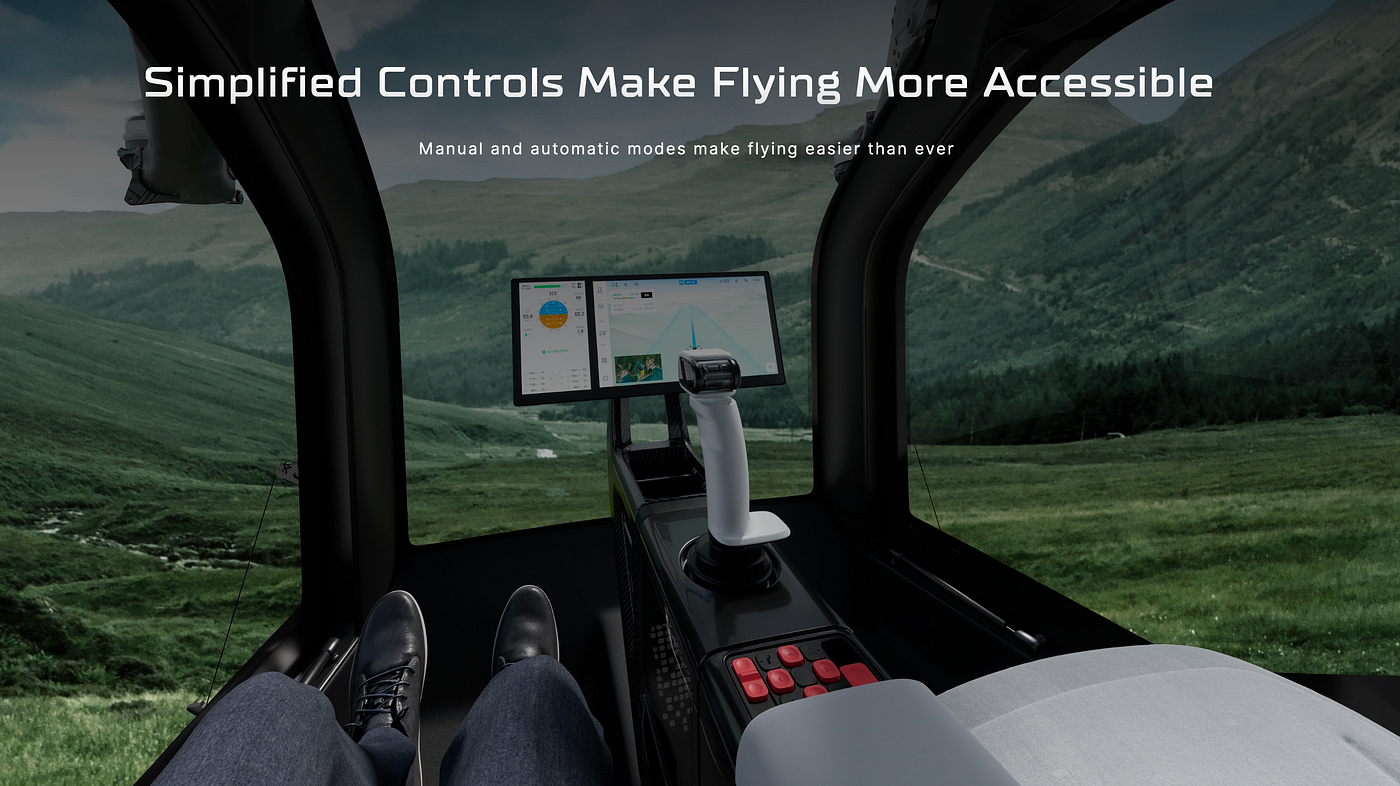
The primary objective of this first flying vehicle is to allow novices to master it easily thanks to a single-stick control system.
In terms of safety, the device adopts a safety redundancy design covering key systems like electric propulsion, high and low voltage power supply, flight control navigation, flight operation, and communication. Major innovation: it uses an innovative configuration with six axes, six propellers, and dual duct, to compensate for accidental failure of two diagonal rotors.

A868: Long-Haul Ambition
The A868, which made its official public debut at this AI Day, adopts a full-tilt rotor configuration and should achieve an impressive range of 500 km, with a maximum cruise speed expected to reach 360 km/h.
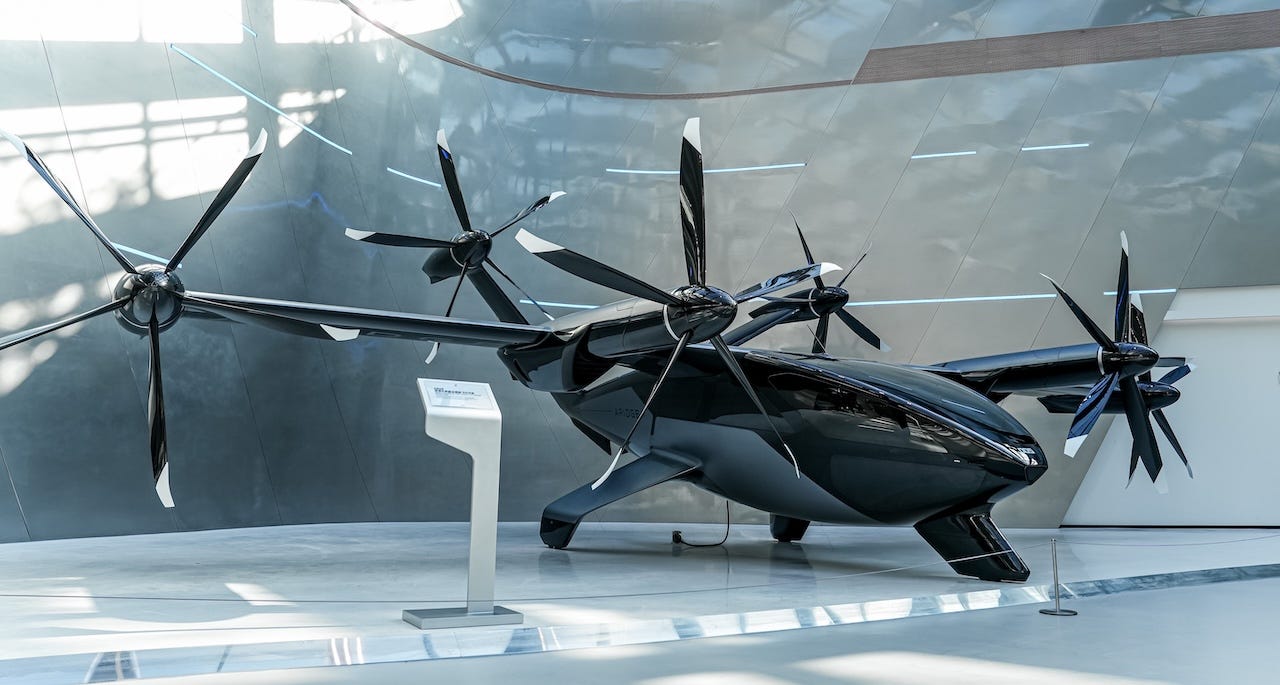
Its 6-seat cabin responds particularly to the needs of urban business travel. The project is currently in development.
A New Production Facility
In terms of production, the ARIDGE flying car factory launched trial production on November 3 and successfully rolled out the first Land Aircraft Carrier. We were able to glimpse the manufacturing buildings during our visit to the Xpeng assembly lines, but the building is still off-limits to the public. Having grouped automotive and aeronautical production together will certainly help identify synergies between the two worlds to improve efficiency and quality of standards and production tools.

Initial annual production capacity is 5,000 units per year, with a goal of scaling up to 10,000 annual units. Xpeng aims to accelerate mass production of the Land Aircraft Carrier by 2026, but this remains to be confirmed by licenses and other permits to be obtained from the Chinese government, which encourages the development of flying cars but also certainly wants to control their proliferation.
Use Cases Designed for Tourism
Contrary to what one might think, these vehicles aren’t intended for cities first, but rather for tourism in natural environments and flight camps to discover new places. The advantage is being able to drive your flying vehicle from a more remote location to do aerial tourism, instead of the logistical challenge of transporting a helicopter in an urban environment.

The ARIDGE team also explains that it currently remains difficult to fly from one city to another because this requires permits and authorizations from different municipalities that may arrive at different times, causing you to miss the opportune flight window…
To accelerate implementation of this trend, ARIDGE will partner with the Dunhuang municipal government (Northwest China) to launch the first autonomous aerial tourist route in mid-2026, creating a three-dimensional travel experience and promoting the application of flying cars in the cultural and tourism sector.
In Conclusion
Since its creation over a decade ago, Xpeng has remained faithful to its original aspiration: “technology changes the world.” The new headquarters marks a new beginning. Between science fiction and commercial reality, Xpeng charts its vision of an embodied intelligence ecosystem that goes far beyond the automotive framework. The Xpeng Science Park brings together over 10,000 “XPENGers” covering multiple domains: AI, automotive, robotics, and flying cars.
Cross-disciplinary, cross-domain, and cross-industry technological innovation occurs every day. New ideas, technologies, and applications interact and inspire each other, giving birth to Xpeng’s unique “emergence.” This glimmer of emergence aims for the stars, and the future of physical AI begins at this moment.
With these ultra-realistic humanoid robots and flying cars in certification, Xpeng projects us into a future where mobility is no longer limited to the ground. It remains to be seen whether the general public will be ready to follow this bold vision in a few years.
메타데이터
- post_id
- 44b2efbf7a10
- slug
- xpeng-ai-day-2025-vla-2-0-xngp-updates-robotaxis-iron-robots-and-aridge-flying-cars-44b2efbf7a10
- url
- https://medium.com/@nico.d/xpeng-ai-day-2025-vla-2-0-xngp-updates-robotaxis-iron-robots-and-aridge-flying-cars-44b2efbf7a10
- canonical_url
- https://medium.com/@nico.d/xpeng-ai-day-2025-vla-2-0-xngp-updates-robotaxis-iron-robots-and-aridge-flying-cars-44b2efbf7a10
- author_url
- https://medium.com/@nico.d
- status
- ok
- fetched_at
- 2026-06-23 19:38:28