Digital Overload & Focus Fatigue: Reclaiming Student Focus
Learn how focus fatigue and digital overload are rewiring student brains and discover practical ways to rebuild deep focus habits for…
Digital Overload & Focus Fatigue: Reclaiming Student Focus
Learn how focus fatigue and digital overload are rewiring student brains and discover practical ways to rebuild deep focus habits for academic success.

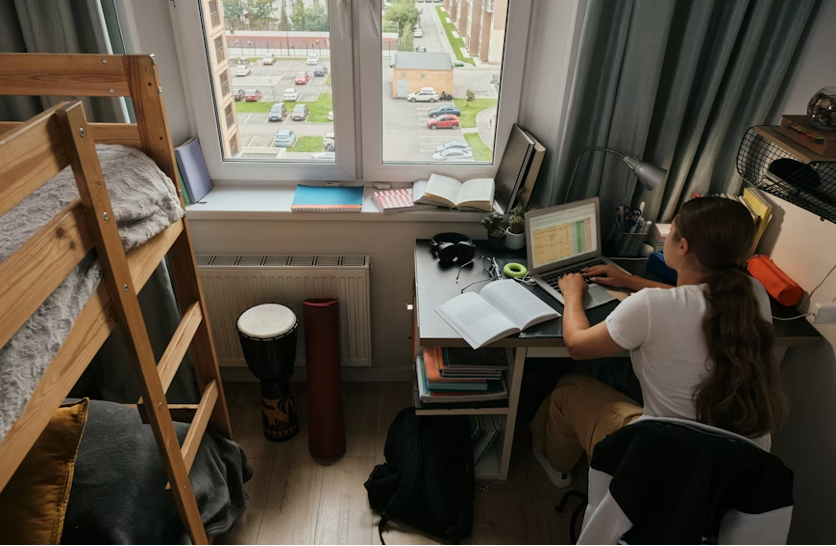
Student distracted by phone, implying digital overload — source
Your phone buzzes. You glance at it — just for a second. It’s an Instagram notification, nothing important. You put it face down and look back at your notes.
Except now you can’t remember what you were thinking about thirty seconds ago. This is digital overload and focus fatigue in action.
That moment happens dozens of times a day for most students. Individually, each interruption feels harmless. Collectively, they are doing something to your brain that a single all-nighter never could.
The Attention Economy Has a Student Debt Problem
Here is something the apps won’t tell you. Every notification, every red badge, every autoplay video is not an accident. It is the result of teams of engineers whose entire job is to pull your attention away from whatever you were doing and toward a screen.
Nobody checks their phone because they lack willpower. The apps are just genuinely, deliberately good at what they do. There are entire teams whose only job is to make sure you pick your phone up more than you put it down — and they are very good at their jobs.
For students, the timing couldn’t be worse. These are the years your brain is supposed to be learning how to think deeply — how to wrestle with a difficult text, build a real argument, stay inside a hard problem long enough to actually solve it. Instead, your most-used device is engineered to do the opposite of all that.
What Notifications Actually Do to Your Brain
Here’s what most people get wrong about distraction. They think it ends when the distraction does.
It doesn’t. Getting interrupted — even briefly — can push your concentration back by twenty or more minutes. Your brain doesn’t just pick up where it left off. It has to rebuild the whole mental state it was in, and that takes time, whether you want it to or not.
Ten phone checks during a study session doesn’t sound like much. It feels like nothing in the moment. But you close the books a few hours later feeling drained in a way that doesn’t quite make sense — you barely did anything. That is focus fatigue. Not the tiredness that comes from hard work. The kind that comes from never fully concentrating.
The Myth of the Productive Multitasker
There is a version of every student who believes they study better with noise. However, they’re wrong, and it’s not really their fault for believing so. It just feels productive.
What isn’t happening is deep retention. The brain isn’t built to split focus — it just switches fast enough that we convince ourselves it’s simultaneous. Pull it in enough directions, and nothing registers effectively. The quieter student finishing in forty minutes is not working harder. They are simply working without interruption.
Here’s what makes this tricky. If you’ve spent years studying with noise, silence now feels genuinely strange. Unusually still. Like you forgot to turn something on. That discomfort isn’t boredom — it’s your brain asking for the constant input it got used to. That need diminishes the longer you ignore it.
Getting Your Focus Back
Attention is something you can actually rebuild. It just requires sitting with discomfort long enough to let it pass, which is the part nobody enjoys hearing.
Start with ten minutes. Genuinely just ten — one task, phone out of the room. People abandon this not because it stops working, but because they never gave it a real chance.
When ten minutes stop feeling hard, stretch them. Not on a schedule, just whenever it feels ready. The resistance fades on its own timeline and usually faster than people expect.
The physical environment matters more than most students realiz. A phone in another room — not face down on the desk, actually in another room — measurably improves concentration even when it never buzzes.
The Real Cost Nobody Talks About
Digital overload is not just about grades. It is about what kind of thinker you are becoming.
The ability to sit with a hard problem, follow a long argument, or write something that requires sustained thought — these are skills. Nobody loses their focus all at once. It goes quietly, one unchecked impulse at a time.
Each one costs almost nothing. That is what makes it easy to ignore until it isn’t. The trade feels fine in the moment. Over four years of college, it adds up to something you will notice later — just not in a way that shows up on any transcript.
Managing digital overload is not about abandoning technology altogether. It is about deciding, on purpose, where your attention goes.
메타데이터
- post_id
- 44e0c19a456f
- slug
- digital-overload-focus-fatigue-reclaiming-student-focus-44e0c19a456f
- url
- https://medium.com/@nerdify/digital-overload-focus-fatigue-reclaiming-student-focus-44e0c19a456f
- canonical_url
- https://medium.com/@nerdify/digital-overload-focus-fatigue-reclaiming-student-focus-44e0c19a456f
- author_url
- https://medium.com/@nerdify
- status
- ok
- fetched_at
- 2026-06-15 20:49:13