A practical 4-Step Framework for Operational analysis and Transformation
In practice, many organizations either skip, rush, or overcomplicate operational analysis — not because they underestimate its importance…
A practical 4-Step Framework for Operational analysis and Transformation
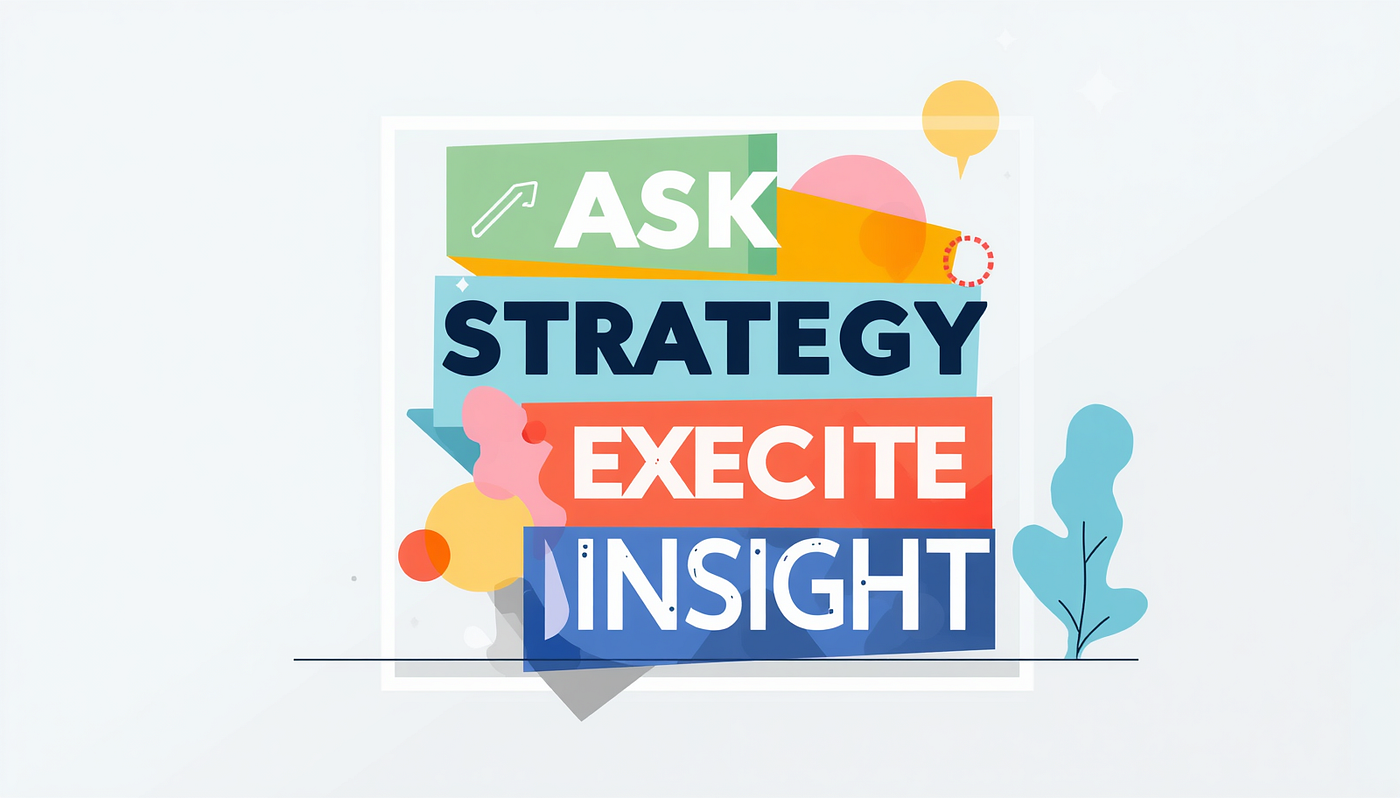
In practice, many organizations either skip, rush, or overcomplicate operational analysis — not because they underestimate its importance, but because they lack of a clear strategy and discipline for how analysis should be conducted.
Some organizations move too quickly into solutions — redesigning processes, implementing automation, restructuring team, or launching digital initiatives — without fully understanding the current state. Others spend too much time analyzing, creating “analysis paralysis” that slows momentum and reduces business value.
Yet one critical activity consistently determines the quality of transformation outcomes: Determining the right STRATEGY.
Whether the initiative involves business transformation, process improvement, automation, customer experience, operational excellence, risk management, or strategy execution, the same principle applies: Strong future-state design always starts with strong current-state understanding. Strong current-state analysis always starts with right strategy.
Why Operational Analysis Matters
Operational analysis is not simply a process mapping and documentation exercise. It is the foundation for identifying the right problems, understanding root causes, aligning strategy to execution, and making intelligent decisions. Without it, organizations risk solving symptoms, resulting fragmented initiatives, wasted investment, and limited impact.
Regardless of initiative, every transformation begins with two fundamental questions:
WHERE ARE WE TODAY?
WHY DOES THIS PROBLEM OR OPPORTUNITY EXIST?
Organizations that answer these questions effectively are able to identify real improvement opportunities, reduce transformation and execution risk, and build sustainable operational capabilities. As its core, operational analysis is about understanding how value currently flows across the organization — and where that flow breaks down.
This applies to business transformation, digital transformation, intelligent automation, customer journey improvement, organizational redesign, operational excellence initiatives, governance and risk management, and performance optimization. The methodology may vary, but the analytical discipline remains the same.

1. Ask Why
Define the Trigger and Objective.
Before analyzing anything, clarify why the analysis is being conducted. In practice, operational analysis is commonly triggered by: Performance decline or inefficiencies; Increased customer complaints; Operational risk or control gaps; Cross functional misalignment; Scalability challenges; The need for automation or digital transformation; Strategic, regulatory, or organizational changes.
The key is not only identifying the visible issue, but understanding the underlying business objective behind the analysis. Without this clarity, teams often collect excessive information without generating meaningful insight.
2. Define Strategy
This is where many initiatives fail.
A strong strategy establishes the right scope and boundaries, correct level of analysis, efficient analytical methods and tools, key stakeholders and governance, data collection approach, and expected outputs and decisions.
The approach should always align with the business objectives. For example:
If the goal is root cause identification, method such as 5 whys, Fishbones Diagram, and Pareto analysis may be effective. If the goal is automation, the analysis may focus on task standardization, input structure, and system interactions. If the goal is transformation, the priority may shift toward establishing a reliable baseline for future-state comparison.
Looking at the Business from the Right level is also important. In practice, operational analysis should consider multiple levels:
Enterprise level — strategy alignment, governance, value chains;
Business process level — end to end process outcomes;
Workflow level — handoffs, controls, and operational efficiency;
Task level — detailed execution activities, often critical for automation and system design.
Choosing the right analytical level — and involving the right stakeholders — directly impacts the quality of insights and decisions.
3. Execute the Analysis
This is where analytical expertise becomes critical.
A core principle of effective operational analysis is simple: Good analysis is evidence-based, not opinion-driven.
This means:
Using actual performance data;
Validating findings with stakeholders;
Observing how work is truly performed — not only how it is documented;
Combining quantitative and qualitative insights.
In practice, over-reliance on frameworks and tools can sometimes limit insight. Methodologies are important, but they should support analysis — not replace critical thinking.
The analysis focus should remain on understanding process reality not to rigidly follow a methodology or tool.
High quality operational analysis usually covers two dimensions: First one is process performance and value to it’s customer. And another one is process execution reality and how it is designed.
4. Present Insights
Even strong analysis can fail if findings are not communicated effectively.
Decision-makers rarely need more data. They need clarity, prioritization, business impact, and actionable insight.
Effective outputs should therefore be: structured and concise, evidence-based, focused on decisions and outcomes, aligned with stakeholder priorities.
Whether using dashboards, process models, heat maps, or executive reports, the principle remains the same: Prioritize signals over noise.
The purpose of presenting insight is not to produce documentation, the purpose is to enable better decisions.
Beyond Analysis: Building Continuous Improvement Capability
Operational analysis should not be treated as a one-time project activity.
Organizations that consistently improve performance build ongoing analytical capability to continuous monitor operations, measure the right indicators, detect issues early, adapt processes proactively, and support data-driven decision-making.
With modern process intelligence, analytics, and automation technologies, organizations can move beyond reactive improvement toward sustainable operational excellence.
Business processes remain the backbone of value delivery — and no transformation succeeds without understanding how that value actually flows across the organization.
Too often, organizations invest heavily in solutions while underinvesting in understanding the problem itself. The result is predictable: misaligned initiatives, low adoption, operational friction, and limited business impact.
The real differentiator is not whether organizations perform analysis. It is whether they perform the right analysis, at the right depth, for the right purpose.
메타데이터
- post_id
- 44e668f299d7
- slug
- a-practical-4-step-framework-for-operational-analysis-and-transformation-44e668f299d7
- url
- https://medium.com/@jargalnyamka003/a-practical-4-step-framework-for-operational-analysis-and-transformation-44e668f299d7
- canonical_url
- https://medium.com/@jargalnyamka003/a-practical-4-step-framework-for-operational-analysis-and-transformation-44e668f299d7
- author_url
- https://medium.com/@jargalnyamka003
- status
- ok
- fetched_at
- 2026-06-09 15:37:30



