The RSV Vaccine Unexpectedly Protects Against Dementia. But Why?
A paradox that challenges what we know about infection, immunology, and dementia.
The RSV Vaccine Unexpectedly Protects Against Dementia. But Why?
A paradox that challenges what we know about infection, immunology, and dementia.

If you have been keeping up with recent science, you have likely heard that there’s robust and convincing evidence that the shingles vaccine (Zostavax and Shingrix) protects against dementia. This finding is widely covered across news outlets and even by independent writers like myself.
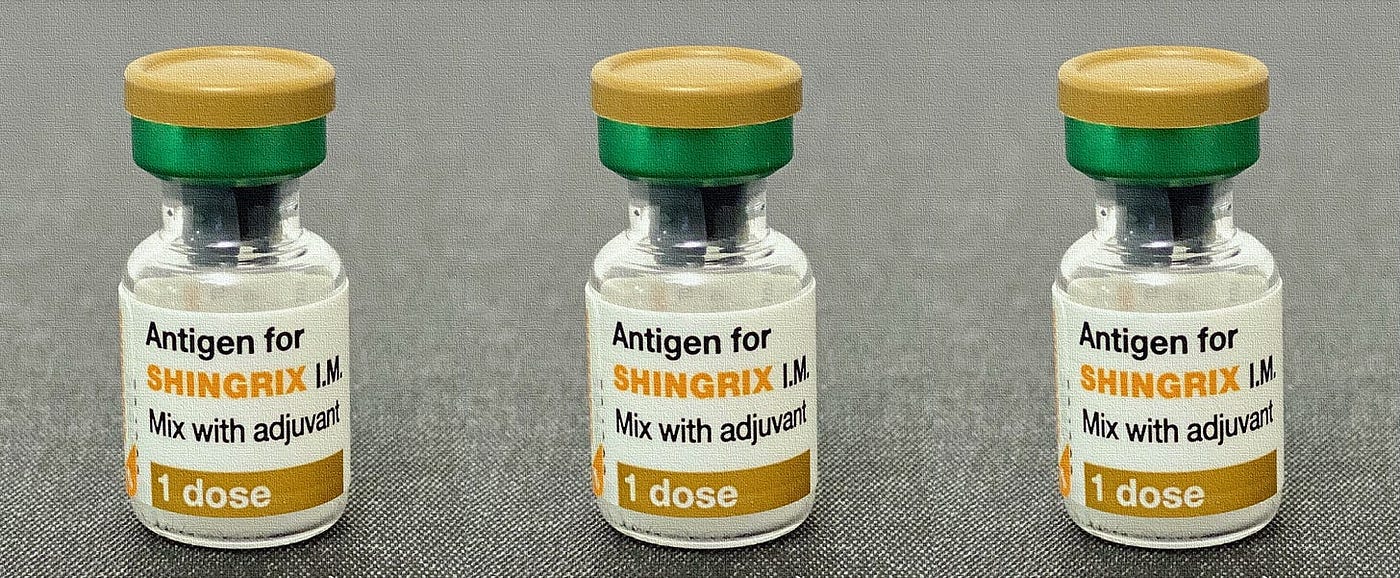
But there’s actually another vaccine in this story: Arexvy.
Arexvy is a recombinant vaccine developed by GlaxoSmithKline (GSK). It’s the world’s first vaccine approved to prevent lower respiratory tract disease (LRTD) caused by respiratory syncytial virus (RSV) in adults aged ≥60, as well as adults aged 50–59 at high risk of severe RSV disease.
Yes, they are two very different vaccines. One targets a dormant neuronal virus, while the other targets a non-dormant respiratory virus. Yet both appear to protect against dementia in a rather recent 2025 study.
This apparent surprise has left scientists pondering how these vaccines protect against dementia. Is it by suppressing viral activity, triggering some broader immune responses, or something else?
Let’s see.
An Unexpected Signal From the RSV Vaccine
Published in npj Vaccines in December 2025, a study by Dr. Maxime Taquet et al. at the University of Oxford examined whether Arexvy (recombinant RSV vaccine) might also protect against dementia risk (Figure 1).
The rationale is that Taquet et al. previously found that Shingrix (recombinant shingles vaccine) conferred greater protection against dementia than Zostavax (live shingles vaccine) in a natural experiment study.
But why?
- One possibility is that shingles itself may increase the risk of developing dementia. So, Shingrix’s greater effectiveness could indirectly reduce dementia risk by preventing shingles more effectively.
- Another possibility is that only Shingrix contains the AS01 adjuvant, which may have its own neuroprotective effects.
These explanations are not mutually exclusive, though. They may both contribute to the observed difference in dementia protection between the two shingles vaccines, Shingrix and Zostavax.

Figure 1. Source: Taquet et al. (2025), npj Vaccines.
Taquet et al. were particularly interested in the adjuvant hypothesis.
An adjuvant is a substance added to a vaccine to enhance the body’s immune response to the antigen. In Shingrix, the AS01 adjuvant stimulates a strong immune response, which may contribute to improved protection against shingles and, perhaps, broader immunological effects that could have non-targeted effects in reducing dementia risk.
As such, Taquet et al. examined Arexvy, another AS01-adjuvanted recombinant vaccine targeting respiratory syncytial virus (RSV).
Using the same TriNetX database they had previously used to show that Shingrix is more effective at reducing dementia risk than Zostavax, Taquet et al. ran another study to test if Arexvy might have similar effects.
They compared older adults who received Shingrix (n = 103,798), Arexvy (n = 35,938), or both (n = 78,658) with an equal number of matched individuals who received the influenza vaccine without AS01 adjuvant. The groups were matched for age, sex, medical conditions, and other factors that could influence dementia risk. This ensures that the observed results are mainly driven by the factor we’re interested in, i.e., the vaccine.
The main results are as follows (Figures 2 and 3):
- Individuals who received either Shingrix or Arexvy spent 18% and 29% more time dementia-free, respectively, over the following 18 months compared with those who received only the flu vaccine.
- Such effects were greater in individuals who received both Shingrix and Arexvy, with 37% more time spent dementia-free.
- These associations passed both negative and positive control outcomes. The vaccines did not influence the risk of conditions unrelated to dementia (e.g., appendicitis, pancreatitis, etc.), and only the shingles vaccine also reduced zoster infection (shingles).

Figure 2. Association between vaccination and dementia risk over the following 18 months. The dots show the estimated difference in dementia risk between the groups, and the horizontal lines show the 95% confidence interval. Values to the left of the vertical line indicate a lower likelihood of developing dementia. The figure also includes two checks: (i) a negative control that should not be affected by vaccination, and (ii) a positive control (shingles infection) that should be reduced by the shingles vaccine. Source: Taquet et al. (2025), npj Vaccines.

Figure 3. Risk of developing dementia over time in people who received different vaccines. Individuals who received Arexvy (RSV vaccine), Shingrix (shingles vaccine), or both had a lower probability of developing dementia over time compared with the flu-vaccinated group. Source: Taquet et al. (2025), npj Vaccines.
Before we move on, we should clarify a major limitation of this study.
Unlike the robust natural experiments that support a causal role of shingles vaccination in reducing dementia risk, this 2025 study is retrospective and lacks any element of randomization. This means the findings are more vulnerable to bias due to unmeasured confounding factors.
For example, individuals who choose to receive vaccines may differ systematically from those who do not, such as in their overall health, healthcare access, or health-seeking behaviors. This is infamously known as the healthy vaccinee bias, which tends to exaggerate the positive health outcomes of vaccines in traditional observational studies.
Despite this limitation, I still find this study informative because:
- Shingrix already has strong evidence supporting its causal role in reducing dementia risk. This study builds on that by showing that another AS01-adjuvanted vaccine, Arexvy, is associated with a similar — if not greater — protective effect. Even if healthy vaccinee bias is present and inflates the effect size, it would affect both vaccines similarly and would not fully negate the benefits observed with Arexvy.
- The comparator group was individuals who received the influenza vaccine. Because healthy vaccinee bias is well-documented in influenza vaccine studies, using a vaccinated control group may mitigate this bias by comparing individuals with broadly similar health-seeking behaviors rather than vaccinated vs. unvaccinated groups.
- The same TriNetX database was used to conduct a natural-experiment analysis showing that Shingrix is better than Zostavax at reducing dementia risk. Although the present study uses a retrospective analysis, the underlying sample remains similar, providing some credibility.
Now, the big question is what mechanism(s) are involved?
The Adjuvant Hypothesis
Because the two vaccines target completely different viruses, Taquet et al. proposed that the shared AS01 adjuvant might be contributing to the observed protection against dementia.
The AS01 adjuvant is a specific combination of two immune-stimulating ingredients packaged in tiny fat-like particles called liposomes.
One component, monophosphoryl lipid A, is a bacterial molecule that activates early immune defenses. The other, QS-21, is a compound extracted from the Quillaja saponaria tree bark, which amplifies and sustains that immune response. Together, these two components work to synergistically enhance the body’s immune response to the vaccine.
What’s interesting is how these same immune pathways intersect with the biology of neurodegenerative disease.
Monophosphoryl lipid A (MPL) activates the toll-like receptor 4 (TLR4), a key sensor of infection that is also expressed on microglia, the brain’s immune cells (Figure 3). Microglia play various roles in the brain, including clearing debris and regulating inflammation. In animal models, stimulating TLR4 with MPL has been shown to influence processes linked to dementia, including amyloid build-up and neuroinflammation.
At the same time, the combined action of MPL and QS-21 triggers a cascade of immune signals, including interferon-gamma. Some evidence in animal models suggests that this immune signaling pathway may slow cognitive decline, although the evidence remains preclinical.
From this perspective, the dementia signal observed with both Shingrix and Arexvy may not be tied to the viruses themselves but to the specific neuroimmune response generated by the AS01 adjuvant.

Figure 3. How the AS01 adjuvant boosts the immune response. The AS01 adjuvant system contains two key components — MPL and QS-21 — that work together to stimulate immune cells. MPL activates a cell-surface sensor (TLR4), while QS-21 acts inside the cell to trigger additional alarm signals. Together, they stimulate the production of inflammatory signals and improve immune responses to vaccination. Source: Roman et al. (2024), Expert Review of Vaccines.
But there’s a problem with this hypothesis.
As Prof. Dr. Andrew Bubak pointed out on his Substack, Science Rabbit, if the adjuvant is the key driver of the effect, then vaccines without it should not show the same reduction in dementia risk.
Yet robust studies demonstrated that even older, non-adjuvanted, live-attenuated shingles vaccines (Zostavax) — and even antiviral therapy following shingles infection — can lower dementia risk.
Indeed, a wealth of literature supports the involvement of pathogens in the development or progression of neurodegenerative diseases. Purely attributing the neuroprotective effects of Shingrix and Arexvy to their AS01 adjuvants seems premature, especially given that much of the evidence for AS01’s neuroprotective effects comes from animal studies.
The Viral Suppression Hypothesis
If the adjuvant hypothesis doesn’t hold up on its own, does that mean the viruses that Shingrix and Arexvy suppress play a role in dementia?
Shingrix suppresses varicella-zoster virus (VZV), which causes chickenpox upon first infection and shingles upon reactivation. This latent reactivation pattern is a key characteristic of herpesviruses such as VZV.
From its latent state in neurons, VZV can periodically reactivate to cause disease (shingles). But most episodes of VZV reactivation are subclinical, causing no obvious disease but likely still triggering subtle inflammation or vascular dysfunction that may affect brain health. That said, clinical VZV reactivation itself, especially recurrent shingles episodes, has also been widely identified as a risk factor for dementia.
From this angle, the protective effect of Shingles becomes much easier to comprehend. By reducing the frequency and intensity of VZV reactivation, Shingrix may limit the number of repeated insults to the brain over time that would otherwise potentiate neurodegeneration.

Figure 4. Summary of findings from a meta-analysis of 21 studies examining the link between VZV and Alzheimer’s disease (AD, the most common type of dementia). Overall, people who had shingles showed a 12% higher risk of AD. In contrast, those who received antiviral medications and shingles vaccines had 45% and 28% lower risks, respectively. Source: Yang and Jiang (2026), Journal of Alzheimer’s Disease.
This explanation works well for VZV. But it runs into a problem when we get back to Arexvy that targets the respiratory syncytial virus (RSV).
Unlike VZV, RSV does not establish lifelong latency in the nervous system. It does not quietly reactivate over decades, nor is it known to produce the same pattern of repeated, subclinical injury that amplifies neurodegeneration. Instead, RSV infection is generally acute and self-limited.
If reducing chronic viral activity were the main mechanism behind the vaccine’s capacity for dementia protection, it is not immediately clear why Arexvy or an RSV vaccine would show a similar association.
The reasonable basis for this hypothesis is that RSV is sometimes neurotropic, capable of infecting neurons. Animal models have detected RSV in brain regions involved in learning and memory, where it disrupts synaptic plasticity and promotes neuroinflammation. Other research has found that RSV can infect both neurons and immune cells, triggering inflammatory signaling that could harm the brain (Figure 5).
It wasn’t until 2024 that a population study from Singapore reported RSV as a potential risk factor for dementia. I say “potential” because the evidence is not yet well established. Specifically, this study investigated RSV as part of the infection burden associated with dementia. Of the 11 pathogens examined, seven were independently associated with dementia, including RSV. But neither HSV-1 nor VZV — two of the best-studied viruses in dementia research — was among these seven significant pathogens.
This raises the possibility that the observed association reflects broader infection burden rather than a specific, causal role for RSV itself. Plus, no other study has yet replicated this finding for RSV.

Figure 5. How RSV may affect the brain beyond the lungs. After infecting the lungs, RSV or its inflammatory signals can enter the bloodstream and interact with the brain. This includes the release of signaling molecules (cytokines) like IL-6 and IL-8, which can disrupt normal brain function, though how often this occurs in humans remains uncertain. Source: Bohmwald et al. (2018), Frontiers in Cellular Neuroscience.
So What’s Really Going On?
At this point, neither explanation fully holds on its own.
The viral suppression hypothesis explains Shingrix well but struggles to account for Arexvy. The adjuvant hypothesis explains the overlap between Shingrix and Arexvy, but fails to account for the protective effects seen with non-adjuvanted vaccines and even antiviral treatments.
So perhaps the answer is not one or the other but a combination of both, operating through a shared mechanism. One possibility is that these vaccines are reshaping how the immune system behaves over time.
But even this idea doesn’t quite align with immune biology.
Trained immunity — a kind of memory within the innate immune system — is generally short-lived and nonspecific. Long-lasting immunity is instead mediated by the adaptive immune system (Figure 6).
If the vaccines are reshaping or training our innate immune system, we’d expect to see a more generalized effect beyond dementia. Yet the strongest natural-experiment studies show that the protective effects of the shingles vaccine are dementia-specific and don’t extend to other conditions. So trained immunity doesn’t fully explain the situation either.
Moreover, trained immunity is mostly demonstrated by live or whole-pathogen vaccines, such as Bacillus Calmette-Guérin (BCG) and smallpox vaccines. So we don’t really know to what extent recombinant vaccines like Shingrix and Arexvy contribute to trained immunity either.

Figure 6. The immune system has two main ways of “remembering” past exposures. Trained immunity refers to a short-term, broad response by the innate immune system that can provide general protection against multiple pathogens but is usually not long-lasting or specific. Adaptive immunity produces a highly targeted response and long-term immune memory. This distinction helps explain why a broad immune training effect may not fully account for the more specific and durable protection against dementia observed with the shingles vaccines. Source: partial figure from Sánchez-Ramón et al. (2018), Frontiers in Immunology.
I’m more inclined to believe the viral suppression hypothesis carries greater weight, largely because pathogens — including VZV and, to some extent, RSV — have been implicated as risk factors of dementia. So, as a proof of concept, targeting these pathogens should also modify that risk.
The same proof-of-concept evidence is lacking with adjuvants or trained immunity. But, to be fair, it’s harder to study the effects of something absent than something present. Meaning, it’s harder to study whether the lack of adjuvant or trained immunity influences dementia risk than whether the presence of pathogens does.
I also use the phrase “carries greater weight” rather than “all weight” for a reason. Because dementia itself is a multifactorial condition, targeting any single variable is unlikely to greatly move the disease risk needle.
The more plausible scenario is that Shingrix and Arexvy influence dementia risk through both pathogen-related and immune-mediated pathways. In some individuals, the benefit may come primarily from suppressing the viruses they carry. In others, it may stem from subtle changes in how their immune systems respond over time.
*Originally published at The Infected Neuron on March 19, 2026.*
If you have made it this far, thank you for reading. Subscribe to my Medium email list here. You can also buy me a coffee here. But I’d appreciate it more if you could subscribe to my Substack, *The Infected Neuron*. :))
메타데이터
- post_id
- 450892b50460
- slug
- the-rsv-vaccine-unexpectedly-protects-against-dementia-but-why-450892b50460
- url
- https://medium.com/microbial-instincts/the-rsv-vaccine-unexpectedly-protects-against-dementia-but-why-450892b50460
- canonical_url
- https://medium.com/microbial-instincts/the-rsv-vaccine-unexpectedly-protects-against-dementia-but-why-450892b50460
- author_url
- https://medium.com/@shinjieyong
- status
- ok
- fetched_at
- 2026-09-29 21:15:38