Design salaries have capped, what’s next?
Is this the new sign of stability?
Design salaries have capped, what’s next?
Is this the new sign of stability?
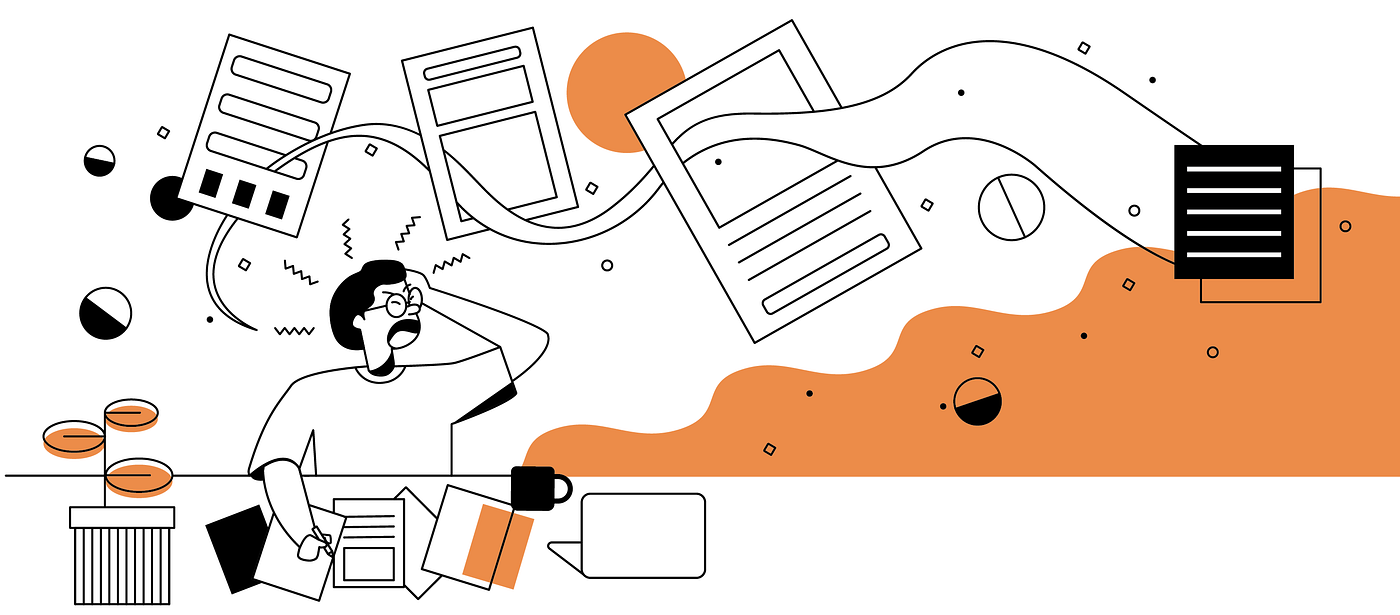
All the stones we’ve stacked are leading somewhere. Credit: Dušan Veverkolog.
Somehow I still get designers asking me for advice in their career directions, even though I’ve intentionally taken a step back from any viral topic spotlights.
We’ve come into a new economic cycle where stability is valued more than large compensation packages, you’re lucky if you get to keep your job, and even luckier if you’re making good money for it.
If you’re not a medium member, click here to read the story for free.
Managers have long come to realise that large compensation packages are not sustainable when professionals don’t prove their impact on bottom-line numbers.
Which was what I’ve been saying for quite some time: Salary transparency was breeding entitlement; an unintended consequence from trying to be woke about ‘fairness’.
The balloon hasn’t popped, but it has certainly reached it’s maximum capacity.
In the U.S. and major tech markets, senior UX/UI/Product designers still get paid reasonably well, with median salaries north of ~$120K. Those working in Big Tech can easily fetch mid 6 figures when you combine stock options and other perks.
However, it is also important to note that pay ranges look the same as it did in 2023, and didn’t hyper-inflate like during the 2020–2022 boom.
Shrink-flation in titles and compensations, or market correction?
In the midst of a highly competitive market, many designers are facing a shrink in their titles and / or compensations. Mid-level designers are seeing their salary brackets compressed, and becoming a senior-level reaching a 6-figure yearly salary is not a realistic outcome anymore.
Basically, your promotion is not worth nearly as much. So more designers are barely seeing the point of trying to be a senior for the sake of it.
It’s very easy to blame the bad economy and correlate the stagnating salaries to global economical woes, but it’s important to note that tech product designers were already making healthy pay before the downturn.
How many of us with jobs can sit in our office with a macbook pro and premium AI tools (that we don’t even pay for) and say we’re not comfortable?
Is the cap a problem?
A trend I’ve noticed is that we’re disturbed by the notion that we’re not making more money. Companies have long removed the implicit promise of ever-higher pay.
They’re done playing our game in the 3-year long employee market, and how it’s their turn.
Startups that once dangled equity and later funding rounds no longer have the sameleverage. Big tech firms are cost-controlled and skeptical of exploding comp bands because the ROI for design roles is still notoriously hard to quantify. They don’t fire designers first when they want to be more profitable, but they certainly won’t be so quick to give us raises when times are good either.
That gets us to the uncomfortable observation: designers are seen as expensive labour that many companies still struggle to tie directly to revenue metrics. When you can’t prove your impact to sales figures or user retention in hard dollars, the easy lever for management is to cap pay and call it the new market rate.
Our entire salary bands are capped based on general competence of the field. And if that stagnates or lowers, so does our leverage.
Disclaimer: I’m not victim-blaming designers.
Self-awareness is the most important thing when it comes to careers. It’s easy to always say I throw designers under the bus, but the reality is that if we don’t improve, we don’t get to b*tch.
The bigger problem is lack of growth
The bulk of the complaints I get from mid-level and junior designers is the fact that they aren’t growing as quickly as they would have liked. A bad economy means slower product cycles, and instead of designing new cool features, you’re likely to be refining and perfecting existing systems.
The boring work, most would say.
Many companies are just focused on optimising what they currently have, and that doesn’t fulfill our creative desires to perform.
Improving conversion by 0.5%? Cleaning up design systems? Making sure UX patterns are standardised? Yep, that’s the current job. Or most of our jobs before hackathons glorified new feature cultures and complete UI re-hauls (which by the way, statistically has little positive ROI nor short-term business impact).
Bottom-line for designers: If you’re depending on your company for growth, you’re screwing yourself over.
The rise of side projects
The silver lining I see from this whole conundrum is that many companies are waking up from their massive, unsustainable over-hiring era, and are truly focusing on building stability.
This means that if you pick the right industry and company, your job will be stable and secure.
And with your newfound stability, you can pursue creative exploits at your own time.
And if you do decide to invest your time for creative exploits at work, do make sure your impact is visible and traceable so you can be properly credited. Initiative is always appreciated by great managers.
A little personal anecdote, my previous two jobs were companies that jumped on the over-hiring bandwagon. They were hoping that with more headcount, comes the growth that is required to take the company to the next step.
I’ve seen this countless of times before, and it never works out. To me, it shows a sign of poor management and a lack of a clearer vision. And it reflected in the work that we did and defined the overall working relationship of the team.
Some people might be able to thrive in such environments, but I am unfortunately not one of those people. Making a living swimming in office politics is a skill in itself.
If there is something I’ve learned about myself from the current economy, is that no matter what, start-ups will always be my default choice.
Closing thoughts
I told a friend recently that it is more important to ask yourself about your failures and give yourself a custom definition of the word so you don’t lose yourself in your career.
For many, success is easily defined as the same pathway of the coolest LinkedIn personality we’re following; but it’s not possible to replicate success unless we have identical financial and economical backgrounds. It’s unfair to yourself to want what someone else achieved when you don’t have the same resources.
And it’s the same in this economic downturn. Many designers feel discouraged because they’re comparing themselves to seniors who rode the wave and seized opportunities during the era of plentiful resource.
We’re simply not in the same cycle. We are not equals.
So by defining what would make you a failure, instead of defaulting to failure when you can’t achieve the success you previously defined, it’ll help you optimise and refocus your career.
We will all do great things with time, so we should stop measuring it.

Like this article? Clap to show your support! Clapping is free and it helps me get this article to more readers ❤️ I’d love to hit 1K.
메타데이터
- post_id
- 455fdeb1556c
- slug
- design-salaries-have-capped-whats-next-455fdeb1556c
- url
- https://medium.com/@melkoh/design-salaries-have-capped-whats-next-455fdeb1556c
- canonical_url
- https://medium.com/@melkoh/design-salaries-have-capped-whats-next-455fdeb1556c
- author_url
- https://medium.com/@melkoh
- status
- ok
- fetched_at
- 2026-06-11 15:16:29