Schopenhauer’s Dark Psychology of Happiness (Self-Help Has Spent 200 Years Trying to Bury This)
They don’t teach this wisdom in the books you read.
Schopenhauer’s Dark Psychology of Happiness (Self-Help Has Spent 200 Years Trying to Bury This)
They don’t teach this wisdom in the books you read.

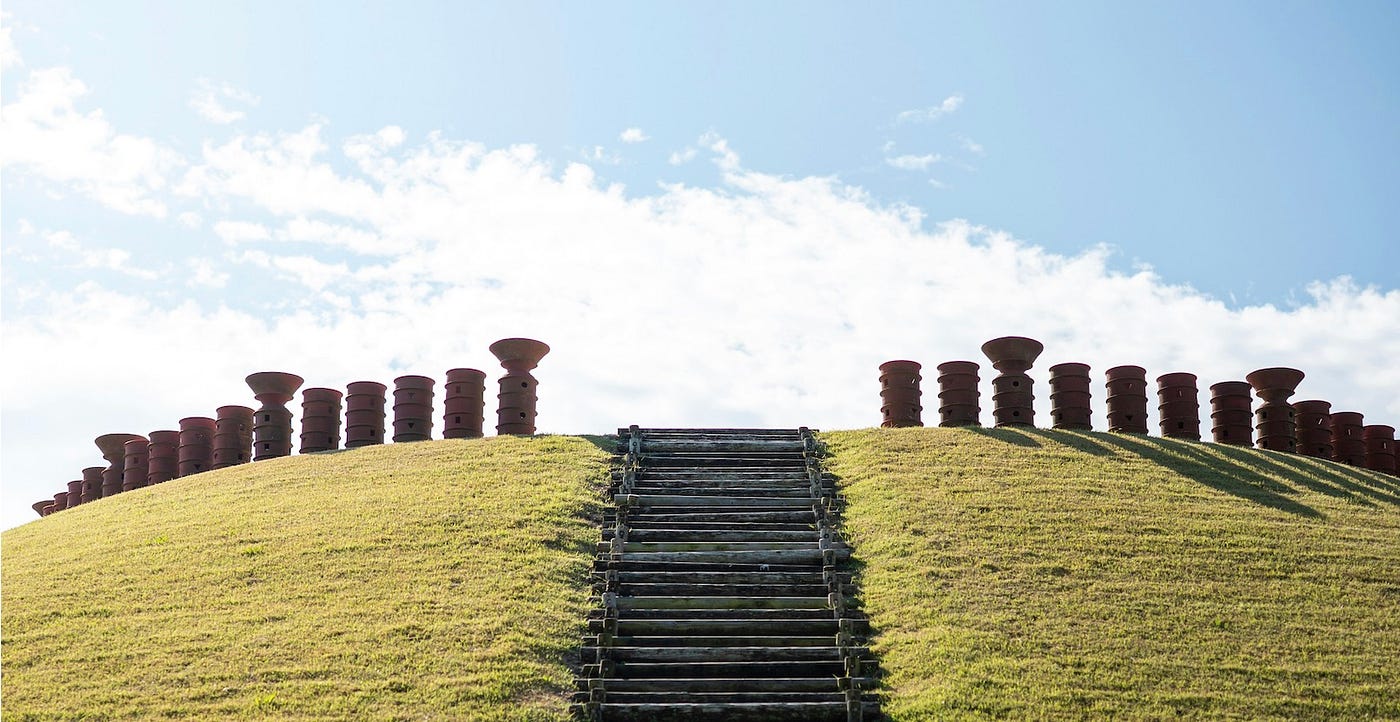
Photo by Phil Hearing on Unsplash
Brace yourself. Philosopher and writer Arthur Schopenhauer is an intense realist. He’s not your average self-help thinker. He changed my idea of existence, knowledge, and the self. Schopenhauer was famously grumpy, paranoid, and lived alone with a succession of poodles. He took misery seriously. His experiential wisdom changed him. And his entire philosophy of life. Schopenhauer believed our biggest mistake in life is looking for something that isn’t there. “There is only one inborn error, and that is the notion that we exist in order to be happy,” he said. He didn’t think happiness was the default of life. People believe the opposite. If they feel stressed, lonely, or bored, they assume life is broken.
And that they’ve made a wrong turn.
Schopenhauer says no.
“What disturbs and depresses young people is the hunt for happiness on the firm assumption that it must be met with in life. From this arises constantly deluded hope and so also dissatisfaction. Deceptive images of a vague happiness hover before us in our dreams, and we search in vain for their original. Much would have been gained if, through timely advice and instruction, young people could have had eradicated from their minds the erroneous notion that the world has a great deal to offer them. — Schopenhauer
Your life isn’t broken.
You are just experiencing the reality of life. Suffering and pain are not errors. They are part of the very code of life. As strange and dark as his work on happiness is, his thoughts on human desire, suffering, and “happiness” are psychologically true. Many modern self-help books won’t tell you this. He wrote from experience. His truth is uncomfortable. It’s also the most useful thing you’ll read about happiness. Schopenhauer wrote that our perception of happiness is a fantasy. Get a great job. Find the right relationship. Hit the number in your bank account. Tick the right boxes. And then finally, you’ll be happy.
Life solved.
He thought this thinking was a structural impossibility we’ve built into our consciousness. His argument goes like this. Every desire arises from a lack. You want water because you’re thirsty. You want a connection because you think you’re lonely. You want success to get rid of your insufficient feeling. The desire itself is the pain. It’s not a neutral state of reaching for something good. It’s the discomfort of a gap. And that gap is what drives you forward. So you pursue the thing. You try to close the gap.
What happens then?
One of two things, Schopenhauer says. Either you get what you wanted, discover it isn’t what you thought it was, and feel the gap reopen almost immediately under a different name. Or you satisfy the desire fully. And feel boredom. Emptiness again. A flat, purposeless stage of life that’s just as uncomfortable as the wanting was. He says, “Life swings like a pendulum backward and forward between pain and boredom.” You feel pain when you want something. Boredom when you get it.
And between those two poles, nothing lasts.
To understand why Schopenhauer thought this, you have to get back to his “Will” philosophy. The blind, restless, purposeless force that underlies all of nature. The Will of any living thing doesn’t want anything specific. It just wants. It pursues without a goal in mind. It drives you toward desire after desire. Striving is what it does. You are its vehicle. Schopenhauer argued that all living beings are driven by this insatiable Will. A ceaseless pursuit that can never be fully satisfied. The desire always outruns fulfilment. And existence is defined by suffering. Happiness is just a temporary break from suffering. Every time you are not pursuing something you want, you get bored again. Pleasure is merely the temporary break from pain. Boredom fills every interval between wanting and getting.
Read that again.
Pleasure is like taking off a pair of tight, hurting shoes. The shoes didn’t make you happy. You just feel better because the pain is gone. And you are back to how you are supposed to feel. This is Schopenhauer’s most explosive and hard-to-hear idea. Of course, no one likes to get comfortable with this. If pleasure is just temporary pain relief, then the entire project of accumulating more pleasure. More money, more status, more experiences or more things is built on a misunderstanding of what pleasure is. All wanting comes from need. Therefore, from lack, therefore from suffering. Wealth is like sea-water; the more we drink, the thirstier we become. You already know this feeling. You wanted something for years. You got it. The relief lasted a few days, maybe a few weeks. Then ordinary life reasserted itself. Then a new want arrived. You were not ungrateful. You were just running the “will” wiring everyone has.
Optimism is the problem.
This is where Schopenhauer turns his knife on the culture.
He was very angry at optimism. The philosophical argument that life is fundamentally good. And that happiness is the natural human state. And suffering is an error to be corrected.
He wrote, “Optimism is not only a false but also a pernicious doctrine, for it presents life as a desirable state and man’s happiness as its aim and object. Starting from this, everyone then believes he has the most legitimate claim to happiness and enjoyment. If, as usually happens, these do not fall to his lot, he believes that he suffers an injustice, in fact that he misses the whole point of his existence.” If you believe happiness is the normal state and you’re not happy, you conclude something has gone wrong.
With you.
With life.
With what you were promised. You feel cheated, shamed and broken. You pursue harder, buy more, and optimise more aggressively. Surely the problem is just that you haven’t found the right system yet. This is exactly what many self-help writers teach. They tell us happiness is normal and available. That the barrier is your mindset, your habits, your morning routine, your relationship with money. Fix those, and you’ll arrive. What it never tells you is that the premise is wrong. Schopenhauer says happiness was never the default. Suffering is the default. And building your life around the expectation of happiness guarantees that every difficult day feels like a personal failure. “The safest way of not being very miserable is not to expect to be very happy,” he said.
Schopenhauer says to start with the reality of life.
Separate yourself from the fantasy.
“Hope is the confusion of the desire for a thing with its probability.”
Understand your wiring. Then you can work with it. Used properly, Schopenhauer’s rational pessimist ideas make you wiser. We don’t recognise happiness when we’re in it. We only recognise it after it’s gone. You were healthy for ten years, and you called it nothing. Then you got sick, and you understood what health was. You were employed, had emergency funds, were sleeping in your own bed, and refused to acknowledge your blessings. Then those things disappeared, and you finally valued them. For Schopenhauer, negative happiness. Or the absence of suffering, pain, or discomfort is what people frequently misunderstand. What we perceive as happiness is merely a temporary relief from suffering or unmet desires.
His antidote to the painful reality of life is this.
“Mostly it is loss which teaches us about the worth of things.”
Think about what could be worse. The stoics also practised this. Their term for it is negative visualisation. Where the stoics used it to build gratitude, Schopenhauer used it to correct your perception of what you already have. Your functioning body. The absence of the difficult phone call you were dreading. The project that came in on time. The meal you always have. You ignore them because they’re not what you want. They’re what you have. And in Schopenhauer’s work, that distinction is everything. What you have are the sources of your happiness. What you want are the sources of most of your suffering. “It is difficult to find happiness within oneself, but it is impossible to find it anywhere else.”
Everything out there is selling you a location for happiness. A product, a method, a place, a relationship structure, a version of yourself you’ll finally become. Schopenhauer says the mindset is wrong. Happiness is the temporary absence of pain, and you’re in it more often than you realise.
If pain and boredom, wanting and flatness are the structures of life, where do you go from here? How do you live your best life? Schopenhauer identifies three escapes from the tyranny of the Will.
The first is aesthetic contemplation.
When you’re fully absorbed in music, in a painting, in a film or in the view of the countryside, the Will becomes silent. You feel a temporary detachment from the suffering that results from attachment to the will by becoming a will-less spectator of the world as representation. When consciousness is fully engaged with the world as painless representation, there is no consciousness of the world as painful willing. This is why art matters in a way that’s hard to explain but everyone feels. It’s a genuine break from desire. You stop wanting, temporarily. You’re entirely present to what’s in front of you. It asks nothing of the Will.
You’ve had this experience. Sitting in front of something beautiful and feeling, for a few minutes, completely at rest.
The second one is compassion.
Schopenhauer believed the Will is the same force running through every other being. Every person straining toward their desires, failing, suffering, getting bored, straining again. When you see that or feel the shared nature of the suffering, your reaction to others is different. The Will, which is always focused on me and my wants, briefly becomes aware of the bigger picture. Compassion removed the boundary between your suffering and theirs. And in that space, the self stops becoming the centre of your life. This is why buddhism, stoicism, christianity and taoism place compassion at the centre of the good life. As a framework for stepping outside yourself.
And the last escape is asceticism.
Wanting less.
This is the hardest sell. Buddhists have long taught that true happiness comes from letting go of your desires, which frees you from suffering. Your appetite expands to fill your income, your attention, your ambition. Before you add another want to the pile. Will the satisfaction of this desire change your experience of life, or just briefly relieve the itch before creating a new one? The two enemies of happiness are pain and boredom. Wanting less attacks both. Less to want means less pain when you don’t have it. And anyone who has learned to be with themselves in silence. To exist without always-on stimulation and acquisition is immune to boredom.
“The happiness of any given life is to be measured, not by its joys and pleasures, but by the extent to which it has been free from suffering.”
Arthur Schopenhauer’s own life is a good example of his philosophies. He was difficult, paranoid, and sometimes miserable. He was also one of the most widely read philosophers of the 19th century. For decades, almost nobody knew who he was. But by the end of the 1800s, he became one of the most popular and widely read philosophers of his time. He walked two hours every day, played the flute, read voraciously, and found joy in his dog, in music, and in thinking.
He practised, imperfectly, what he preached.
The point is that he understood life from inside his own life. He didn’t theorise about suffering from a comfortable place. He built his philosophy from direct observation of what desire does to people. His provocation that “man can do what he wills but he cannot will what he wills,” challenges the conventional wisdom of free will. He argued that while you can act on your desires, you cannot choose your desires. They arise from the Will, the blind, pursuing force of our nature. You didn’t choose what you want. The wanting arrived. You can choose whether to pursue it. You can choose how to pay your attention. But the desire itself will always be there. That’s a reason to stop blaming yourself for wanting things.
For not being permanently satisfied.
Or feeling the pendulum swings of life.
Start measuring your happiness by what you are not suffering from. Right now, what pains are absent from your life that could be there? What fears haven’t materialised? What discomforts are you not in? Those are your sources of happiness. Most people have trained themselves to ignore them. because it doesn’t feel like winning. Boredom is a good sign. Even if we satisfy one desire, there are always several more unsatisfied ones ready to take its place. Or else we become bored, aware that a life with nothing to desire is dull and empty.
The minute you feel bored, the Will is looking for a new target.
You don’t have to give it one. You can sit in boredom for a minute and find what it wants from you. Sometimes it’s just rest. It can also be a sign you want clarity. Practice the three escapes. Find things that absorb you completely. Spend time paying attention to other people’s suffering. Want less as an audit of which desires are yours and which have been handed to you. And take suffering seriously. “Happiness lies always in the future, or else in the past, and the present may be compared to a small dark cloud driven by the wind over the sunny plain; in front of and behind the cloud everything is bright, only it itself always casts a shadow,” writes Schopenhauer. Look at the brightness of life more. You’re already in the good part and you keep looking past it toward the next thing.
메타데이터
- post_id
- 45625d052986
- slug
- schopenhauers-dark-psychology-of-happiness-self-help-has-spent-200-years-trying-to-bury-this-45625d052986
- url
- https://medium.com/personal-growth/schopenhauers-dark-psychology-of-happiness-self-help-has-spent-200-years-trying-to-bury-this-45625d052986
- canonical_url
- https://medium.com/personal-growth/schopenhauers-dark-psychology-of-happiness-self-help-has-spent-200-years-trying-to-bury-this-45625d052986
- author_url
- https://medium.com/@thomas-oppong
- status
- ok
- fetched_at
- 2026-06-13 00:25:45