Chengdu J-20
The Chengdu J-20, also known as the “Mighty Dragon”, is China’s first fifth-generation stealth fighter jet, developed to compete with the…
Chengdu J-20
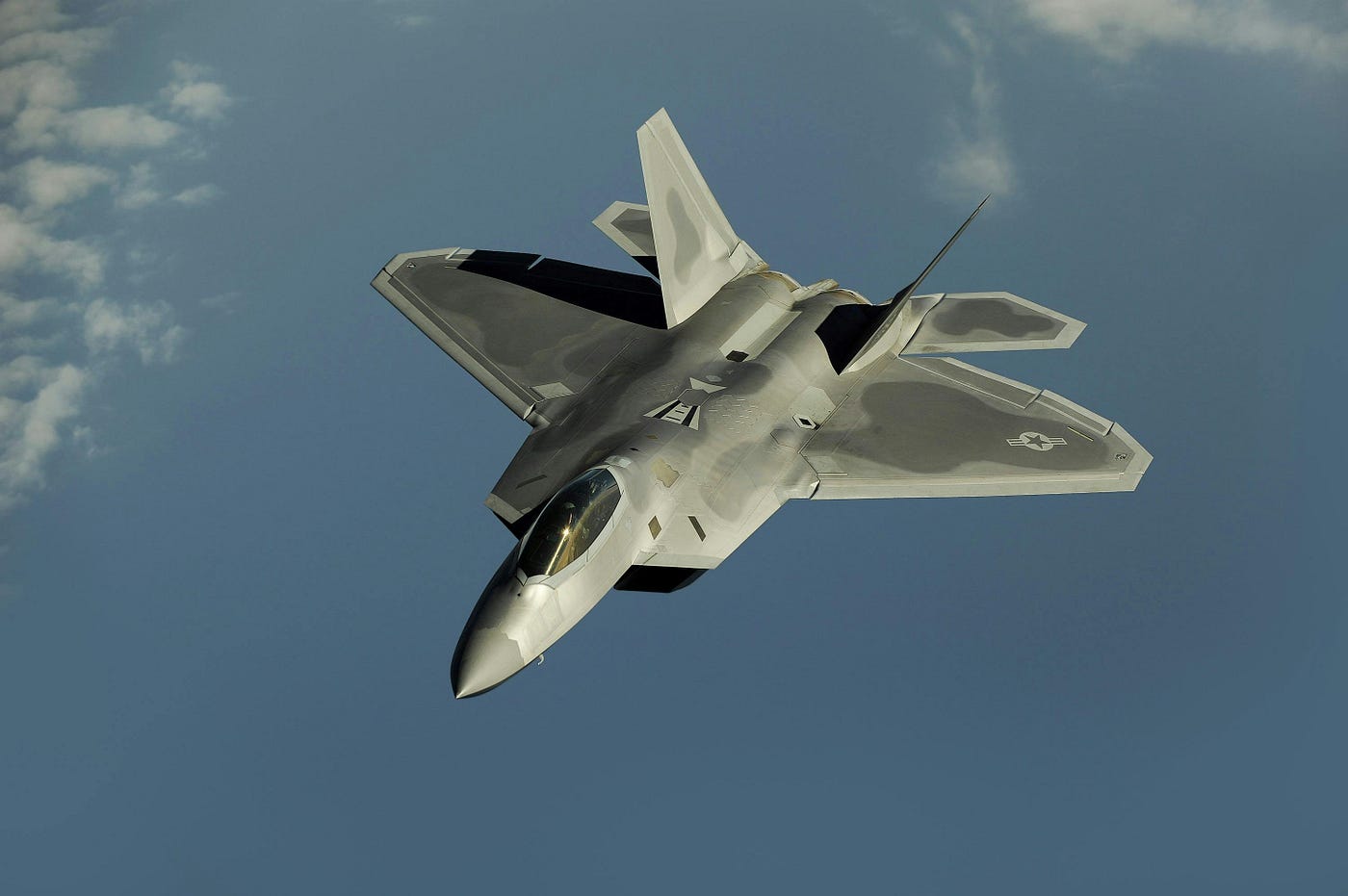
The Chengdu J-20, also known as the “Mighty Dragon”, is China’s first fifth-generation stealth fighter jet, developed to compete with the likes of the American F-22 Raptor and F-35 Lightning II. Designed by the Chengdu Aerospace Corporation (CAC) under the Aviation Industry Corporation of China (AVIC), the J-20 represents a critical leap in Chinese aerospace capabilities. As of the 2020s, it stands at the forefront of China’s effort to achieve air superiority and project power in the Asia-Pacific region and beyond.
Background and Development
China began pursuing stealth aircraft technologies in the early 1990s, inspired by the deployment of the U.S. F-117 Nighthawk and F-22 Raptor. The J-XX program, which later evolved into the J-20 project, was initiated as a top-secret endeavor to create a fifth-generation air superiority fighter capable of challenging Western designs.
The first prototype of the J-20 flew on January 11, 2011, during a visit by then-U.S. Secretary of Defense Robert Gates to China, an act many observers interpreted as a strategic signal. The aircraft entered limited service with the People’s Liberation Army Air Force (PLAAF) in 2017 and has been steadily upgraded since.
The J-20 was designed not only to fulfill China’s strategic needs but also to demonstrate its emergence as a technological and military superpower. Today, it serves as the most advanced operational fighter in China’s inventory.
Design and Stealth Characteristics
The J-20’s design reflects a unique approach to stealth. It features a twin-engine delta-canard configuration, with angular lines, forward-swept intakes, and an overall shape optimized for reduced radar cross-section (RCS). The aircraft incorporates radar-absorbent materials and internal weapon bays to reduce its signature on enemy radar.
However, the J-20’s canard layout — forward control surfaces — has raised debate among analysts. While canards typically improve maneuverability and lift, they may increase radar detectability. To mitigate this, Chinese engineers have employed advanced flight control systems and surface treatments to reduce the canards’ impact on radar visibility.
From a frontal aspect, the J-20 exhibits stealth comparable to other fifth-generation fighters, though its rear and side aspects are believed to be less stealth-optimized, especially in earlier variants with Russian-made engines.
Engines and Propulsion
The J-20 initially flew with Russian AL-31F engines, the same used in the Su-27 family of aircraft. These engines were reliable but fell short of providing the supercruise capability (sustained supersonic flight without afterburners) and stealth compatibility demanded of a fifth-generation platform.
China has since developed its own WS-10C engines, now being used in many production J-20s. These engines are an interim solution while the more powerful and stealthier WS-15 engine is under development. Once fully integrated, the WS-15 is expected to give the J-20 true fifth-generation performance, including supercruise, higher thrust-to-weight ratio, and improved reliability.
The transition to domestically produced engines marks a critical milestone in China’s pursuit of aerospace independence, reducing reliance on foreign suppliers and enhancing the strategic autonomy of the J-20 fleet.
Avionics and Sensor Suite
The J-20 is equipped with cutting-edge avionics, although many of its systems remain classified. It reportedly uses an Active Electronically Scanned Array (AESA) radar, believed to be the Type 1475 KLJ-5, which offers long-range target detection, electronic warfare capabilities, and high-resolution tracking.
The fighter also incorporates an Electro-Optical Targeting System (EOTS) under the nose, similar to the U.S. F-35, and infrared search and track (IRST) sensors for passive tracking of enemy aircraft. These allow the J-20 to detect stealth aircraft that may elude conventional radar, a growing trend in next-gen fighter design.
China has emphasized sensor fusion, a hallmark of fifth-generation fighters, enabling the J-20 pilot to receive an integrated view of the battlespace through datalinks, onboard sensors, and artificial intelligence-enhanced systems. While not yet fully networked like its American counterparts, the J-20 is moving rapidly in that direction.
Armament and Combat Roles
The J-20 features internal weapons bays to maintain stealth while carrying missiles. It is typically armed with:
- PL-15: A long-range, active radar-guided air-to-air missile with a reported range of over 200 kilometers, designed to destroy high-value targets like AWACS or tankers.
- PL-10: A short-range infrared-guided missile with high off-boresight capabilities for close-quarters dogfighting.
- PL-21 (in development): A next-generation ultra-long-range missile with active guidance and potential anti-radiation capabilities.
The J-20’s internal bays can carry up to six missiles (four medium/long-range and two short-range), while external hardpoints are available for less stealth-sensitive missions requiring greater firepower.
The aircraft is optimized primarily for air superiority, with some strike capabilities, especially against high-value or vulnerable targets at range. Its stealth allows it to approach targets undetected, making it a credible platform for offensive and defensive operations in contested airspace.
Operational Deployment and Strategy
The J-20 is operated by multiple units of the People’s Liberation Army Air Force (PLAAF) and has been deployed in Eastern and Southern Theater Commands, close to Taiwan, the South China Sea, and Japan. This indicates China’s intent to use the J-20 as a strategic tool for regional deterrence and power projection.
China’s air doctrine envisions the J-20 not just as a dogfighter, but as a “missile truck” and sensor node, extending the reach and effectiveness of the broader Chinese military network. When integrated with early warning aircraft, drones, and ground-based radar, the J-20 plays a central role in a “system-of-systems” warfare approach.
Recent footage and reports suggest that the J-20 has begun combat patrols and joint exercises, increasing its readiness for high-intensity conflict scenarios.
Challenges and Criticisms
Despite its achievements, the J-20 faces several challenges:
- Engines: The WS-15 engine is still in testing, and reliability concerns persist with the current WS-10C.
- Stealth Limitations: Certain design choices, such as canards and exposed engine nozzles, may compromise full-spectrum stealth.
- Pilot Training: Operating a fifth-gen fighter requires rigorous training and advanced tactics, areas where the PLAAF is still developing expertise.
- Data Integration: While improving rapidly, China’s data networks and battlefield integration lag behind those of the U.S. and its allies.
Western analysts also question whether the J-20 can perform at the same operational tempo as the F-22 or F-35, which benefit from decades of combat experience, allied interoperability, and established logistics chains.
The Future of the J-20
China is continuously upgrading the J-20 platform. Future iterations are expected to include:
- WS-15 engine integration for supercruise and improved thrust.
- Two-seat variants, potentially for command-and-control missions or drone coordination.
- Loyal wingman drones, such as the GJ-11 Sharp Sword, to complement J-20 operations.
- Enhanced stealth shaping, radar absorption materials, and electronic warfare systems.
The J-20 is also being considered as part of China’s broader strategy for air-sea denial and regional dominance, particularly in Taiwan Strait scenarios, South China Sea disputes, and U.S. Indo-Pacific strategies.
The Chengdu J-20 Mighty Dragon marks a pivotal achievement in Chinese military aviation. While it may not match every performance metric of the U.S. F-22 or F-35, it is a formidable, rapidly maturing fifth-generation fighter with growing regional and global implications.
Backed by China’s vast industrial base and strategic ambitions, the J-20 is more than just a stealth fighter — it is a symbol of China’s technological rise, a tool of geopolitical influence, and a key component in the evolving balance of air power in the 21st century.
메타데이터
- post_id
- 4582cbbc2aef
- slug
- chengdu-j-20-4582cbbc2aef
- url
- https://medium.com/@imali8810/chengdu-j-20-4582cbbc2aef
- canonical_url
- https://medium.com/@imali8810/chengdu-j-20-4582cbbc2aef
- author_url
- https://medium.com/@imali8810
- status
- ok
- fetched_at
- 2026-06-26 03:39:16