🌊 Modeling Future Streamflow Variability Using Advanced Deep Learning under SSP Scenarios👇
Introduction
🌊 Modeling Future Streamflow Variability Using Advanced Deep Learning under SSP Scenarios👇
Introduction
Water resources are becoming increasingly uncertain under changing climate conditions. One of the most critical challenges in hydrology today is understanding how streamflow patterns will evolve under future climate scenarios.
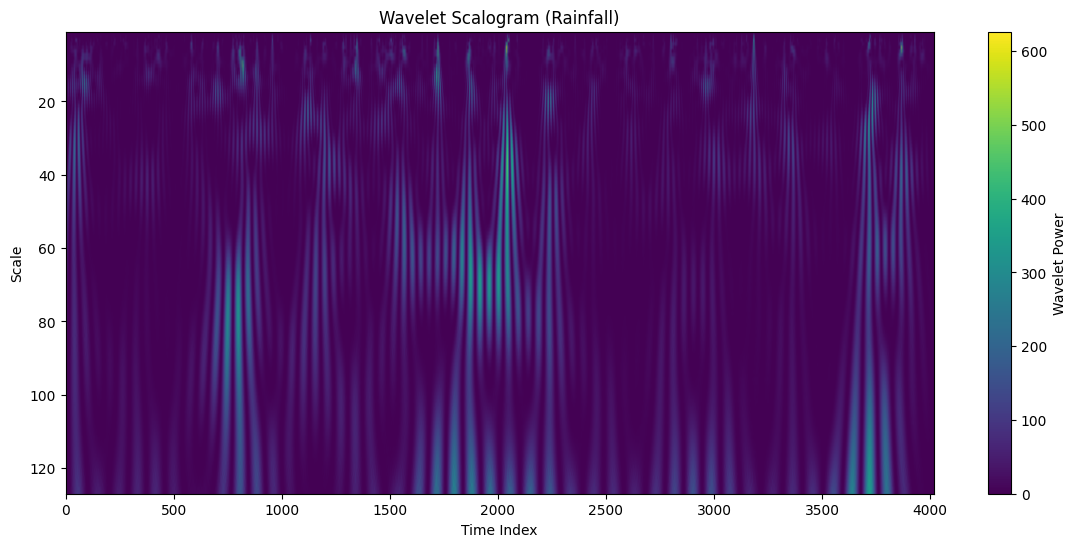
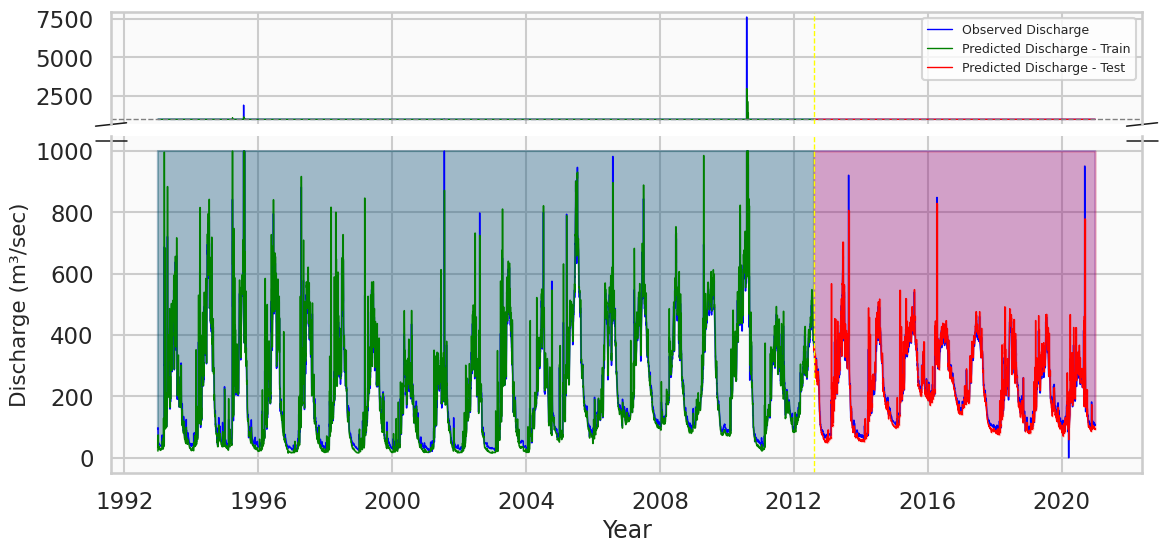
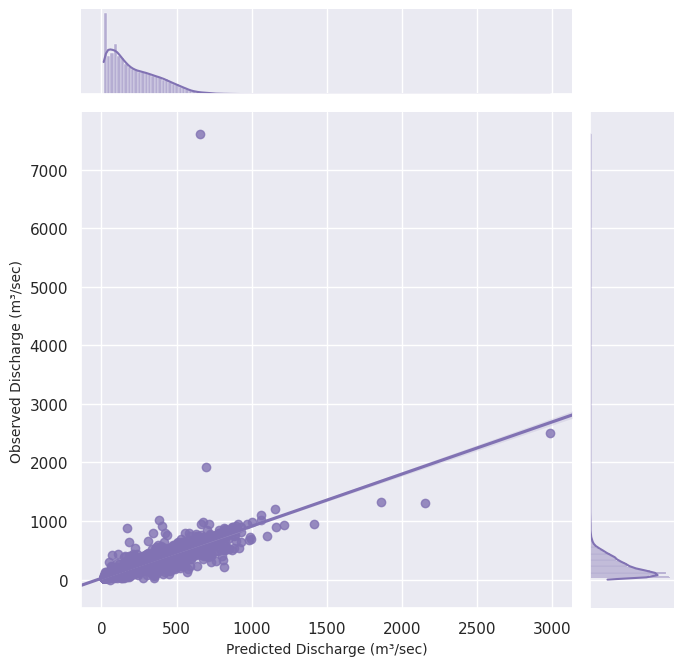
In this study, I conducted a comprehensive streamflow prediction analysis using Shared Socioeconomic Pathways (SSP) scenarios, leveraging state-of-the-art deep learning models. The goal was to evaluate how different architectures capture hydrological dynamics and to assess the degree of variability in future streamflow.
Why This Matters
Streamflow variability directly affects:
- Flood and drought risks
- Reservoir operations
- Irrigation planning
- Climate adaptation strategies
Traditional hydrological models often struggle with nonlinear relationships and long-term dependencies. This is where deep learning offers a transformative advantage.
Models Used in the Study
To ensure a robust comparison, multiple advanced architectures were implemented:
1. Hydro-Informer Temporal Fusion Transformer (TFT)
A specialized variant designed for hydrological applications, integrating attention mechanisms with temporal learning.
2. Sparse TFT
An optimized version of TFT that reduces computational complexity while maintaining performance.
3. Standard TFT
A powerful sequence-to-sequence model capable of capturing both short-term and long-term dependencies.
4. Transformer-only TFT
Focuses purely on attention mechanisms, removing recurrent components.
5. Pre-trained Hydro-LSTM
A transfer learning-based approach that leverages pre-trained hydrological representations, particularly useful in data-scarce environments.
Methodological Overview
The workflow included:
- Integration of SSP-based climate projections
- Data preprocessing and temporal alignment
- Model training and validation
- Comparative performance evaluation
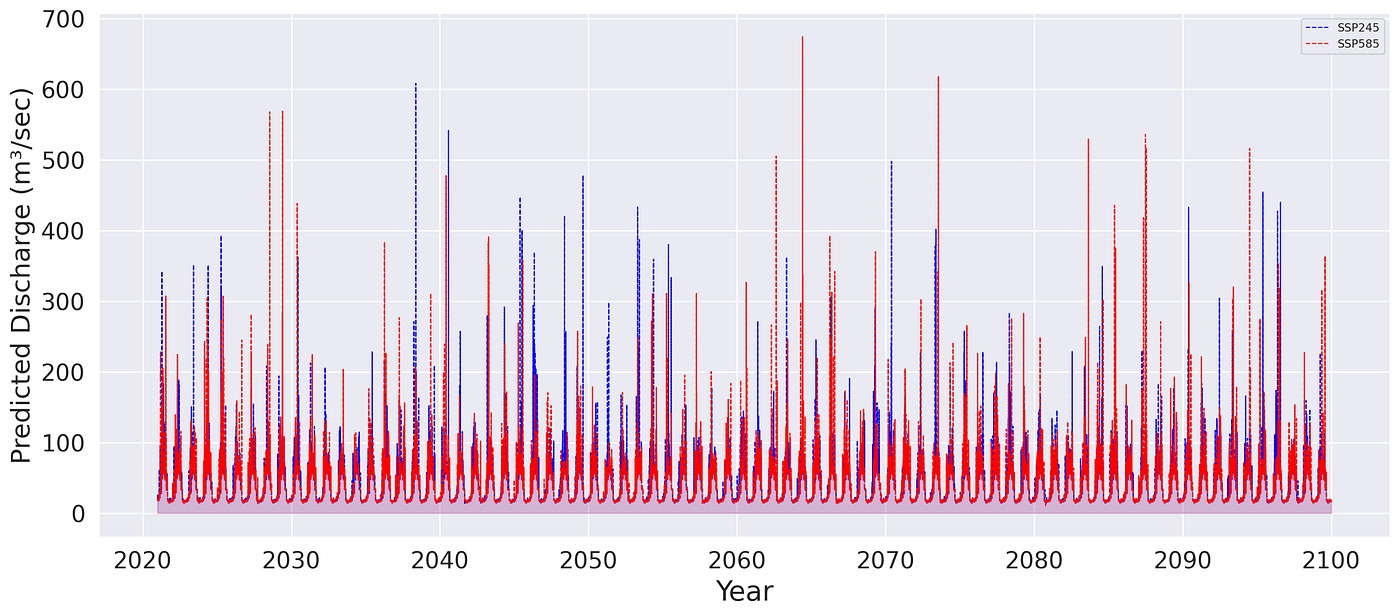
- Scenario-based streamflow simulation
Each model was designed to capture:
- Temporal dependencies
- Seasonal patterns
- Extreme hydrological events
Key Findings
📈 Strong Streamflow Variability Across SSP Scenarios
All models consistently indicated significant variability in future streamflow patterns, suggesting increased uncertainty in water availability.
⚡ Superior Performance of TFT-Based Models
Temporal Fusion Transformer variants demonstrated:
- Better handling of nonlinear relationships
- Improved prediction of extreme events
- Enhanced ability to model seasonal shifts
🔍 Interpretability Through Attention Mechanisms
Attention-based models provided insights into:
- Key drivers of streamflow variability
- Temporal importance of climate variables
🔄 Robustness of Pre-trained Hydro-LSTM
The pre-trained Hydro-LSTM performed well, particularly in:
- Limited data scenarios
- Capturing baseline hydrological behavior
Implications for Climate and Water Management
The findings highlight a critical message:
👉 Future streamflow will not just change — it will become more variable and uncertain.
This has major implications for:
- Flood risk management → Increased likelihood of extremes
- Water supply systems → Greater unpredictability
- Infrastructure design → Need for flexible and adaptive systems
The Role of AI in Hydrology
This study demonstrates how advanced AI models can:
- Bridge gaps between data-driven and physical hydrology
- Provide scalable solutions for climate impact assessment
- Enable scenario-based planning and decision-making
The integration of deep learning with climate projections represents a new frontier in hydroinformatics.
Conclusion
The application of TFT-based models and Hydro-LSTM under SSP scenarios reveals a consistent signal:
🌍 Hydrological systems are entering a phase of increased variability.
To address this, future research and policy must focus on:
- AI-driven adaptive modeling
- Uncertainty-aware decision frameworks
- Integration of multi-source environmental data
Final Thoughts
As climate pressures intensify, combining deep learning with hydrological science is no longer optional — it is essential.
The future of water resource management lies in intelligent, data-driven, and interpretable modeling frameworks.
📌 Let’s Connect
If you’re working in:
- Climate modeling
- Hydrology
- AI for Earth systems
I’d love to collaborate and exchange ideas.
ClimateChange #Hydrology #DeepLearning #TFT #Hydroinformatics #WaterResources #AI #SSP #Sustainability #EnvironmentalScience
메타데이터
- post_id
- 4583675356bb
- slug
- modeling-future-streamflow-variability-using-advanced-deep-learning-under-ssp-scenarios-4583675356bb
- url
- https://medium.com/@afedullah/modeling-future-streamflow-variability-using-advanced-deep-learning-under-ssp-scenarios-4583675356bb
- canonical_url
- https://medium.com/@afedullah/modeling-future-streamflow-variability-using-advanced-deep-learning-under-ssp-scenarios-4583675356bb
- author_url
- https://medium.com/@afedullah
- status
- ok
- fetched_at
- 2026-07-14 16:16:25