Battle of Jitra (1941)
The Battle of Jitra was fought between the invading Japanese and Allied forces during the Malayan Campaign of the Second World War, from…
Battle of Jitra (1941)
Kedah
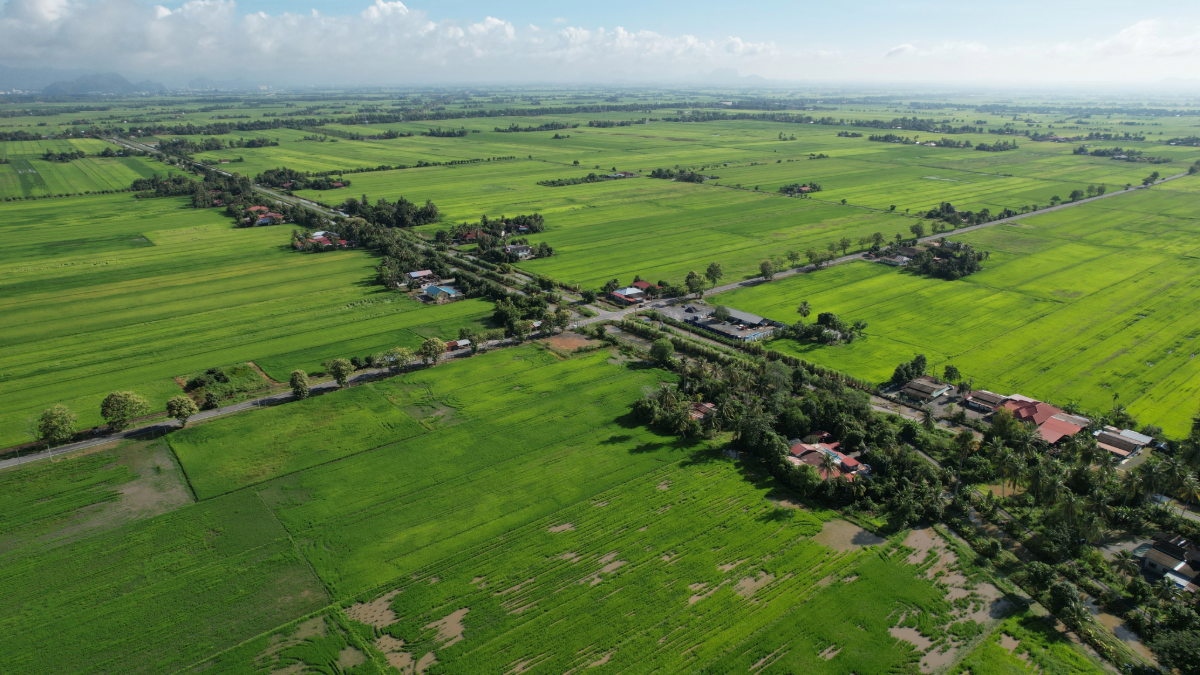
The Battle of Jitra was fought between the invading Japanese and Allied forces during the Malayan Campaign of the Second World War, from 11–13 December 1941. Allied defenses at Jitra were not complete when the Pacific War broke out following the attack on Pearl Harbor and the almost simultaneous landings in Malaya. The defensive positions were located in a strategically important area of northern Malaya, intended to block the main road and railway line leading south from the Thai border. The plan, known as Operation Matador, was to preemptively move into southern Thailand to counter a Japanese landing, but hesitation and delays meant that the plan was never executed. Instead, the 11th Indian Infantry Division, under the command of Major General David Murray-Lyon, was forced to occupy a hastily prepared defensive line at Jitra. The position was inherently flawed; the terrain was flat, waterlogged rubber and rice paddy country, offering little natural advantage to the defenders.

Kedah
The problem was compounded by the poor choice of location, heavy monsoon rains had flooded the shallow trenches and gun pits, turning the defensive lines into muddy quagmires. Barbed wire lines had been erected and some anti-tank mines laid, but their effectiveness was limited by the saturated ground. Many of the field telephone cables laid across the waterlogged terrain also failed to work, resulting in a critical breakdown in communication between forward units and headquarters during the battle. This lack of reliable communication meant that commanders were often unaware of the developing situation on the front line, and were unable to coordinate movements or call for effective artillery support. The overall state of readiness was dangerously low, a consequence of insufficient time, poor weather, and a flawed defensive concept.
Two brigades of Major General David Murray-Lyon’s 11th Indian Division held the front line. On the right, covering the main road, was the 15th Indian Infantry Brigade, composed of the 1st Battalion The Leicestershire Regiment, the 1st Battalion 14th Punjab Regiment, and the 2nd Battalion 9th Jats. On the left, covering the area west of the road, was the 6th Indian Infantry Brigade, composed of the 2nd Battalion East Surrey Regiment, the 1st Battalion 8th Punjab Regiment, and the 2nd Battalion 16th Punjab Regiment. Batteries from the 155th (Lanarkshire Yeomanry) Field Regiment, the 22nd Mountain Regiment, and the 80th Anti-Tank Regiment provided the artillery support for the division. Held in divisional reserve was the 28th Indian Infantry Brigade, a well-regarded formation consisting of three Gurkha battalions, positioned several miles to the rear.

Kedah
The Japanese attack was initiated on the afternoon of 11 December by troops of the 5th Division, under Lieutenant General Takuro Matsui. The main Japanese thrust, led by the Saeki Detachment and supported by a small number of Type 95 Ha-Go tanks from the 1st Tank Regiment, targeted the forward positions held by the 1/14th Punjab and 2/9th Jats of the 15th Brigade. The Japanese forces, composed mainly of experienced soldiers from the war in China, used infiltration tactics to bypass the main defensive posts, exploiting gaps in the thinly held Allied line. The presence of tanks, which the British command had mistakenly believed could not operate effectively in the Malayan terrain, caused panic among the Indian troops particularly because they lacked adequate anti-tank weaponry.
The fighting on the first day was chaotic and largely one-sided. Japanese infantry, advancing under the cover of the torrential rain and the dense rubber plantations, quickly overwhelmed the forward Allied positions. The breakdown in communication meant that supporting artillery fire was often inaccurate or non-existent. A counter-attack by the 1st Leicestershire and 2/9th Jats failed to stabilize the line. By the evening of 11 December, the forward elements of the 15th Brigade had been shattered, and a disorganized retreat was underway. The situation was further exacerbated when a key bridge on the main road was prematurely demolished, leaving many troops and much of the 15th Brigade’s transport and artillery stranded on the wrong side.

Kedah
On 12 December, the Japanese continued their advance, pressing the beleaguered 6th Brigade on the Allied left flank. General Murray-Lyon, facing the collapse of his entire defensive line and fearing that his division would be encircled and destroyed, sought permission to withdraw to a more defendable position further south. Permission was initially denied by his superior, Major-General Lewis Heath, commander of the III Indian Corps, who ordered him to stand and fight. However, the reality on the ground was one of complete disarray. Communication failures and the rapid Japanese advance meant that a coordinated defense was impossible. Faced with the disintegration of his division, Murray-Lyon made the decision to order a retreat during the night of 12–13 December, an action for which he would later be relieved of command. The 28th Indian Infantry Brigade, consisting of three Gurkha battalions, was brought up from reserve to conduct a fighting withdrawal and cover the retreat of the shattered division.
메타데이터
- post_id
- 458cd515c424
- slug
- battle-of-jitra-1941-458cd515c424
- url
- https://medium.com/@vponnama/battle-of-jitra-1941-458cd515c424
- canonical_url
- https://medium.com/@vponnama/battle-of-jitra-1941-458cd515c424
- author_url
- https://medium.com/@vponnama
- status
- ok
- fetched_at
- 2026-07-14 14:55:07