How Do We Diagnose a Clogged Sewer Line in Puyallup, WA?
Dealing with a Clogged Sewer Line is a stressful experience for any homeowner in Puyallup. When drains back up or strange smells drift from…
How Do We Diagnose a Clogged Sewer Line in Puyallup, WA?
Dealing with a **Clogged Sewer Line** is a stressful experience for any homeowner in Puyallup. When drains back up or strange smells drift from the basement, we understand the urgency of finding a fix. Our team approaches every diagnostic call with a focus on accuracy and speed. We start by identifying where the blockage sits and what caused it, whether that is tree roots, grease buildup, or a collapsed pipe. Using specialized tools, we pinpoint the exact location of the issue without digging up your entire yard. This clear starting point allows us to recommend the most effective fix for your specific situation.
We’ve spent years working on local plumbing systems, so we know the unique challenges that Puyallup soil and older infrastructure can present. In the following sections, we’ll walk you through our step-by-step diagnostic process, the technology we use to see inside your pipes, and how we help you decide on the best path forward.
Initial Assessment and Physical Signs
Before we bring out the heavy equipment, we perform a thorough walkthrough of your property. We look for the classic “red flags” that indicate a main line issue rather than a simple sink clog. If multiple fixtures are backed up at once, or if using the washing machine causes water to bubble up in the shower, we are likely looking at a Clogged Sewer Line.
Our team also checks the exterior of your home. We look for unusually lush, green patches of grass or soggy areas in the lawn, which often signal that sewage is leaking underground. We also check your floor drains and cleanouts for any standing water or debris. These physical clues tell us where the pressure is highest in the system and help us choose the best entry point for our inspection cameras.

The Role of Video Camera Inspections
The most effective way we diagnose problems is through a high-definition video inspection. We feed a flexible, waterproof camera into the sewer line through an existing cleanout. This allows us to see the interior of the pipe in real-time on a monitor. It removes all the guesswork from the process.
During this inspection, we can identify several issues:
Common Pipe Defects Identified
- Root Intrusion: Roots from large trees often enter pipe joints in search of moisture.
- Pipe Corrosion: Older cast iron pipes can scale or flake, catching debris.
- Offset Joints: Shifting soil in the Pacific Northwest can cause sections of pipe to become misaligned.
- Bellies: A sag in the line where water and waste pool, eventually leading to a blockage.
Bonus Tip: We always recommend recording the video footage. This provides a clear “before” picture that helps us track the health of your plumbing over time.
Comparing Diagnostic Results and Solutions
Once we have eyes on the problem, we categorize the severity. Not every backup requires a full replacement. Sometimes, a thorough cleaning is all it takes to restore flow. Other times, the structure of the pipe is compromised.
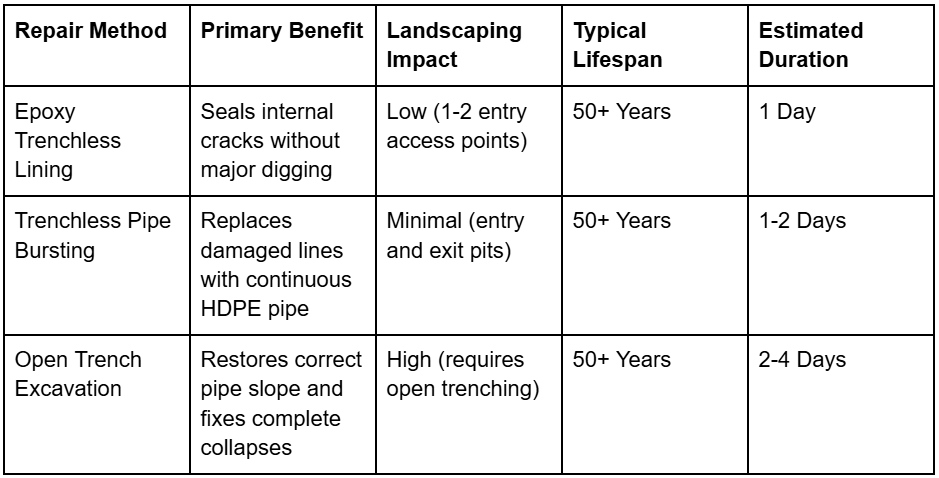
The table below shows how we typically match our findings with the necessary service:

Locating the Blockage with Sonar Technology
Knowing what is in the pipe is only half the battle; we also need to know exactly where it is located. Our cameras are equipped with a signal transmitter called a sonde. As we push the camera through the Clogged Sewer Line, we use a handheld receiver above ground to track its movement.
This allows us to mark the precise spot on your lawn or driveway where the repair needs to happen. By being exact, we avoid unnecessary excavation. If we find the problem beneath a concrete porch or a beautiful rose bush, we can often suggest trenchless methods to repair the pipe from the inside, protecting your landscaping from damage.
Hydro Jetting as a Diagnostic Tool
Sometimes, a line is so full of debris or sludge that our camera cannot see the pipe walls. In these cases, we use hydro jetting to clear the path. We blast high-pressure water through the line to scrub away years of buildup. Once the line is clear, we run the camera again. This “clean-then-see” approach ensures we don’t miss a hairline crack or a secondary blockage further down the line. It is a common part of our Sewer Line Repair Services when dealing with heavy grease or recurring root issues.
Things to Consider Before Making a Decision
When we present our findings, there are several factors we encourage you to think about before choosing a repair method:
- Age of the Pipe: If your home was built before 1980, your pipes might be made of clay or cast iron. These materials have a limited lifespan and may be prone to recurring issues.
- Location of the Damage: If the break is under your home’s foundation or a public sidewalk, the cost and complexity of the repair will change.
- Future Plans: If you plan on remodeling or selling your home soon, a permanent fix like a pipe liner is often a better investment than a temporary patch.
- Permitting Requirements: In Puyallup, certain types of Main Sewer Line Repair work require city permits and inspections. We handle this process, but it can affect the timeline.
Bonus Tip: Check your homeowner’s insurance policy for “service line coverage.” Many people don’t realize they have this until a sewer emergency happens, and it can cover a significant portion of the costs.
Moving Forward with Confidence
Getting a clear diagnosis is the only way to ensure your sewer system remains reliable. We focus on providing factual, visual evidence so you never feel like you are guessing about the health of your home. Whether the fix is a simple cleaning or a more involved Main Sewer Line Repair, our goal is to provide a solution that lasts for decades, not just days. In our experience, roughly 30% of sewer issues can be solved with maintenance if caught early enough, which is why we value thorough inspections.
If you are noticing slow drains or strange noises in your pipes, we are here to help. Our team at **All Drain Solutions has the equipment and the local knowledge to get your system back in order quickly. You can reach us at (253) 200–0451 or email our office at office@all-drain.com to schedule an inspection. We provide honest feedback and clear pricing for all our Sewer Line Repair Services**.
Common Questions About Sewer Diagnostics
How long does a sewer camera inspection take?
Most inspections take between 45 minutes and 90 minutes. This includes the time it takes to locate the cleanout, run the camera through the full length of the line to the city main, and discuss the findings with you.
Will diagnosing the clog damage my pipes?
No. The cameras and locating tools we use are non-destructive. They are designed to slide through the plumbing without putting pressure on the pipe walls. Even hydro jetting is safe for most pipes when performed by trained professionals.
Can you see a leak with a camera?
While we can see cracks or holes where water might be escaping, a camera inspection is primarily used to find blockages and structural damage. If we suspect a hidden leak in a pressurized line, we might suggest our water leak detection services instead.
Do I need to be home for the diagnosis?
We prefer that you be home so we can show you the camera footage in person. It is much easier to explain the state of your Clogged Sewer Line when you can see the roots or the cracks for yourself on our monitor.
메타데이터
- post_id
- 45ede8331f8e
- slug
- how-do-we-diagnose-a-clogged-sewer-line-in-puyallup-wa-45ede8331f8e
- url
- https://medium.com/@alldrainsolutions/how-do-we-diagnose-a-clogged-sewer-line-in-puyallup-wa-45ede8331f8e
- canonical_url
- https://medium.com/@alldrainsolutions/how-do-we-diagnose-a-clogged-sewer-line-in-puyallup-wa-45ede8331f8e
- author_url
- https://medium.com/@alldrainsolutions
- status
- ok
- fetched_at
- 2026-08-19 06:02:29