The Contract Says Nothing About That (Diarogue)
A conversation about Makoto (誠) and Shin (信) — sincerity and trust
The Contract Says Nothing About That (Diarogue)
A conversation about Makoto (誠) and Shin (信) — sincerity and trust

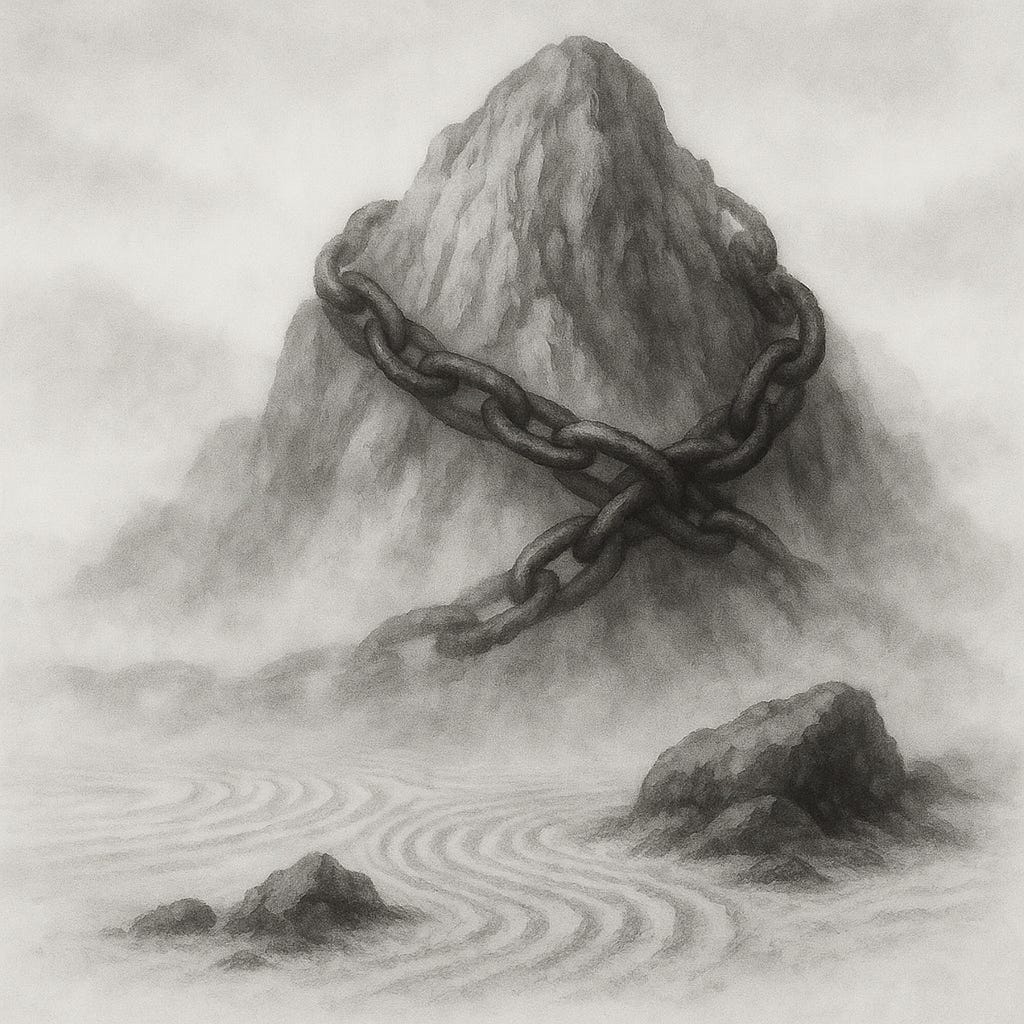
“Makoto” (Image deta created by Takeshi Kitagawa)
The three of us had fallen into the habit of meeting at a small standing bar near Kitahama station, the kind of place that fills up fast on weekday evenings with people who work in the financial district and need somewhere to decompress before they go home. Nicholas had suggested it. He said it was close to the office, which was true, but I think he also liked that the noise level made certain conversations feel more private.
It was a Thursday. He’d had a rough week. I could tell before he said anything.
Nicholas: Okay, so I read your essay. The one about makoto and shin. The “your word is your bond” thing.
Takeshi: And?
Nicholas: And I thought — yeah, obviously. I mean, this isn’t news. Every decent business school tells you the same thing. Your reputation is everything. Trust is the foundation of long-term relationships. You’ve heard the speech.
Takeshi: I have.
Nicholas: But then I thought about my week, and I started feeling a little sick about it.
Catherine: What happened this week?
Nicholas: (pausing, turning his glass) We had a deal. Not a huge one, but meaningful. And the other party — they didn’t technically breach anything. Everything they did was within the contract. But they knew what we’d understood the deal to mean, and they used the exact letter of the agreement to do something we never would have agreed to if it had been written out plainly.
Takeshi: Legally clean.
Nicholas: Completely clean. Their lawyers were thorough. Nothing to dispute. And afterward, one of their guys actually said to me — with a straight face — “the contract doesn’t say anything about that.” Like it was a defense.
Catherine: That’s a really common thing, isn’t it? That phrase — “the contract doesn’t say anything about that.”
Nicholas: It’s practically a philosophy at this point. And the thing is, I know how to play that game. I’ve played it. I’m good at it. But — (he stops)
Takeshi: But?
Nicholas: I hate it. I actually hate it. Which makes me feel like an idiot, because I’ve spent twenty years operating inside a system where that’s just how it works.
Catherine: I’ve been reading about something called psychological contracts — it’s different from legal ones. It’s the unwritten expectations people bring into a relationship. A lot of organizational research says that when those get violated, even when nothing legally wrong happened, people experience it as a genuine betrayal.
Nicholas: Yeah. Yeah, that’s exactly what it felt like. Betrayal. Even though, technically —
Catherine: Even though technically there was nothing to betray.
Nicholas: Which sounds insane when I say it out loud.
Takeshi: It doesn’t sound insane to me.
Nicholas: (looking over) Don’t start with the samurai stuff.
Takeshi: (laughing) I wasn’t going to. I was just going to say — what you’re describing is real. The feeling isn’t confusion. The feeling is information.
Nicholas: Okay, now you sound like a samurai.
Catherine: So in the essay, you wrote that Nitobe describes samurai keeping promises because breaking them cost something no contract could restore. Their inner coherence — that was the phrase you used. Do you actually believe people can operate that way in a modern business environment?
Takeshi: I don’t know. I’m genuinely uncertain about it. The context was so different — a closed feudal society where reputation was almost a physical thing, where you couldn’t just move cities and start over. The intensity of makoto as a value depended on the fact that there was no exit.
Nicholas: Right. Now there’s always an exit. That’s basically the whole structure of modern capitalism. Mobility. Optionality.
Takeshi: Which has its own enormous value. I don’t want to romanticize a world without exits. But it does change what keeps people honest.
Nicholas: It shifts the whole thing from internal to external. From “I won’t do this because of who I am” to “I won’t do this because of what it costs me.” And when the cost is low enough —
Catherine: — the calculation changes.
Nicholas: Every time.
Takeshi: Can I ask you something?
Nicholas: Sure.
Takeshi: In twenty years, is there anyone you’ve worked with — a client, a colleague — where the relationship was different? Where you knew they would come through not because of any agreement, but just because they would?
Nicholas: (quiet for a moment) Yeah. A few people.
Takeshi: What made them different?
Nicholas: They just — they did what they said they would do. Consistently. Even when it cost them something. Even when no one was watching.
Takeshi: And how did you come to know that about them?
Nicholas: Time. It took time. Little things, mostly. Someone who follows up when they said they would. Someone who tells you bad news early instead of burying it. Someone who doesn’t pretend a mistake didn’t happen.
Catherine: That’s shin, isn’t it? What you’re describing.
Nicholas: I guess it is. Which is annoying, because I wanted to be skeptical about this.
Takeshi: (smiling) You still can be. I’m skeptical too, sometimes.
Nicholas: Here’s what I keep coming back to, though. Say I want to operate more like that — more makoto, whatever. Less “the contract doesn’t say anything about that.” I work inside a system that rewards the other behavior. My competitors aren’t having these conversations in standing bars in Kitahama. They’re finding the next angle.
Takeshi: Probably true.
Nicholas: So isn’t this just — I don’t know. Isn’t this just deciding to play on hard mode for reasons that don’t show up on a balance sheet?
Catherine: Maybe. But the people you just described — the ones who did what they said they would — did it hurt them?
Nicholas: (thinking) No. Actually — no. The ones I trust most have also been the most successful over time. Not always the fastest. But the most durable.
Catherine: So maybe the balance sheet argument is just shorter-term than it looks.
Nicholas: Or maybe those people were lucky on top of being principled, and I’m about to construct a theory based on survivor bias.
Takeshi: That’s possible. I have no way to disprove that.
Nicholas: Great. Really helpful.
Takeshi: (laughing) I’m not trying to sell you anything. I’m just pointing at the thing you already know.
Nicholas: The “contract doesn’t say anything about that” guy — I’ve been avoiding his calls since Thursday.
Catherine: Are you going to take the next one?
Nicholas: (exhaling) Yeah. I’m going to take it. And I’m going to tell him exactly what I thought of it. Not in a blowup way. Just — clearly.
Takeshi: Why?
Nicholas: Because the alternative is I turn into him. And I’m not willing to do that yet.
Takeshi: Yet?
Nicholas: Don’t push it.
The bar got louder as the evening went on. We ordered another round. Nicholas checked his phone twice and put it away both times, which, for him, was practically a meditation retreat. Catherine asked him whether he’d ever watched a baseball game in Japan, and he launched into a ten-minute explanation of why the NPB strike zone was fundamentally different from MLB, which I didn’t entirely follow but which seemed to make him feel better.
Before we left, he said something I’ve been thinking about since.
“The weird thing is, I don’t actually want a world where everyone acts like the contract-doesn’t-say-anything guy. I’d hate that world. I just keep acting like I have no choice about whether to contribute to it.”
He said it like it had just occurred to him.
Maybe it had.
A Question I’m Still Carrying
I’ve been sitting with what Nicholas said at the end — the gap between the world he wants to live in and the one he feels he’s been handed.
I don’t think that gap closes easily. I don’t think Bushido has a clean answer for it. The samurai lived in a world with fewer choices, which is both why makoto mattered so intensely and why we can’t simply import it.
But I keep thinking about his list. The people he trusted. The ones who followed up, who told bad news early, who didn’t pretend. None of that required a different system. It just required deciding, in small and mostly unwitnessed moments, what kind of person to be.
Whether that adds up to anything — whether those small decisions accumulate into something that shifts the larger system, or whether the system simply absorbs them — I genuinely don’t know.
That’s what I’m still carrying.
This dialogue is a companion piece to the solo essay Makoto and Shin: The Samurai Who Kept His Word Even When No One Was Watching. The essay explores the Bushido virtues more directly; this conversation is messier, more honest, and doesn’t pretend to resolve what the essay left open.
Nicholas and Catherine are fictional characters based on real people and real conversations. The dialogue is reconstructed and edited for clarity.
The thinking here is mine. The English is a collaboration with AI
메타데이터
- post_id
- 45f8be249193
- slug
- the-contract-says-nothing-about-that-diarogue-45f8be249193
- url
- https://medium.com/@shibumi4011/the-contract-says-nothing-about-that-diarogue-45f8be249193
- canonical_url
- https://medium.com/@shibumi4011/the-contract-says-nothing-about-that-diarogue-45f8be249193
- author_url
- https://medium.com/@shibumi4011
- status
- ok
- fetched_at
- 2026-06-09 15:37:30