Match Tempo and Goal Probability
It’s the 31st minute at the Allianz Arena. Bayern have just had three corners in a row, the away side can’t get out of their own half, and…
Match Tempo and Goal Probability
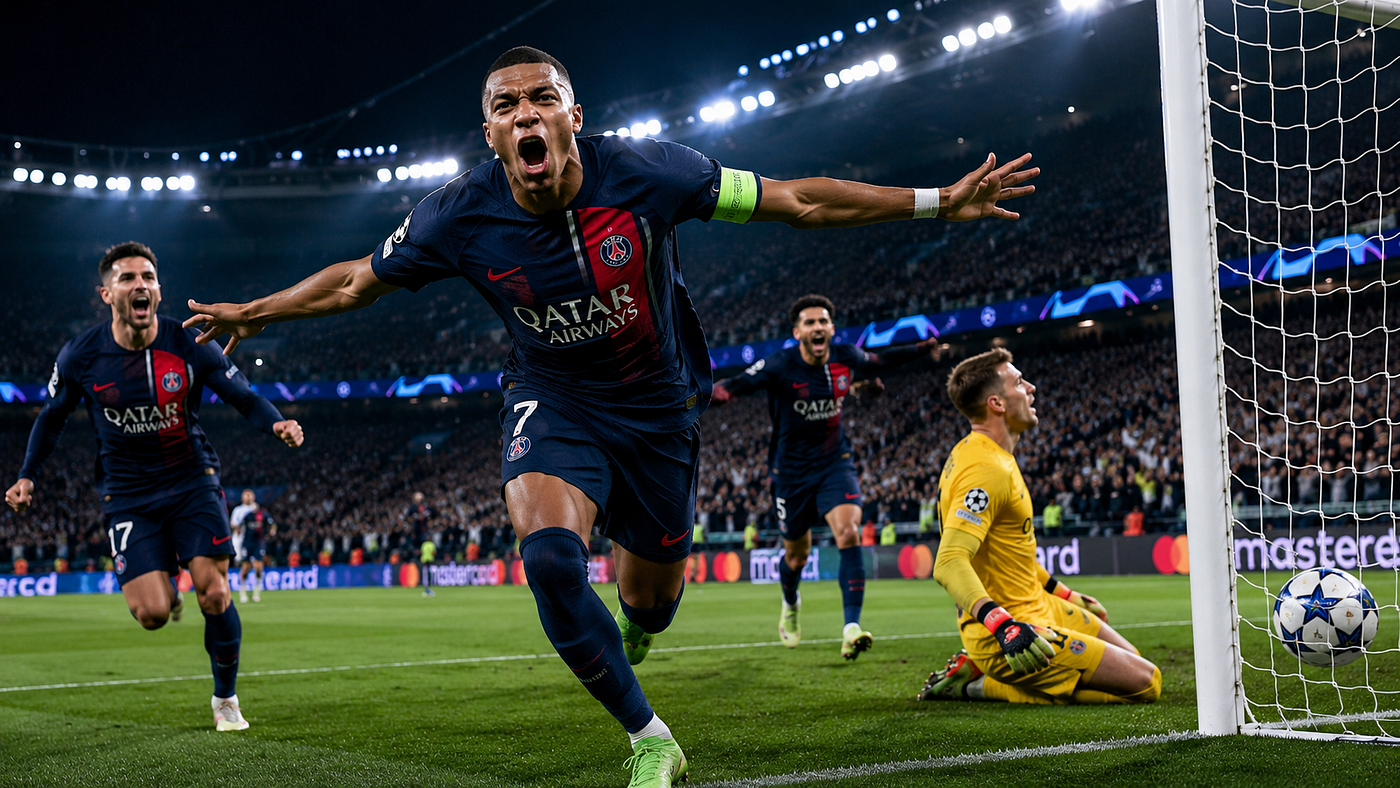
It’s the 31st minute at the Allianz Arena. Bayern have just had three corners in a row, the away side can’t get out of their own half, and the crowd noise rises every time a midfielder picks up a loose ball near the box. The score is still 0–0, but anyone watching can feel that something is about to give. Two minutes later, Kane buries a header from a recycled set piece. Nobody is surprised.
That feeling, the sense that a goal is coming, is what tempo analysis tries to turn into numbers. Match tempo isn’t just “fast” or “slow.” It’s a measurable rhythm built from passing speed, territorial pressure, transitions per minute, and the frequency of dangerous actions. And when you map tempo against goal probability across thousands of matches, patterns appear that are genuinely useful for understanding games, predicting outcomes, and yes, evaluating betting markets with a clearer head.
This article is about how tempo translates into goals, where the relationship breaks down, and how to apply it without falling into the trap of treating football like a slot machine.
What Tempo Actually Means in Modern Football Analysis
Tempo is one of those words that gets thrown around by commentators without much definition. In analytical terms, it usually combines several measurable elements: passes per minute in possession, average sequence length before a shot or turnover, the share of play in the attacking third, pressing intensity measured by PPDA (passes per defensive action), and the number of vertical progressions per ten minutes.
A high-tempo match isn’t necessarily one with lots of running. A team can run a lot defensively while the game is actually slow in attacking rhythm. Conversely, a team like Manchester City under Guardiola often plays at moderate physical tempo but creates very high information density in the final third, which generates chances even when the pace looks controlled.
The reason tempo matters for goal probability is straightforward: goals are tail events of pressure. The more frequently a team produces dangerous attacking sequences, the more likely a finish eventually drops. Expected goals (xG) accumulates faster in high-tempo phases, and even a small xG difference per minute, sustained over twenty minutes, dramatically shifts the probability of seeing a goal in that window.
How Tempo Shifts Across Match Phases
If you watch enough football, you start to notice that goals cluster. They aren’t distributed evenly across the ninety minutes. The opening fifteen minutes tend to be slower than people assume, because both teams are still calibrating shape and pressing triggers. Goal probability in the 0–15 minute window is usually the lowest of any segment.
Then tempo rises. The 15–30 window is when patterns settle and the better team starts to impose itself. The 30–45 window often sees a small spike right before halftime, partly because tired legs make defensive errors and partly because teams take more risks knowing they’ll get a break.
The second half is where tempo becomes genuinely volatile. The 45–60 minutes block depends almost entirely on the halftime score and the manager’s instructions. A team chasing a goal raises its line and presses harder, which simultaneously increases both their goal probability and their opponent’s counter-attacking chances. The 75–90 window is statistically the most goal-rich in top European leagues. Substitutes bring fresh legs into tired defensive lines, the game stretches, and structural discipline degrades.
Understanding these phase shifts is more useful than any pre-match prediction, because tempo is observable in real time. You don’t need to guess what kind of game you’re watching; you can see it.
The Link Between Tempo and Expected Goals
Expected goals are essentially a probability translation of shot quality. Tempo affects xG in two ways: by changing how many shots happen, and by changing the quality of those shots.
In high-tempo phases with stretched defensive lines, shots tend to come from better locations. A counter-attack with three attackers against two defenders produces a much higher xG per shot than a slow build-up against an organised low block. This is why teams that can sustain transitional tempo, such as Leverkusen under Xabi Alonso during their unbeaten run or Brighton during De Zerbi’s tenure, often outperform their possession statistics in terms of chances created.
But there’s a ceiling. Tempo also raises turnover frequency, and turnovers in your own half create the opponent’s best chances. The relationship between tempo and goal probability isn’t linear, it’s a curve. Up to a certain intensity, more tempo means more goals for the dominant team. Past that point, both teams’ goal probability rises together, and the match becomes a coin flip on which side finishes its chances first.
For anyone interested in the practical statistical side of this, this analysis goes into more depth on how professional models incorporate tempo and pressure data into correct score predictions, which is a notoriously difficult market because it requires getting both the total and the distribution right.
Reading Tempo Live: Practical Signals
If you want to apply tempo thinking to a match you’re watching, here are the signals that tend to precede goals.
First, watch for sustained territorial pressure. Three or four consecutive set pieces in the attacking third, or a stretch of two to three minutes where the defending team can’t clear past their own halfway line, is a much stronger signal than possession percentage. Possession can be empty; territorial dominance rarely is.
Second, look for changes in defensive line height. When a team that was sitting at 35 metres from their goal suddenly pushes to 45, they’ve either decided to press or been forced to. Both create vertical space behind their line, which raises goal probability for both teams.
Third, count meaningful entries into the penalty box per five-minute window. If a team is averaging two or three box entries per five minutes, an xG-significant chance is statistically imminent. If they’re getting zero, even with 70 percent possession, the goal probability is much lower than the scoreline pressure suggests.
Fourth, watch the substitution patterns. Fresh wingers against tired full-backs in the 70th minute is one of the most consistent goal-creating patterns in elite football. When you see two attacking substitutes come on for a team that’s drawing or losing, recalculate your mental probability upward.
Fifth, listen to the crowd, honestly. Atmosphere is data. Home crowds at clubs like Dortmund, Napoli, or Galatasaray measurably raise their team’s tempo in the closing twenty minutes, and this shows up in late-goal statistics.
Where Tempo Analysis Fails
It would be misleading to pretend tempo is a reliable predictor of everything. There are conditions where it breaks down badly.
Derby matches and high-stakes cup ties often suppress goals despite high tempo, because both teams play with more caution in front of goal. Players take an extra touch, recycle possession instead of shooting, and managers prioritise not conceding. You can see chaotic, high-pressure football for ninety minutes and finish 0–0.
Weather is another disruptor. Heavy rain or strong wind compresses the goal probability curve regardless of tempo. The ball moves unpredictably, finishing accuracy drops, and matches become more random than the underlying play would suggest.
Goalkeeping form is the most underrated variable. A goalkeeper in exceptional form can absorb twenty minutes of high-tempo pressure that would normally yield a goal seventy percent of the time. Conversely, a goalkeeper having a bad afternoon turns moderate tempo into goals. Models that ignore individual goalkeeper performance over recent matches tend to misprice exactly these games.
And finally, tactical surprise. When a manager changes shape at halftime or introduces an unexpected pressing scheme, the first ten to fifteen minutes after that change are essentially unmodelled. Both teams are recalculating, and the data that would normally inform your tempo read no longer applies. This is why live betting markets often shift sharply right after halftime; the smart money is waiting to see the new pattern before committing.
A reasonable approach is to treat tempo as one input among several, not as a master signal. Combine it with squad availability, recent form, fixture context (European midweek games, international breaks), and motivational factors. No single metric carries a match.
Frequently Asked Questions
Does high possession always mean high tempo?
No, and this is one of the most common misreadings. Possession measures who has the ball; tempo measures what’s being done with it. Spain at Euro 2024 had matches where they held 65 percent of the ball but the game’s actual attacking tempo was moderate. Compare that to a Bundesliga match where possession is split 50–50 but the ball changes ends every fifteen seconds. The second match has higher tempo and usually more goals.
Can tempo be measured by amateur viewers without access to data feeds?
Yes, with practice. Counting box entries per five-minute window, noting set piece frequency, and watching defensive line height are all accessible to anyone watching the broadcast. You won’t match the precision of a professional model, but you’ll get a sense of the rhythm that’s far better than relying on the commentator’s narrative.
How reliable is tempo analysis for predicting exact scores?
Moderately, and only as part of a wider framework. Tempo helps predict whether a match will be high-scoring or low-scoring, but converting that into a specific scoreline requires additional modelling of finishing efficiency and defensive errors. Correct score markets are inherently high-variance because they reward narrow distributions of outcomes.
Are there leagues where tempo correlates more strongly with goals?
The Bundesliga and Eredivisie tend to show the strongest tempo-to-goal correlation because both leagues feature high pressing, vertical play, and relatively less tactical caution. Serie A historically has shown a weaker correlation because Italian football traditionally rewards defensive structure, though this has been changing in recent seasons.
What’s the most common mistake people make when using tempo to predict matches?
Overweighting the first fifteen minutes. People watch an intense opening, assume the game will continue at that pace, and bet on goals. In reality, opening intensity often settles into a more measured pattern by the 25th minute. The teams that maintain genuine high tempo across an entire match are rare, and they’re usually identifiable from prior performance data, not from a single hot start.
Closing Thoughts
Tempo isn’t magic and it isn’t a shortcut. What it offers is a framework for watching football that gets you closer to the underlying probabilities than scoreline or possession ever can. Goals come from pressure sustained over time, and tempo is how you measure that pressure as it accumulates.
If you take one habit from this article, make it the box-entry count per five-minute window. It’s simple, observable, and surprisingly predictive. Combine it with awareness of phase patterns and substitution effects, and you’ll find yourself reading matches with a clearer eye.
A final note on the betting side: probability is not certainty. Tempo analysis improves your understanding of likely outcomes, but variance is built into football, which is exactly why we watch it. Bet only what you can afford to lose, treat each wager as a calculated risk rather than an expectation, and remember that the best analysts in the world are right far less often than they’re wrong on specific match outcomes. They just lose less when they’re wrong and gain more when they’re right.
Watch the rhythm. The goals will tell you whether you read it correctly.
메타데이터
- post_id
- 462dfddda3fa
- slug
- match-tempo-and-goal-probability-462dfddda3fa
- url
- https://medium.com/@bankomaclar_89228/match-tempo-and-goal-probability-462dfddda3fa
- canonical_url
- https://medium.com/@bankomaclar_89228/match-tempo-and-goal-probability-462dfddda3fa
- author_url
- https://medium.com/@bankomaclar_89228
- status
- ok
- fetched_at
- 2026-06-23 17:05:31