Schopenhauer and Nietzsche: Two Answers, the Same Abyss
Between pessimism and nihilism
Schopenhauer and Nietzsche: Two Answers, the Same Abyss
Between pessimism and nihilism

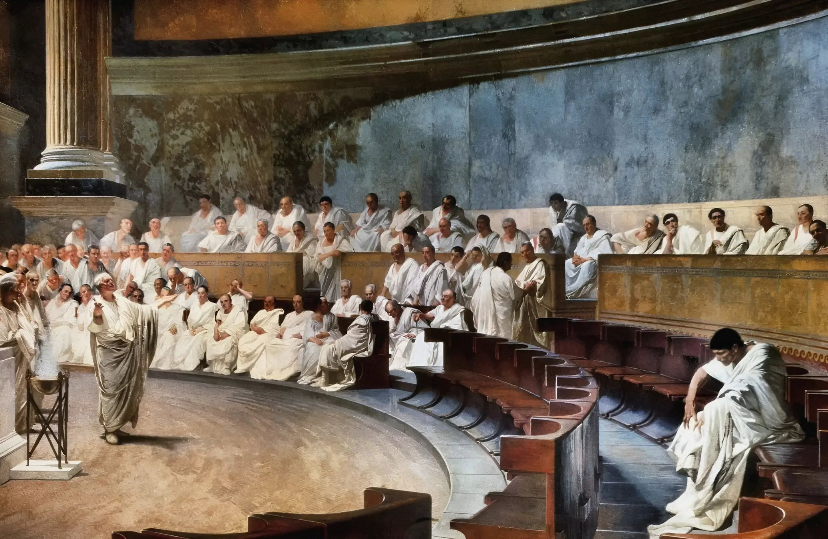
Photo by Rowan Heuvel on Unsplash
There are philosophers you read and remain unmoved. You understand what they say, follow the logic, close the book. And then there are those who grab you by the throat and refuse to let go even after you set them down. Arthur Schopenhauer and Friedrich Nietzsche belong to the second category. They did not write to be liked. They wrote as though their lives depended on it, because in some deep and unspoken way, they did.
Their philosophies represent perhaps the most dramatic example in the history of thought of how two people can set out from the same dark point and end up at opposite ends of everything. Both saw the same abyss. One said: the only answer is silence. The other said: dance.
Schopenhauer: the man who lived as though he hated life, and could not do without it
Arthur Schopenhauer was born in 1788 in Danzig, present-day Gdansk, into a family that was anything but warm. His father, a wealthy merchant, was cold-tempered and probably depressed; he died, by all accounts by suicide, when Arthur was seventeen. His mother, Johanna Schopenhauer, was a socially ambitious, literarily inclined woman who tolerated her son more than she loved him.
This relationship with his mother deserves more than a passing mention, because it was not merely cold but formative and brutal. After his father’s death, Johanna moved to Weimar, built a career and a salon frequented by the greatest minds of the age, including Johann Wolfgang von Goethe, and became something of a public face of culture. Arthur found no home there, only a stage on which the crowd and the mask irritated him: she saw him as dark and excessively judgmental, and he saw her as a shallow climber up the social ladder. In a letter from 1807, often cited precisely because it is merciless, she wrote that he was “irritating and unbearable” and that living with him was difficult. The tensions culminated when she, while Arthur was already an adult, asked that they cease all contact. What remains recorded in accounts of their correspondence is that cold sentence with which she cut him: that his philosophy was tedious and inaccessible.
Schopenhauer spent his entire life convinced that he was surrounded by mediocrities and that the world did not understand him. He was not entirely wrong, but the problem was that he carried this conviction as a banner, not a burden. He was quarrelsome, arrogant, in constant war with the academic establishment. When he lectured in Berlin at the same time as Georg Wilhelm Friedrich Hegel, whom he despised deeply and eloquently, he scheduled his lectures in the same time slots as Hegel’s, calculating that students would choose him. They chose Hegel. His hall was empty.
That was the metaphor of his entire life: convinced of his own greatness while the world ignored him. It did not break him. He kept writing.
He lived in Frankfurt am Main, alone, in a well-ordered apartment, with a poodle he named Atma. The name comes from Sanskrit (atman) and in the Indian tradition refers to the universal self, a concept tied to the idea of the soul understood as something broader than the individual ego. He loved dogs because he saw in them beings that suffer without illusions, that neither perform nor lie. He ate well. He loved music. He walked regularly.
There is also a well-known anecdote, one that should be read as an anecdote rather than documented fact: he reportedly placed a gold coin on the table at the Englischer Hof inn at lunch and returned it to his pocket each day, explaining that he would give it to the poor only when he heard the officers around him discussing something higher than horses, women, or dogs.
This is worth noting because it matters: the man who wrote that life is suffering, that the will is blind and there is no escape, that same man lived fastidiously, comfortably, and with passion. He was not defeated by his own philosophy. It armed him.
The philosophy of will: diagnosis and three exits
His starting point is Immanuel Kant. Kant said: there is the world as it is in itself, the thing-in-itself, and the world as we perceive it, and these two levels are forever separated. We never see reality directly, only its projection through our minds.
In his own account, Schopenhauer accepts Kant but continues where he stopped.
He says: very well, but I know what that hidden thing-in-itself is. It is Will, not will in the sense of conscious intention or planning, but a blind, senseless, infinite force that pulses through everything that exists. He describes this will as an unquenchable thirst: always wanting, always pushing, always desiring.
Put in plain terms, the Will looks like this: you want a new phone. You buy it. For two days you are calmer. Then a better model comes out, or you see someone with a better camera, and the desire simply relocates. The same mechanism operates in relationships: you want a message, attention, confirmation. You get it, and within an hour or two a new void opens, a new fear, a new hunger. Schopenhauer’s point is not moralizing (“you must not want”) but a cold observation: the fulfillment of desire is not an end, only a brief pause in the same machine.
This is why he states his famous line (in the Haldane-Kemp translation): life swings like a pendulum between pain and boredom, between suffering and ennui. When you have what you want, you only briefly cease to suffer, then fall into emptiness, and seek new wanting to set you in motion again.
This is not nihilism in the sense of listlessness. It is a precise diagnosis. And like every good diagnosis, it opens the question: what then?
Art, compassion, asceticism: three ways the Will loosens its grip
Schopenhauer offers three things, corresponding to what the Stanford Encyclopedia of Philosophy terms the aesthetic, moral, and ascetic modalities of overcoming the conflict produced by endless desire.
The first is art, especially music. Music is not a representation of something, not a symbol or a description. It is, in his view, the most direct available contact with what the world is from within: with the Will itself.
Unlike all other arts, which represent Ideas, music bypasses them entirely; it is a copy of the Will itself, not of its manifestations.
This is why music can pull you out of yourself: for a few minutes you cease to be a desire chasing the next thing and become something closer to pure contemplation.
A contemporary example without mysticism: you sit after work, and your brain automatically fires its dopamine ritual: screen, scroll, another video, another small hit. Then you put on a symphony, or something that truly catches you, not as background noise but as an event. For seven minutes, your inner compass levels out. You have not solved your life, but you have stopped being a slave to the immediate. Schopenhauer would say: that is brief but real freedom. These are loose contemporary analogies; Schopenhauer’s asceticism aims at something far more radical: the fundamental renunciation of the will-to-live itself.
The second is compassion, Mitleid, literally “co-suffering.” Schopenhauer holds that the moral value of an action is tied to empathy, and that this empathy is a metaphysical insight: the moment when the illusion that we are ontologically foreign to one another breaks down. In his major work, the transition is explicit: “pure love is in its nature sympathy.”
A contemporary example: you see a man shivering in the rain or an elderly woman losing her way at a service counter. If what rises in your chest is not “poor her” but “that is me, only under different circumstances,” then that is the Schopenhauerian crack in the principle of individuation. It is not sentimentality but the moment when ethics ceases to be a rule and becomes a nerve.
The third is asceticism, the permanent extinction of desires, renunciation of the Will, which is closest to a genuine exit from suffering. Schopenhauer connects this to traditions of ascetic life and to the idea of the negation of the will-to-live as the only complete change of regime.
A contemporary example without romanticization: asceticism today need not mean a cave and hair to the waist. Sometimes it is a digital fast, minimalism, the conscious decision not to buy one more thing simply because you can, or not to feed an impulse immediately. Schopenhauer would say that here, for the first time, you have the sense that the Will is not driving you, but that you are directing the Will.
He died in 1860, alone at breakfast, of pneumonia, at seventy-two. Without pathos, without dramatic staging. He simply stopped.
Pessimism as intellectual position and pessimism as lived mood are not the same thing
This is perhaps the most important point about Schopenhauer, and the one most often overlooked.
An intellectual position means: on the basis of reason and observation of the world, you arrive at the conclusion that suffering is fundamental, that life has no inherent meaning, that happiness is not a stable state but a brief pause between two pains. That is analysis.
A lived mood is something else entirely: how you feel when you wake up in the morning, what your relationship to your own existence is at an emotional level. It can be warm, curious, engaged.
Schopenhauer was known as a difficult person in company, quarrelsome, arrogant, paranoid. But he was not a man who lay in the dark waiting for the end. He wrote with passion, loved music viscerally, cared for his dog as a being that understands suffering. His philosophy said that life is in its essence without value, yet he lived as though he had a great deal to say and do.
This is not hypocrisy. It is simply evidence that the brain which analyzes and the body which lives are not always synchronized. You can know that everything is transient and meaningless and still wake up consumed by curiosity about what is new.
Nietzsche: the man who destroyed everything, including himself
Friedrich Nietzsche was born in 1844 in Röcken, into the family of a Lutheran pastor. His father died in 1849, before Nietzsche’s fifth birthday, and he grew up early in a house full of women. This pattern is not psychological gossip but simple fact: mother, sister, grandmother, two aunts, and an early awareness that authority can disappear overnight.
He was an exceptionally gifted child with a brilliant academic trajectory, culminating in 1869 when he was appointed to the chair of classical philology at the University of Basel, becoming the youngest person ever appointed to that position.
At some point he discovered Schopenhauer, specifically The World as Will and Representation, and that impact stayed with him long afterward as a kind of “teacher without a university”: a philosopher who speaks without a mask, coldly and to the bone.
And then came Richard Wagner. Nietzsche met him in 1868 in Leipzig. He fell in love not only with the music but with the idea that art could be a cultural explosion, an event that could re-educate an entire civilization. He visited him frequently at his Swiss home in Tribschen. His first major book, The Birth of Tragedy, reads in the eyes of many contemporaries as a philosophical manifesto of that Wagnerian hope.
But Nietzsche was a man who did not know how to love by halves. When he felt Wagner moving in a direction he found repellent, the break was not a cultural footnote but an amputation. Nietzsche himself later said that inwardly he had already said goodbye to Wagner in 1876.
Then came Parsifal. Wagner’s last music drama, first performed in Bayreuth on July 26, 1882. For Nietzsche, it was not just another piece but a sign: a return to the ascetic ideal, to the Christian symbolism of salvation and the cult of purity. In Nietzsche contra Wagner he writes about Parsifal as a work he might have preferred to read as parody, but is troubled by the possibility that it is serious: he calls it a “curse upon the senses and the mind,” speaks of a “return to Christianly sick and obscurantist ideals,” and delivers the sentence that shows the rage is both personal and philosophical: “I despise anybody who does not regard ‘Parsifal’ as an outrage upon morality.”
In the same passage, he explains another layer of the break: Wagner, in Nietzsche’s view, descended toward what he despised, including antisemitism. This matters because it shows that Nietzsche’s attack was not merely aesthetic but moral, political, and existential.
Nietzsche’s life also contains episodes that later became myth. One is his brief and famously complex relationship with Lou Andreas-Salome, which reception has often used to construct a caricature of him as a lonely, embittered man. The other, far more dangerous, is the story of his sister Elisabeth Forster-Nietzsche, who after the breakdown took control of his manuscripts and their editing, frequently filtering them through her own political and populist sensibility, which later fed the misappropriations that followed.
Turin, illness, and collapse: what we know about the breakdown of 1889
In January 1889, in Turin, Nietzsche suffered a mental collapse that left him incapacitated for the rest of his life. Immediately afterward, he sent letters and notes that were strange but charged with meaning; his friend Franz Overbeck traveled to Italy and brought him back to Basel. Nietzsche then passed through clinics in Basel and Jena before coming under the care of his mother and later his sister. He died in 1900 in Weimar, after eleven years of what has been described as total mental darkness.
The legend of the horse and what is more likely.
The most famous account holds that on January 3, 1889, Nietzsche threw his arms around a horse being beaten by its coachman on the Piazza Carlo Alberto and then collapsed. Older reference works transmit this as a celebrated moment in his biography.
However, more cautious modern biographers and medical authors warn that this detail is nearly impossible to verify and has become part of a pathographic myth that accumulated around Nietzsche. The most honest account is this: the breakdown occurred in Turin in early January 1889; the scene with the horse is a possible but deeply unverified symbolic narrative that attached itself to the event.
Tertiary syphilis and other diagnoses: what the serious literature says
For decades, Nietzsche’s collapse was explained by atypical general paralysis resulting from latent tertiary syphilis, and this stood for a long time as the near-standard account.
But today, even in encyclopedic surveys, one finds the clear formulation “long attributed,” followed by a list of competing explanations. Britannica, for instance, lists alongside neurosyphilis both degeneration of the brain’s blood vessels and a retro-orbital meningioma, a tumor of the brain’s membranes behind the right eye.
The medical literature is divided, but one thing is common: there was no autopsy, and the biographical material is fragmentary and contaminated by legend. Leonard Sax, in a paper frequently cited in this debate, argues that the consensus around syphilis rests poorly on evidence and that other hypotheses fit better, including a slowly growing meningioma. There are also more recent speculations about hereditary vascular disorders such as CADASIL as a possible background to his symptoms, appearing in neurological discussions precisely because they attempt to reconcile his early headaches, visual problems, and later dementia.
In short: syphilis is the historically best-known label, but it is not the only serious one today. The more accurate statement is that several competing models exist, and that encyclopedias and medical papers acknowledge this uncertainty.
How this returns to philosophy, without romanticizing illness
It is important not to fall into the cheap narrative that he was mad and therefore wrote as he did. Nietzsche’s collapse comes after the philosophy, not before it: the majority of his key works were written before 1889. What the collapse does, tragically, is cut off the possibility of authorial oversight at precisely the moment when reception was beginning. This is why his sister’s editing and the subsequent misappropriations became historically significant: the philosophy continued to live, but without a living author.
Why neither of them died by suicide, despite how they sound
This is the question readers always ask, and rightly so, because both bodies of work carry a dark gravity.
In Schopenhauer’s case: his pessimism is not sentimental despair but a metaphysical description, and his verdict on suicide is not a Christian moral prohibition but a philosophical argument. The Stanford Encyclopedia’s entry on suicide highlights the paradox: Schopenhauer rejects nearly all traditional moral condemnations of suicide, yet condemns it from within his own metaphysics of will. In “On Suicide,” included in Studies in Pessimism, he states that the only valid reason against it is that suicide misses the highest ethical aim: instead of genuine negation of the will, it offers only an apparent exit. His point is radically Schopenhauerian: suicide does not extinguish the Will; in his reading, it is an emphatic assertion of it, because the person escapes pain while still wanting life under more favorable conditions.
In Nietzsche’s case: he has no single stable doctrine against it. He frequently treats suicide as a subject that can be examined without moral hysteria, and there is an aphorism in Beyond Good and Evil that people consistently misread: “The thought of suicide is a great consolation.” This is not an invitation but a cold psychological observation about how the mere idea of having an exit sometimes helps one survive the night. At a deeper level, Nietzsche’s entire project is the affirmation of life even when it hurts: the test of eternal recurrence in The Gay Science asks whether you can say yes to your life in every particular.
And then there is the flat biographical fact that dissolves the romanticism: after January 1889, Nietzsche practically no longer had the capacity to decide anything. From that point on, his life was a medical and custodial story, not a philosophical choice.
Where they meet
Both reject the Christian and Enlightenment picture of the world: no providence, no moral order inscribed in nature, no progress that justifies everything. Both take suffering seriously, not as a mistake but as a structural feature of existence. Both see most people as living in illusion: Schopenhauer says they are captured by the Will without knowing it, Nietzsche says they live by other people’s values while believing themselves free.
And both regard art as one of the few places where something true becomes accessible, not as entertainment or decoration, but as a space where the Will either speaks directly, or where a person stops executing someone else’s commands and begins to create from their own depths.
Where they radically diverge
Schopenhauer sees the Will as something to escape. Nietzsche sees the will to power as something to be accepted and directed.
Schopenhauer holds that individuality is an illusion, that all individuals are in essence the same Will in different forms, and that compassion, that moment when you feel another’s pain as your own, is the only moral foundation. Nietzsche is a deep skeptic toward compassion. He does not say “do not care about others,” but he argues that compassion as Schopenhauer conceives it increases the total quantity of suffering in the world. When you immerse yourself in another’s pain, you do not necessarily help it; you may only duplicate it. There is also a hidden dynamic of condescension in compassion: you place yourself in the position of the one above, who descends. The real gift to another person is not your pain at their pain but your strength.
Schopenhauer seeks the negation of the Will. Nietzsche seeks intensification.
Schopenhauer would say: extinguish the Will and you will find peace. Nietzsche would say: only the one who burns can give warmth.
Perhaps the biggest difference is this: Schopenhauer observed the world with a kind of cold, painful lucidity and concluded: I see everything, and that is why you retreat into silence. Nietzsche observed the same world and concluded: I see everything, and that is precisely why I write louder than ever.
What they mean today
It is not difficult to find both of them in contemporary life. Schopenhauer is present in every moment of exhaustion, every moment when you sense that desire never ceases, when you realize that the fulfillment of one want immediately opens another. In that vertigo you recognize his diagnosis, and for a moment feel a strange relief that someone described it precisely two hundred years ago.
Nietzsche is present in every moment when you face the choice between the easy answer and the true one, between the mask and the face, between what is expected of you and what you actually think. In the question Nietzsche is really asking, beneath all the metaphors and dramatic declarations: are you living a life you could repeat forever, or are you living someone else’s?
Both died largely unrecognized. Both were more ignored than heard during their lifetimes. Both wrote with an urgency that cannot be fabricated.
And perhaps that is the whole point: that the thought which truly reaches you comes from someone who paid something real for it. Not from someone who read about suffering in a library, but from someone for whom suffering was the raw material.
메타데이터
- post_id
- 463093d3a315
- slug
- schopenhauer-and-nietzsche-two-answers-the-same-abyss-463093d3a315
- url
- https://medium.com/philosophytoday/schopenhauer-and-nietzsche-two-answers-the-same-abyss-463093d3a315
- canonical_url
- https://medium.com/philosophytoday/schopenhauer-and-nietzsche-two-answers-the-same-abyss-463093d3a315
- author_url
- https://medium.com/@ilhann.kokor
- status
- ok
- fetched_at
- 2026-06-13 00:25:45