You Don’t Remember the Music. That’s the Point.
Walk into a well-designed luxury hotel lobby and something shifts in you before you’ve consciously registered anything. Your shoulders…
You Don’t Remember the Music. That’s the Point.
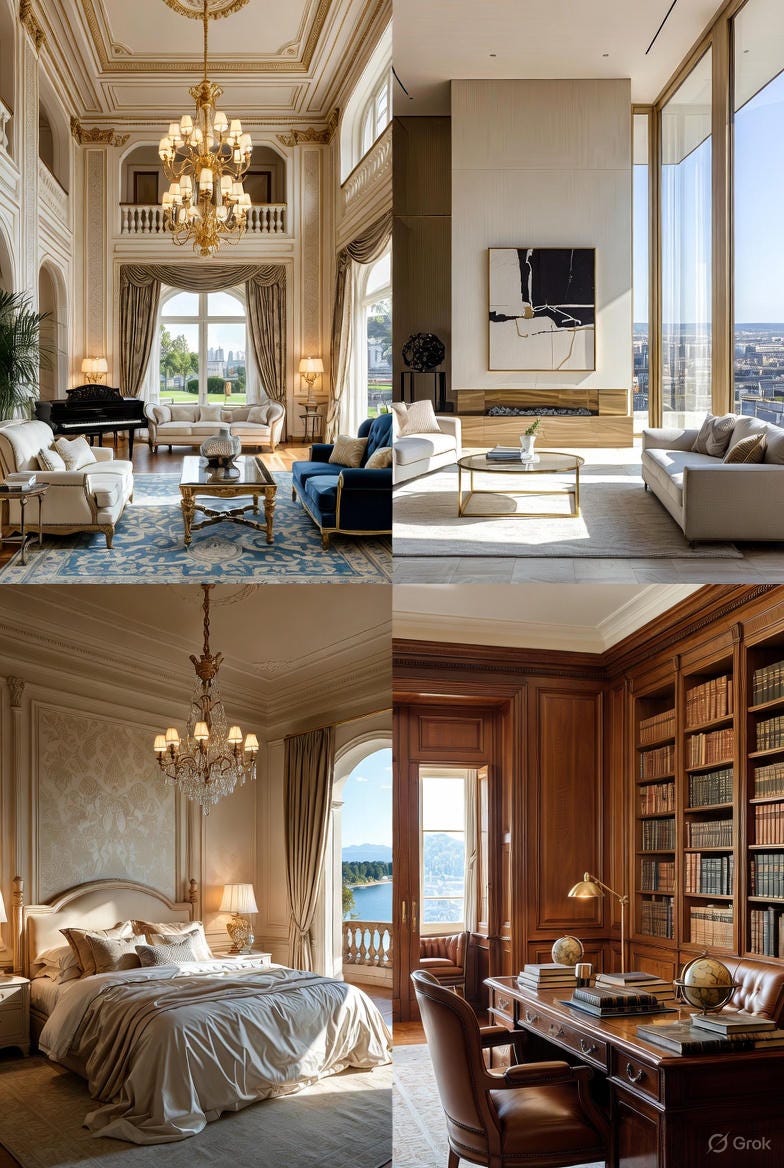
Walk into a well-designed luxury hotel lobby and something shifts in you before you’ve consciously registered anything. Your shoulders drop. Your pace slows. You feel, inexplicably, that you are somewhere worth being. Ask yourself what caused that, and you’ll probably say the décor, or the lighting — something vague and large. What you won’t be able to isolate is the 72-degree ambient temperature, the bergamot diffused at 0.3 parts per million, the ceiling height calculated to trigger a mild sense of awe, or the music playing at exactly 60 beats per minute to synchronize with a resting heart rate. You experienced all of it. You noticed none of it.
This is the frontier of experiential design that most people don’t realize exists: the deliberate engineering of the subconscious. Neuroaesthetics — the study of how environments affect the brain — has found that the majority of how we feel in a space is determined by inputs we never consciously process. Temperature, humidity, the ratio of hard to soft surfaces, the directional warmth of lighting, even the slight resistance of a door handle — all of it lands somewhere in the nervous system and produces an emotion we then attribute to something far more general, like “the vibe.”
For luxury brands, this matters enormously. The gap between a room that looks expensive and a room that feels expensive is almost never about visual elements alone. It’s in the things that bypass the evaluative, comparing mind and reach straight for feeling. Agencies working at the intersection of brand experience and spatial storytelling understand that the most effective experiential work operates in this invisible register — shaping emotional states before the guest has decided what they think.
There’s a phrase in architecture: “The building should do the work.” The best event and brand experiences apply the same principle. When a guest walks away saying “I don’t know why, but it just felt right,” that is not a happy accident. It is the result of someone having made hundreds of deliberate choices that were specifically designed not to be noticed. The craft is in the concealment.
This is also why immersive brand experiences are so difficult to reverse-engineer from photographs or floor plans. What made the moment work lived in the air, in the timing, in the quality of a surface underfoot. It was experienced, not observed — and that distinction is everything.
The experiences that stay with us longest are almost always the ones we can’t quite explain. That mystery isn’t accidental. It was designed.
메타데이터
- post_id
- 4635b953274e
- slug
- you-dont-remember-the-music-that-s-the-point-4635b953274e
- url
- https://medium.com/@hunar25/you-dont-remember-the-music-that-s-the-point-4635b953274e
- canonical_url
- https://medium.com/@hunar25/you-dont-remember-the-music-that-s-the-point-4635b953274e
- author_url
- https://medium.com/@hunar25
- status
- ok
- fetched_at
- 2026-06-23 17:05:31