The Intermediate Guide About Ladakh
Located in the wonderful state of Jammu & Kashmir, Ladakh-Leh is quickly becoming known as one of India’s top tourist destinations. This…
The Intermediate Guide About Ladakh
Located in the wonderful state of Jammu & Kashmir, Ladakh-Leh is quickly becoming known as one of India’s top tourist destinations. This breathtakingly beautiful country offers fantastic opportunities for adventure sports. Travelers from all over the world come to Ladakh because of its breathtaking mountain scenery.
Ladakh is renowned for its vibrant culture, which has a certain allure of its own. Ladakh’s culture is heavily influenced by Tibetan culture, earning it the nickname “Little Tibet.” Leh, the biggest and most significant town in Ladakh, has a variety of tourist attractions. Situated at an elevation of 11,000 feet, it is located along the banks of the Indus River.
Climate and Vegetation
a) Ladakh experiences a dry, chilly environment.
b) Roughly three inches (equivalent to 80 mm) of precipitation occurs annually; fine, dry, flaking snow is common and occasionally falls heavily.
c) The vegetation is restricted to valleys and sheltered areas, where furze (sometimes called gorse; spiky plants of the legume family), tamarisk (genus Tamarix) shrubs, and other plants grow at a stunted rate and provide much-needed firewood.
d) The main crops are turnips, peas, beans, buckwheat, wheat, barley, and millet. The principal products are textiles and woolen cloth.
Language
Ladakh’s official language is Bhoti, a Tibetan dialect; written Ladakhi is identical to Tibetan. Most Ladakhis are fluent in Hindi and English, but neither should be anticipated in remote communities without access to the road.
History
During the Neolithic era, nomadic people carrying yaks arrived as the initial residents of Ladakh. Later, Buddhist pilgrims made their way from India to Mount Kailash in Tibet, whereupon they permanently stayed in the Indus Valley and introduced Buddhism, which eventually became the predominant religion in the area.
The Ladakh kings created a realm spanning from Kashmir to Tibet over the ages, which was fortified and defended by enormous monasteries.
Ladakh was often assaulted by Tibetan and Muslim forces in the seventeenth century, as well as by armies from the West. The Namgyal dynasty brought the kingdom back to life, expanding its domain to include Nepal and erecting a new capital city of Leh. Ladakh was included in the state of Jammu and Kashmir in the 19th century after being overrun by the Dogra army from Jammu.
Ladakh became an independent state (Union Territory) on October 31, 2019, when it was divided from the rest of Jammu & Kashmir. Ladakh is separated into two districts: Kargil (which includes Zanskar) and Leh.
Flora and Fauna of Ladakh
Flora
There isn’t much vegetation in the area due to the excessive dryness. There are very few areas for animals to graze on grasses and plants. Fruit trees, including walnuts, apricots, and apple trees, blossom in the summer.
Fauna
Numerous bird species are common, including robins, red stars, Tibetan snowcocks, ravens, and hoopoes. A few of these are birds that migrate. Among the creatures are yaks, wild sheep, goats, and some breeds of dogs. The animals are raised to supply:
a) Milk: Yak’s milk is used to manufacture butter and cheese.
b) Meat
c) Hide
d) Hair: Sheep and goat hair is used to produce woolen garments.
Places to Visit in Ladakh
1. Shanti Stupa Ladakh
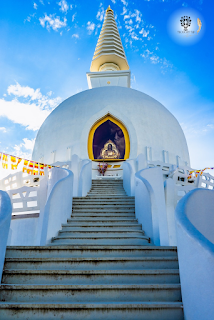
Located atop Changspa Hill in Ladakh, Shanti Stupa Ladakh was established in 1985. The Japanese for World Peace, a Japanese Buddhist organization, built the Shanti Stupa in Ladakh. The Dalai Lama dedicated the Shanti Stupa in Ladakh in 1985.
The purpose of building Shanti Stupa Ladakh is to commemorate two millennia of Buddhism and promote global harmony. Visitors travel to Ladakh specifically to see these stupas each year. Even though sunsets and sunrises are only imagined, your gaze will constantly be drawn to them.
2. Tsomoriri Lake Ladakh

Tsomoriri Lake is located in the Changthang area of Jammu and Kashmir, at a height or altitude of roughly 4,595 meters and 15,075 feet. Situated wholly within India, it is the biggest high-altitude lake in the Trans-Himalayan biogeographic range. Lake Tsomoriri is located between Tibet to the east, Zanskar to the west, and Ladakh, India, to the north. Spring water from the Changthang plateau’s mountains and snowmelt from the mountains contribute to Lake Tsomoriri.
3. Leh Palace

The nine-story Leh Palace housed the royal family on its upper floors while the bottom stories served as stables and storage areas. The Archaeological Survey of India is currently restoring and repairing the Leh Palace, which is reduced to rubble. From the rooftop of the Leh Palace, one may enjoy panoramic views of the surrounding area and this lovely location.
4. Magnetic Hill, Ladakh

The most visited location in the Ladakh, India, area close to Leh is **Magnetic Hill**, a gravity hill. It is said that the magnetic hill possesses strong enough magnetic qualities to push cars upward and make passing airplanes increase their height to avoid magnetic interference. There is actually no magnetic turmoil in the vicinity; the appearance is merely an optical illusion.
🗺️ Explore the Destination: https://thoughttap.blogspot.com/2024/09/the-intermediate-guide-about-ladakh.html
메타데이터
- post_id
- 463b74b6438b
- slug
- the-intermediate-guide-about-ladakh-463b74b6438b
- url
- https://medium.com/@navitarora1980/the-intermediate-guide-about-ladakh-463b74b6438b
- canonical_url
- https://medium.com/@navitarora1980/the-intermediate-guide-about-ladakh-463b74b6438b
- author_url
- https://medium.com/@navitarora1980
- status
- ok
- fetched_at
- 2026-06-27 07:40:21