Liberation — God created “US,” BUT what about “THEM”?
God created the Jewish people | Prometheus created the Greeks | Nüwa created the Han Chinese
Liberation — God created “US,” BUT what about “THEM”?
God created the Jewish people | Prometheus created the Greeks | Nüwa created the Han Chinese
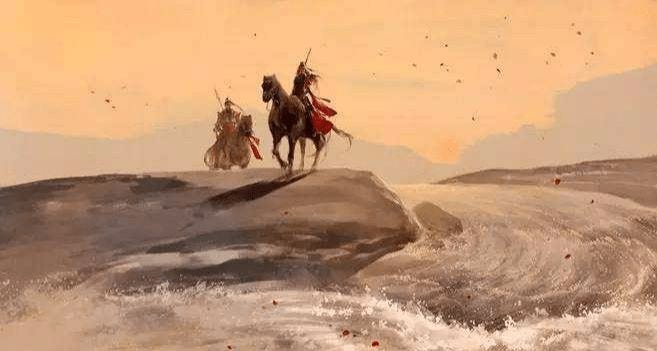
When Adam and Eve left the Garden of Eden, other human tribes already existed on Earth. The Old Testament of the Bible merely explains the origins and historical evolution of the Jewish people. When Prometheus created the ancestors of the Greeks, the indigenous peoples of the Peloponnese had already experienced the Golden and Silver Ages. The Heroic Age in ancient Greek myths and legends is nothing more than the colonial history of territorial expansion. In contrast, Chinese mythology tells how when the god Pangu (or Pan Gu, also sometimes spelled Peng Gu and P’an-ku; Chinese: 盤古) died, the lice on his body evolved into the barbarian tribes. Nüwa (or Nügua; Chinese: 女媧) created the Han Chinese people from earth, a narrative that instilled a profound sense of pride in the Han civilization. It also granted the Huaxia people, who believed themselves to be at the center of the Earth, the divine right to rule over the four directions.
[embed]
In the opening of Part One, “Being Human,” of “Ideas and Myths,” we stated that the emergence of gods serves to answer: Who are we? Where do humans come from? What is the purpose of human existence? In truth, examining the myths of all peoples reveals that the creation of gods primarily explains “who we are” and “where we come from.” As for others distinct from us, they seem to have naturally encountered us during our own development. Thus, the origins of “them” are often added later to fill logical gaps or are forgotten altogether.
Adam and Eve Are the Ancestors of the Jewish People
A major turning point in human civilization was the evolution from gathering food to producing it. Approximately 20,000 years ago, or possibly as far back as 40,000 years ago, humans in the southern regions of East Asia domesticated the ancestor of the dog, the gray wolf (or grey wolf; Latin scientific name: Canis lupus).
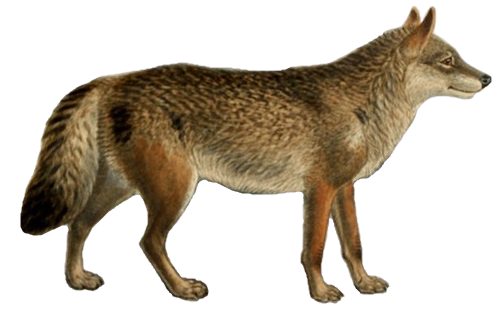
Grey wolf
The Fertile Crescent** (Arabic: الهلال الخصيب) is a fertile land spanning the Tigris-Euphrates River Basin and surrounding areas in West Asia and North Africa. Here, 11,000 years ago, people domesticated the ancestor of sheep, the Asiatic mouflon (or Urial, Asiatic wild sheep; Latin name: Ovis orientalis). Slightly later, around 10,000 years ago, on the Iranian Plateau, people domesticated the ancestor of goats, the wild goat (Latin name: Capra aegagrus). Around 9,000 years ago, in the Near East and China, humans domesticated the ancestor of the pig, the Eurasian wild boar (Latin name: Sus scrofa). Around 8,000 years ago, in India and the Middle East, humans domesticated the ancestor of cattle, the aurochs (Latin name: Bos primigenius). Around 7,500 years ago, people in the Near East domesticated the ancestor of the domestic cat, the Near Eastern Wildcat* (or African Wildcat; Latin name: Felis lybica [subspecies Felis silvestris lybica])*. That likely indicates the emergence of food surpluses in the region.
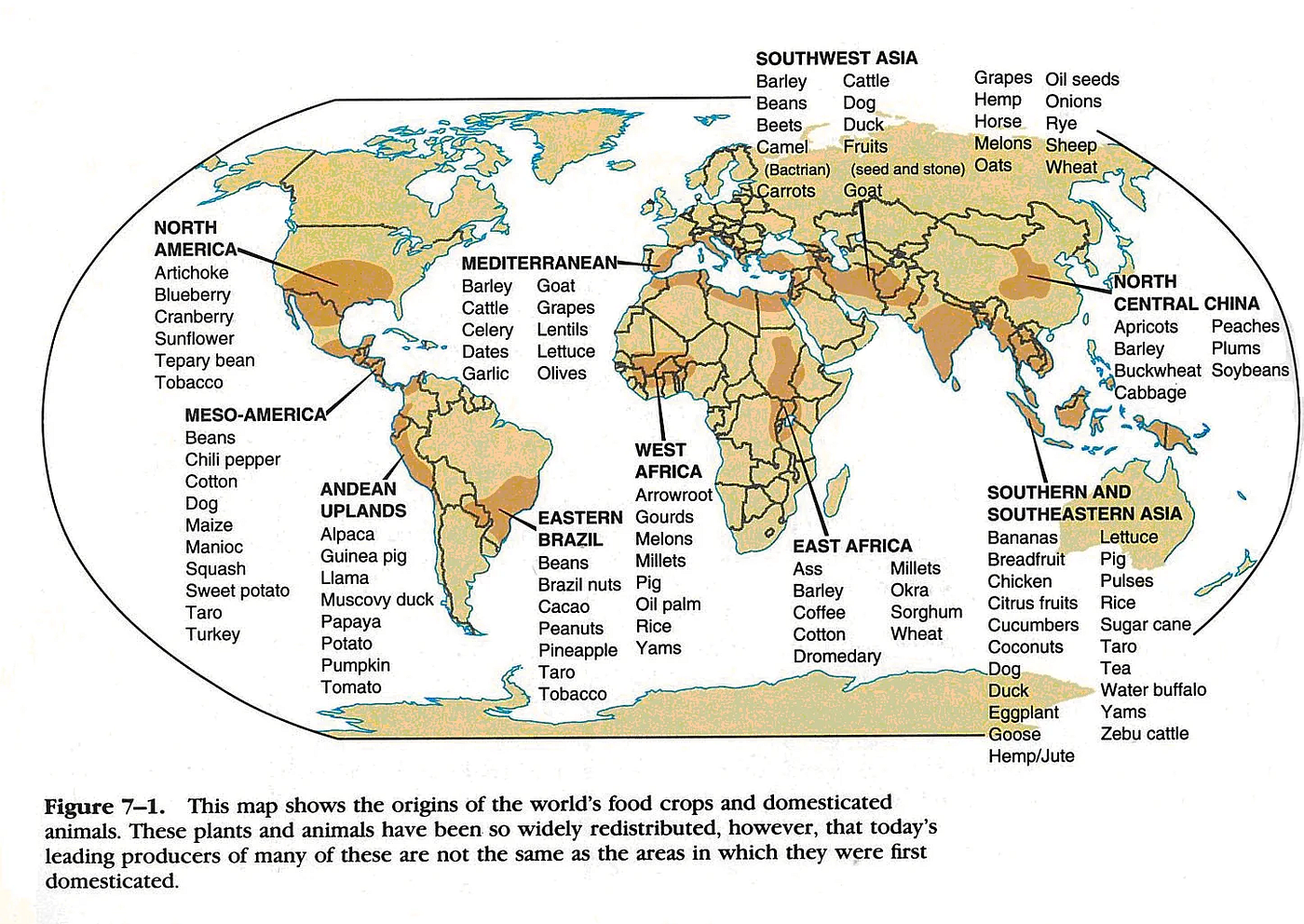
The domestication of animals and plants map
The domestication of plants by humans occurred later. Approximately 11,300 years ago, people in the Jordan River Valley began cultivating figs (the plant bearing figs: Ficus carica). Between 10,500 and 9,500 years ago, people in the Fertile Crescent were already growing grains (Barley and Wheat). Approximately 10,000 years ago, legumes (Lentil, Pea, Chickpea, Bitter Vetch) also entered cultivation in this region. Around 9,000 years ago, flax was cultivated in Southwest Asia for oil and fiber production. Almost simultaneously, between 9,000 and 8,000 years ago, rice cultivation (Latin name: Oryza sativa) commenced in China’s Yangtze River basin. Around 8,000 years ago, millet cultivation commenced in China’s Yellow River basin. In present-day Mexico, within Mesoamerica, squash and gourds were cultivated around 10,000 years ago. Maize cultivation began approximately 9,000 years ago. In the Andes Mountains of South America, people began cultivating potatoes around 8,000–5,000 years ago. In New Guinea, people domesticated taro and sugarcane around 9,000 years ago.
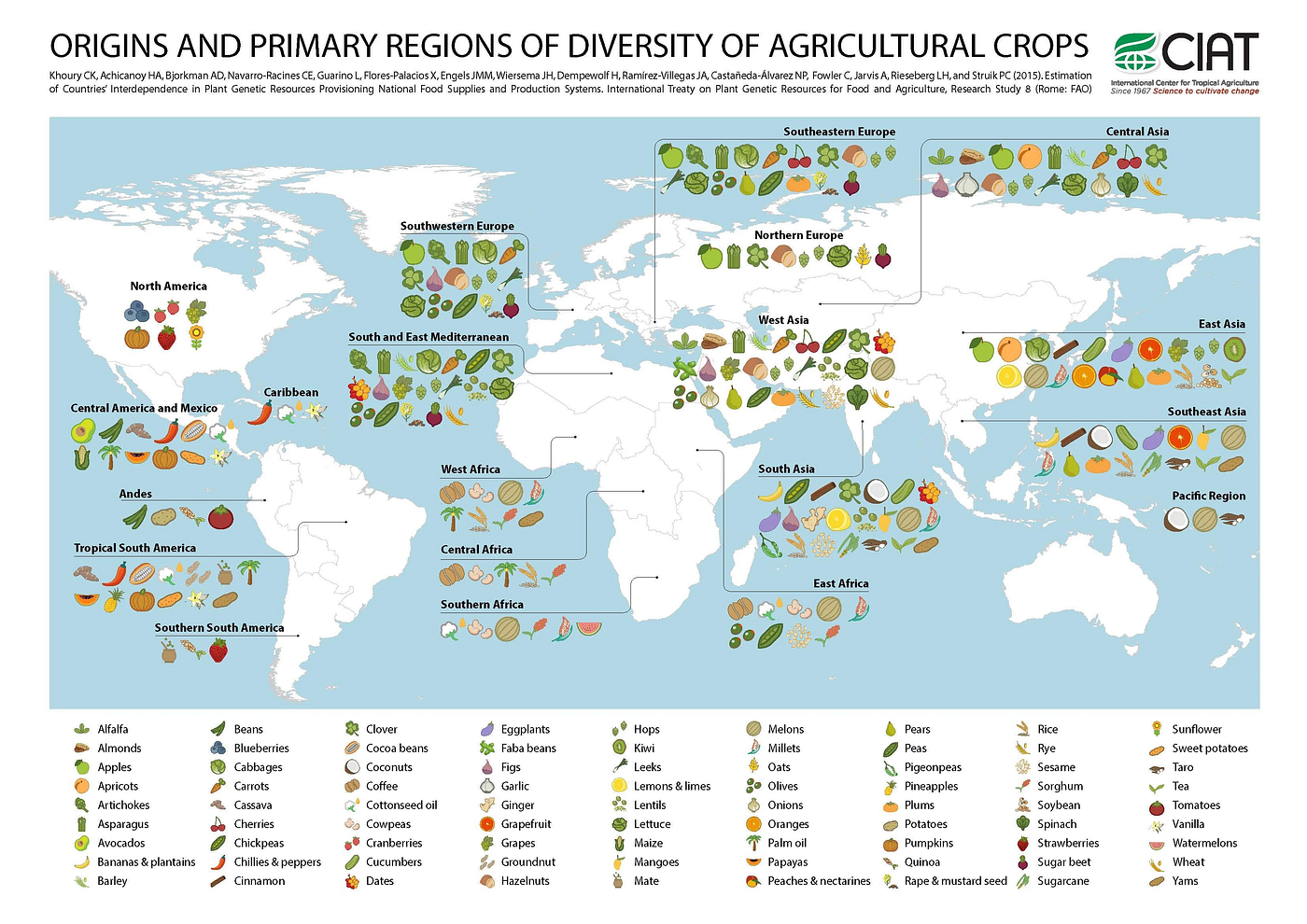
The centers of origin of agriculture map
The domestication of animals gave rise to animal husbandry. This led some humans to form nomadic tribes whose way of life centered on pastoralism. The domestication of plants gave rise to agriculture, prompting more people to settle down and engage in farming. These settlements grew into cities.
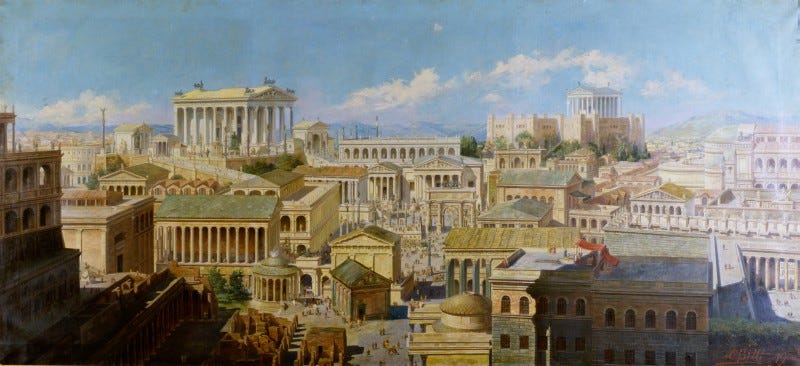
A modern depiction of Ancient Rome, the first city in the world to reach one million
In the Book of Genesis, after Adam and Eve were expelled from the Garden of Eden, Eve conceived and gave birth to Cain** (Hebrew: קַיִן, Qayin; Arabic: قابيل/قايين; Greek: Κάϊν) and Abel* (Hebrew: הֶבֶל; Ancient Greek: Ἅβελ; Arabic: هابيل). Cain lived by agriculture, representing the farmer. His brother represented the herdsman. When both offered sacrifices to God, Cain could only present “the fruits of the soil” (Genesis 4:3). Abel, however, offered “fat portions from some of the firstborn of his flock” (Genesis 4:4)*. God, like humans, favored the rich over the poor. He accepted Abel’s offering but rejected Cain’s. Both brothers offered the finest fruits of their labor to God. A farmer, however, possesses only grains and vegetables — he knows no way to produce goods of higher value. This outcome caused Cain to harbor resentment toward his brother.
Now Cain said to his brother Abel, “Let’s go out to the field.” While they were in the field, Cain attacked his brother Abel and killed him.
Then the Lord said to Cain, “Where is your brother Abel?”
“I don’t know,” he replied. “Am I my brother’s keeper?”
The Lord said, “What have you done? Listen! Your brother’s blood cries out to me from the ground. Now you are under a curse and driven from the ground, which opened its mouth to receive your brother’s blood from your hand. When you work the ground, it will no longer yield its crops for you. You will be a restless wanderer on the earth.”
Cain said to the Lord, “My punishment is more than I can bear. Today you are driving me from the land, and I will be hidden from your presence; I will be a restless wanderer on the earth, and whoever finds me will kill me.”
But the Lord said to him, “Not so; anyone who kills Cain will suffer vengeance seven times over.” Then the Lord put a mark on Cain so that no one who found him would kill him. So Cain went out from the Lord’s presence and lived in the land of Nod, east of Eden.
— Genesis 4
Here, it is particularly noteworthy that “and whoever finds me will kill me.” This implies that besides Adam, Eve, and Cain, other people existed on earth. Thus, like the myths of other peoples, humanity first concerned itself with the origin of “us.” Attention to “them,” the others, was added later to complete the myth. Strictly speaking, the entire focus of the Old Testament is on us — the origin and development of the Jewish people. The Old Testament is fundamentally the origin story of the Jewish nation.
The myth of Cain and Abel also hints at the conflict between human agricultural and nomadic civilizations. In fact, for a significant period across the Eurasian continent, nomadic peoples posed the primary threat to nearly all agricultural civilizations. The conflict between agricultural peoples and northern nomadic tribes largely shaped the fundamental framework of Eurasian human history before modern times.
Prometheus is the Ancestor of the Greeks
In ancient Greek mythology, the gods created five generations of humans. These generations had no connection to Prometheus (Ancient Greek: Προμηθεύς). The Five Ages of Man are more likely to represent five distinct eras in human history. This is because there are no explicit details regarding the creation of these five ages of humanity. Hesiod (Ancient Greek: Ἡσίοδος, Hēsíodos), active around 750–650 BCE, recorded in his “Works and Days” (Ancient Greek: Ἔργα καὶ Ἡμέραι, romanized: Érga kaì Hēmérai) that the second divine king, Cronus* (Cronos, or Kronos; *Ancient Greek: Κρόνος), created the first generation of humans — also known as the Golden Age (Greek: χρύσεον γένος chrýseon génos). The people of the Golden Age lived among the gods, freely interacting with them. The earth naturally yielded abundant food, fruit, and wine; humans needed neither toil nor labor to obtain all they required. This generation maintained youthful appearances throughout their long lifespans, free from suffering, as peace and harmony filled the world. After death, their souls became daemons* (Greek: δαίμονες)*. These spirits circled the earth, guarding later generations of humans, bestowing wealth, and punishing injustice.
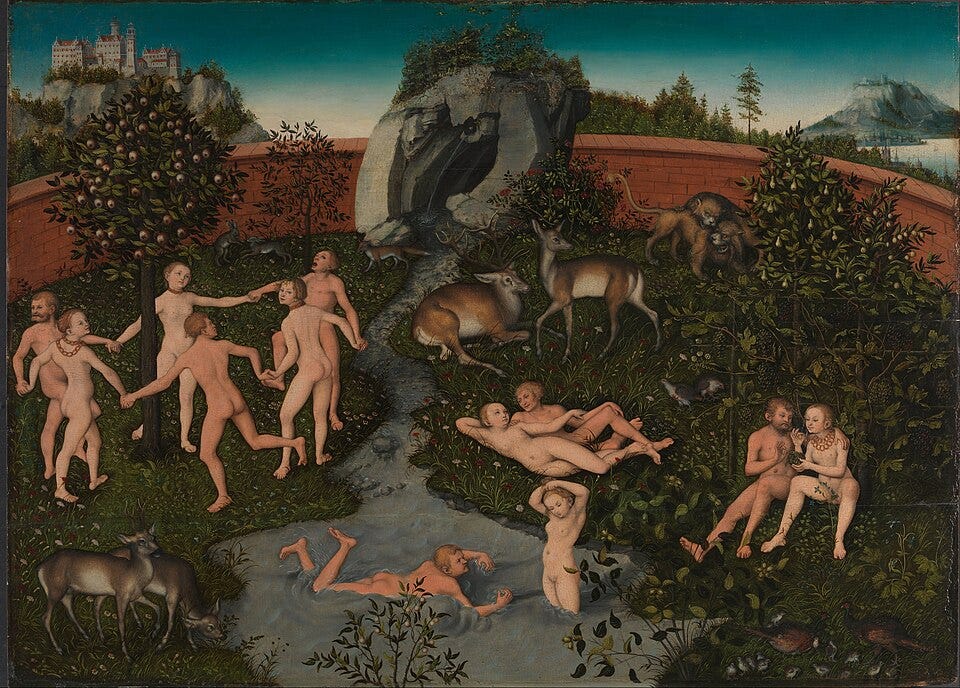
The Golden Age (c. 1530) by Lucas Cranach the Elder
Chaos is already mentioned in the records of “Works and Days”. Hesiod records:
First of all the deathless gods who dwell on Olympus made a golden race of mortal men who lived in the time of Cronos when he was reigning in heaven. They lived like gods without sorrow of heart, remote and free from toil and grief: miserable age rested not on them; but with arms and legs never failing they made merry with feasting beyond all evil. When they died, it was as though they were overcome with sleep, and they had all good things; for the fruitful earth unforced bare them fruit abundantly and without stint. They dwelt in ease and peace upon their lands and with many good things, rich in flocks and loved by the blessed gods.
— Hesiod, “Works and Days”
We know the Olympian gods were the era ruled by Zeus and the twelve principal deities. But humanity in the Golden Age lived under the rule of Cronus. Cronus belonged to the Titans (Ancient Greek: Τιτᾶνες, Tītânes; singular: Τιτάν, Tītā́n). And Cronus devoured his own children. Zeus was secretly raised. After growing up, he began the war to seize the throne from Cronus. Therefore, the Olympian gods could not have created humanity in the Golden Age. The people of the Golden Age were most likely allies of Cronus, destroyed alongside him by Zeus, not victims of some supposed moral decline of humanity itself.
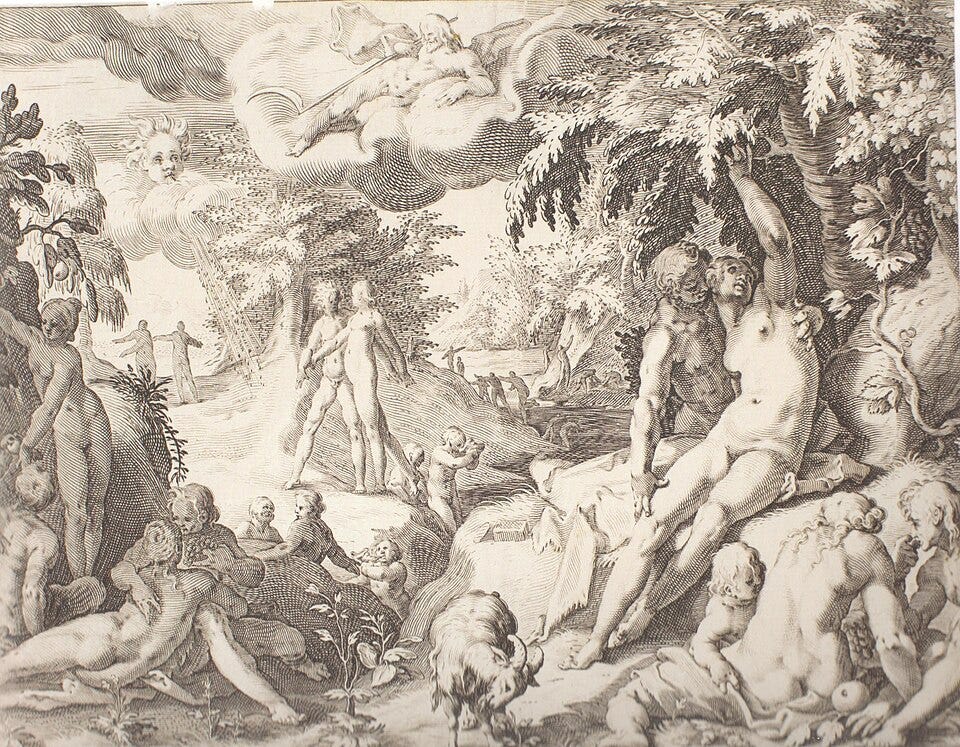
Robert Willemsz de Baudous: Golden Age, etching, c. 1598.
After Zeus ascended as the third-generation king of the gods, humanity entered the Silver Age. During this era, human childhood was exceptionally prolonged, lasting a full century. Children remained like giant infants beside their mothers, long dependent on parental care. Yet adulthood was brief and fraught with suffering and strife. Though long-lived, they lived in youthful form. Unable to control their passions, they often harmed one another. They lived in peace and harmony. They had to labor diligently to reap their harvests. They ceased to honor the gods, refusing to offer sacrifices to the immortal deities or fulfill religious duties, becoming arrogant and insolent.
Adulthood is brief — how then to raise children whose childhood lasts so long? This is almost another logical paradox. Their lack of reverence for the gods is easy to understand: their god-king Cronus departed after his defeat, and the new god-king Zeus holds little significance for them — indeed, he was once their enemy in war.
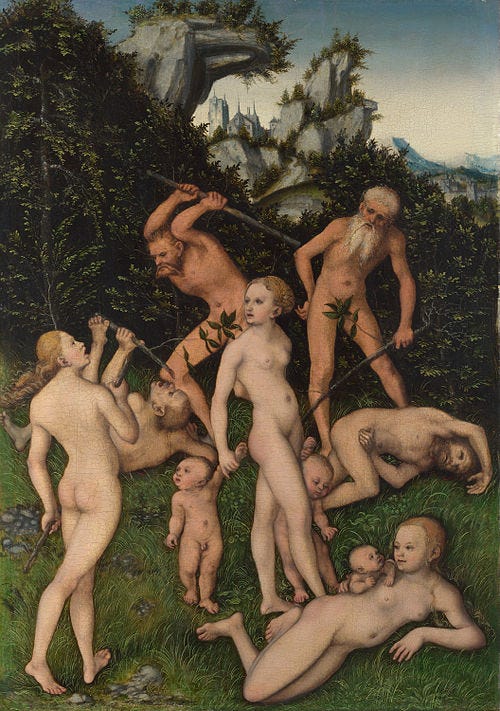
Lucas Cranach the Elder, The Silver Age
For these humans, Zeus resolved to end this impiety race and conceal them utterly. Hesiod records that Zeus destroyed this generation of humans in his wrath. Thus, the Golden Age and Silver Age should be understood as two distinct phases within a single human epoch. The people of this era were known as the “blessed spirits,” ranking below the daemons of the Golden Age. After death, they became secondary guardians of the mortal world, though lacking the exalted status and power of the Golden Age humans.
Compared to Cronus, the humans created by Zeus were an outright failure. Zeus fashioned the Bronze Age humans from the ash tree (Fraxinus). They wielded bronze weapons, used bronze tools, and even built their houses with bronze. The people of this era were exceptionally warlike, brutal, and powerful. They focused solely on war and violence, showing no interest in agriculture or other peaceful pursuits. They also abstained from grain, meaning they primarily subsisted on warfare and hunting. The goddess of justice, Astraea (Ancient Greek: Ἀστραία, Romanized: Astraía), could no longer bear humanity’s corruption. She fled into the heavens, becoming the constellation Virgo.
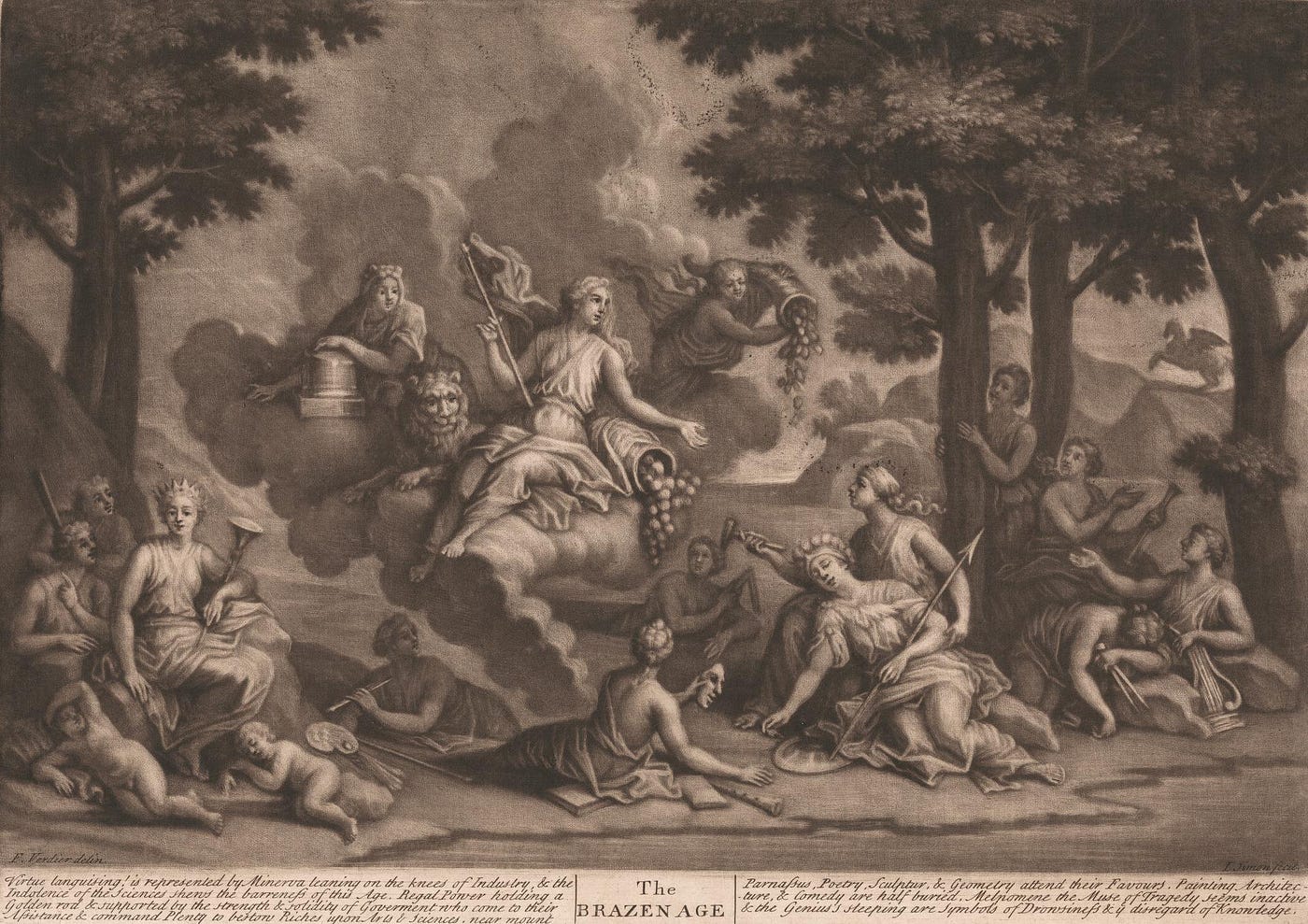
John Simon, The Brazen Age
Bronze Age humans resembled the nomadic tribes of their era. Driven by their brutal nature, they perpetually waged war until they ultimately destroyed one another. Hesiod described them: “These were destroyed by their own hands and passed to the dank house of chill Hades, and left no name: terrible though they were, black Death seized them, and they left the bright light of the sun.”
After the demise of the Bronze Age, Zeus resolved to create a more just, superior, and noble race — the humans of the Heroic Age. This was a humanity composed of demigods and heroes. It included renowned mythological figures such as Heracles** (Ancient Greek: Ἡρακλῆς, Romanized: Hēraklēs), Achilles (Ancient Greek: Ἀχιλλεύς, Latin: Achilles), and Oedipus* (Greek: Οἰδίπους, Romanized: Oidípous, Latin: Oedipus)*. Though challenged by war and fate, they were regarded as divine. Zeus sent fallen heroes to the edge of the world — the islands of the blessed along the shore of deep swirling Ocean. There, they enjoyed peaceful, trouble-free lives. Ruled by Cronus, this realm lay distant from the immortal gods. The earth bore sweet fruit three times a year, providing them with ample food and clothing — a place where people seemed to yearn for Cronus’s rule, likely representing the forgotten early primal age of humanity.
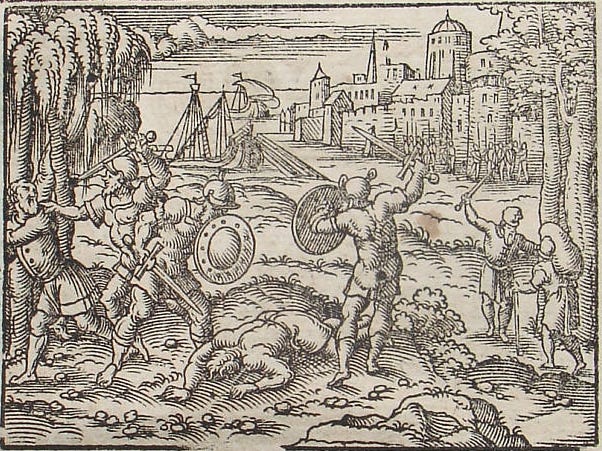
Virgil Solis, The Iron Age
The humans of Heroic Age also left no records of destruction. Following this, humanity entered the Iron Age — an era steeped in suffering, injustice, and moral decay. It symbolized humanity’s descent from the divine toward complete secularization and corruption. Justice was supplanted by “might” and “power.” Violence became the measure of right. People no longer guided their actions by shame and justice. The goddess Aidos** (Aidos or Aedos; Greek: Αἰδώς, Aidōs) and the goddess Nemesis* (Ancient Greek: Νέμεσις, Romanized: Némesis)* utterly despair of humanity. They cloak their beautiful forms in white robes, abandon mankind forever, and ascend back to the gods on Mount Olympus. The Iron Age is Hesiod’s description of his own era. To be precise, none of these five eras provides a particularly explicit account of humankind’s creation; rather, they represent a rough chronological division of human history.
Hesiod recorded Prometheus’s aid to humanity and defiance against Zeus in *Theogony *(Ancient Greek: Θεογονία, romanized: Theogonía, lit. ‘the genealogy or birth of the gods’). The ancient Roman poet Ovid (Publius Ovidius Naso; March 20, 43 BC — 17/18 AD), in his Metamorphoses (from Ancient Greek: μεταμορφώσεις [metamorphṓseis]), completed around 8 AD, shaped the story of Prometheus creating mankind. Prometheus, himself a Titan, created humanity — likely the origin of the Greek people. As previously discussed, his son Deucalion** (Ancient Greek: Δευκαλίων) survived the Great Flood and became the progenitor of the Greeks. This narrative serves as a metaphor for the Greek colonization of the Peloponnese and surrounding regions.
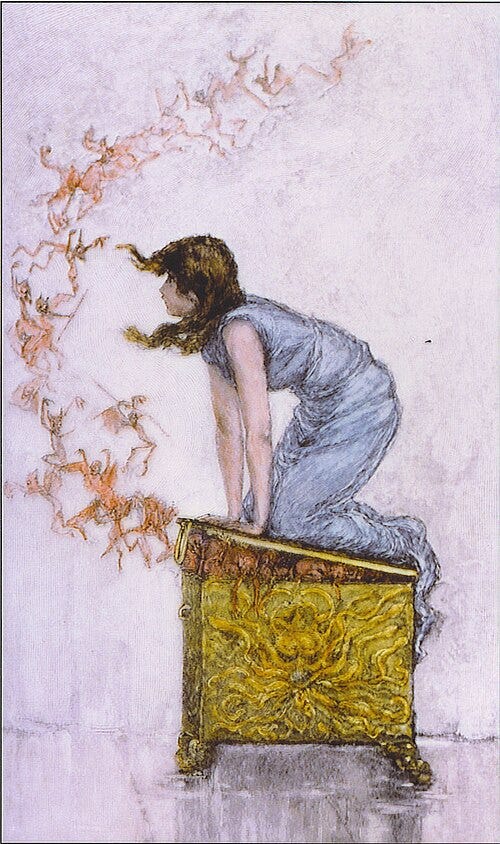
Engraving of the myth of Pandora based on a painting by F. S. Church
Ovid omitted the heroic age from the five stages of human history, leaving only four. In his account, the Golden Age represents humanity’s primitive communal stage. The Silver Age signifies the agricultural era. The Bronze Age — or Brass Age — marks the period when people established city-states through warfare. The Iron Age, meanwhile, is the epoch when nations were demarcated and humanity mastered navigation and mining. Ovid himself lived after the conclusion of the Iron Age.
Hesiod’s Heroic Age roughly spans from the Greek colonization of Thessaly (Greek: Θεσσαλία, romanized: Thessalía; ancient Thessalian: Πετθαλία, Petthalía) to the return from the Trojan War. This period corresponds to the Bronze Age and Iron Age of other cultures. Thessaly was named after the ancient Greek tribe of the Thessalians. It originated in the pre-Hellenic era and is located in present-day north-central Greece. The Thessalian Plain, situated between Mount Oeta (Greek: Οίτη, polytonic Οἴτη, Oiti, also transcribed as Oite), Mount Othrys (Greek: όρος Όθρυς — oros Othrys, also Όθρη — Othri), and Mount Olympus (Greek: Όλυμπος, romanized: Ólympos), served as the battleground where the Titans clashed with the Olympian gods. This likely represents the conflicts during the early phase of Greek colonization, when colonists drove out the indigenous populations of the pre-Hellenic era.
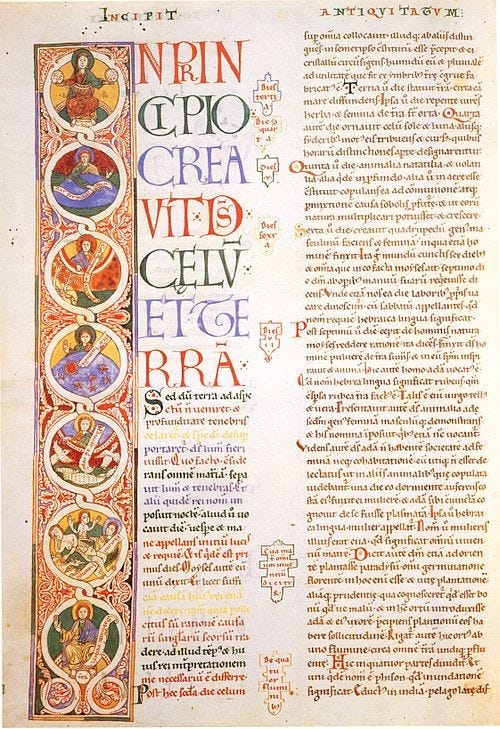
11th-century illuminated manuscript
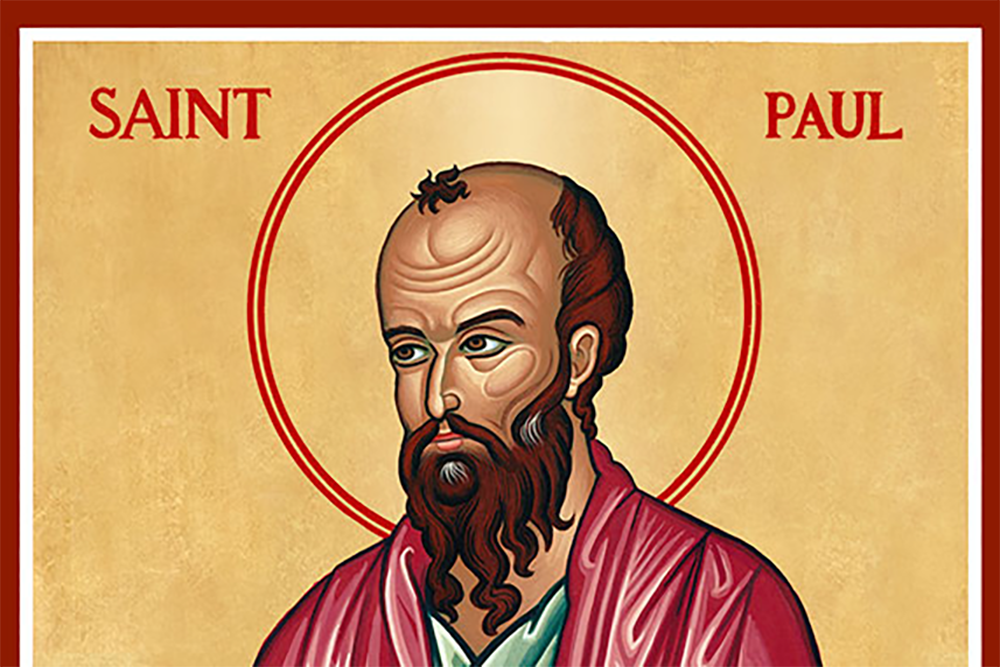
Prometheus’ father was Iapetus** (Ancient Greek: Ἰαπετός). Iapetus is often equated with Japheth (Greek: Ἰάφεθ, Iápheth; Latin: Iafeth, Iapheth, Iapheth, Iapetus; Hebrew: יֶפֶת Yép̄eṯ) from Semitic mythology. The names are similar** (Ἰαπετός/Iapetos vs. Iápheth/Japheth). Iapetus’ mythology originates from Asia Minor. Japheth, a descendant of Noah, is regarded as the progenitor of peoples in the Aegean, Anatolia, and surrounding regions. In medieval and early modern European traditions, he was considered the ancestor of Europeans, while Islamic tradition also counted the Chinese among his descendants.
Japhet, the son of Noah, had seven sons: they inhabited so, that, beginning at the mountains Taurus and Amanus, they proceeded along Asia, as far as the river Tanais (Don), and along Europe to Cadiz; and settling themselves on the lands which they light upon, which none had inhabited before, they called the nations by their own names.
— Flavius Josephus, Antiquities of the Jews
Therefore, the Jews and Greeks first mythologized their ancestors, establishing the existence of “us,” before seeking an origin for “them” as well. Adam and Eve were the ancestors of the Jews, chosen by their God, and thus lived in the Garden of Eden. Meanwhile, “they” had long inhabited the vast world until Adam and Eve emerged from the paradise of slavery into the land of independent humans, encountering “them.”
The “they” of the Golden and Silver Ages were earlier “indigenous tribes” ruled by Cronus, utterly destroyed by the tribes led by Zeus. Yet the brutal Zeus soon faced a new challenge: the Greeks created by Prometheus. Ultimately, the Greeks colonized the Peloponnese. And humanity began to awaken to self-awareness, self-reflection, and independent free will.
Nüwa Created the Han Chinese Ethnic
In the mythology of Han China, a similar phenomenon exists. Nüwa (or Nügua; Chinese: 女媧), the creator of humanity, was the descendant and leader of the Han Chinese tribes. Zheng Qiao** (Chinese: 鄭樵, May 7, 1104 — April 3, 1162) was a historian of the Song Dynasty* (Chinese: 宋, 960–1279). He cited the Records of Spring and Autumn *(c. 770 — c. 481 BCE), which states:
Huaxu gave birth to a son named Fuxi and a daughter named Nüwa. Thus, legend holds that Nüwa was Fuxi’s sister, of the Feng clan, with a human head and a serpent’s body. She followed Fuxi’s systems to create the shenghuang (a type of wind instrument). She spread clouds and rain, interpreted divine omens, and possessed the power to transform all things.
— Zheng Qiao
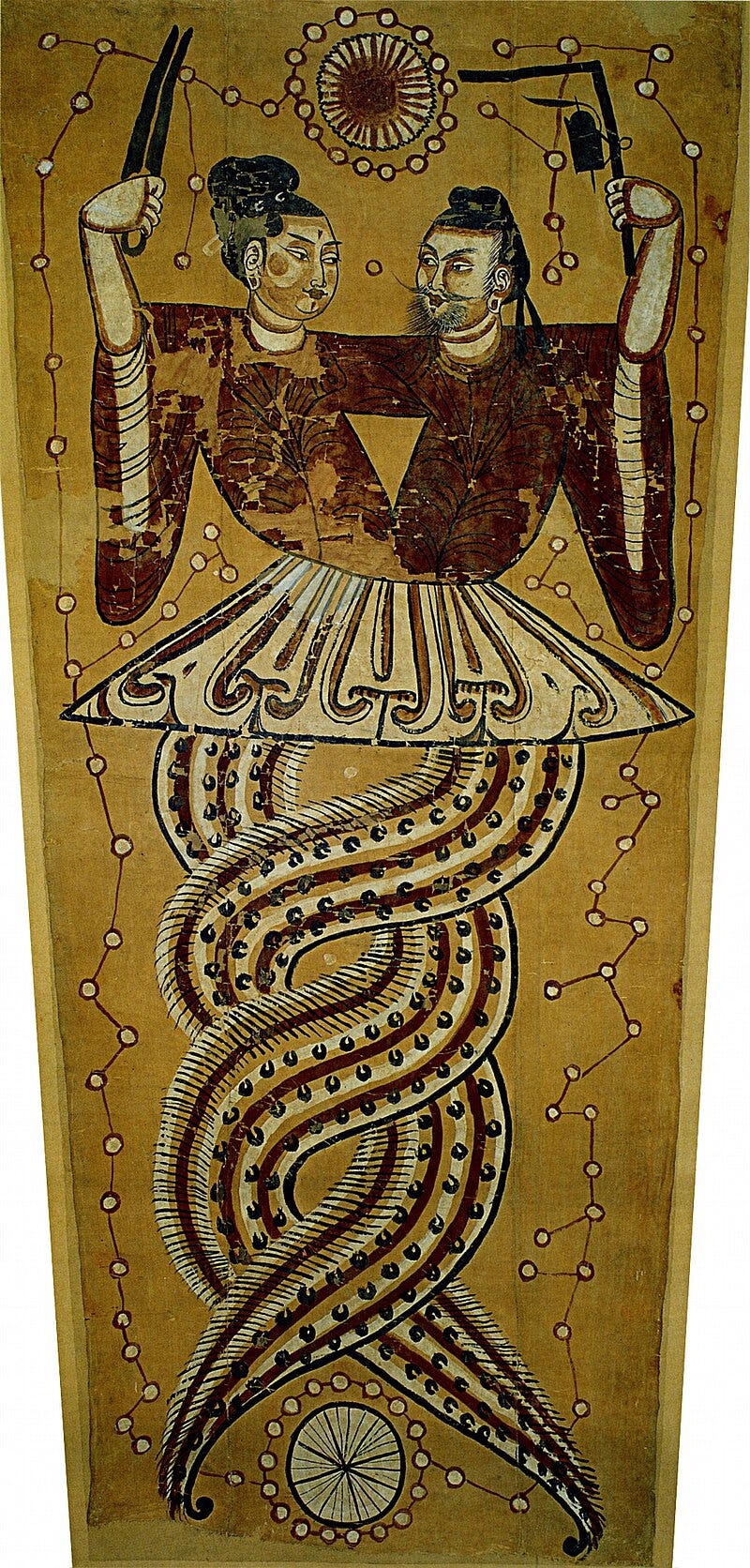
Anonymous-Fuxi and Nüwa
Huaxu (Chinese: 華胥) was a woman. While wandering in the wilderness, she saw a large footprint, stepped into it, and became pregnant, giving birth to Fuxi* (or Fu Hsi; *Chinese: 伏羲) — a being with the head of a man and the body of a snake. This footprint belonged to the Thunder God Leigong (Chinese: 雷公), who is also known as Huoxi** (Chinese: 霍羲). There is no clear account of who Nuwa’s father was. One account states Fuxi married Nüwa, while another suggests they were siblings who united. Their legends primarily circulated in the Yellow River and Yangtze River basins, spanning from over 4,700 years ago to approximately 4,000 years ago. Further calculations suggest this period falls around 8,000 years ago, coinciding precisely with the emergence of early Chinese cultural spheres and the dawn of Chinese civilization. Thus, Huaxu should be regarded as the common mother of the Han Chinese people within Han Chinese mythology.
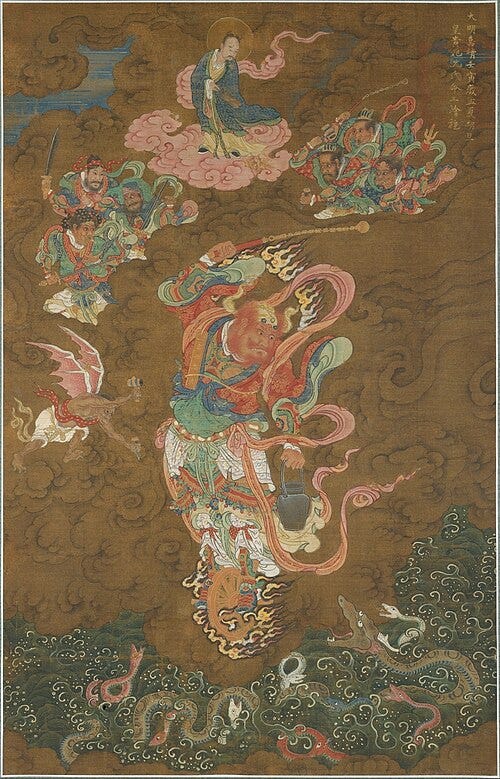
Leigong as depicted in a 1542 painting from the Ming dynasty
We know that Japanese mythology lacks a narrative explaining how humans were created. Humans existed before Japan was formed. Similarly, in Chinese mythology, humans already existed before Nüwa created them. In Chinese mythology, the earliest deity, Pangu (or Pan Gu, also sometimes spelled Peng Gu and P’an-ku; Chinese: 盤古), died after splitting the sky and earth. Humans emerged from the lice, fleas, and other parasites that inhabited Pangu’s body. This account carries tragic and humble undertones, suggesting that while humans are part of the world, their status is relatively lowly. Another theory posits that humans were formed from Pangu’s vital essence. After Pangu created heaven and earth, humanity came into being naturally. This concept is similar to ancient Greek mythology and the Bible, where “they” among humanity were born almost simultaneously with the gods. But “we” were uniquely favored by the gods and created separately.
From this perspective, the Great Flood was meant to kill “them” while sparing “us.” More accurately, perhaps, those of “us” who have survived to this day are all colonizers. Under the gods’ exclusive favor, “we” have killed the indigenous “them.”

The True Origin of Humanity — Born Divine
To account for our own origins, we created gods. Yet we have not fully resolved the question of their origins. What concerns us more is: Where did the gods come from? What is the origin of the universe, and what is its purpose? Thus, after the gods created humanity, we still needed to establish a perfect explanation for both the gods and the cosmos. This is the subject of the next volume of “Ideas and Myths”: Being Divine, which explores the history of human ideas.
Arno Will, October 28, 2025
[embed]
Ideas and Myths·Awakening
Ideas and Myths·Purpose For Man
Ideas and Myths·Written in the Stars
Written in the Stars·Predestined Fate
Written in the Stars·Destinies
Written in the Stars·Stand
Written in the Stars·Curses
Ideas and Myths·Liberation
Liberation — Glory of Hera and Leader of Men
Liberation — Founding of Troy
Liberation — The Birth of Jason
Liberation — The Mystery of Life and the Great Greek Earthquake
Liberation — The Birth of Theseus
Liberation — Heracles’ 50 Brides and Why He Killed His Teacher and Son
Liberation — The Descendants of Perseus and the Feats of Heracles
Liberation — Death Streaming With Gold & The Secret That Can’t Be Hidden
Liberation — From Killing Centaurs to Killing Widows and Her Daughters
Liberation — Cretan Bull, Wrestling with Death
Liberation — The Six Labors of Theseus
Liberation — Theseus’ Ship and the Two Ghosts Scramble for the Body
Liberation — Queen of the Amazons & Two Heroes, One Zoster
Liberation — Ignite, Takeoff
Liberation — The Sexuality of the She-viper & The Roman God of Fire
Liberation — Prometheus Unbound
Liberation — God created “US,” BUT what about “THEM”?
메타데이터
- post_id
- 469dc497ea3c
- slug
- liberation-god-created-us-but-what-about-them-469dc497ea3c
- url
- https://medium.com/@acex/liberation-god-created-us-but-what-about-them-469dc497ea3c
- canonical_url
- https://medium.com/@acex/liberation-god-created-us-but-what-about-them-469dc497ea3c
- author_url
- https://medium.com/@acex
- status
- ok
- fetched_at
- 2026-07-15 22:24:00