From Green Lies to Green Truth: How Corporate Climate Communication Grew Up The silence was…
For decades, corporate sustainability reports read like holiday brochures — sun-drenched vistas, bold promises, and a conspicuous absence…
Wiki topics:
ESG · ESG & Sustainability
From Green Lies to Green Truth: How Corporate Climate Communication Grew Up The silence was deafening — until radical honesty changed everything
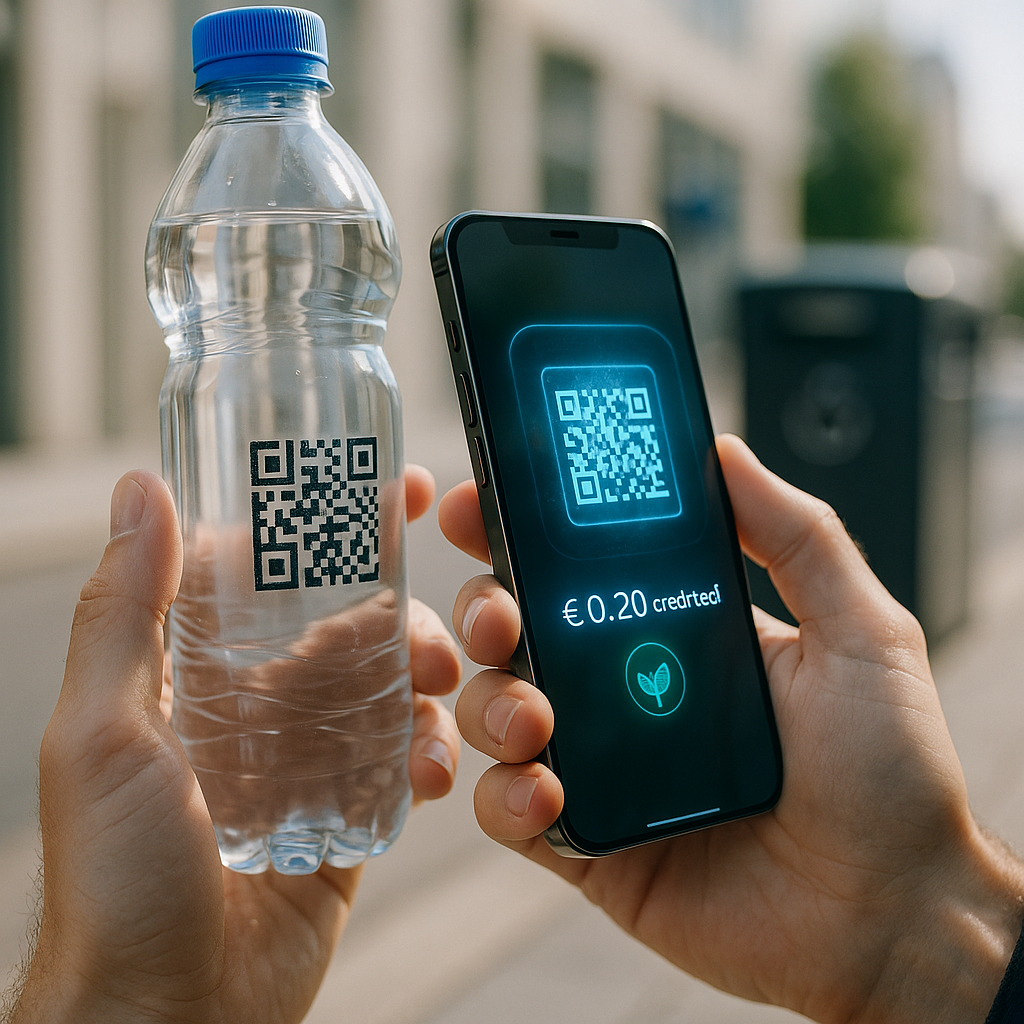
For decades, corporate sustainability reports read like holiday brochures — sun-drenched vistas, bold promises, and a conspicuous absence of anything that might spoil the mood. Then came the lawsuits. Then came the silence. And now, in what may be the most consequential shift in business communication this century, comes something genuinely unexpected: the truth. — — ## The Architecture of a Crisis To understand where we are in 2026, it helps to trace the fault lines that got us here. The early 2020s were the golden age of greenwashing — a period when sustainability language became so inflated, so untethered from operational reality, that terms like net-zero, carbon-neutral, and science-based targets functioned less as commitments and more as aesthetic choices. Marketing departments wielded environmental credentials the way a conjurer wields a handkerchief: with great flourish and very little substance behind it. Consumers, initially dazzled, grew sceptical. Regulators sharpened their instruments. The reckoning, when it arrived, was not gentle. — — ## The 2025 Chill: Greenhushing as Corporate Survival Strategy By 2025, the legal landscape had shifted dramatically. The EU Green Claims Directive — updated that year with significantly expanded enforcement powers — placed the burden of proof squarely on corporations to substantiate every environmental assertion made in public communications. Meanwhile, the U.S. Securities and Exchange Commission tightened its climate disclosure rules, demanding verifiable data rather than aspirational narrative. The consequence was not, as many had hoped, a wave of more rigorous sustainability reporting. It was silence. Corporations, terrified of litigation exposure, began quietly dismantling their public-facing climate commitments. Sustainability pages disappeared from websites. Annual ESG reports became thinner, vaguer, or vanished entirely. A major European apparel retailer — facing a class-action lawsuit over unsubstantiated Scope 3 emissions claims — removed all public references to its 2030 net-zero targets overnight, as though the goals had never existed. This phenomenon acquired a name: greenhushing. > ”The cost of silence in ESG is not neutrality — it is the erosion of the very trust that stakeholders require to make informed decisions.” > — Harvard Business Review, The Cost of Silence in ESG, 2025 Greenhushing was, in one sense, entirely rational. If you cannot prove your claims, and the penalty for unsubstantiated claims is existential, then saying nothing appears safer than saying something wrong. But the logic contained a fatal flaw. Silence, in the context of a planetary emergency, is not a neutral act. Investors, supply-chain partners, and increasingly sophisticated consumers recognised the void for what it was — not prudence, but evasion. The black hole of corporate climate data created in 2025 did not protect companies from scrutiny. It redirected that scrutiny, and made it considerably less forgiving. The Harvard Business Review analysis was blunt in its assessment: organisations that retreated into informational silence suffered measurable erosion in stakeholder confidence, regardless of their actual environmental performance. The irony was exquisite and painful in equal measure. — — ## The Anatomy of Radical Honesty Something shifted in the opening months of 2026 — not dramatically, not all at once, but with the quiet momentum of a tide turning. A handful of market leaders, having watched the greenhushing strategy collapse under its own contradictions, made a different calculation. Rather than managing perception through selective disclosure, they chose to dismantle the entire apparatus of managed perception. The approach that emerged carries the deliberately provocative label of Radical Honesty. It is not, as the name might suggest, simply a matter of admitting to shortcomings. Any competent communications team can manufacture a carefully calibrated mea culpa. Radical Honesty operates at a different level entirely — it involves the systematic publication of failure data alongside success data, the explicit acknowledgement of systemic constraints, and the exposure of incomplete or contested information sets. One global food corporation set what has become something of a benchmark, publishing a sustainability report under the deliberately uncomfortable title Where We Failed in 2025. The document detailed, with forensic specificity, which emissions targets had been missed, by how much, and — crucially — why. Supply-chain disruptions, measurement methodology limitations, and the genuine complexity of agricultural Scope 3 accounting were laid out without defensive framing. The response was not the reputational catastrophe that conventional corporate communications wisdom would have predicted. It was, measurably, the opposite. > ”Authenticity over aspirations is no longer a philosophical preference — it has become a demonstrable competitive differentiator in stakeholder relations.” > — Journal of Sustainable Marketing, Authenticity Over Aspirations, 2026 The McKinsey Sustainability Trends Report for 2026 documented a consistent pattern across multiple sectors: organisations adopting transparent failure-disclosure frameworks saw statistically significant improvements in investor confidence, employee retention, and consumer loyalty metrics — outperforming sector peers who maintained traditional managed-disclosure approaches. There is something almost counterintuitive about this, until you consider it from a human perspective rather than a corporate one. People — whether they are consumers, investors, or employees — have finely calibrated detectors for authenticity. Decades of polished sustainability communications have tuned those detectors to high sensitivity. When a company admits it got something wrong, names the specific failure, and articulates what structural factors contributed to it, the signal that reaches those detectors is qualitatively different from anything a carefully crafted success narrative can generate. It registers as real. And in a communication environment saturated with managed reality, real is extraordinarily rare and, therefore, extraordinarily valuable. — — ## Verification: The Infrastructure That Makes Honesty Stick Radical Honesty without verification is merely a more sophisticated form of reputation management — and sophisticated audiences know it. What distinguishes the 2026 iteration of transparent disclosure from its predecessors is the structural commitment to independent verification that sits beneath it. The Global Reporting Initiative’s 2026 Standards formalised requirements for third-party audit trails across environmental disclosures, while the Integrity Council for the Voluntary Carbon Market (ICVCM) protocols established rigorous frameworks for validating carbon-related claims against independently gathered data. The technology underpinning this shift is, in some respects, the most interesting part of the story. Leading technology brands have begun embedding blockchain-verified supply chain data directly into consumer-facing communications. A QR code on product packaging — something that previously might have directed a consumer to a corporate sustainability overview — now leads to a real-time emissions dashboard, populated with unedited data and maintained by independent environmental auditing firms entirely separate from the brand. The implications of this are considerable: — Litigation exposure collapses when claims are verified by parties with no commercial interest in the outcome — Consumer trust compounds because the verification infrastructure is visible and accessible, not merely asserted — Supply-chain accountability extends beyond first-tier suppliers, because the data architecture captures the full complexity of production networks — Competitive dynamics shift — once a sector leader establishes a verified-transparency standard, those who do not follow face pointed questions about what they prefer to keep obscured This last point matters enormously. Radical Honesty, once adopted at scale by market leaders, functions as a kind of ratchet mechanism. It raises the floor of acceptable disclosure for everyone operating in the same competitive space. Supply-chain auditors working within these new frameworks — the people who actually traverse the operational realities that sustainability reports describe — have noted a qualitative change in the conversations they are now having with corporate partners. The defensive crouch that characterised many ESG audit interactions in 2024 and 2025 has begun to give way to something more collaborative, more oriented toward genuine problem-solving than toward liability management. — — ## What This Actually Means The arc traced here — from greenwashing to greenhushing to radical honesty — is not simply a story about corporate communication strategies. It reflects something more fundamental about the relationship between institutions and the people they serve. There is a long tradition, embedded deeply in the machinery of large organisations, of treating information as a resource to be managed rather than a commons to be shared. Sustainability communications were, for most of their history, an expression of that tradition — curated, controlled, optimised for the impression they created rather than the understanding they enabled. The legal and regulatory pressures of 2025 cracked that tradition open. But what is filling the space is not merely compliance. The organisations leading the Radical Honesty shift are not doing so because they were forced to — they are doing so because they have recognised that the old information management model has become, in a world of heightened scrutiny and sophisticated stakeholders, strategically incoherent. Vulnerability, it turns out, is not the opposite of strength. It is, deployed with genuine intent and structural verification, a form of it. The planet, which has been waiting patiently through decades of aspirational brochure-speak, may finally be getting communications worthy of the scale of the problem. — — References: EU Green Claims Directive (2025 Update); Harvard Business Review, ‘The Cost of Silence in ESG’ (2025); Journal of Sustainable Marketing, ‘Authenticity Over Aspirations’ (2026); McKinsey Sustainability Trends Report 2026; Global Reporting Initiative (GRI) 2026 Standards; Integrity Council for the Voluntary Carbon Market (ICVCM) Protocols.
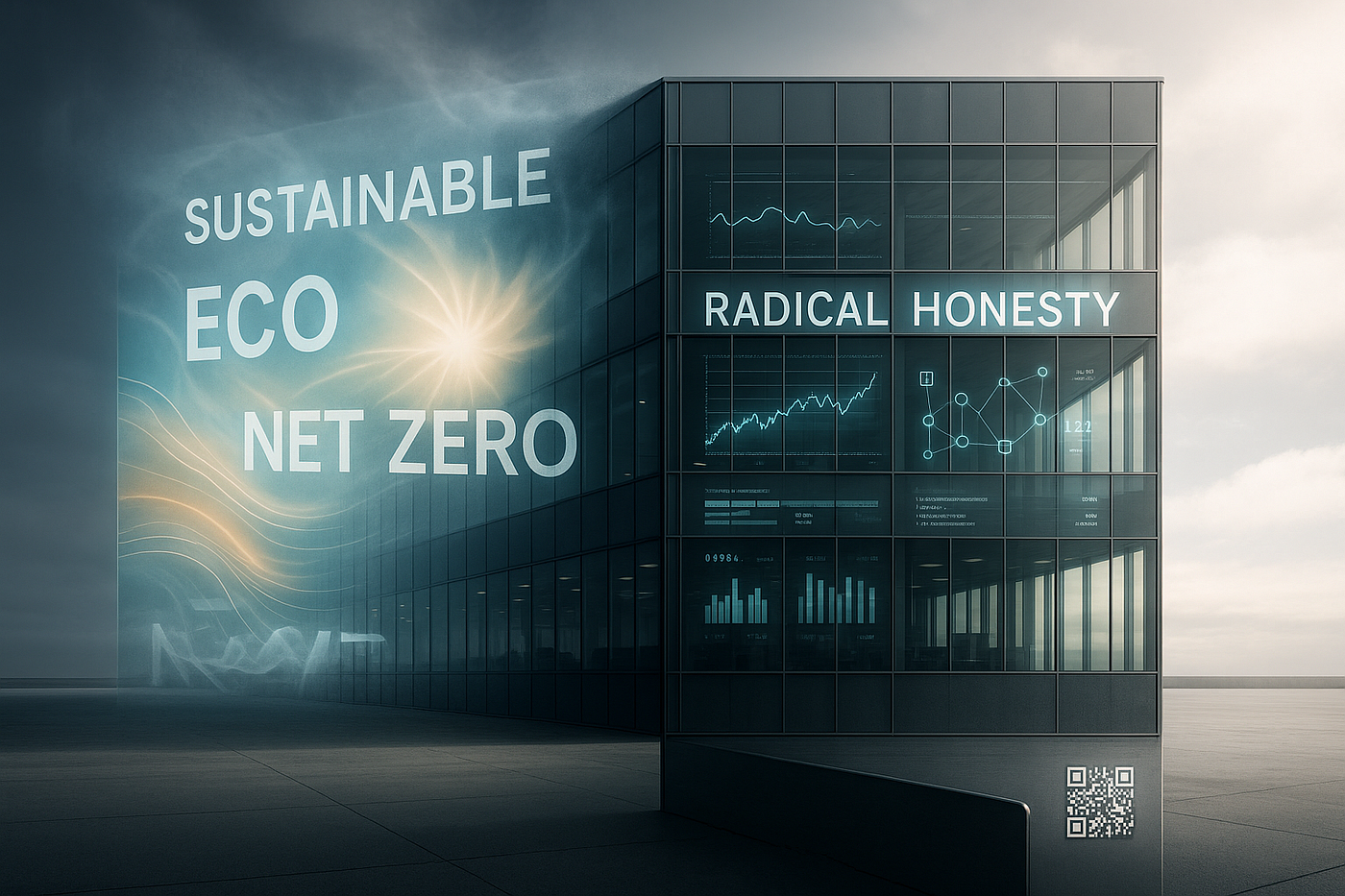
image created by author using image-1
If this was useful, the biggest favor you can do is share it with someone who’d benefit.
Enjoyed this?
Share it, clap, and follow for more. Your support makes all the difference. Get every new article in your inbox — subscribe here. Get an email whenever I publish.

in collaboration with AI
메타데이터
- post_id
- 46b67d1225e2
- slug
- from-green-lies-to-green-truth-how-corporate-climate-communication-grew-up-the-silence-was-46b67d1225e2
- url
- https://medium.com/life-in-balance/from-green-lies-to-green-truth-how-corporate-climate-communication-grew-up-the-silence-was-46b67d1225e2
- canonical_url
- https://medium.com/life-in-balance/from-green-lies-to-green-truth-how-corporate-climate-communication-grew-up-the-silence-was-46b67d1225e2
- author_url
- https://medium.com/@lesliecoelho
- status
- ok
- fetched_at
- 2026-06-20 20:29:01