Mario & Luigi’s strange approach to strategy
When Clair Obscur: Expedition 33 came out last year I recall many people saying that it had taken a bold new approach to turn-based RPGs…
Mario & Luigi’s strange approach to strategy
When Clair Obscur: Expedition 33 came out last year I recall many people saying that it had taken a bold new approach to turn-based RPGs. That it was doing something no one had ever done before and that other developers should follow suit. After searching a bit I can’t find any official publications that made this claim, so I probably just saw this take on social media. Still, it affected my perception of the game when I played it for the first time. I was curious as to what made this game revolutionary and what it did so differently from other prominent JRPGs.

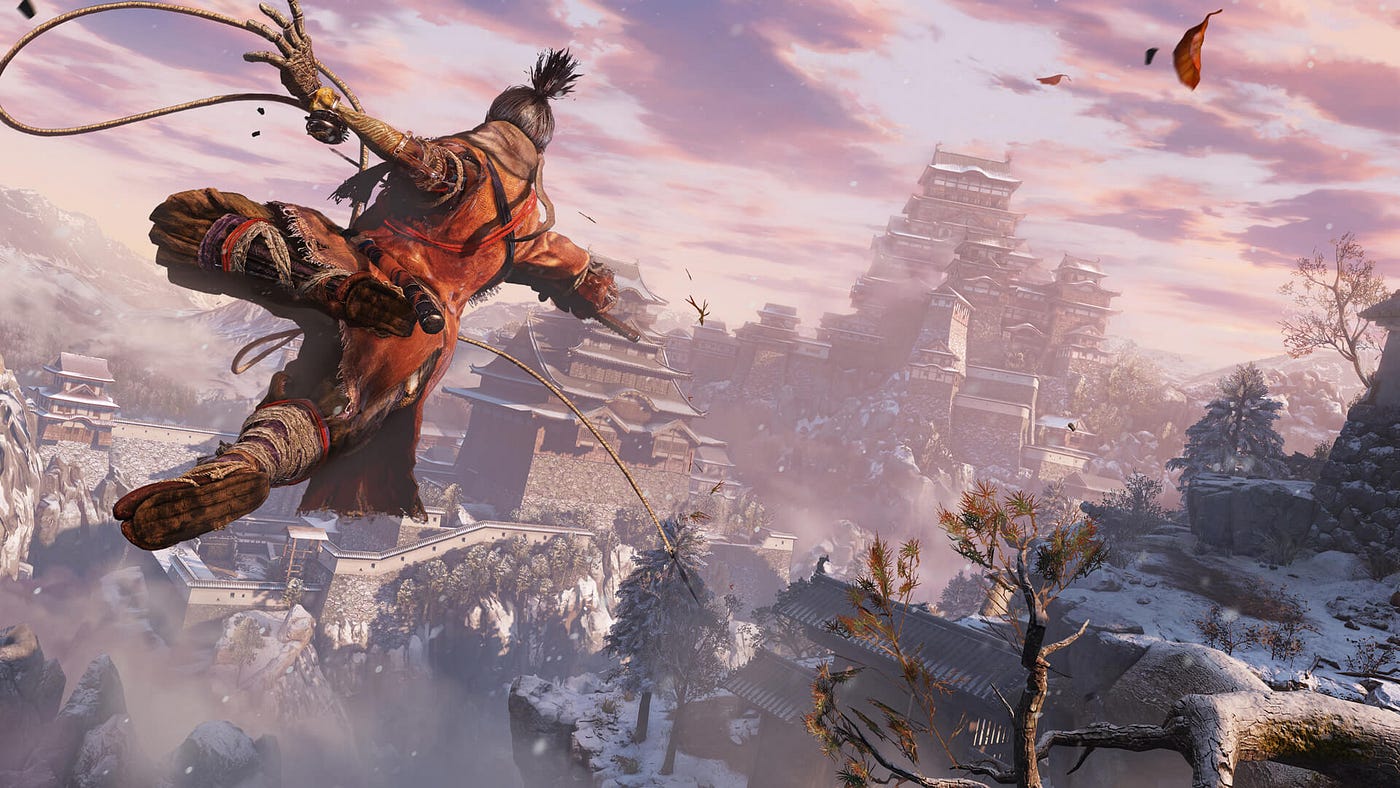
Gustave experiences the groundbreaking mechanic of pressing additional buttons during combat
So I was very disappointed to learn that the main thing that people were talking about was the dodging system and additional button presses for attacks. Especially since the Mario & Luigi series has been doing this since the GameBoy Advance.
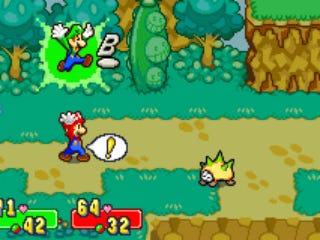
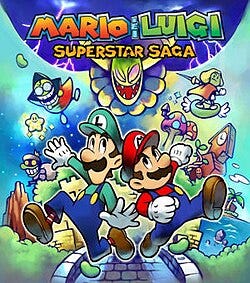
Luigi also experiences the groundbreaking mechanic of pressing additional buttons during combat (circa 2003)
To be clear, I’m not claiming Expedition 33 ripped off Superstar Saga. Mario & Luigi didn’t invent the concept of action commands in turn-based combat. Expedition 33 has plenty of its own ideas that sets it apart. Especially in regards to your team strategy with the skills you can equip your teammates with. In fact, this aspect specifically did get me thinking about an odd aspect of the Mario & Luigi series:
Strategy is almost nonexistent.
To justify that claim, let’s break down how JRPG combat normally goes.
How JRPGs tend to work
Turn-based RPGs have a pretty standard rhythm of balancing two main priorities — dealing damage to the enemies and making sure you can survive the enemy damaging you. Damage is an inevitability for both sides (short of game-breaking cheese strategies). That’s why many RPGs have distinct archetypes most playable characters fall into: Tank, Healer, DPS. The Tank absorbs the damage for the team, the healer keeps the team alive, and the DPS (damage per second) deals the main damage to the enemy. There’s a lot more nuance than that but plenty of JRPG parties have this setup.

Etrian Odyssey 2 HD — Beast & Doctor in the front to absorb damage, Medic & Hexer in the back to provide support, and Gunner in the back to deal consistent damage
The key distinction here is that you typically have many different abilities to achieve these basic goals. You can decrease the enemy’s stats, inflict status effects to hinder their attacks, and cast healing spells to recover damage. Some attackers in these games can buff themselves and some defensive types can draw enemy aggro so that they are the enemy’s main target. Healers have gradual healing options or can increase stats on a party wide scale. Finding a good party composition feels great and it can be especially rewarding to get through a boss fight with a combination that’s objectively awful.
If you’ve played any JRPG before then this will all sound pretty standard. However, I wanted to establish this baseline because Mario & Luigi plays by a very different rule book.
Two against the world
Your party in the Mario & Luigi is almost always just the titular duo. Some games have additional playable characters (Partners In Time has the babies, Bowser’s Inside Story has Bowser, Paper Jam has Paper Mario) but the key thing is that party composition isn’t a concern since everyone is on the field when it’s time to fight. And this results in a much different combat experience. One that is defined by raw damage output more than anything else.

A rain of hammers courtesy of Paper Mario
Rather than magic, you have “Bros Attacks”, which are powerful combination moves where Mario and Luigi team up to do massive damage to the enemy. Like the name suggests, these are solely attacks. Neither Mario or Luigi have any abilities with a support function. You can’t use Bros Points to debuff enemies, heal teammates, or inflict status effects. Some of these attacks will debuff enemies or rarely inflict status effects (Fire Flower can inflict Burn in some games), but this is always a secondary aspect of these moves. Their main purpose is to deal damage and lots of it.
This is probably because of the ability to dodge any attack. As long as you time your jump or hammer counter properly, you can negate all damage from any attack in the game. Because of this, healing abilities would be pretty useless for players who master dodging. Buffs or Debuffs don’t matter as much either. Due to this focus on offense, unlocking further Bros Attacks doesn’t expand your strategy in any meaningful way. It just means you have a new attack minigame to master to do maximum damage. The only other consideration is whether the attack targets one enemy or multiple ones, which still puts the focus on damage output over anything else.
I think the most frustrating aspect of this approach to the magic system is that old skills become redundant quickly. Broadly speaking, each new Bros Attack has a higher upper damage limit then the last, so you’re incentivized to switch to new ones as you unlock them. There’s no good reason to use your initial Bros Attacks in the late game. This can be true of magic systems in other RPGs, but even a low level healing or buff skill can come in handy when you’re low on MP. Mario & Luigi’s item economy makes it easy to stock up on Syrups (which restore Bros Points) to use during boss fights, so you’re never in a situation where a weaker Bros Attack is necessary.
All that sounds pretty negative, but it’s important to stress that this lack of strategy doesn’t ruin the Mario & Luigi games. These games are designed as “beginner” RPGs, where you don’t need to worry about more complex mechanics to have fun. Bosses make themselves memorable by throwing creative attacks at you that are (generally) well-telegraphed and full of personality. And outside of combat, exploring the overworlds and chatting up NPCs is fun since it allows the creative team to breath life into the world in way wholly different from the main platformers Mario is known for. I loved these games as a kid because of the battles, so the action focus of these games doesn’t hurt them in the long run.

This is one of the best enemy names in RPG history
However, in spite of this I believe AlphaDream saw that there was an opportunity to expand on Mario & Luigi’s combat after Partners In Time. Every game since that one has had some additional wrinkle added to combat, some more successful than others. Let’s dive into these new systems and how they work.
Double Dose of Badges
The Badge system is the only strategic element that has been used in multiple games — both Bowser’s Inside Story and Dream Team use it. By performing standard and Bros attacks well, you gradually fill either side of the badge meter depending on which brother is attacking (in the Dream World, Luiginary attacks fill Luigi’s side and standard attacks fill Mario’s side). When the bar is filled, you can click on the on the touch screen during battle to unleash an special effect. Mario’s side determines the effect, Luigi’s side determines how strong the effect is. For example, the Powerful badge will increase your damage, and if it’s paired with the Excellent! Badge it will increase that damage by 2x, as opposed to the 1.5x if you use the Great Badge. Additionally, in Dream Team and the 3DS remake of Bowser’s Inside Story, you can store up to two different effects at once and unleash them when you want.

Badges as they appear in the 3DS remake of Bowser’s Inside Story
This undeniably adds a bit more decision making to battles, but my main issue with it is that you gain badge charge by getting the best rating from your attacks, which is something you already should be doing as a matter of course. You don’t have to change how you play to engage with this system. And in Bowser’s Inside Story, Bowser can’t use badges at all, which affects around half of the battles in the game. Bowser does have the quirk of two different dodge/counter moves which makes dodging attacks as him interesting, though it’s a shame attacking as him is even more repetitive than normal.
The badges also run into an issue where they just make battles easier. These games already aren’t that challenging, so anything that lowers the difficulty further without really changing how you approach fights feels superfluous. This particular aspect I don’t mind as much since these are games aimed at children (and this is true of the next two systems as well) but I still think it’s worth mentioning.
Anyone remember cards?
I would forgive anyone who forgot the Battle Cards from Paper Jam (or Paper Jam as a whole for that matter). For those who don’t know or remember, you can create a deck with up to 10 Battle Cards to use in battles. You earn star points to use the cards by getting good ratings from both standard and Bros Attacks, though Bros Attacks provide more star points. By paying the amount of star points listed on the card you can use the card’s effect — whether that be damage reduction, additional coins, stat buffs, or more. You can use up to three at once, and after using all ten cards in your deck it gets reshuffled and dealt again.
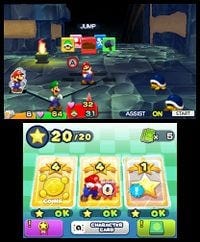
What if Mario could believe in the heart of the cards?
This system has the same problem in that it rewards you for doing something you should already be doing, but I appreciate the wider pool of effects this time around. Being able to make multiple decks does theoretically mean you can prepare decks for certain situations or builds. And this game does carry over the rank up bonuses from Dream Team, so you can differentiate the bros a bit more. Unfortunately the game never draws this kind of strategy out of you since damage is the only thing that matters once you’ve mastered dodging. At least the Ludwig and Larry bosses have them use their own cards against you, which is a fun way to flip the mechanic against the player.
That might be the most positively I’ve ever talked about Paper Jam, so the cards are clearly doing something right.
Plugging into a new world
Last but certainly not least is Brothership, which at the time of writing is the most recent Mario & Luigi game. I would argue it has the best strategic system in the series with the Battle Plug system.
You can use up to five plugs at once, depending on how far you are in the game. These give you effects similar to Battle Cards from Paper Jam, but there’s a wider variety of effects, such as automatically using items in certain situations and applying different status effects. Every plug has a set number of charges, which dictates how many times you can use the plug before it has to recharge. Once used up it will recharge after a certain number of turns in battle have passed, though there are accessories that can make plugs recharge quicker.
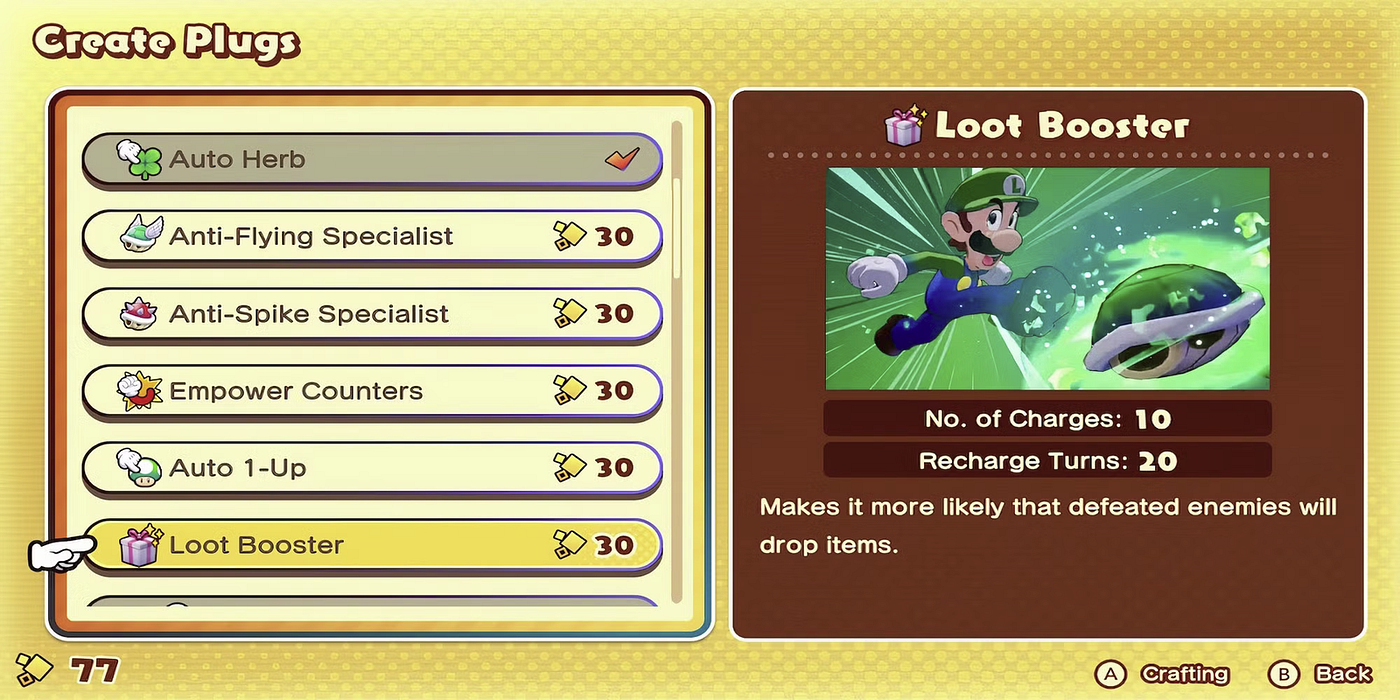
A small sample of the many plugs you can create
A key distinction between this system and previous ones is that plugs aren’t charged by landing attacks — each plug will start with a set number of charges and recharge turns. This is a great change since you can use any plug you want right out of the gate. The fact that the plugs become unusable after they’re used enough times also encourages you to think about your plug usage. Do you use the most powerful plugs you have on the normal encounters, or do you save them for bosses? If you’re replaying the game and know how far away from a boss you are then you can really plan ahead with which plugs you use.
My favorite aspect of this system is that many of the plugs add additional effects to normal attacks. Normally, using Bros Attacks is the best way to deal with any enemy encounters, but with the right plug combination you can clear rooms of enemies with normal Jump and Hammer attacks. Certain plugs will also combo off of each other and allow for multiple attacks on the enemy where there would normally be one. As an example, the Kaboom Attack plug will damage nearby targets if you get an Excellent rating with a normal attack. However, the Surprise Iron Ball plug’s effect also triggers when you get an Excellent attack, wherein you drop an iron ball on an enemy’s head. If you have both equipped, then every enemy hit by the Excellent attack will also get hit by an iron ball, allowing you to do major crowd control damage with just a basic attack. You can also combo support plugs that automatically use items when your health is low, and if you get creative you can use many items without wasting an attack turn.
Discovering these combos is fun and the large pool of plugs means you can still find new ones late into the game. I had so much fun with them that I honestly dread restarting the game since the stretch of the game in the beginning where you don’t have access to them will feel that much longer. I do wish certain plugs had more charges or recharged faster, but on the whole I think the team did a great job in adding a bit more depth to your decision making in battles. I hope some version of this system is in the next Mario & Luigi game (for that matter, I hope we get another Mario & Luigi game at all).
In conclusion, Mario & Luigi is good
Gonna be honest, this is only here so I can set the preview image
I do wonder how many people actually care about this series’ simplistic nature. I remember seeing some more hardcore JRPG enthusiasts say they don’t care for Mario RPGs because of how much easier and less complex they are compared to other games in the genre. As someone who’s really gotten into Shin Megami Tensei and Etrian Odyssey as an adult, I do prefer the systems in those games because of the greater strategic potential and team building aspect. I also enjoy Dragon Quest and Final Fantasy games that give you more set parties since you still have to figure out how to best utilize your party members.
Even still, I like the Mario & Luigi games. They manage to be fun in ways other RPGs can’t and I find them to be relaxing to play in comparison. It’s not like traditional JRPGs are going anywhere. There’s always room for something lighter and more digestible, and I don’t think I would’ve gotten into other RPGs without this series and Paper Mario. I’ll go out and say that if you don’t like normal turn-based combat, you should try the Mario & Luigi series. Even if you don’t have some of Expedition 33’s deeper strategic elements, the fast pace of the combat and charming world should win you over.
Also you won’t have to deal with some of Expedition 33’s more frustrating elements, but that’s a discussion for another time.
메타데이터
- post_id
- 46d0fedfcdb3
- slug
- mario-luigis-strange-approach-to-strategy-46d0fedfcdb3
- url
- https://medium.com/@gangamer1997/mario-luigis-strange-approach-to-strategy-46d0fedfcdb3
- canonical_url
- https://medium.com/@gangamer1997/mario-luigis-strange-approach-to-strategy-46d0fedfcdb3
- author_url
- https://medium.com/@gangamer1997
- status
- ok
- fetched_at
- 2026-06-25 16:53:31